
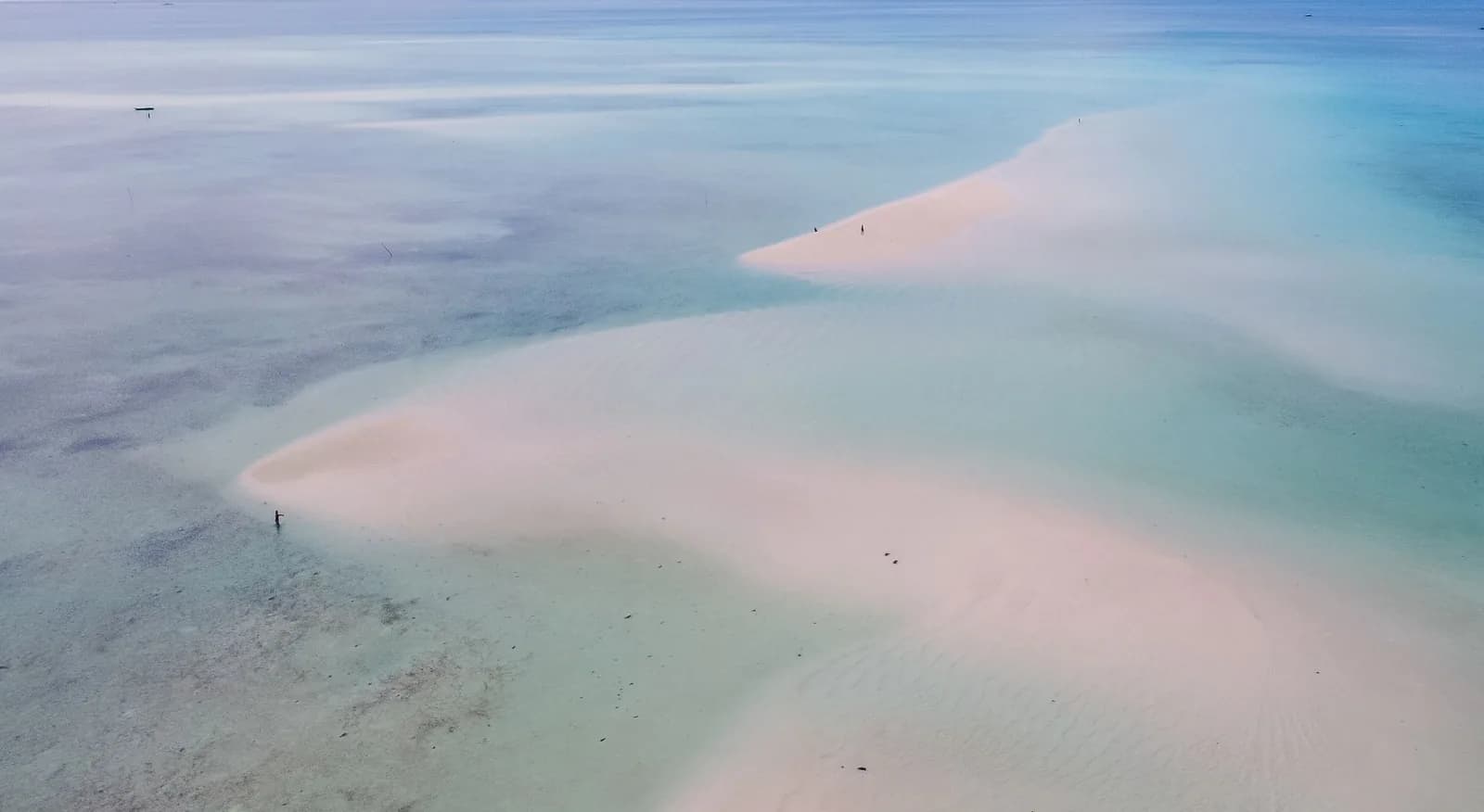
North or east coast in Zanzibar
This is the question the whole trip turns on, and it is not really about scenery. Both coasts have white sand and turquoise water. One of them has water you can swim in all afternoon, and it charges you for it.
Updated 10 September 2026
Zanzibar is small enough that people assume the coasts are interchangeable. They are not. Sixty kilometres separates a beach where the sea never leaves from one where it walks half a kilometre out twice a day, and almost every disappointed review of this island traces back to somebody booking the second while picturing the first.
North versus east coast, side by side
| North (Nungwi, Kendwa) | East (Paje, Jambiani, Bwejuu) | |
|---|---|---|
| Tidal range | 1 to 1.5 m | 3 to 4 m |
| Swimming | Any hour | Around high water only |
| Sand | White, narrower | White, very wide at low tide |
| Wind | Light | Strong June to September |
| Crowds | The busiest coast | Spread thin along 20 km |
| Room rates | Highest on the island | 30 to 50 per cent less |
| Nightlife | Bars, and the full moon party | A handful of beach bars |
| Village life | Mostly built over | Still visible, still working |
| Drive from airport | 1 h 15 to 1 h 30 | 50 min to 1 h |
Go north if
- It is a first trip and you want no variables
- You are travelling with children who swim on impulse
- You want restaurants and bars within walking distance
- A week of doing nothing next to the sea is the entire plan
Go east if
- You kitesurf, or you want to learn
- The budget matters, because the same money buys more here
- You want a coast with villages rather than a hotel strip
- Planning your swim around a tide table sounds fine
What a week costs on each coast
Two people, seven nights, flights excluded. The gap is real and it is almost entirely in the room rate, because the northern tip charges for water you can get into at any hour.
| Line | North | East |
|---|---|---|
| Seven nights, mid range double | $900 to $1,600 | $500 to $950 |
| Food and drink, two people | $420 to $700 | $250 to $450 |
| Airport transfers, return | $100 to $120 | $60 to $80 |
| Two days out | $150 to $260 | $150 to $260 |
| Rough total | $1,570 to $2,680 | $960 to $1,740 |
Call it thirty to forty per cent less on the east coast for the same standard of room. The full breakdown, including flights and the visa, is in the budget page.
The split stay almost nobody plans
On anything longer than a week, do both. They are ninety minutes apart, as the drive times from the airport show, which is one transfer of forty to sixty dollars, and it turns an argument into an itinerary.
- Nights 1 and 2, Stone Town. Twenty minutes from the airport, and the part of the island that is not a beach. See Stone Town.
- Nights 3 to 6, the east. Cheaper, emptier, and the coast people remember. Stop at Jozani on the way, since it is on that road.
- Nights 7 to 10, the north. End on the coast where you can swim at any hour, and do Mnemba from Matemwe on the way up.
- One transfer, not three. Order it so each move goes in one direction. Two coasts and a town in ten days costs about two hours of driving in total.
Under a week, pick one. The transfer eats an afternoon at each end and a short trip cannot afford it.
What a week costs on each coast
The same standard of room costs roughly a third less on the east coast. A guesthouse at Jambiani runs twenty to forty dollars where the equivalent at Nungwi is sixty to ninety.
Food follows the same curve, but for a different reason. The east coast has village restaurants at three to six dollars a plate. The north has more choice at higher prices, and the resorts are pricier still.
Transfers are the one thing that costs more in the north: ninety minutes and forty to sixty dollars, against an hour and slightly less to the east. The full budget page has the numbers.
What each coast does badly
The north is busy, and in July, August and at Christmas it is very busy. Sunbeds go by nine, the beach sellers work harder, and the prices reflect all of it.
The east is half a day without a sea. That is not a complaint about the coast, it is the coast, and people who arrive without knowing write the disappointed reviews.
Neither has much to do after dark. Kendwa has one party a month and Paje has a handful of bars that stay open. Anyone expecting nightlife is on the wrong island.
The split stay, which almost nobody plans
On anything longer than a week, doing both is the obvious move and hardly anybody does it. The two coasts are ninety minutes apart, which is one taxi and forty to sixty dollars.
Three or four nights on the east coast first, while you are still curious and want to walk the flats and see the seaweed farms. Then move north for the last few days, when what you want is to swim without thinking and eat somewhere with a menu.
Done in that order it also solves the budget: the cheaper coast takes the longer half of the stay. The tide page explains what you are choosing between.
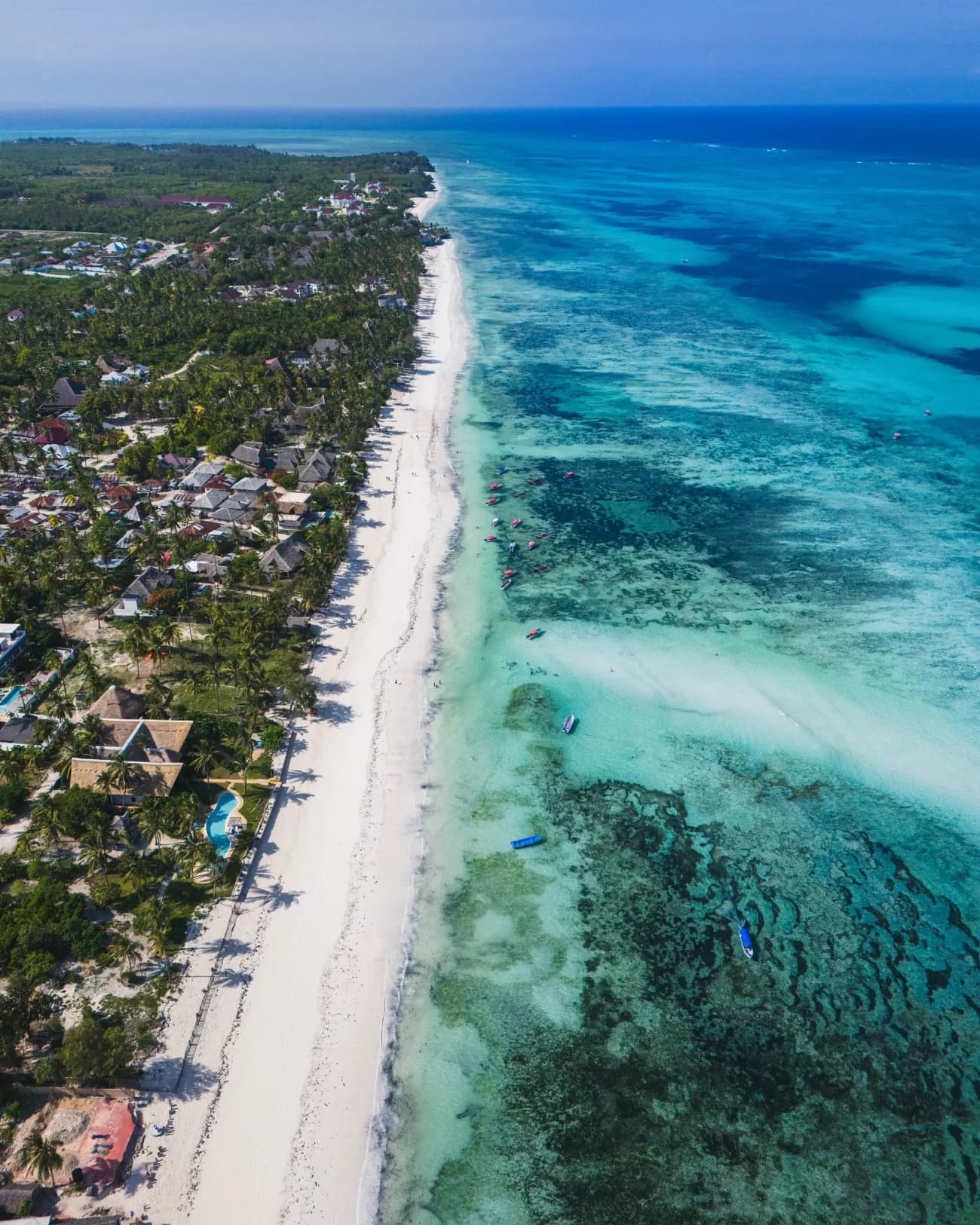
Questions people ask about the north and east coasts of Zanzibar
Is the north or the east coast of Zanzibar better?
The north if you want to swim whenever you feel like it and do not mind crowds or paying for the privilege. The east if you want space, lower prices, wind for kitesurfing and a coast that still has villages on it. Neither is objectively better and the tide is what separates them.
Where should I stay in Zanzibar for a first trip?
The north, usually. A first trip has enough unknowns without adding a tide table to them, and Nungwi and Kendwa remove that variable entirely. Most people who come back a second time move to the east.
Can I split my stay between both coasts?
Yes, and on anything over a week it is worth it. They are ninety minutes apart by road, which is one transfer of forty to sixty dollars. Three nights north and four east, or the reverse, gives you both without much dead time.