Zanzibar wildlife at a glance: where, when, and is it ethical
Nine animals people come to Zanzibar hoping to see. Each one links to the page with the prices, the timing and the operators, so this is the map rather than the detail.
| Animal | Where | When | Ethical? |
|---|---|---|---|
| Zanzibar red colobus | Jozani Forest | All year, best 8 to 9.30am | Yes, with the park guide and two metres of distance |
| Bottlenose and humpback dolphins | Kizimkazi, Menai Bay | All year, early morning | Only with a boat that does not chase |
| Sea turtles in a pool | Baraka and Mnarani, Nungwi | All year, 8am to 6pm | Mixed: watch, do not swim or feed |
| Wild green turtles | Mnemba Atoll | All year, no guarantee | Yes, at a distance |
| Aldabra giant tortoises | Prison Island | All year, mornings | Yes, guarded compound. Never sit on one |
| Whale sharks | Mafia Island | October to March, best Nov to Feb | Yes, under Mafia's distance rules |
| Humpback whales | Offshore, south and east coasts | July to September | Yes, from the boat |
| Starfish | Nakupenda, Kwale sandbank, Paje | Low tide | Yes, if they stay in the water |
| Zanzibar leopard | Nowhere you can visit | Not since the 1990s | Not seeable |
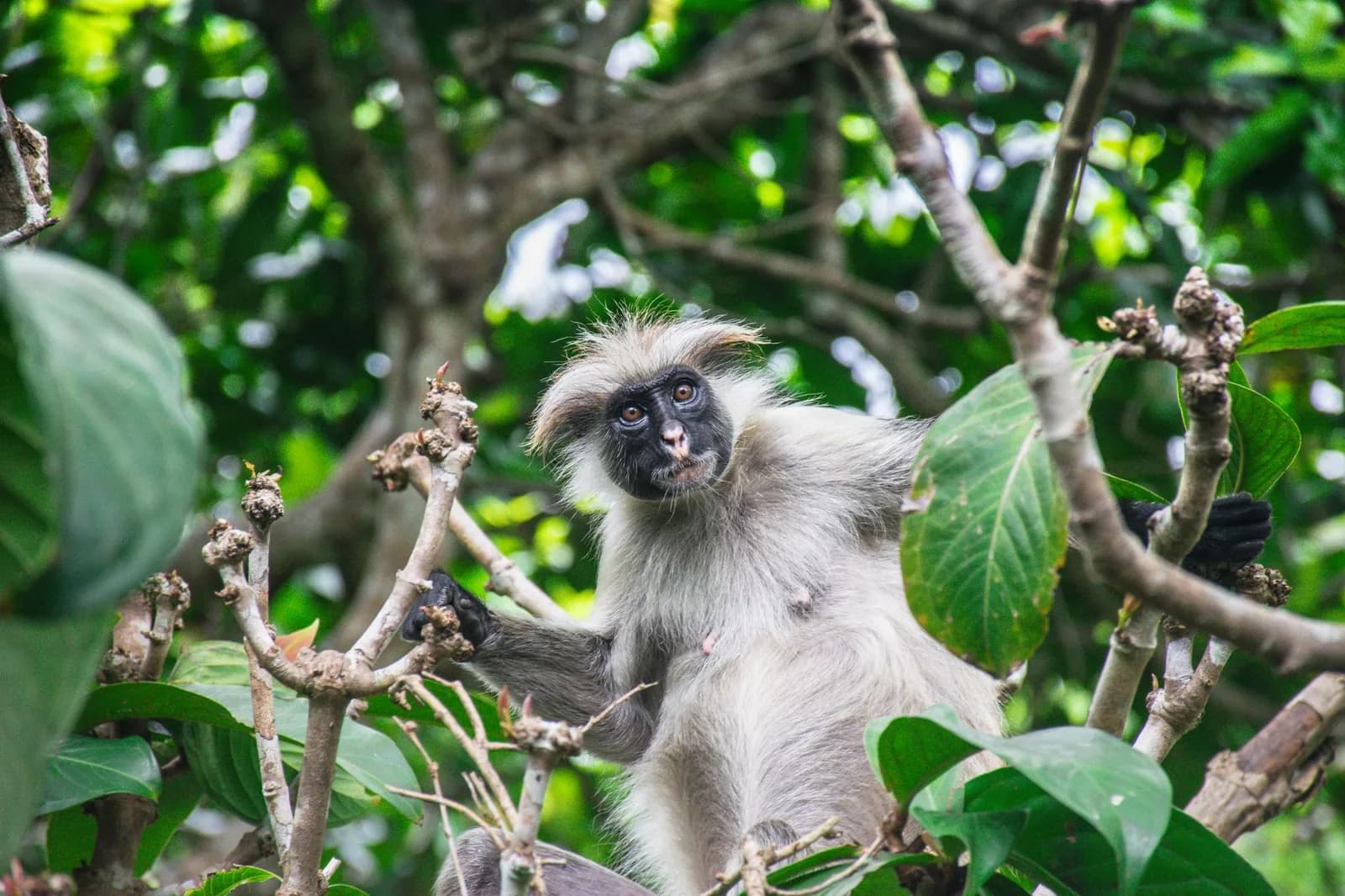
Zanzibar red colobus monkey at Jozani Forest
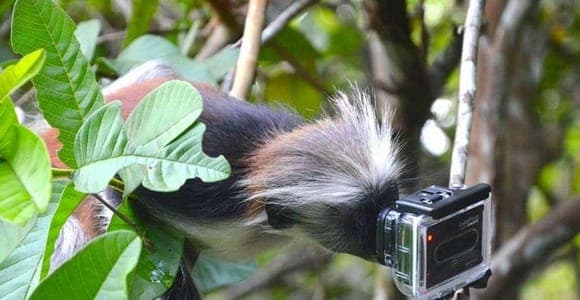
The red colobus is the one animal on this list you cannot see anywhere else. Piliocolobus kirkii is endemic to Unguja, the main island, and listed as endangered. The most recent full count put the population at around 5,800, close to half of them in and around Jozani-Chwaka Bay National Park, the rest in farmland and coral rag forest elsewhere on the island.
At Jozani the troops along the main trail are used to people, so you stand a couple of metres away while they eat leaves above your head. Go early, between eight and half past nine, when they feed low and the coach groups have not arrived. Entry, about ten dollars with the compulsory guide, hours and the mangrove boardwalk are all on the Jozani Forest guide.
Dolphins in Zanzibar: Kizimkazi and the ethics question
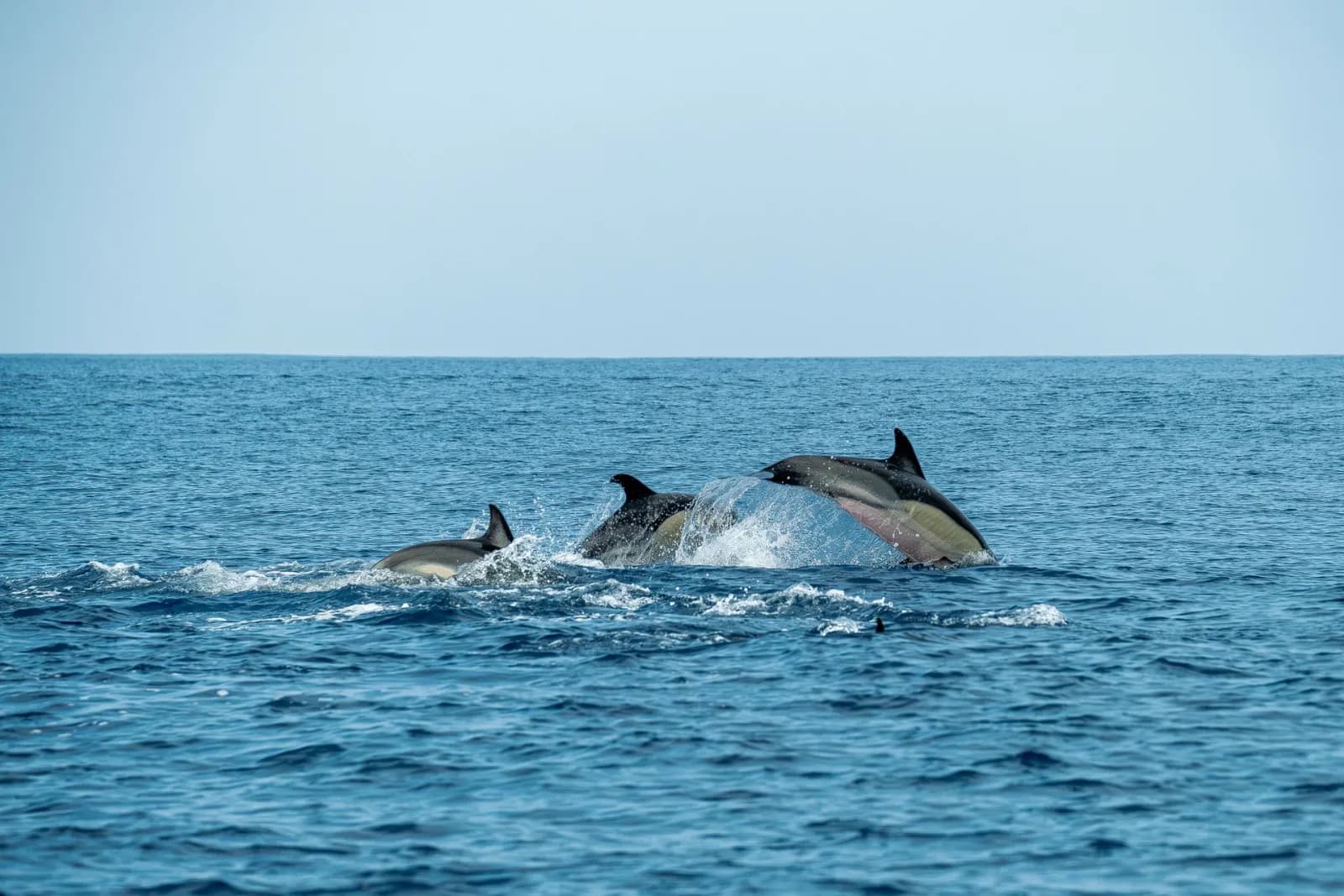
Indo-Pacific bottlenose and humpback dolphins both live year round off Kizimkazi, the fishing village on the south coast. You will almost certainly see them. The question is how.
The standard morning trip is a race: dozens of boats converge on each pod and drop swimmers in front of it. Researchers have watched this since the 1990s, and the resident humpback dolphins have declined. A good trip keeps its distance, cuts the engine and lets the animals come closer if they want to. It costs a little more and is worth it. What separates the two, and what to ask before you pay, is on the Kizimkazi dolphin page.
Between July and September, humpback whales migrate past the same coast, and the morning boats sometimes see them blow far offshore.
Sea turtles in Zanzibar: Nungwi pools and wild reefs
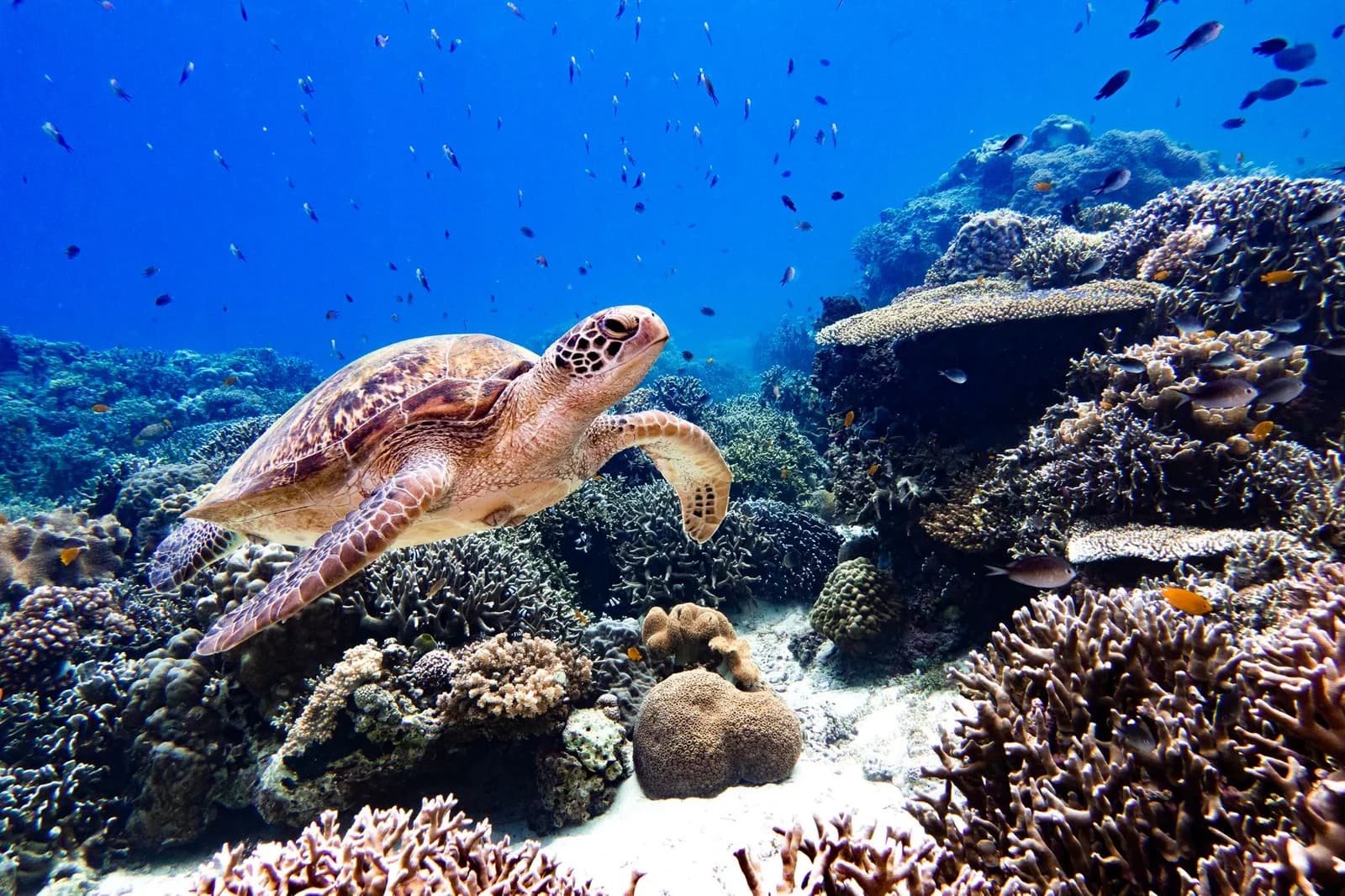
Two species feed around the island, the green turtle and the hawksbill, and both are endangered. You can see them in two very different ways: in a tidal pool at the northern tip, or on the reef.
Baraka Natural Aquarium, Nungwi
Baraka is a natural tidal lagoon in the coral rock at Nungwi, fed by the sea through the porous stone. It charges ten dollars per experience (swim, feed or the small zoo), opens every day from 8am to 6pm, and says it has rescued more than 150 turtles, most of them caught in fishing nets. It describes itself as rescue, rehabilitate, release. How often turtles go back to the sea, and how many, it does not publish.
Mnarani Marine Turtles Conservation Pond
Mnarani, near the lighthouse on the other side of Nungwi, is the older and more community-run of the two. Fishermen and villagers bring in eggs and turtles caught as bycatch, the hatchlings grow in small tanks, and the larger animals live in a pool connected to the sea. Entry is about ten dollars. Once a year, in late February and often on the 20th, the pond releases its turtles into the ocean. That day has its own ticket, quoted at around thirty five dollars for non-residents, and it is the best reason to go.
Swimming with turtles in Zanzibar: why the pool is a problem
The pools sell "swimming with turtles" as the highlight, and it is the part to think twice about. A dozen or more turtles share a lagoon the size of a hotel pool with a steady line of swimmers, sunscreen and hands. Feeding teaches them to approach people, which is the last habit a turtle going back to a sea full of nets needs.
None of that makes the places pointless. The rescue work is real, the entry fee pays for it, and watching from the edge costs the animals nothing. Just separate the two: the money helps, the swim does not.
Before you pay at either pool
Where to see wild turtles in Zanzibar
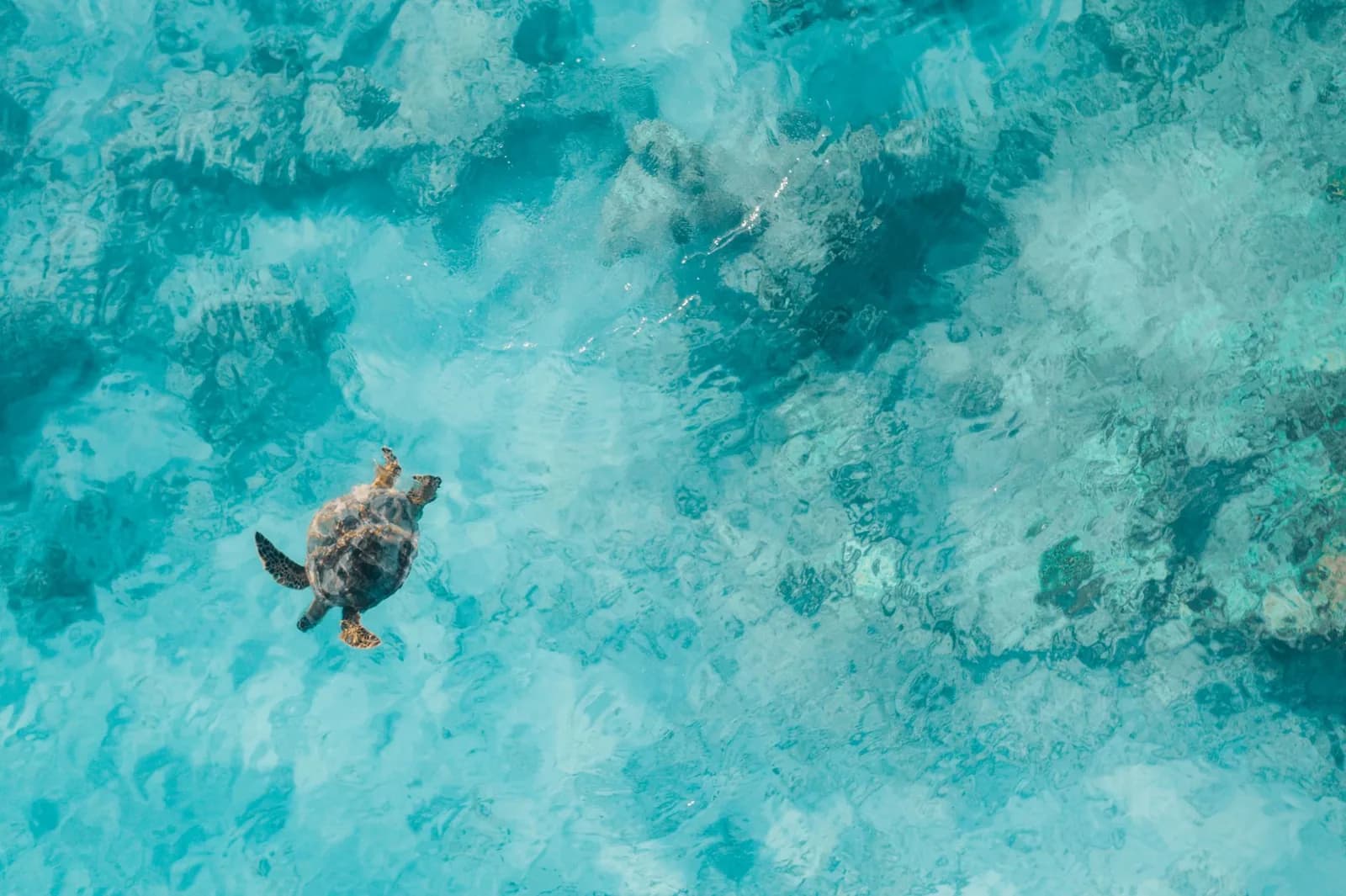
The better turtle encounter is at sea. Green turtles graze the seagrass on the shallow side of Mnemba Atoll, and most snorkelling trips there see at least one (how the Mnemba trip works). Turtles also nest on the island's beaches, mostly between February and September depending on which source you read, but nests are protected and rarely signposted, so do not plan a trip around seeing one hatch.
Giant tortoises in Zanzibar: Prison Island
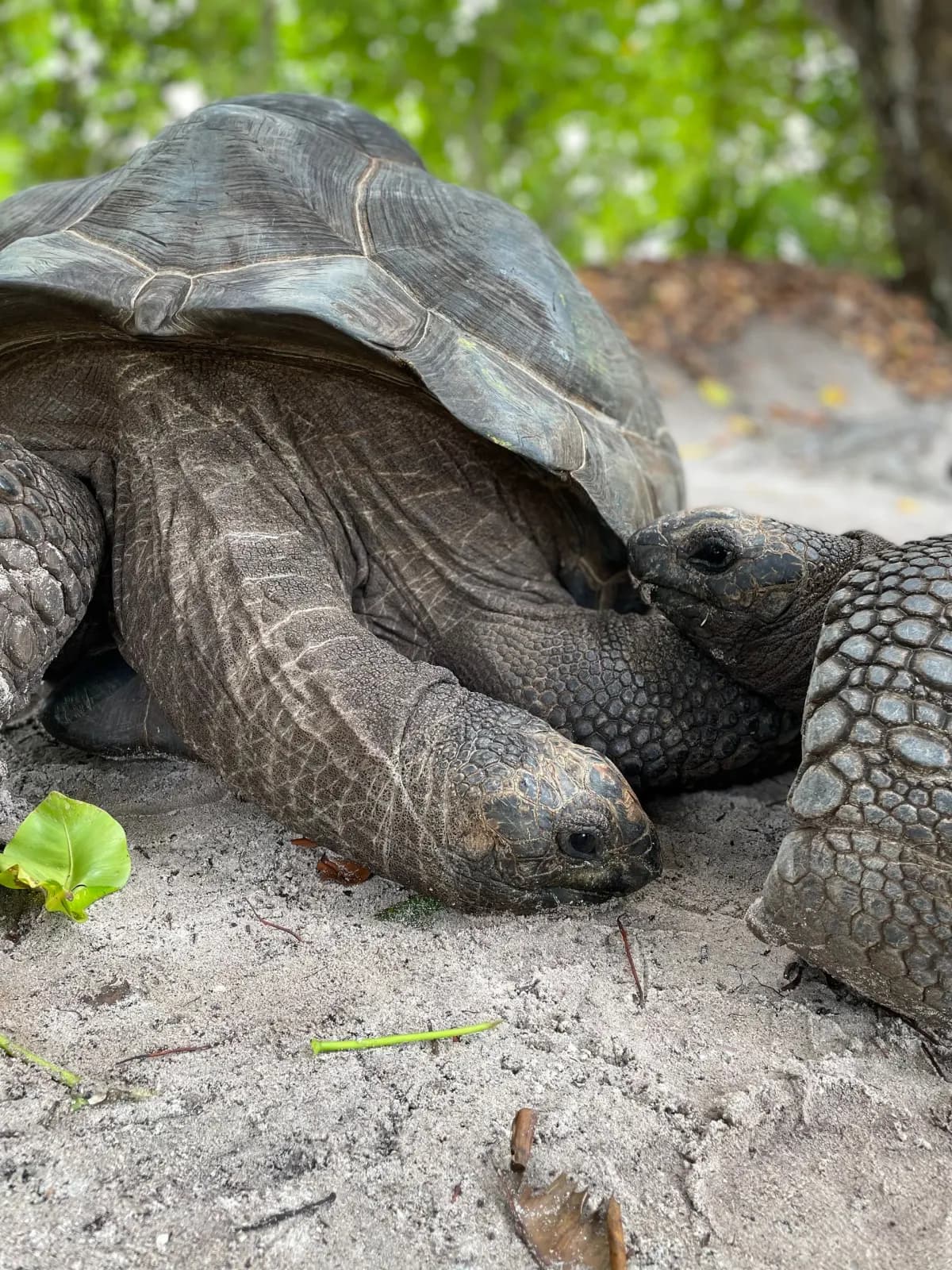
The giant tortoises are not native. They are Aldabra tortoises, descended from four sent from the Seychelles in 1919, and they live in a guarded compound on Changuu, twenty minutes by boat from Stone Town. Poaching nearly emptied it in the 1990s. The population has recovered, and walking among them is the easiest animal encounter on the island, good with children and free of any ethical catch as long as nobody sits on a shell.
Entry is around four dollars, plus a ten dollar marine conservation fee since September 2025. Book it with the Nakupenda sandbank or the morning feels thin. The rest is on the Prison Island page.
Zanzibar wildlife trips to book
One trip per animal: Jozani for the colobus, a Menai Bay boat that looks for dolphins rather than chasing them, Prison Island for the tortoises, and the Mafia day out for whale sharks. Prices, ratings and review counts as the partner lists them, read on the date shown below the cards.
Jozani Forest: guided visit
Zanzibar red colobus and the mangrove boardwalk, three hours, entry included.
From$25per person
Check availability
Dolphin watching at Pungume Island, with lunch
Menai Bay, where the boats look for dolphins rather than drop swimmers on them.
Prison Island and Nakupenda sandbank with barbecue
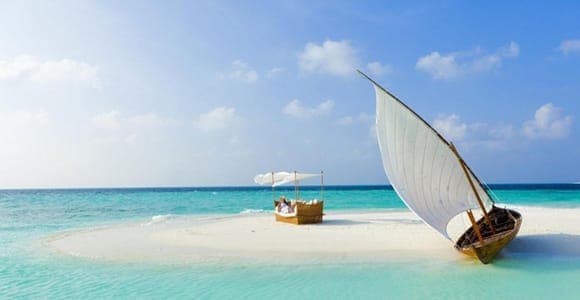
Century old giant tortoises, then lunch with your feet in the water.
From$36per person
Check availability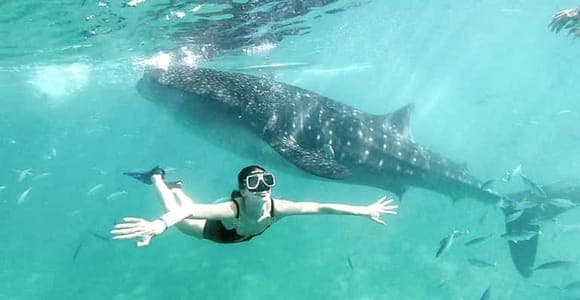
Mafia whale sharks by plane, with lunch
Flights, the snorkelling boat, lunch in Kilindoni and the flying foxes.
Prices, ratings and review counts read from GetYourGuide on 27 September 2026, and indicative. These are partner links: the price is the same for you.
Whale sharks near Zanzibar: go to Mafia Island
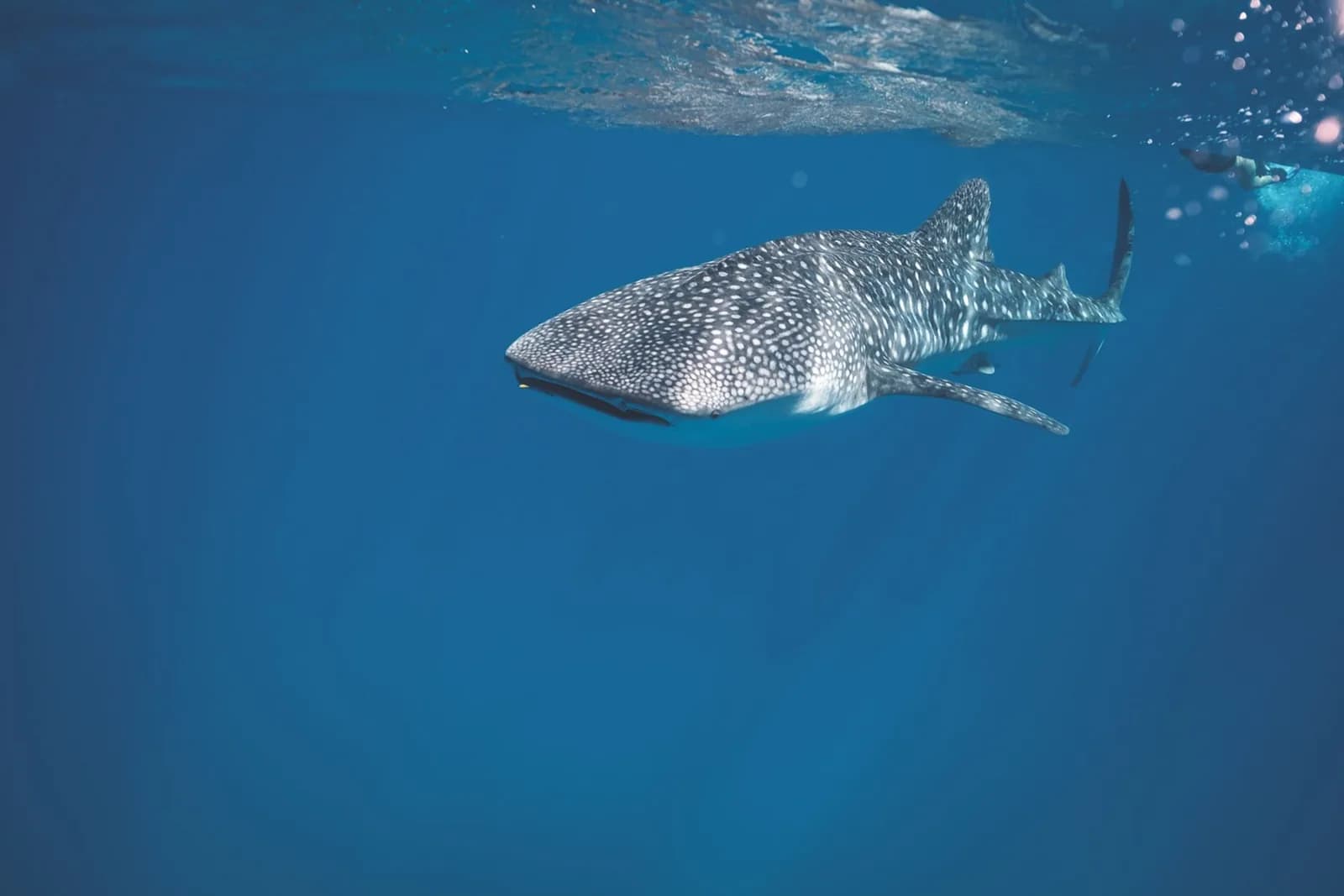
Whale sharks pass Zanzibar, but no trip from the island finds them reliably. Mafia does. From October to March, at their best from November to February, young males of four to nine metres feed at the surface in the bay off Kilindoni, and boats find them within half an hour. It is a 45 minute flight south, and the rules are strict: three metres from the head and body, four from the tail, no touching and no flash.
The flights, the marine park fee and whether a day trip is enough are on the Mafia Island whale shark page.
Starfish in Zanzibar: sandbanks at low tide
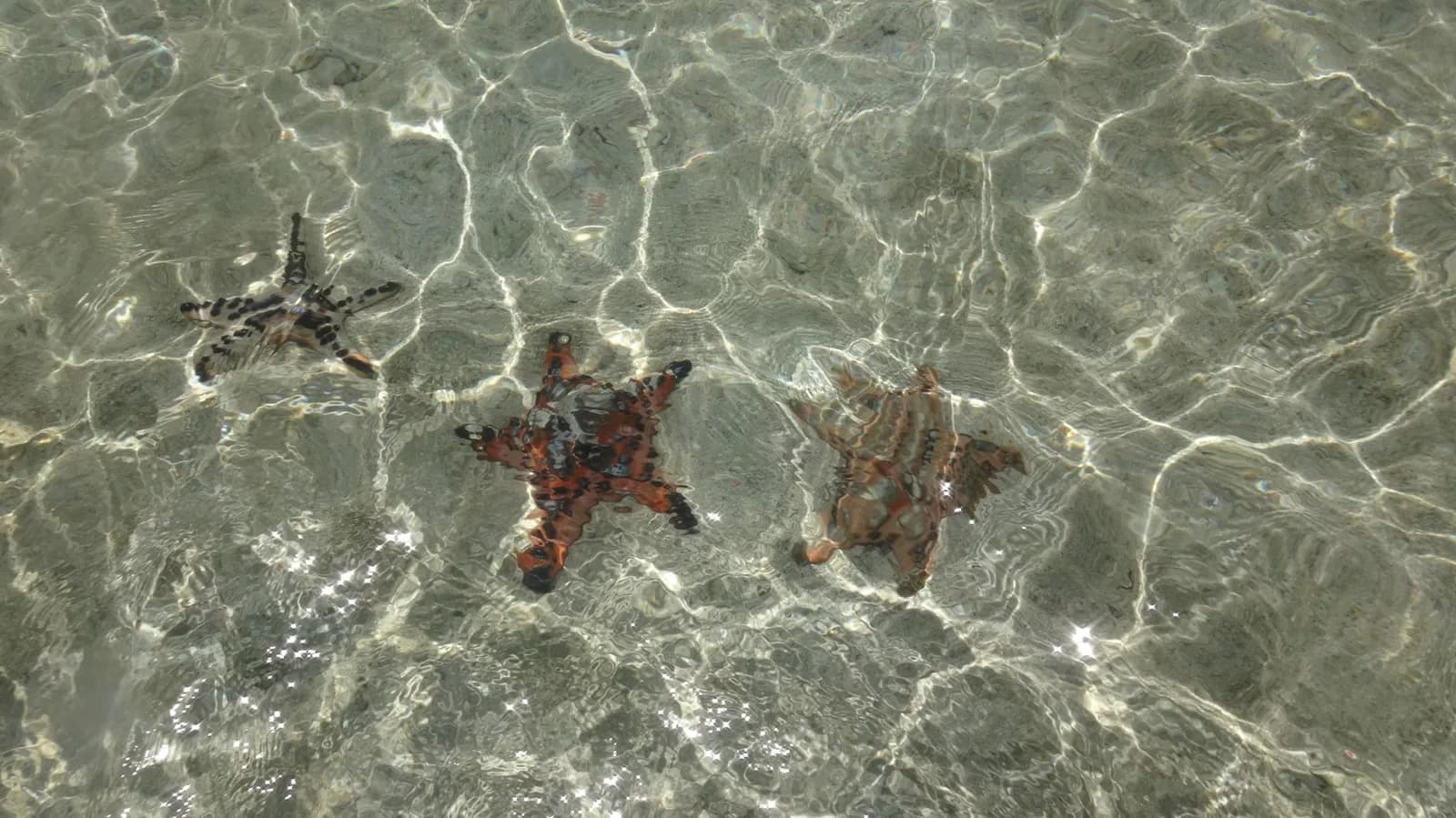
Red-knobbed starfish cover the shallows on the sandbanks at low tide:Nakupenda off Stone Town, Kwale on the Safari Blue day, and the lagoon at Paje when the water drains out. Since they only show at low water, the tide table decides when you go.
Guides on the sandbank trips will often lift one out for a photo. Say no. A starfish breathes through its skin and tube feet, and every minute in the air harms it. Photograph them where they are, through a few centimetres of clear water, which looks better anyway.
The Zanzibar leopard: extinct, or almost
The Zanzibar leopard is a real animal, a small island leopard described in 1932 as Panthera pardus adersi and since folded into the African leopard by most taxonomists. Villagers long believed witches kept leopards to harm their neighbours, and decades of eradication campaigns followed. There has been no confirmed sighting since the 1990s, and the government conservation programme was abandoned in 1997.
In 2018 a camera trap set for an Animal Planet series, Extinct or Alive, filmed what its makers said was a Zanzibar leopard. Without DNA or a second record, most scientists treat it as unproven. If a guide at Jozani offers to show you one, what you are being sold is a story.
Rare animals in Zanzibar and Pemba
- Aders' duiker, a tiny forest antelope and one of the rarest in Africa. Counts fell from about 5,000 in 1983 to around 640 in 1999. It lives in the coral rag forest around Jozani and Kiwengwa and is almost never seen by day.
- The Zanzibar servaline genet, a small spotted carnivore nobody photographed alive until a camera trap near Jozani caught one in 2003.
- Bushbabies and tree hyraxes, both nocturnal. You are more likely to hear a hyrax scream at night than to see one.
- The Pemba flying fox, a fruit bat with a wingspan of more than a metre and a half, found only on the neighbouring island. This one you can see: the village colony at Kidike, on Pemba, holds several thousand.
For lions, elephants and giraffes, you need the mainland. Combining the two in one trip is covered in safari and beach.
Questions people ask about Zanzibar animals
What animals live in Zanzibar?
On land, the Zanzibar red colobus, which lives nowhere else, along with Sykes' monkeys, Aders' duiker, bushbabies, tree hyraxes and dozens of bat species. In the sea, bottlenose and humpback dolphins, green and hawksbill turtles, reef fish, octopus and rays, with humpback whales passing offshore from July to September. Add the Aldabra giant tortoises on Prison Island, which were brought from the Seychelles.
Are there lions in Zanzibar?
No. Zanzibar has no lions, elephants, giraffes or any of the big game the mainland is known for. For those you fly to the Selous (Nyerere) or the northern parks, either as a long day trip from the island or as a few nights before the beach.
Can you swim with turtles in Zanzibar?
Yes, in two places: the pools at Baraka Natural Aquarium and Mnarani in Nungwi, where turtles are kept in tidal lagoons, and at sea around Mnemba Atoll, where green turtles graze the seagrass. The second is the better encounter for you and the only one where the turtle chooses to be there. In the pools, watching is fine; swimming in with them and hand feeding is not something a conservation project needs from you.
How much is Baraka Natural Aquarium in Nungwi?
Ten dollars per experience on the aquarium's own site, open every day from 8am to 6pm. Mnarani, the community turtle pond on the other side of Nungwi, charges around ten dollars too. The one day a year Mnarani releases its turtles, in late February, has its own ticket at about thirty five dollars for non-residents.
Is the Zanzibar leopard extinct?
Very probably. There has been no confirmed sighting since the 1990s, the government conservation programme was dropped in 1997, and only a handful of skins sit in museums. Camera trap footage filmed in 2018 for a television series reopened the question, but without DNA or a second record most scientists treat it as unproven.
Are there dangerous animals in Zanzibar?
Not in the sense people worry about. The animals most likely to hurt you are sea urchins on the reef flats at low tide, which is the reason to wear reef shoes, and the occasional jellyfish. Snakes live on the island but visitors almost never see one. Keep your distance from the monkeys at Jozani, more for their sake than yours.
Where is the best place to see red colobus monkeys in Zanzibar?
Jozani Forest, in the middle of the island, where habituated troops feed in the trees along the main trail and the guide is included in the ten dollar entry. Colobus also live in the farmland around Kiwengwa, but Jozani is the only place where seeing them is close to certain.