
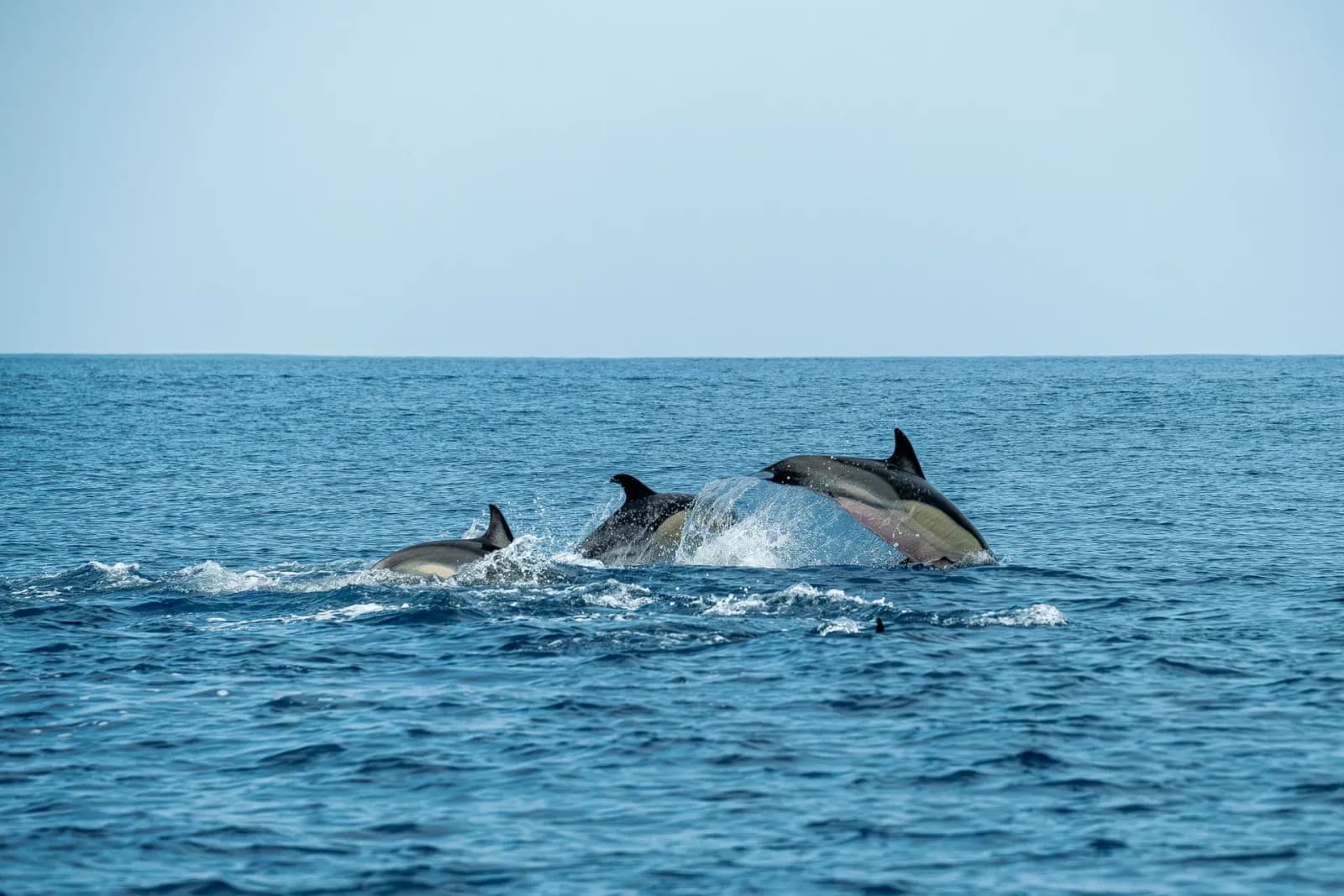
Price
$25 to $50 shared, $80 to $150 private
Where
Kizimkazi, on the south coast
Getting there
40 to 45 min from the airport
Time needed
Half a day, and it has to be early
Best departure
First light, before the boats multiply
The problem
Boats that chase, swimmers dropped on pods
Book a dolphin trip, if you book one
Read the listing before the price. The wording tells you almost everything: a trip that promises you will swim with dolphins is promising to chase them, because that is the only way to keep the promise. One that says watching, or observation, or no guarantee, is describing a boat that behaves.
Dolphins without the chase, in Menai Bay
Neither of these sells a swim with dolphins. They are likely on both days and promised on neither, which is how you know the boat behaves. Prices, ratings and review counts as the partner lists them, read on the date shown below the cards.
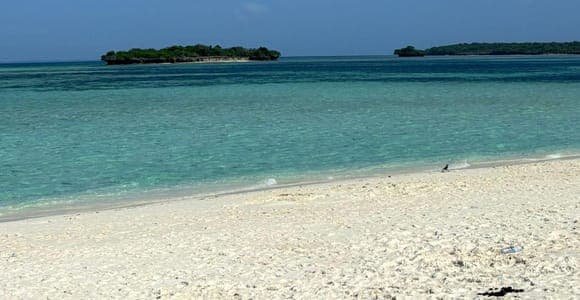
Dolphin watching at Pungume Island, with lunch
Menai Bay, where the boats look for dolphins rather than drop swimmers on them.
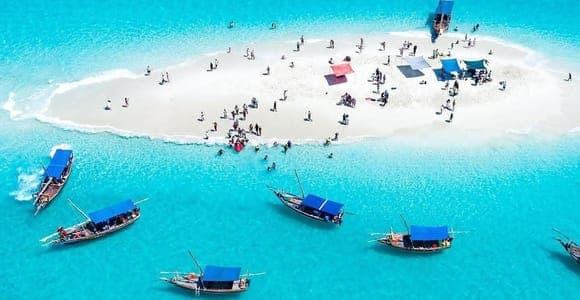
Safari Blue: lagoon, snorkelling and a barbecue lunch
The classic dhow day out in Menai Bay, full day.
Prices, ratings and review counts read from GetYourGuide on 27 September 2026, and indicative. These are partner links: the price is the same for you.
What a dolphin tour costs at Kizimkazi
| Option | Price | Notes |
|---|---|---|
| Shared boat, from the village | $25 to $40 | Mask and fins included. You share the skipper's judgement with everyone else on board, which is the problem. |
| Shared, booked through a hotel | $40 to $60 | Same boat, plus the transfer from the coast and a margin. |
| Private boat | $80 to $150 | The version to book. You set the hour and you can tell the skipper to hold off, which on a shared boat you cannot. |
| Combined with Jozani or the south | $60 to $90 | Sensible geography, since the forest is on the same road back. Dolphins first, at dawn. |
| Taxi from Paje or Jambiani | $40 to $60 return | Forty minutes each way, leaving at half past five. Nobody mentions that part when they sell it. |
What goes wrong on a dolphin tour
Kizimkazi has had dolphin tourism since the early 1990s and it has been studied for almost as long. The findings have been consistent and unflattering: sustained pursuit interrupts resting and socialising behaviour, the animals spend more of the day moving and less of it feeding, and the resident humpback dolphin population has declined.
What that looks like from the boat is straightforward. A pod surfaces, four boats converge at speed, the engines are left running, and people are told to jump in on top of them. The dolphins dive. The boats find them again a hundred metres on and it repeats.
Nobody on the water is a villain here. Fishing gave way to tourism, the boats are competing for the same customers, and a skipper who holds back watches a family go home saying they saw nothing. The incentive is the problem, and the only person who can change it is the one paying.
Do not
What a responsible operator does
- Leaves at first light, before the fleet, and does not race anybody to a sighting.
- Approaches from the side and behind, slowly and parallel, never head on and never through the middle of a pod.
- Cuts the engine and waits. Dolphins that want to come to a boat will. That is the only encounter worth having.
- Keeps a limit on time. Twenty or thirty minutes with one group, then leaves them alone rather than working them until the trip ends.
- Says no. To swimming when the pod has calves, to a second approach after the animals have dived twice, and to promising anything at all before departure.
- Tells you what you are looking at. Indo-Pacific bottlenose and humpback dolphins are both resident here and they are easy to tell apart once somebody has pointed out the difference.
Better ways to see dolphins in Zanzibar
If what you actually want is to see dolphins rather than to swim with them, there are two straightforwardly better options and both come attached to a day you would enjoy anyway.
- Menai Bay on a Safari Blue day. Bottlenose are resident in the conservation area and the boat looks for them on the way out. Nobody is being sold a swim, so nobody is chasing. See Safari Blue.
- The Mnemba channel. Dolphins on the crossing often enough to expect them, on a morning whose real purpose is the reef.
- Humpback whales, July to September. They pass offshore on migration and are a far bigger sight than any dolphin. Trips run out of the north and the south west.
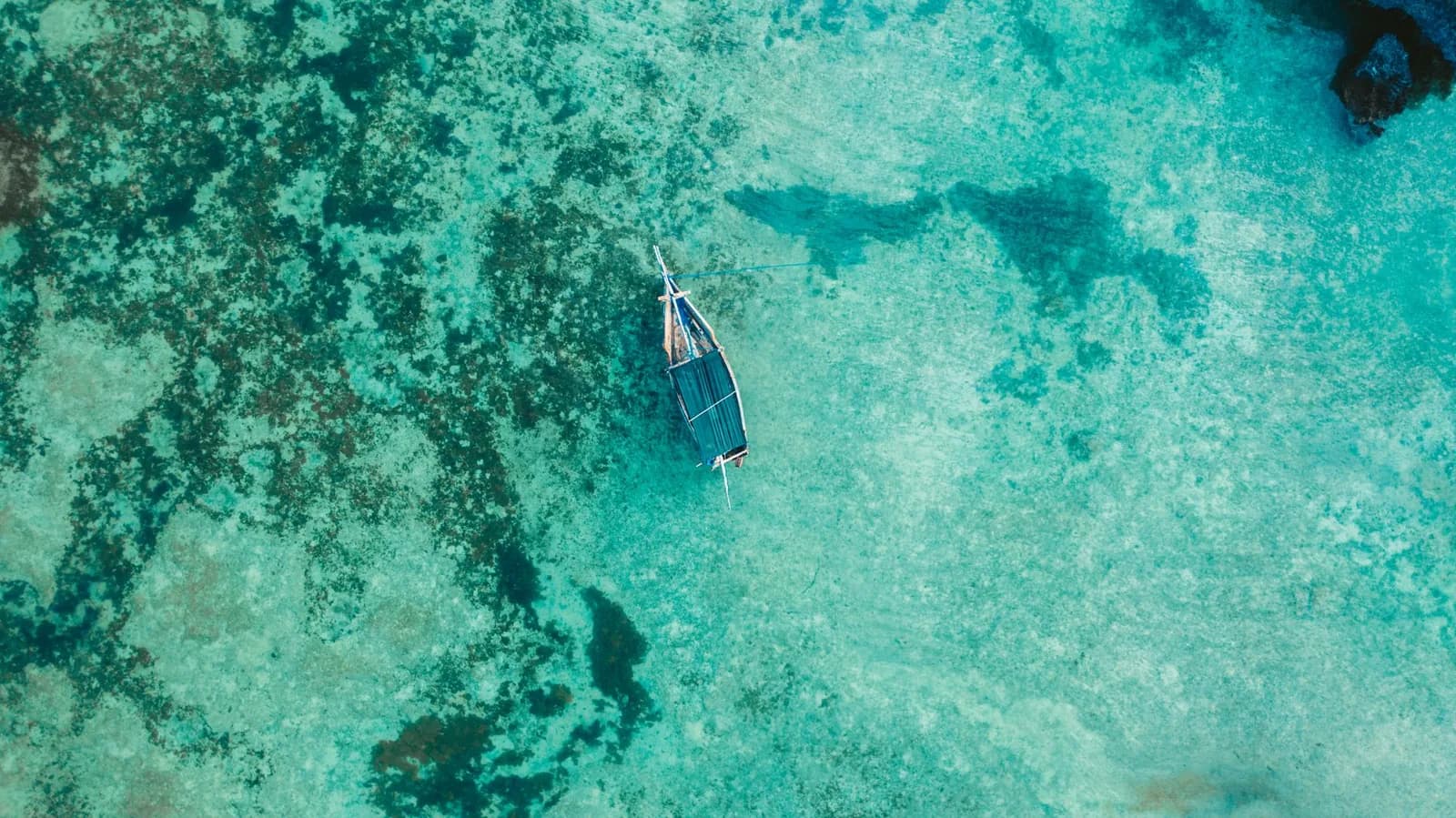
Doing the morning properly
Kizimkazi is on the south coast, forty to forty five minutes from the airport and about the same from Paje. A boat at six means leaving your hotel around half past five, in the dark, which is the part that talks most people out of it.
Pair it with Jozani forest, which is on the road back and also best in the early morning, and you have a genuinely good half day rather than a long drive for forty minutes on the water. There is also a twelfth century mosque at Kizimkazi, one of the oldest surviving Islamic buildings in East Africa, that almost nobody on these boats knows is there.
If the low tide falls late in the morning, the other good stop is Mtende Beach, a rock cove just past Makunduchi whose pools and caves are at their best when the sea is out.
Questions people ask about swimming with dolphins in Zanzibar
Can you swim with wild dolphins in Zanzibar?
You can get in the water near them at Kizimkazi, and that is what the trips sell. Whether you should is a different question. The pods are wild, resident and habituated to being followed, and the standard method of putting a swimmer near one is to drive at it. A boat that holds position and lets you watch is doing the thing properly.
How much is swimming with dolphins in Zanzibar?
Twenty five to fifty dollars a head on a shared boat from Kizimkazi, usually including mask and fins. A private boat runs eighty to a hundred and fifty and is worth it, because you control the departure time and the skipper's behaviour rather than sharing both with eight strangers.
Is the Kizimkazi dolphin tour ethical?
As commonly run, no. Researchers have been documenting the effects here since the 1990s and the pattern is consistent: pursuit interrupts resting and socialising, and the humpback dolphin population has declined. A trip that keeps distance, cuts the engine and watches from the deck is a legitimate way to see them. A trip that races other boats to a pod is not.
What time do dolphin tours leave Kizimkazi?
Between six and seven in the morning, and this matters more than any other detail. Early means fewer boats, calmer water and animals that have not yet spent three hours being followed. Anything leaving at nine is joining a queue.
Is it safe to swim in the ocean in Zanzibar?
Yes. There is no meaningful shark risk at the beaches or on a dolphin trip, and the sea off Kizimkazi is open but not rough in the morning. The real hazards on this coast are sea urchins, stonefish and sun. Wear reef shoes and cover up.
Where else can you see dolphins in Zanzibar?
Menai Bay, on the south west, where they are usually a bonus on a Safari Blue day rather than the object of it, and the channel off Mnemba, where boats pass them on the crossing. Both are better experiences than Kizimkazi precisely because nobody is being sold a swim.