
Guesthouse
$20 to $40 a night
Mid range
$60 to $100
Best coasts
Jambiani, Bwejuu, Paje
Eating out
$3 to $6 a plate locally
Cheapest months
April, May, and November
Watch out for
The costs that are not the room
Book a cheap bed
Rooms at Zanzibar
Hostels and cheap guesthouses on the east coast, where the same money buys roughly twice what it does on the northern tip.
See places to stay at ZanzibarPartner link. The price is the same for you.
A cheap week in four lines
- Jambiani and Paje, not the north. The same island at roughly half the room rate, and the tradeoff is the tide rather than the quality.
- Eat where people live. Three to six dollars a plate at a village canteen against twenty at a beach restaurant, and often better.
- Dala dala rather than taxis. Under a dollar a ride. Slow and hot, and the single biggest saving available.
- Budget $700 to $900 a head for a week. On the island, flights excluded, including the compulsory visa and insurance.
What a budget week actually costs
Per person, seven nights on the east coast, flights excluded. The middle column is what most careful travellers actually spend.
| Line | Tight | Comfortable |
|---|---|---|
| Bed, seven nights | $105 to $175 | $210 to $420 |
| Food and drink | $70 to $105 | $140 to $210 |
| Getting around | $15 to $30 | $60 to $120 |
| Two things to do | $40 to $70 | $90 to $150 |
| Visa | $50, or $100 on a US passport | Same |
| Compulsory ZIC insurance | $44 | $44 |
| Rough total | $324 to $474 | $594 to $1,044 |
The two fixed costs at the bottom are the ones people forget, and together they are $94 a head before anything else. See the visa page and the full budget.
Where the cheap coast is
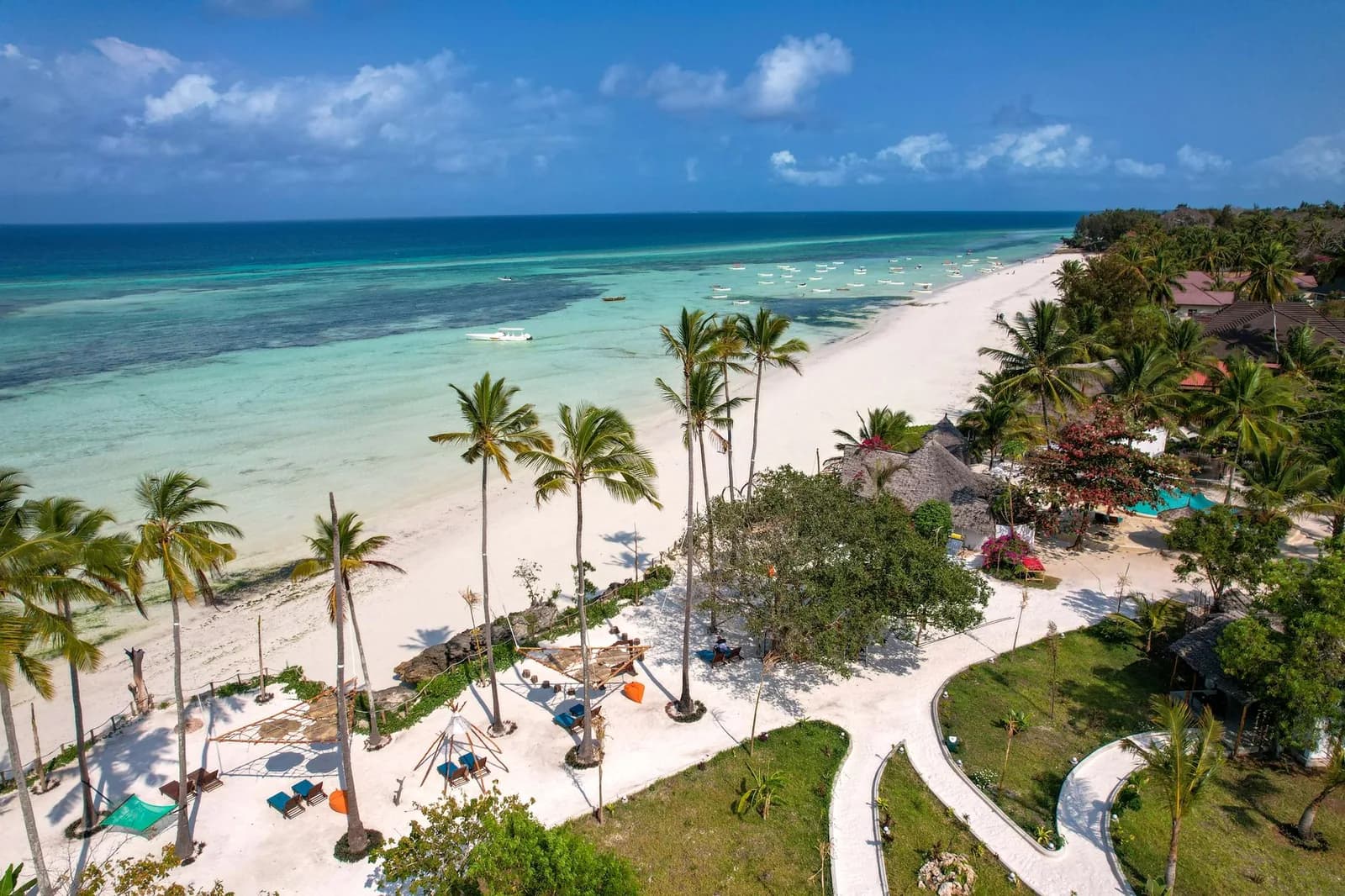
Jambiani and Bwejuu on the south east, and Paje if you can find something back from the beach. Guesthouses here run twenty to forty dollars and the beach in front of them is the same white sand people pay triple for in the north.
What you accept in exchange is the tide, which takes the sea away for half of every day, and the absence of anything resembling a resort. Plenty of people consider that a better holiday rather than a worse one.
Eating for a fifth of the price
A plate of rice, beans and grilled fish at a local place costs three to five dollars. The same meal in a beach resort is twenty five before drinks.
This is the single largest saving available on the island and it requires nothing except walking out of the hotel gate. Jambiani and Paje both have village restaurants that expect visitors.
The costs nobody budgets for
Fifty dollars for the visa, or a hundred on a US passport. Forty four for the compulsory island insurance. A dollar per person per night in infrastructure tax, collected in cash at checkout.
Four to eight dollars per cash withdrawal, on top of your own bank's fee, with each withdrawal capped. And forty to fifty dollars each way for the airport transfer, which is per vehicle rather than per person and is the same whether you are backpacking or not.
Together that is a couple of hundred dollars that does not appear in any nightly rate.
Getting around cheaply
The airport transfer is the one cost you cannot avoid, at forty to fifty dollars for the vehicle. Sharing it with anyone on your flight going the same way halves it, and the drivers are happy to arrange this.
After that, dala dala. They run the length of the island for a dollar or less, they are slow, crowded and entirely usable if you are not carrying a suitcase.
Renting a scooter at ten to eighteen dollars a day makes sense for stays over a week, provided you have sorted the local permit and your insurance covers two wheels, which most policies do not.
Doing things without paying resort prices
The seaweed walks at Jambiani cost a few dollars and go straight to the women who run them. Jozani forest is ten dollars. A spice tour is twenty.
Boat trips are the expensive category, and the saving is in booking through your guesthouse rather than through a hotel or a platform. The same boat, twenty per cent less.
The beach itself is free, and on the east coast it is the same beach the resorts sixty kilometres north are charging three hundred dollars a night to look at.
Where the false economies are
Boat trips. A cheap Safari Blue is cheap because the boat is overloaded and the lunch is thinner, and this is a day you are buying.
SIM cards from kiosks that skip the registration, which stop working within days.
The very cheapest guesthouses in high season, which is when they fill regardless and stop trying. Off season the same money buys considerably better.
A week on sixty dollars a day
Per person, on the east coast, and it is genuinely doable rather than a theoretical exercise. This is what the days look like.
| Line | A day | Notes |
|---|---|---|
| A bed | $15 to $25 | Guesthouse double shared, or a hostel bed at Paje or Jambiani |
| Food | $10 to $15 | Village canteens for two meals, a beach restaurant for one |
| Water and drinks | $3 to $5 | Refill where the hotel filters, rather than buying bottles |
| Getting about | $1 to $5 | Dala dala. A taxi once in the week rather than daily |
| One thing to do | $10 to $15 | Averaged. Jozani, the spice tour and a sunset dhow across a week |
| Total | $39 to $65 a day | Plus $94 fixed for the visa and the compulsory insurance |
That comes to roughly $370 to $550 for seven days on the island, flights excluded. The same week on the northern tip is close to double, and the difference is almost entirely the room.
How to eat well for very little
Food is where the gap between the visitor price and the real price is widest, and it is easy to close.
- Eat where there is no menu in English. Pilau, biryani, octopus curry and chapati, at three to six dollars a plate. Often better than the beach restaurant version at four times the price.
- Forodhani night market in Stone Town. Five dollars fills you, and it is the best evening on the island regardless of budget.
- Buy fruit at the village market. Not from the hotel. Mangoes, jackfruit and passion fruit for a fraction of what a resort breakfast charges.
- Skip the resort breakfast if it is not included. Fifteen dollars for what a local place does for three.
- Agree the price before it is cooked. At a stall or a beach grill. Not a scam so much as a habit, and asking costs nothing.
What is free, and genuinely good
More than the tour desks suggest, and several of these beat the paid alternatives.
- Every beach on the island. None are private in law, including the sand in front of the largest resorts.
- Walking Stone Town. The doors, the lanes, Jaws Corner, the seafront wall. Most of what the town is costs nothing.
- Darajani market before ten. The most alive place in Zanzibar, and nobody charges to walk through it.
- The tide going out. On the east coast the whole lagoon becomes walkable. See what the tide does.
- Sunset anywhere on the west coast. Nungwi and Kendwa charge for the boat, never for the view from the sand.
Questions people ask about Zanzibar on a budget
Is Zanzibar expensive?
It is two economies side by side. Accommodation is priced for international visitors and is the main cost. Food, transport and local activities are cheap the moment you step outside a resort. A budget traveller can do a week here for a few hundred dollars on the island.
Where is the cheapest place to stay in Zanzibar?
Jambiani and Bwejuu on the south east coast, where guesthouses run twenty to forty dollars a night. Paje is slightly more, and the north is two to three times higher for a comparable room.
What is the cheapest month to visit Zanzibar?
April and May, because it is the long rains and demand collapses. November is the more sensible budget answer: prices are low, the rains are short afternoon showers, and the island is quiet.