
Budget
$40 to $120, and $300 plus at the top
Nights
Two is right, three if you like cities
When
At the start of a trip, before the beach
Getting there
15 to 20 min from the airport
The catch
No swimming, and it is hot
The gain
The only part of the island with a history
Book a merchant house
Rooms at Stone Town
Restored merchant houses with courtyards and rooftops, from about forty dollars a night. Ask whether the room faces the lane or the courtyard before you book.
See places to stay at Stone TownPartner link. The price is the same for you.
Two nights in Stone Town, in four lines
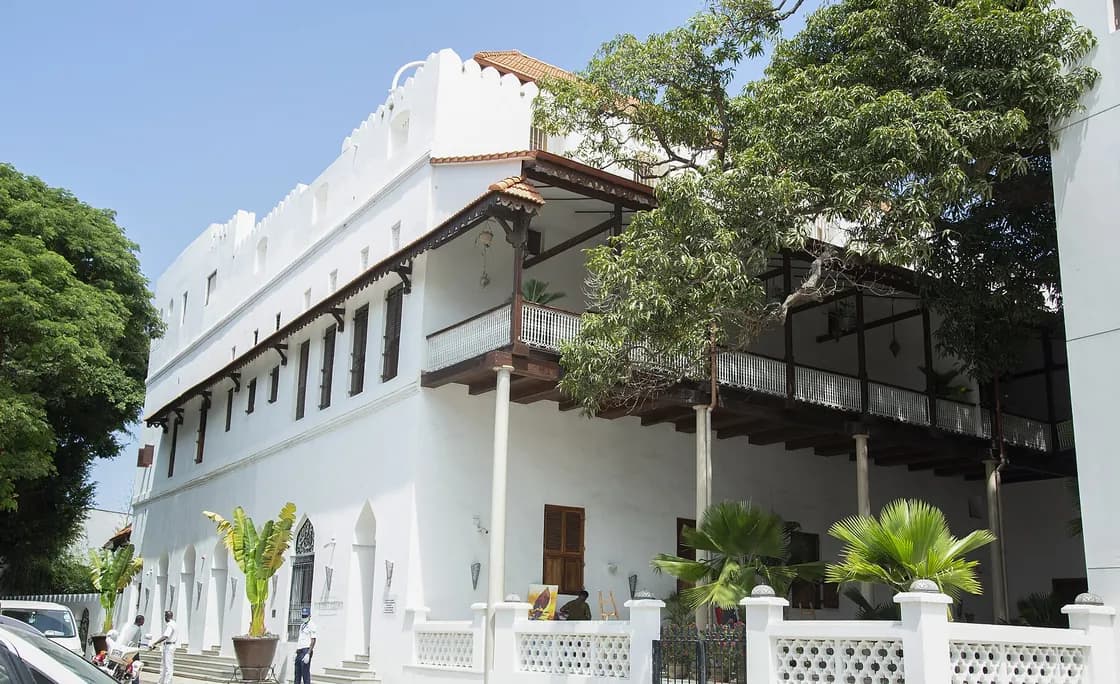
- A restored merchant house, not a hotel. Carved doors, a courtyard, a rooftop, and fifteen rooms at most. This is what the town has instead of resorts.
- $40 to $400 a night. A fraction of a beach hotel of the same standard, and twenty minutes from the airport rather than ninety.
- Two nights, at the start of the trip. Long enough for the slave market site, the market and an evening at Forodhani. A week would be strange.
- You cannot swim, and it is hot. Those are the two real costs, and the call to prayer at half past four is the third.
Which part of the old town to sleep in
The old town is fifteen minutes across on foot, so this is about noise and light rather than distance.
| Where | What it is like | Suits |
|---|---|---|
| The seafront, near Forodhani | Breeze, light, and the evening food market on your doorstep | First timers, and anyone who wants to walk to dinner |
| Shangani | The quiet western corner, the restored hotels, the rooftop bars | Couples, and a first night after a long flight |
| Near the Old Fort | In the middle of everything, including the noise | People who want to be in it rather than beside it |
| Around Malindi and the port | Cheaper, louder, and genuinely local | Budgets, and anyone catching an early ferry |
| The far back lanes | Dark, quiet, and hard to find at night | Return visitors who already know the town |
Whatever you book, ask whether the room has a window on to the lane or the courtyard. It is the difference between hearing the town and hearing nothing.
Why start here
Stone Town is twenty minutes from the airport and every beach is at least fifty more. Sleeping here on the night you land removes a long drive at the end of a long flight.
It also puts the town first, which is the right order. The former slave market, the doors, the layers of Omani, Indian and British trade, all of it gives the beach half of the trip something to be a contrast with rather than a sequel to.
What the buildings are
The good hotels here are restored eighteenth and nineteenth century merchant houses: thick coral stone walls, carved doors, internal courtyards and rooftop terraces where breakfast happens.
Comparable quality costs a fraction of a beach resort, because the demand is a fraction. A hundred dollars buys something genuinely special here and something ordinary on the coast.
What you give up
Swimming, essentially. The seafront is not for bathing and the nearest usable beach is a boat ride away at Prison Island or twenty minutes north.
It is also hot, in the way old towns without sea breeze are hot, and it is noisy at prayer times and at night. Two nights is right. A week would be a strange choice.
Which part of the old town
Anywhere inside the lanes is walkable to everywhere else, so the choice is between the seafront and the interior.
The seafront gets the breeze and the sunset and costs more. The interior is quieter at night, considerably cheaper, and marginally harder to find your way back to.
Shangani and the area around the Old Fort are the two most convenient corners. Avoid anything advertised as being in Stone Town that turns out to be on the ring road.
Practicalities of sleeping in a 19th century house
Thick coral stone keeps rooms cool and also keeps them dark. Windows are small and some rooms have none facing outside.
Stairs are steep and narrow, and there are no lifts. This matters for anyone with mobility issues and for anyone with a large suitcase.
The call to prayer starts before five and there are several mosques within earshot of anywhere. Some people find it one of the best things about staying here and some people do not sleep.
What a night here actually costs
Forty to seventy dollars buys a clean room in a restored building with a fan and a shared terrace. Eighty to a hundred and twenty buys air conditioning, a better room and usually breakfast on the roof.
Above two hundred you are in the handful of serious hotels, of which the Park Hyatt on the seafront is the best known. Even there it costs less than an equivalent beach resort.
Compare that with the coast, where a hundred dollars buys something ordinary. The town is the best value accommodation on the island and almost nobody uses it.
The evening, which is the argument
Forodhani gardens fill with food stalls around six and the town comes out to eat. It is a genuine local evening, not a staged one, and it only happens after the day trippers have driven back to their resorts. What to order at the stalls, and what to skip.
The rooftop bars open at the same hour and are the only way to understand the shape of the town, which from inside the lanes is impossible to read.
By ten it is quiet. This is not a nightlife destination and the appeal is precisely that it is a working town that goes to bed.
A two night plan
Two nights is the right dose and it fits neatly at the front of a trip, twenty minutes from the airport rather than ninety.
| When | What |
|---|---|
| Day 1, afternoon | Land, drop bags, walk to the seafront. Do nothing ambitious after a night flight |
| Day 1, dusk | Forodhani night market, five dollars, and the best evening on the island |
| Day 2, 8am | The former slave market site, before the heat and the cruise groups. Twenty minutes, and it changes the rest |
| Day 2, 9am | Darajani market while the fish is still landing |
| Day 2, 10am | A guided walk. Doors, Jaws Corner, the Old Dispensary. Twenty to thirty dollars |
| Day 2, 1pm | Lunch, then hide. The lanes between one and four are punishing |
| Day 2, 5pm | A rooftop, or a dhow off the seafront. Both cost about the same |
| Day 3, morning | Transfer to the coast, stopping at Jozani or a spice farm on the way |
Everything in that table is priced in the Stone Town guide.
What sleeping in a merchant house is actually like
It is the reason to stay here rather than on a beach, and it comes with four things nobody mentions in the listing.
- The call to prayer is at about half past four. From several mosques at once, and the old town is dense. Earplugs, or accept it as part of the experience.
- Coral stone holds heat. Rooms stay warm well into the night. Confirm the air conditioning works rather than that it exists.
- Rooms on the lane hear the town. Rooms on the courtyard hear almost nothing. Ask which yours is, because it is the difference between the two.
- The stairs are steep and there is rarely a lift. These are nineteenth century houses. Worth checking if anyone in the party would struggle with four narrow flights.
Against all of that: a carved door, a courtyard, a rooftop at sunset, and a fraction of what a beach hotel of the same standard costs.
Questions people ask about where to stay in Stone Town
Should I stay in Stone Town or on the beach?
Both, in that order. Two nights in Stone Town at the start, then the beach. It costs less than the beach, it removes a long drive on arrival day, and it gives the rest of the trip context.
How much does a hotel in Stone Town cost?
Forty to a hundred and twenty dollars for something good in a restored building, and three hundred plus at the top of the market. It is considerably better value than the equivalent on the coast.
Is Stone Town worth staying in overnight?
Yes, and the evening is the argument for it. Forodhani gardens fill with food stalls at dusk and the town is at its best after the day trippers have gone back to their resorts.