
Cost
$10 to $20, around $35 with lunch
Time needed
Two hours, half a day with lunch
Where
Kizimbani and Kindichi, inland from Stone Town
Getting there
30 to 40 min from Stone Town
Best combined with
Stone Town, or Jozani on the way east
Worth paying for
The version with a cooked lunch
Book a Zanzibar spice tour
Every hotel desk on the island sells this, and the quality varies far more than the price. What you are actually buying is a guide and a group size. Six people around somebody cutting a nutmeg open works. Twenty five people means you are looking at the back of a head.
Spice farm tours and cooking classes
Prices, ratings and review counts as the partner lists them, read on the date shown below the cards. Check the maximum group size, which is the only figure here that predicts whether the morning is any good.
Swahili spice tour and cooking class
The plantation, then a meal cooked with what you picked.
From$26per person
Check availability
Spice tour, Stone Town and lunch
Two visits in one day, hotel transfer included.
From$22per person
Check availability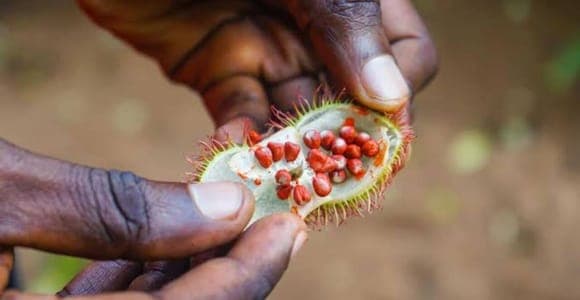
Guided spice tour on foot
Short format: three hours in the Kizimbani plantations.
From$35per person
Check availabilityPrices, ratings and review counts read from GetYourGuide on 27 September 2026, and indicative. These are partner links: the price is the same for you.
How much a Zanzibar spice tour costs
Three price bands, and the middle one is the answer for almost everybody.
| Version | Price | Verdict |
|---|---|---|
| Plantation walk only | $10 to $20 | Two hours, no food, and you arrange your own transport. Fine, and slightly thin. |
| Walk, lunch and transfer | $30 to $40 | Book this one. Lunch is cooked by the family that farms the place, using what you just walked past. |
| Bundled with Stone Town or Jozani | $45 to $70 | Good value on a transfer day, since the plantations sit between the two. A long day otherwise. |
| Private, with a cooking class | $60 to $100 | You cook the curry rather than eat it. Worth it for two people, indulgent for one. |
What happens on a spice tour
Pick up between eight and nine, then thirty to forty minutes inland to Kizimbani or Kindichi, which is where nearly every tour on the island goes. Then two hours walking a working farm while a guide cuts things open and hands them to you.
The point is not botany. It is that almost none of this looks remotely like the version in your kitchen cupboard, and that a nutmeg cut open on the spot smells nothing like ground nutmeg out of a jar.
- Somebody climbs a coconut palm barefoot. This happens at every farm, it is not staged for you specifically, and it is still worth watching.
- Somebody weaves you a hat out of palm leaves, plus a tie and a ring. A small tip at the end is the expectation.
- A tray of fruit appears halfway through. Jackfruit, custard apple, star fruit, and whatever else is in season.
- It ends at a stall. Nobody pushes hard, buying is not compulsory, and there is more on that below.
Which spices Zanzibar is famous for
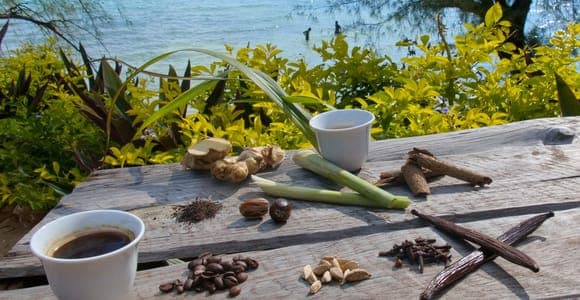
Nine things a decent guide will put in your hands, and what each one actually looks like before it reaches a jar.
| Spice | On the plant |
|---|---|
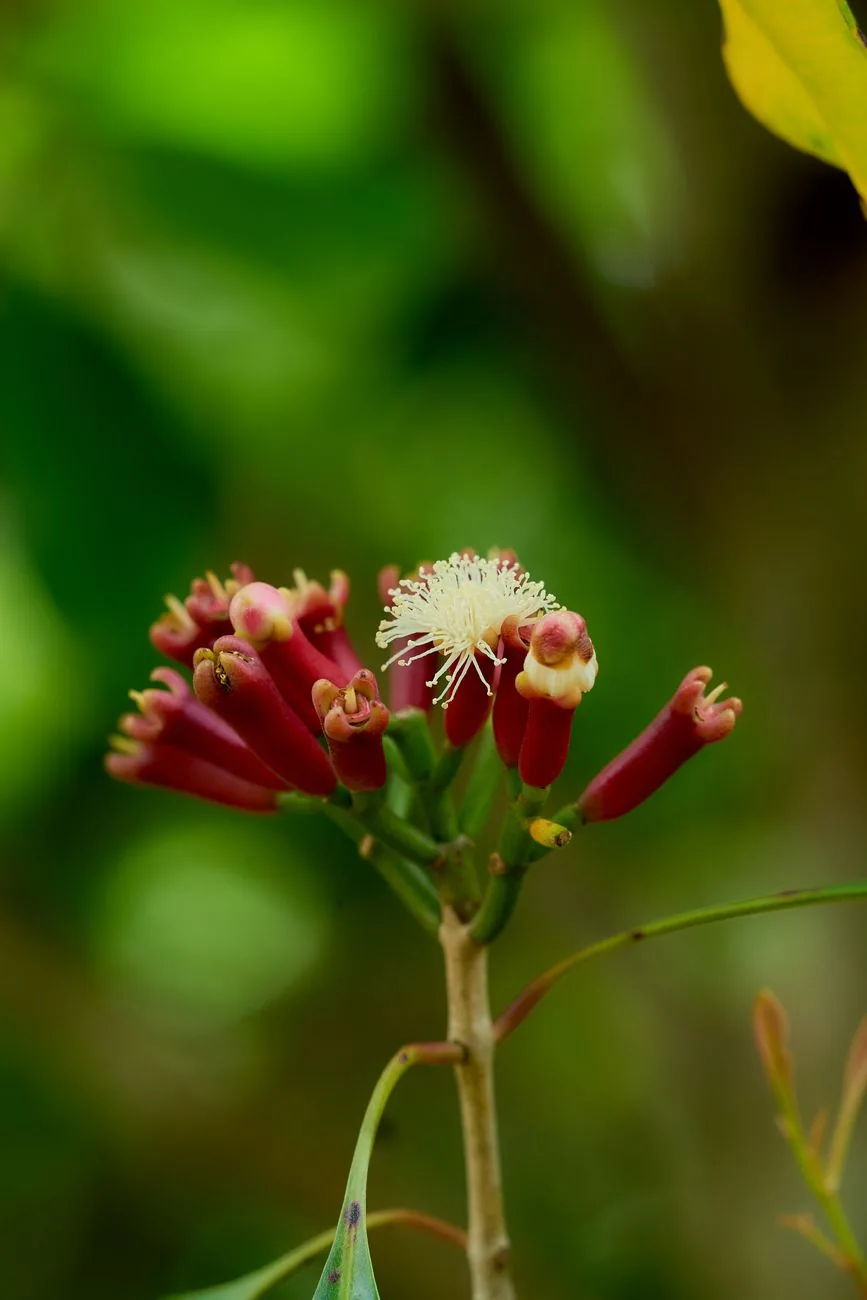
| Cloves | Unopened flower buds, picked pink and dried until they go brown and hardThe reason the island exists in its present form. Planted here from the 1810s and still the biggest export, with most of the crop grown on Pemba rather than Unguja. |
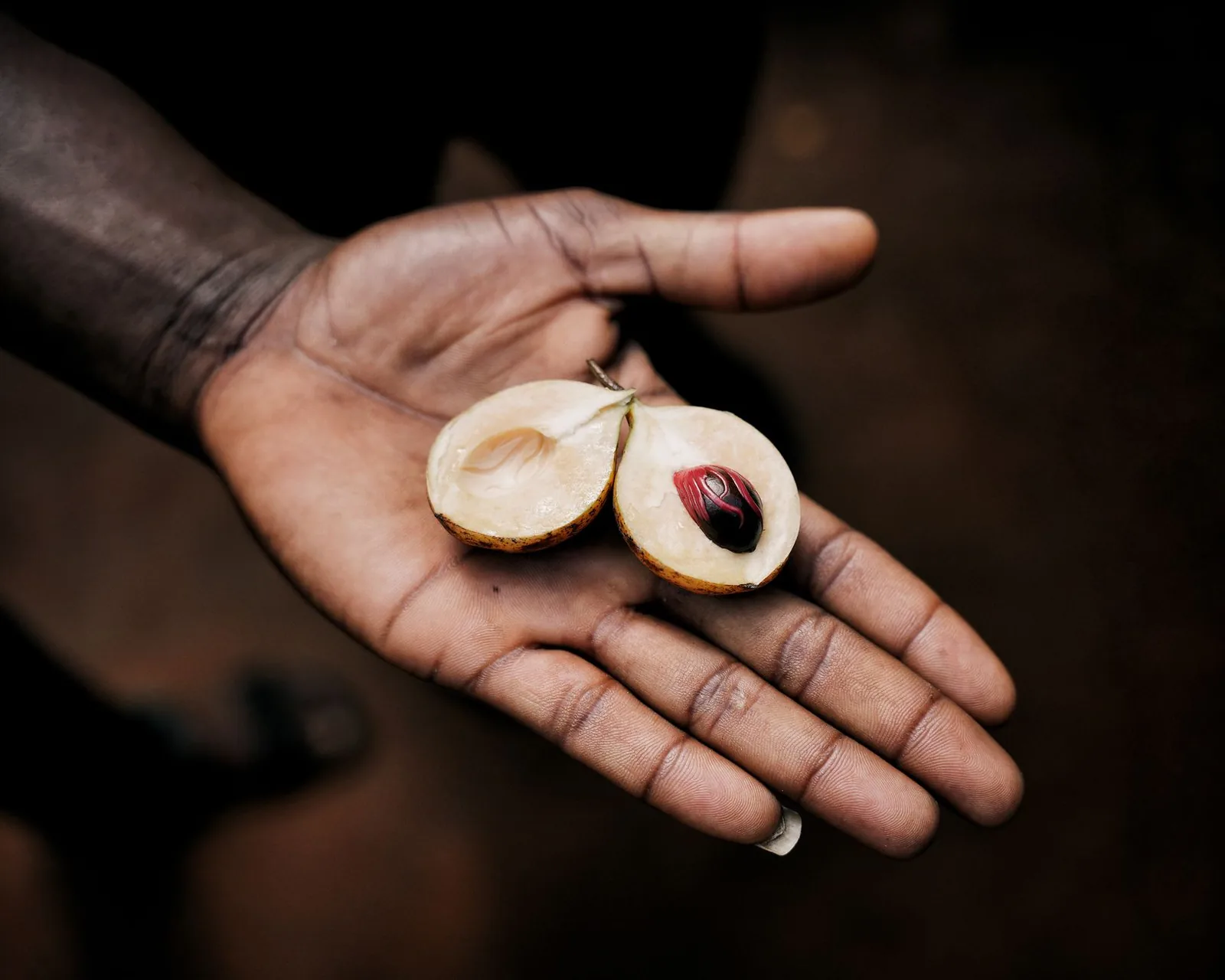
| Nutmeg and mace | A fruit like a small apricot that splits to show a scarlet lace around the seedTwo spices from one fruit: mace is the red web, nutmeg is the nut inside it. The single most photographed thing on any spice tour, and rightly. |
| Cinnamon | Inner bark, scraped from a young branch and rolled while it is wetThe guide will also scratch a root for you. It smells like cinnamon and tastes of nothing, which is the point they are making. |
| Vanilla | An orchid vine, hand pollinated one flower at a timeEach flower opens for a single morning. That is why vanilla costs what it costs, and it is worth asking your guide to show you the pollinating stick. |
| Cardamom | Pods on a low stem at the base of the plant, not up in the leavesNobody guesses this one, because the pods grow at ankle height under a plant that looks like ginger. |
| Black pepper | A climbing vine, green peppercorns in strings up a supporting treeBlack, green and white pepper are the same berry treated three different ways. A good guide leads with that. |
| Turmeric and ginger | Rhizomes, dug up on the spot and cut openFresh turmeric stains everything it touches for two days. Handle it and you will be explaining your fingers at dinner. |
| Lemongrass and ylang-ylang | A grass, and a tree with drooping yellow flowersBoth go into the oils sold at the end. The ylang-ylang is the smell of most of the soap on the stall. |
| The lipstick tree | Spiny red pods full of annatto seedThe guide will paint your hand or your lips with it. It is a food colouring, and it is the moment every child on the tour remembers. |
Why Zanzibar grows spices at all
None of it is native. Cloves came from the Moluccas by way of the Indian Ocean trade and were planted here from around 1818, under Omani rule, on plantations worked by enslaved people and owned by the sultanate.
It worked spectacularly. By the middle of the nineteenth century Zanzibar was supplying most of the world's cloves, and that money built the merchant houses you walk past in Stone Town. The two facts belong together and the better guides say so.
The industry fell away after the 1964 revolution and Indonesia took the market. Cloves are still a real export, most of the crop now comes off Pemba rather than the main island, and the surviving plantations are the reason this tour exists at all.
Buying spices, and taking them home
- Buy the vacuum packed spices. Cloves, cardamom and vanilla weigh nothing, survive the hold, and are considerably better than the supermarket version at home.
- Skip the soaps and oils here. They are pleasant and cost several times what the same thing costs at Darajani market in Stone Town.
- Prices are fixed, mild haggling is tolerated. Nobody pursues you if you buy nothing, which is unusual enough here to be worth saying.
- Put it all in the hold. Sealed dried spice travels fine in checked baggage and any oil over 100ml has to go there regardless.
Careful
Fitting the spice tour into your week
- On a transfer day. The plantations sit between Stone Town and the east coast. Tour in the morning, lunch on the farm, at your beach hotel by three.
- With Jozani forest. Same road, and the forest takes only two hours. Together they make a full and unhurried day.
- From Stone Town. Thirty minutes each way, so it works as a morning from a night in town without touching the rest of the day.
- Not with a boat trip. Both take a morning, both start early, and the sea always wins that argument.
Questions people ask about the Zanzibar spice tour
Is the spice tour in Zanzibar worth it?
For two hours and around twenty dollars, yes, and it is the cheapest genuinely interesting thing on the island. It also explains why Zanzibar looks the way it does, since the merchant houses in Stone Town were built on the clove trade. Book the version with lunch and it becomes a good half day rather than a pleasant walk.
How much does a spice tour in Zanzibar cost per person?
Ten to twenty dollars booked locally for the plantation walk alone. Around thirty five with a cooked lunch and hotel transfer, and forty to sixty if it is bundled with Stone Town or Jozani. The farm itself takes a small share of any of those.
Which spices is Zanzibar famous for?
Cloves above all, which is what the plantations were established for in the early nineteenth century. Also nutmeg and mace, cinnamon, cardamom, black pepper, vanilla, turmeric, ginger and lemongrass. None of them are native. All of them were brought here and planted.
What are the best spice farm tours in Zanzibar?
The farm matters far less than the guide and the group size. Most tours go to Kizimbani or Kindichi, thirty to forty minutes inland from Stone Town, and the plantations there are broadly interchangeable. Ask how many people are on the tour before you ask which farm.
Can you bring spices back from Zanzibar?
Dried, sealed spices are accepted almost everywhere and are the sensible thing to buy. Fresh fruit, seeds for planting, and unprocessed plant material are a different matter and are commonly refused at customs. Check your own country's rules, since they vary more than people expect.
Can I put spices in checked luggage?
Yes, and it is the better place for them. Sealed dried spices travel fine in the hold, they weigh almost nothing, and vacuum packed cloves and vanilla survive the trip intact. Oils over 100ml have to go in the hold anyway.
Where are the best spice markets in Zanzibar?
Darajani market in Stone Town, for both range and price. The stall at the end of your plantation tour is convenient and charges several times more for soaps and oils, though its vacuum packed spices are usually fresher.