
Time needed
Half a day minimum, a full day to do it properly
Guided walk
$20 to $30 for two to three hours
Slave market site
$10, cathedral and guide included
From the airport
20 minutes, and every beach is further
Best hours
Before 10am, and again after 4pm
Dress code
Shoulders and knees covered, both sexes
Book a Stone Town walking tour
The one thing here genuinely worth paying a guide for is the first two hours. Not for the navigation, which sorts itself out, but for what you would otherwise walk straight past: whose door that is, what the fish motif means, which building was whose. Two to three hours runs $20 to $30 a head and pays for itself in the first twenty minutes.
Guided walks and food tours
Prices, ratings and review counts as the partner lists them, read on the date shown below the cards. Check whether the slave market entry is included, because most walking tours stop outside it.
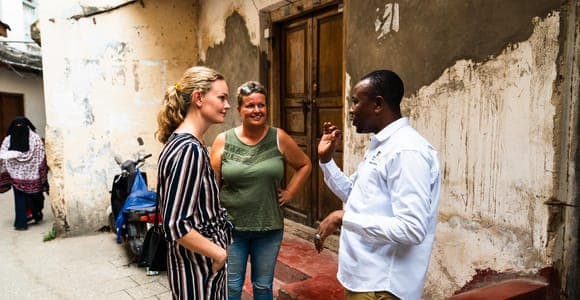
Stone Town: guided history walk
The slave market memorial, the palaces and the Freddie Mercury house.
From$25per person
Check availability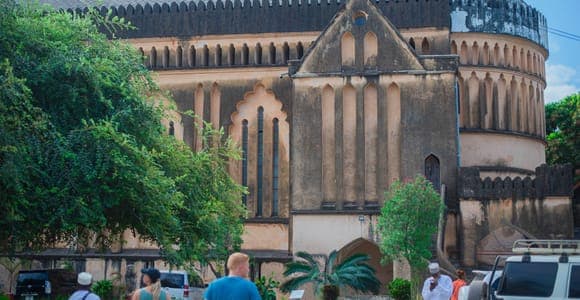
Stone Town, spice tour and Prison Island with lunch
The most booked combined day on the island.
From$55per person
Check availability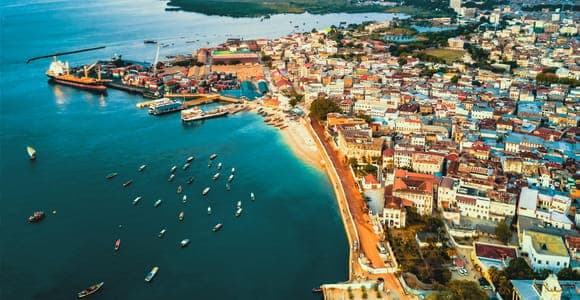
Stone Town, Prison Island and Nakupenda with barbecue
Town and sea in one go, which works well as a first day.
From$42per person
Check availabilityPrices, ratings and review counts read from GetYourGuide on 27 September 2026, and indicative. These are partner links: the price is the same for you.
What is special about Stone Town
Stone Town is the best preserved Swahili trading town on the East African coast, and a UNESCO World Heritage site since 2000. It was built in coral rag by Omani, Indian, Persian and African merchants who all arrived on the same monsoon and stayed, which is why one lane can hold an Omani fort, a Hindu temple, an Anglican cathedral and a Shia dispensary.
It was also the commercial centre of the East African slave trade. Those are not two facts about the town, they are one fact. The merchant houses are large because of what was sold from them, and the town does not hide this. Its central memorial site is the market itself.
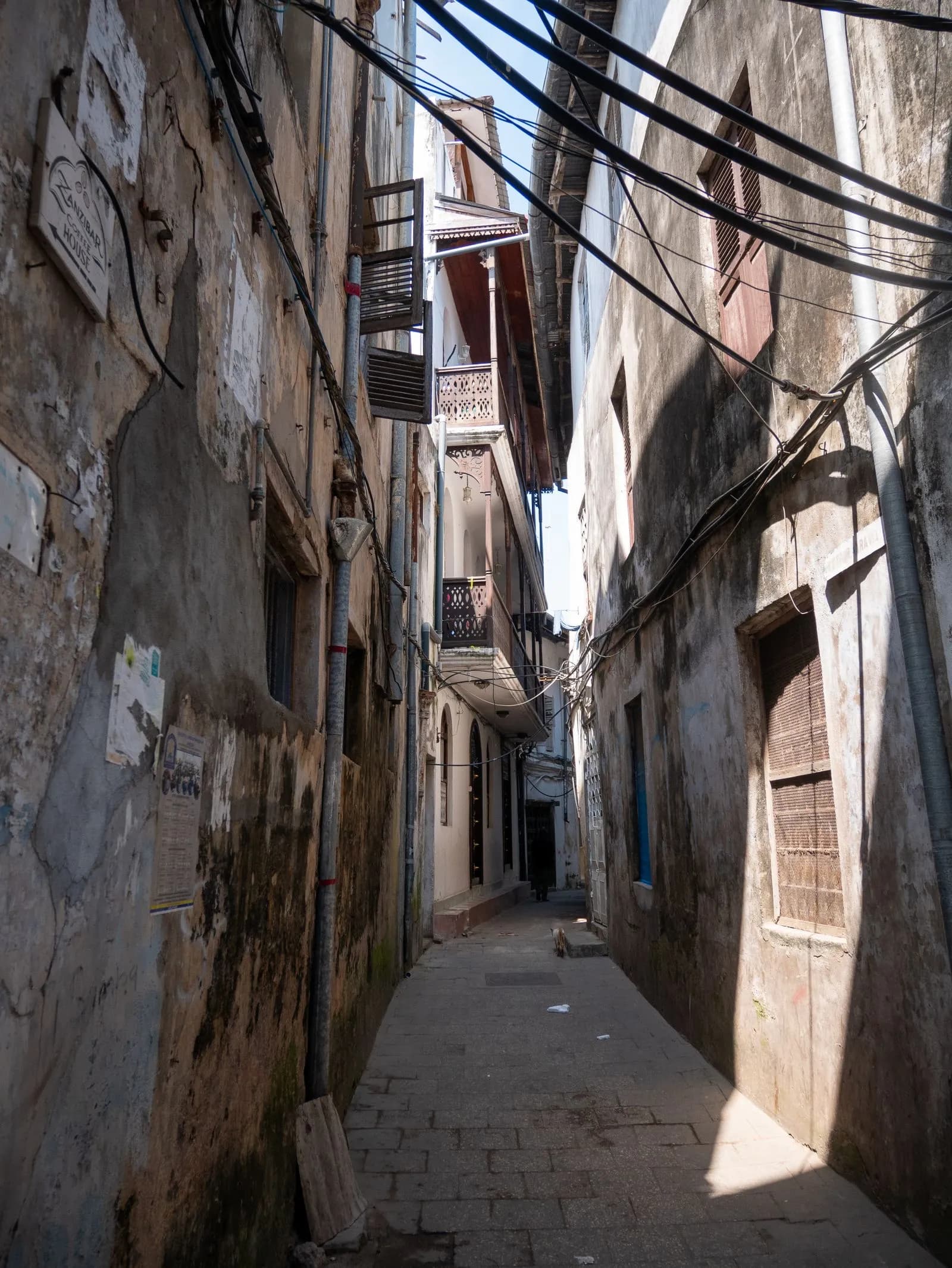
Practically, the old town is tiny. Everything below sits within fifteen minutes on foot of everything else, and no car fits down most of the lanes, which is the reason any of it survived.
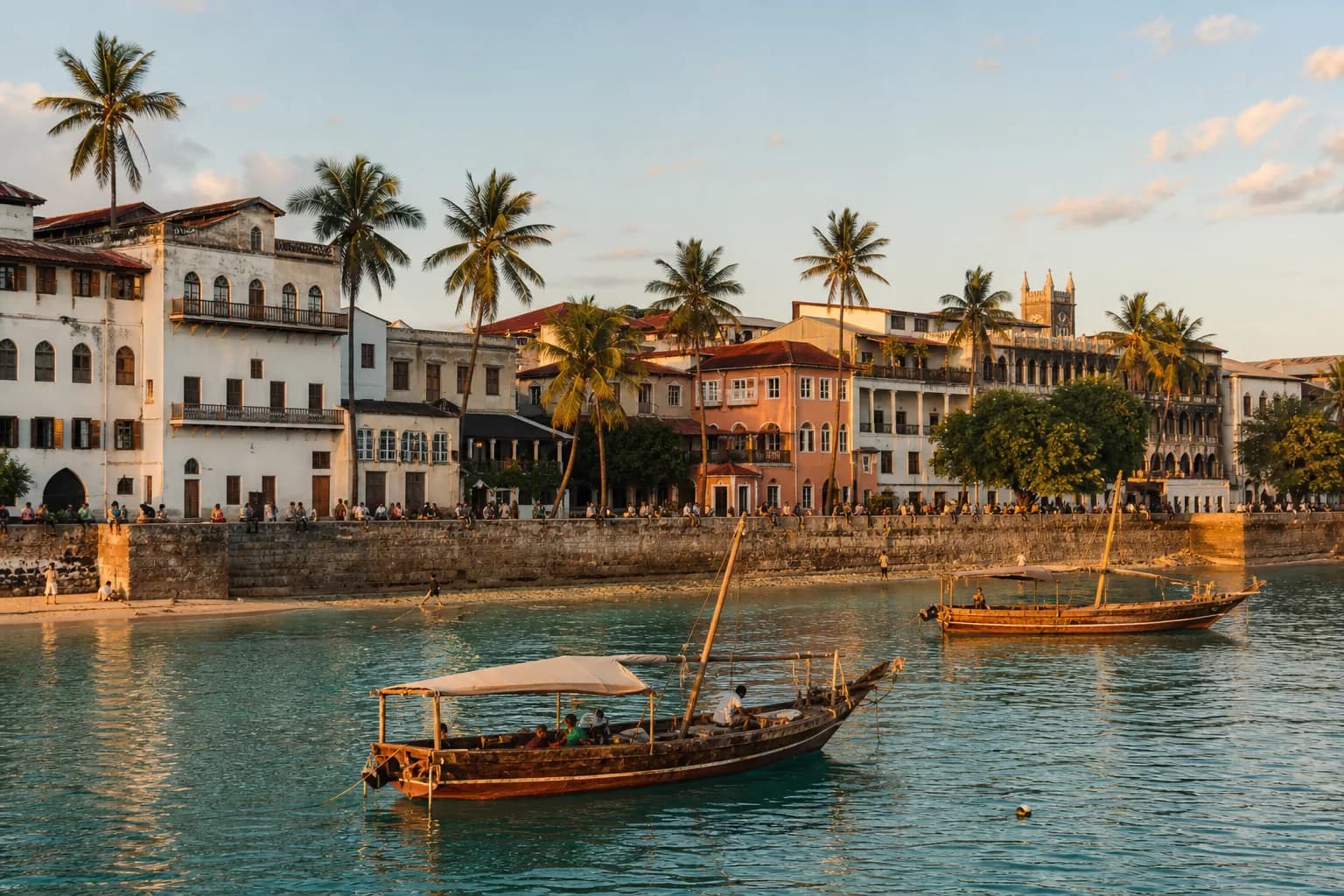
The former slave market, and the hour it takes
Christ Church Cathedral was built in the 1870s directly on the site of the last open slave market in East Africa. The altar stands where the whipping post stood, which was a deliberate decision and not a coincidence of geography.
Underneath the site, two holding chambers survive as they were. They are low, unlit and airless, and the guide tells you how many people were held in each one. It takes twenty minutes and it is not an attraction.
Do it before anything else in the town. The merchant houses, the doors, the sheer wealth of the architecture all read differently once you know what paid for them, and doing it in the other order wastes the day.
Things to do in Stone Town, and what each one costs
Fifteen stops, in the order a day actually strings them together. Prices are gate prices in dollars, which every site here accepts alongside shillings.
| What | Cost |
|---|---|
| The former slave market and Anglican cathedralChrist Church was built in the 1870s on the site of the last open slave market in East Africa, and the altar stands where the whipping post was. Two holding chambers survive underneath, left as they were. Twenty minutes. Go first, before anything else. | $10, guide included |
| The carved doorsSeveral hundred survive. Brass studs came from India, the heavy geometric lintels from Oman, the fish and chain motifs are Swahili. They are a readable record of who traded here, if somebody shows you how to read them. | Free, and everywhere |
| Darajani marketThe working market since 1904. Loud, wet, entirely unstaged. Spices and produce at the front, fish at the far end. Twenty minutes is plenty and it is the most alive part of the town. | Free, best before 10am |
| Forodhani gardens night marketThe seafront gardens fill with grills from about six and the town comes to eat. Seafood skewers, sugar cane juice, and the much mocked Zanzibar pizza. Pick the stall with the longest local queue. | Free entry, $5 fills you |
| The Old FortOmani, built around 1700 on the ruins of a Portuguese church. It now holds craft stalls, an open air amphitheatre and a cafe. Fifteen minutes, and it is the easiest shade in the middle of the day. | Free to enter |
| The House of WondersBeit-al-Ajaib, 1883, the first building in Zanzibar with electricity and the first in East Africa with a lift. Part of it collapsed in December 2020 and it has been shut since, with Oman now rebuilding it. | Closed, look from outside |
| The Old DispensaryA Gujarati merchant's charitable dispensary from the 1890s, with fretwork balconies and stained glass, restored in the nineties. The most photographed facade in town after the doors. | Free outside, small fee in |
| The Palace MuseumBeit el-Sahel, the sultans' town palace on the seafront. Faded, half empty, and the room devoted to Princess Salme, who eloped to Germany in 1866 and wrote the first memoir by an Arab woman, is worth the ticket alone. It replaced the palace the Royal Navy shelled in 1896, in the shortest war on record. | Around $5 |
| Freddie Mercury's houseFarrokh Bulsara, born in Zanzibar in September 1946, spent part of his childhood here. The museum is modest and the building matters more than the collection. Honest verdict: worth passing, not worth planning around. | $10 |
| Hamamni Persian bathsBuilt for Sultan Barghash in the 1870s and the first public baths on the island. Dry and empty now, which makes them stranger rather than duller. Ten minutes. | Around $3 |
| Jaws CornerA small square where men drink coffee from a kettle and argue politics under a mural. There is nothing to see and it is one of the better places in the town to sit for twenty minutes. | Free |
| A rooftop at sunsetSeveral hotels open their terraces to non guests. It is the only way to read the shape of the town, which from inside the lanes is impossible. Africa House and the Emerson terraces are the known ones, so go early for a table. | $5 to $10 for a drink |
| The Anglican cathedral towerA narrow climb and a view straight down onto the roofs. Skip it if the stairs look like work. | Included with the site |
| A dhow at duskThe boats leave from the seafront at about five. See the sunset dhow guide for what separates a good one from a booze cruise. | $25 to $40 |
| Prison IslandTwenty minutes offshore, with giant tortoises brought from Aldabra in the 1920s. Half a day, and it pairs naturally with a Stone Town stay. | $35 to $50 with the boat |
The carved doors of Stone Town
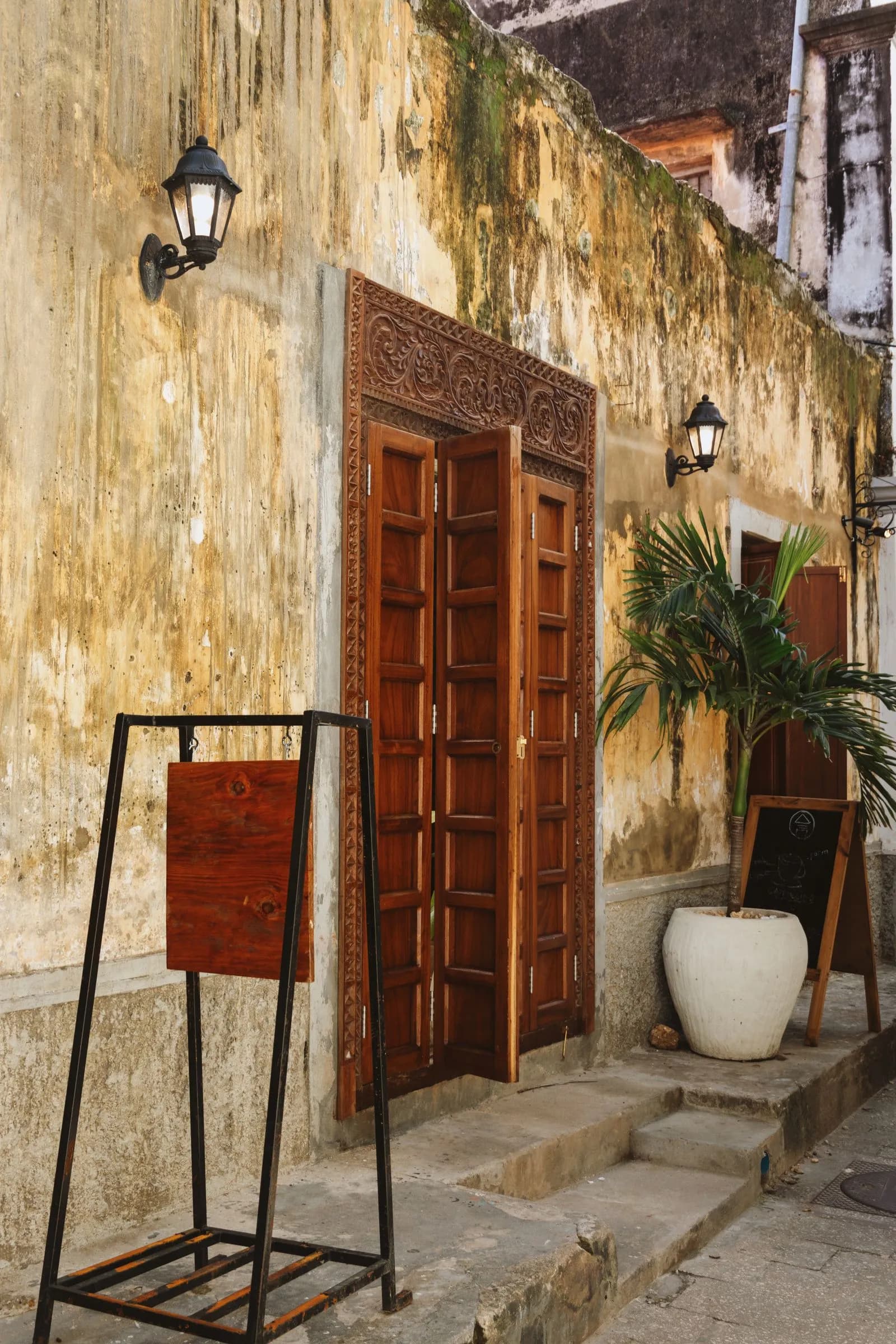
The doors are what people photograph and almost nobody explains. There are two families of them. Omani doors are rectangular, with a heavy square frame and geometric carving, and they are the older shape. Indian doors arrived later, with a rounded arch, folding leaves and a shallower, busier relief.
- Brass studs came from India, where they stopped war elephants. There are no elephants on Zanzibar. They are there because the merchant could afford them.
- A chain motif carved into the frame usually means the household traded in slaves. It is on more doors than anybody points out.
- Fish, lotus and date palm stand for plenty, fertility and wealth, and they are the Swahili contribution to the vocabulary.
- A Quranic inscription across the lintel dates the house, and is the fastest way to tell a genuinely old door from a good reproduction.
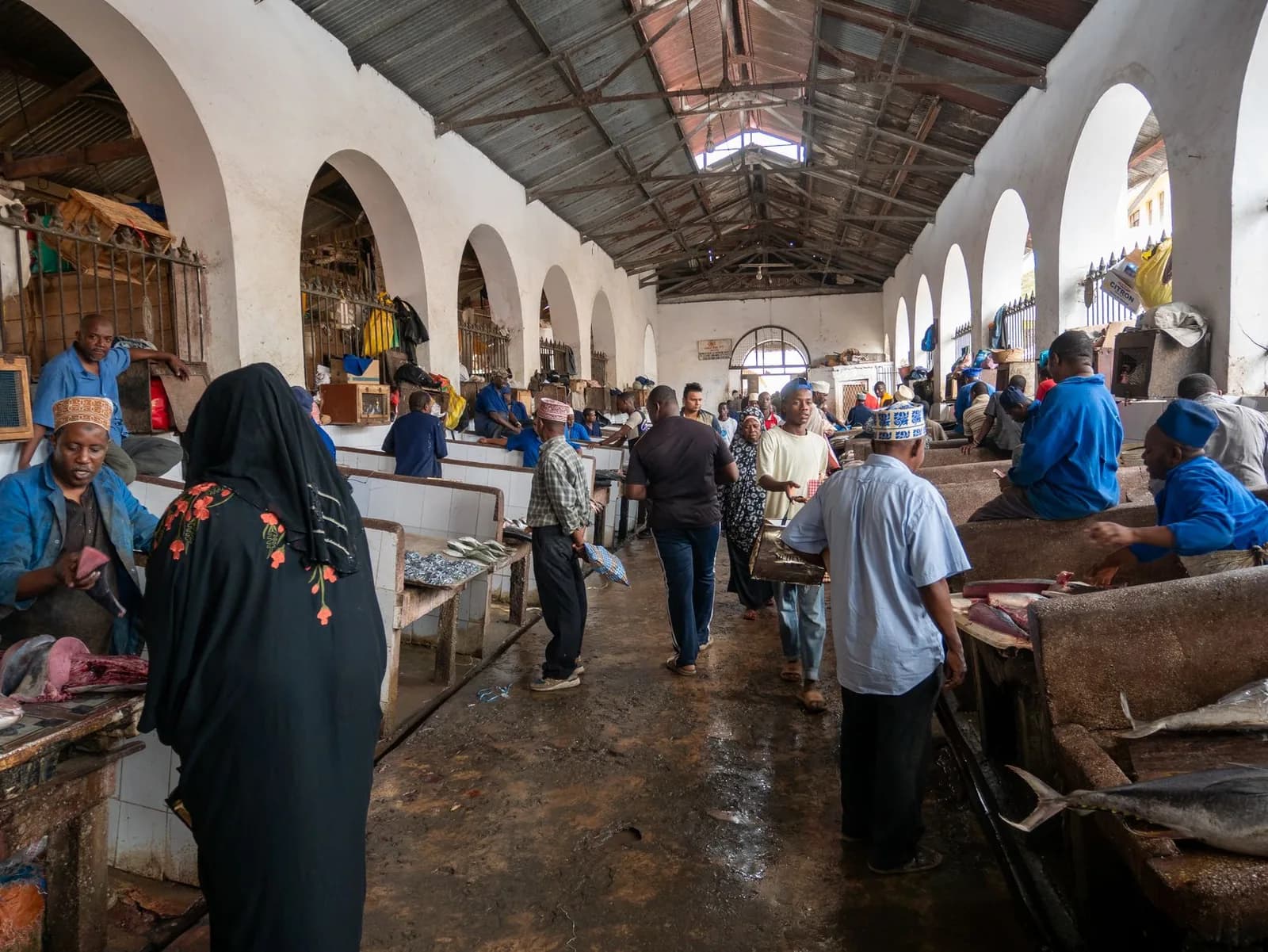
Darajani market
Open since 1904 and still the town's actual food supply rather than a heritage exercise. Produce and spices under the arcades at the front, then the fish hall at the back, where the floor is wet and the tuna are cut on concrete slabs. Go before ten in the morning, when the boats have landed and it has not yet turned into an oven.
Forodhani gardens at night
From about six the seafront gardens fill with charcoal grills and the town comes out to eat. It is genuinely local rather than staged for visitors, although the stalls nearest the entrance have learned what a tourist will pay.
- Around $5 fills you. Seafood skewers, cassava, chapati, grilled octopus.
- Zanzibar pizza is a folded stuffed pancake and not a pizza. The savoury one is decent, the Nutella and banana one exists for Instagram. The rest of the menu, and what to leave on the grill, is in our guide to Zanzibar food.
- Agree the price before it is cooked. Not a scam so much as a habit, and it costs nothing to ask.
- Pick by queue. The stall the locals are standing at is the one whose seafood turned over today.
A one day Stone Town itinerary
| When | What |
|---|---|
| 8.00 | The former slave market site, before the heat and before the cruise groups. The right hour to be in those chambers is the quiet one. |
| 9.00 | Darajani market while the fish is still landing, ten minutes' walk away. |
| 10.00 | The guided walk, if you booked one. Doors, Jaws Corner, the Old Dispensary, the alley behind the cathedral where the carving is best. |
| 13.00 | Lunch, then hide. The lanes between one and four are genuinely punishing and the rooftop bars exist for exactly this. |
| 16.00 | The Old Fort, the Palace Museum, or the seafront wall where the boys jump off into the tide. |
| 17.30 | A rooftop for the sunset, or the water on a dhow. Both cost about the same and only one of them moves. |
| 19.00 | Forodhani, when the grills are lit and the town is eating. |
Day tripping from the coast costs you the last three lines of that table, which are the best of them. If you can, spend the night. The restored merchant houses cost a fraction of a beach hotel of the same standard.
Where to eat in Stone Town
- Forodhani stalls, about $5. Where the town eats, and the reason to be here in the evening rather than on the coast.
- Local canteens, $3 to $6. Pilau, biryani, urojo soup, octopus curry. No menu in English and no worse for it.
- Rooftop restaurants, $20 to $35. Above the merchant houses, mostly Swahili food done seriously, and a view over the roofs to the water. Book for sunset.
- Coffee, under a dollar. Sold from a brass kettle on a street corner, in a thimble, with a sweet. Jaws Corner is the place to try it.
Skip
Stone Town dress code, safety and etiquette
- Shoulders and knees covered, men included. Around ninety nine per cent of Zanzibar is Muslim and the old town is residential, not resort frontage.
- Ask before photographing people, particularly women. A refused photograph costs you nothing.
- The lit streets are fine at night and busy until late. The unlit back lanes alone after dark are the one thing worth avoiding, and a taxi to your door costs a couple of dollars.
- Buy trips from a shop, not the street. Papasi, the street touts, are persistent rather than dangerous, and a firm no in Swahili ends it: hapana asante. More on that in health and safety in Zanzibar.
- Ramadan changes the day. Many kitchens close until sunset and eating in the street is poor form. Forodhani, on the other hand, is at its best.
How to get to Stone Town and get around
| From | Drive | Taxi, one way |
|---|---|---|
| The airport | 20 min | $15 to $20 |
| Paje or Jambiani | 1 h 10 | $40 to $50 |
| Kiwengwa or Matemwe | 1 h 15 | $45 to $55 |
| Nungwi or Kendwa | 1 h 30 | $50 to $60 |
| Dar es Salaam, by ferry | 2 h | $35 to $50 |
Inside the old town there is nothing to arrange. No car fits down most of the lanes, everything is within a fifteen minute walk, and you will get lost. It does not matter: ten minutes in any direction hits either the seafront or the main road, and both are unmistakable.
Taxis wait at the edges. If your hotel is inside the lanes the driver drops you at the nearest access point and somebody walks you the last two minutes. Rates and how not to overpay are in getting around Zanzibar, and the airport run has its own page.
Is Stone Town worth staying in
For two nights, yes, and the arithmetic is better than people expect. A restored merchant house with a rooftop costs a fraction of a beach hotel of the same standard, the airport is twenty minutes away rather than ninety, and the town after the day trippers have gone is a different place entirely.
Against that: you cannot swim, the lanes hold heat well into the night, and the call to prayer at half past four is not negotiable. Three nights suits anyone who likes cities. A week would be an odd choice.
The pattern that works for most people is two nights here at the start, then the coast. Where to stay in each is covered in the Stone Town accommodation guide, and the coast decision itself in north versus east.
Questions people ask about Stone Town, Zanzibar
Is Stone Town worth visiting?
Yes, and it is the only part of Zanzibar that is not a beach. A day here is what turns the trip into an island with a history rather than a stretch of sand. The former slave market alone justifies the drive.
What is special about Stone Town, Zanzibar?
It is the best preserved Swahili trading town on the East African coast, built in coral rag by Omani, Indian, Persian and African merchants, and a UNESCO World Heritage site since 2000. It was also the commercial centre of the East African slave trade, and the two facts are the same fact. The wealth in the architecture came from that trade.
How long do you need in Stone Town?
Half a day covers the doors, the market and the seafront. A full day lets you do the slave market site properly and still be at Forodhani for the evening. Two nights is the version most people wish they had booked.
Can you do Stone Town as a day trip?
Yes, at the cost of three hours of driving from the north coast or two from the east, and of missing Forodhani at dusk, which is the best hour here. Two nights at the start of a trip works better and often costs less than the beach hotel you would be driving back to.
What is the dress code for Stone Town?
Shoulders and knees covered, for men and women. This is a working Muslim town rather than resort frontage. Nobody will confront you about it, and dressing like the beach in the lanes reads exactly as it would in any small conservative town anywhere.
Is Stone Town safe at night?
Broadly yes, and the lit main streets stay busy well into the evening. Avoid the unlit back lanes alone after dark, keep your phone in a pocket rather than a hand on the seafront, and take the two dollar taxi rather than the twenty minute walk.
Where should you avoid in Zanzibar?
Nowhere on a map, which is the honest answer. The recurring problems are the unlit lanes of Stone Town late at night, the beach at Nungwi after dark, and anybody offering you a tour on the street rather than from a shop with a name on it.