
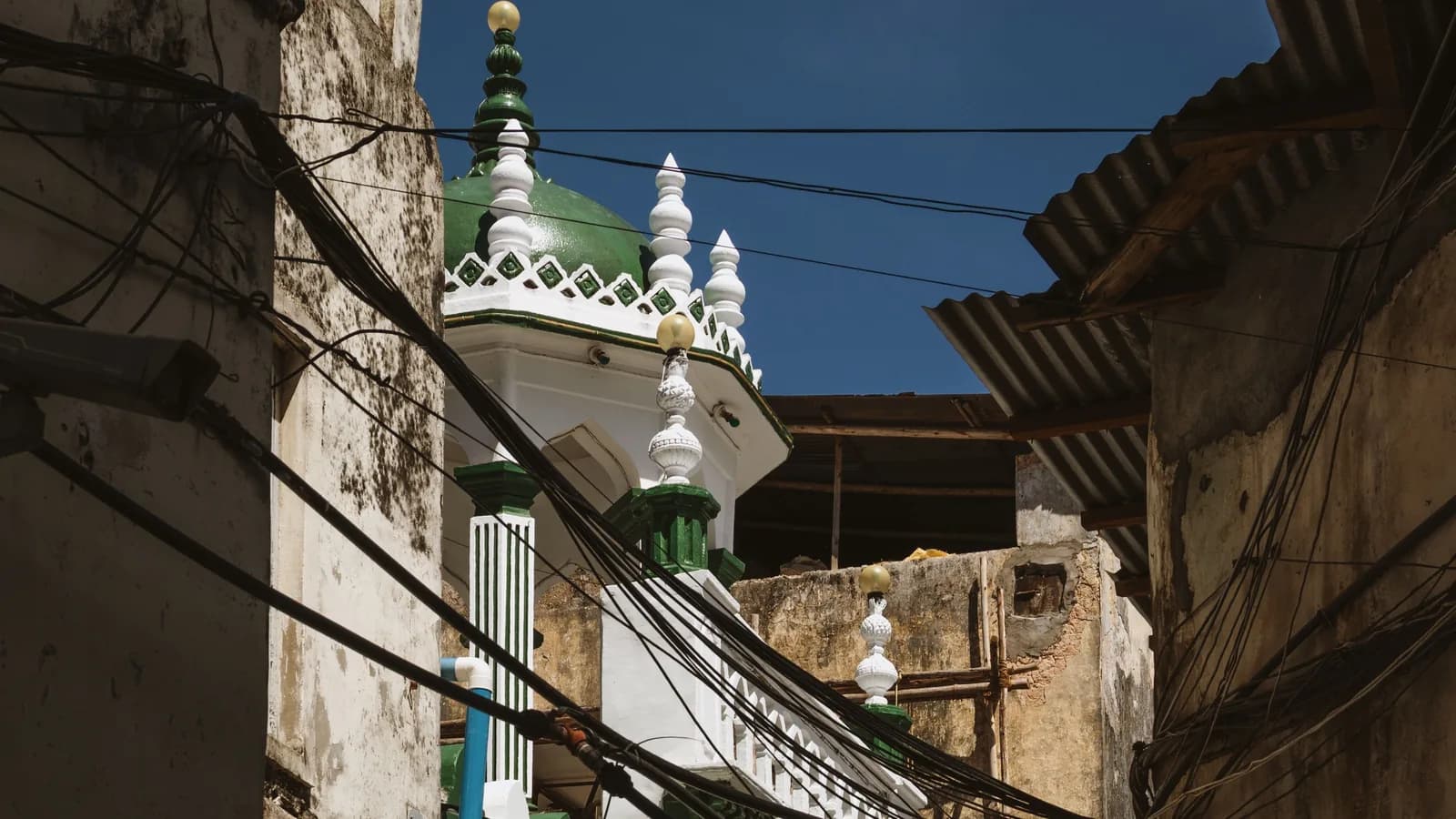
The religion of Zanzibar is Islam: about 97 to 99 per cent of the islands' 1.9 million people are Muslim, most of them Sunni. For a visitor that means covered shoulders and knees off the beach, a quieter island during Ramadan and alcohol served in hotels and licensed bars rather than in the street.
Religion: Islam, about 97 to 99 per cent
Population: 1,889,773 (2022 census)
Languages: Swahili, English in tourism, Arabic in the mosque
Ramadan 2027: About 8 February to 9 March
Alcohol: Legal in hotels and licensed bars
Dress: Shoulders and knees covered off the beach
What religion is Zanzibar? Islam and the islands' minorities
Islam reached the Swahili coast with Arab and Persian traders, and archaeologists have found mosque remains from the 10th century. When the Sultan of Oman moved his court to Stone Town in the 19th century, Zanzibar became one of the centres of Islam in East Africa, and it has stayed that way.
The figure you will see quoted varies. The US State Department's religious freedom report puts Zanzibar at 99 per cent Muslim, Wikipedia at 98 per cent and Indiana University at 97 per cent. Tanzania's census does not ask about religion, so every number is an estimate. The honest answer is that almost everyone you meet outside a hotel is Muslim.
Sunni, Shia and Ibadi Islam in Zanzibar
A large majority are Sunni, of the Shafi'i school followed along the whole Swahili coast. The Omani sultans were Ibadi, a separate branch that survives in a few old Arab families. Stone Town also has Shia communities of Indian origin, the Ithna'asharis, the Bohras and the Ismailis, each with its own mosque, and the Sufi brotherhoods Qadiriyya and Shadhiliyya are active in the town.
Christians, Hindus and the Stone Town cathedrals
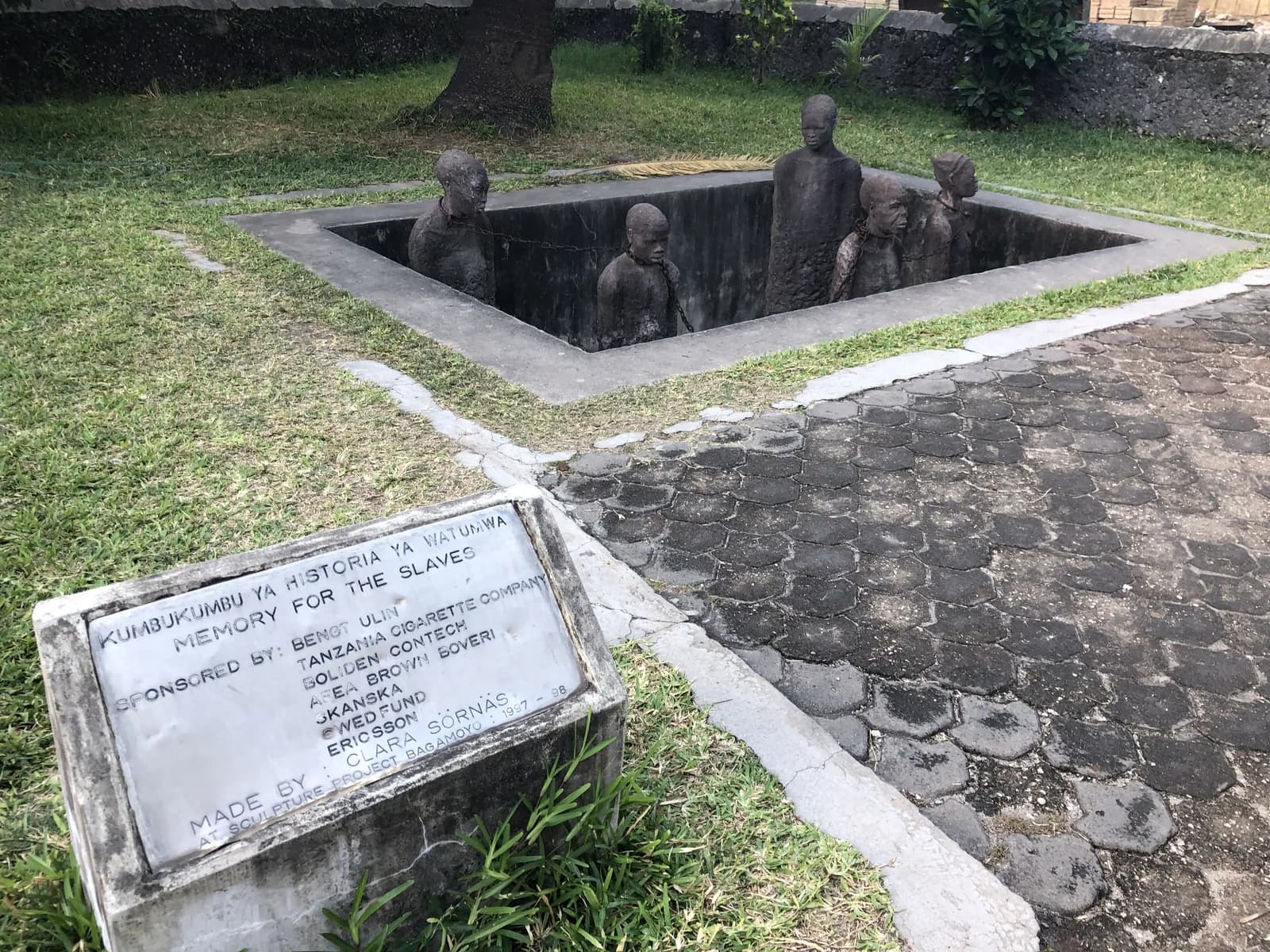
Zanzibar has around 22,000 Christians, many of them from the mainland, plus Hindu, Jain and Sikh families descended from Indian traders. The two buildings visitors see are the Catholic St Joseph's Cathedral, whose twin spires rise over the Baghani quarter, and the Anglican Christ Church, built on the site of the last slave market. Christ Church is open 9 am to 6 pm daily for $5 (adults and children over ten), a ticket that also covers the museum and the slave chambers. It is the stop every Stone Town walk builds around.
Relations between faiths are calm. Since 2005, Muslim and Christian leaders have sat together on a joint committee for peace, and you will hear the call to prayer and church bells within a few streets of each other.
Zanzibar religion before Islam
Older traditions did not disappear. The clearest is Mwaka Kogwa, the Shirazi New Year of Persian origin, held at Makunduchi in the south of Unguja in late July, with a mock fight with banana stems and the ritual burning of a hut. Belief in spirits and in healers, the waganga, also lives on alongside Islam in the villages.
Zanzibar dress code: what to wear in Stone Town, villages and on the beach
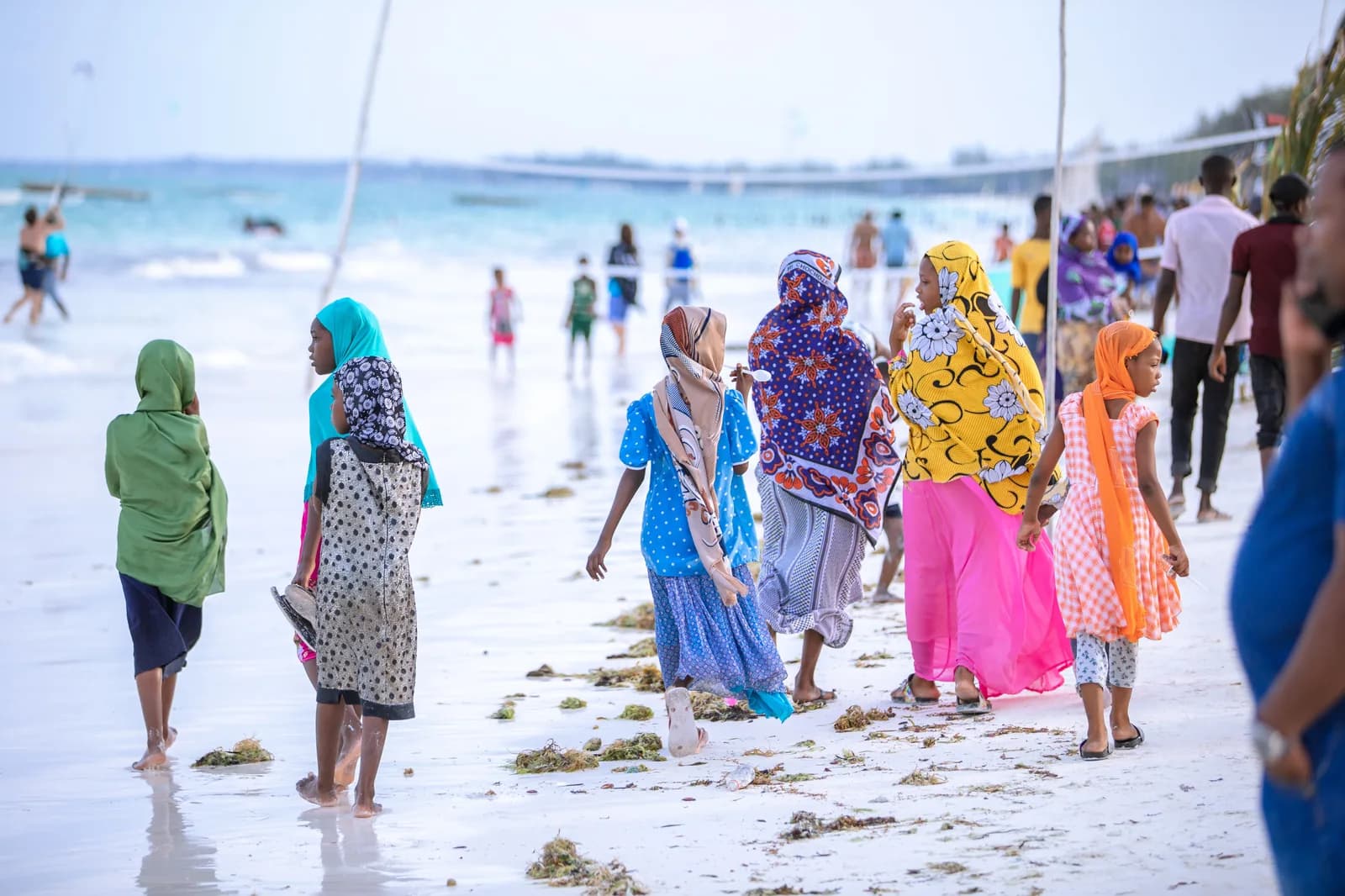
The rule is simple: swimwear on the beach and inside your hotel, shoulders and knees covered everywhere else. It applies to men as much as to women. Zanzibari women wear the kanga, a printed cotton wrap, or the black buibui. Men wear trousers, often the long white kanzu and the embroidered kofia cap on Fridays. Nobody expects you to dress like them, only not to dress like you are at the pool.
| Where | What to wear |
|---|---|
| Stone Town streets and markets | Shoulders and knees covered, for men and women. No swimwear, no bare chests. |
| Villages, including those behind the beaches | Same as town. A kanga or sarong over swimwear when you walk up from the sand. |
| Resort beach and hotel grounds | Swimwear is fine. Topless and nude sunbathing are not, anywhere. |
| Public beach in front of a village | Swimwear on the sand. Cover up before the path back through the houses. |
| Mosques | Ask before entering. If allowed: shoes off, arms and legs covered, women cover their hair. |
| Christ Church cathedral | Shoulders and knees covered. Scarves are usually available at the door. |
What women should wear in Zanzibar
In town, cover shoulders, cleavage and stomach, with a skirt, dress or trousers that reach below the knee. Loose linen and cotton are cooler than anything tight. Sheer fabric over a bikini does not count. You do not need to cover your hair in the street, only in a mosque. The single most useful item is a kanga or sarong in the day bag, which you can buy for a few dollars in Darajani market and wear over shorts.
What men should wear in Zanzibar
No bare chests off the beach, including on the walk from the sand to a village shop. Shorts to the knee are tolerated in tourist streets, but long trousers are better in Stone Town and for any visit to a mosque or a family home. A vest top in town gets the same looks as a bikini.
Beachwear and resorts
On the beaches of Nungwi, Kendwa or Paje and inside hotel grounds, wear what you would anywhere. Two limits hold everywhere: no topless or nude sunbathing, including on private hotel beaches, and no thongs. Many beaches front a working village, so the path behind them is a street, not part of the resort.
In 2021 the Zanzibar tourism ministry reminded guides and tour operators that they are responsible for how their clients dress in public, after cases of public nudity by tourists. The pressure lands on your guide, which is why a good one will ask you to cover up before a village walk.
Ramadan in Zanzibar: 2027 dates and what changes for visitors
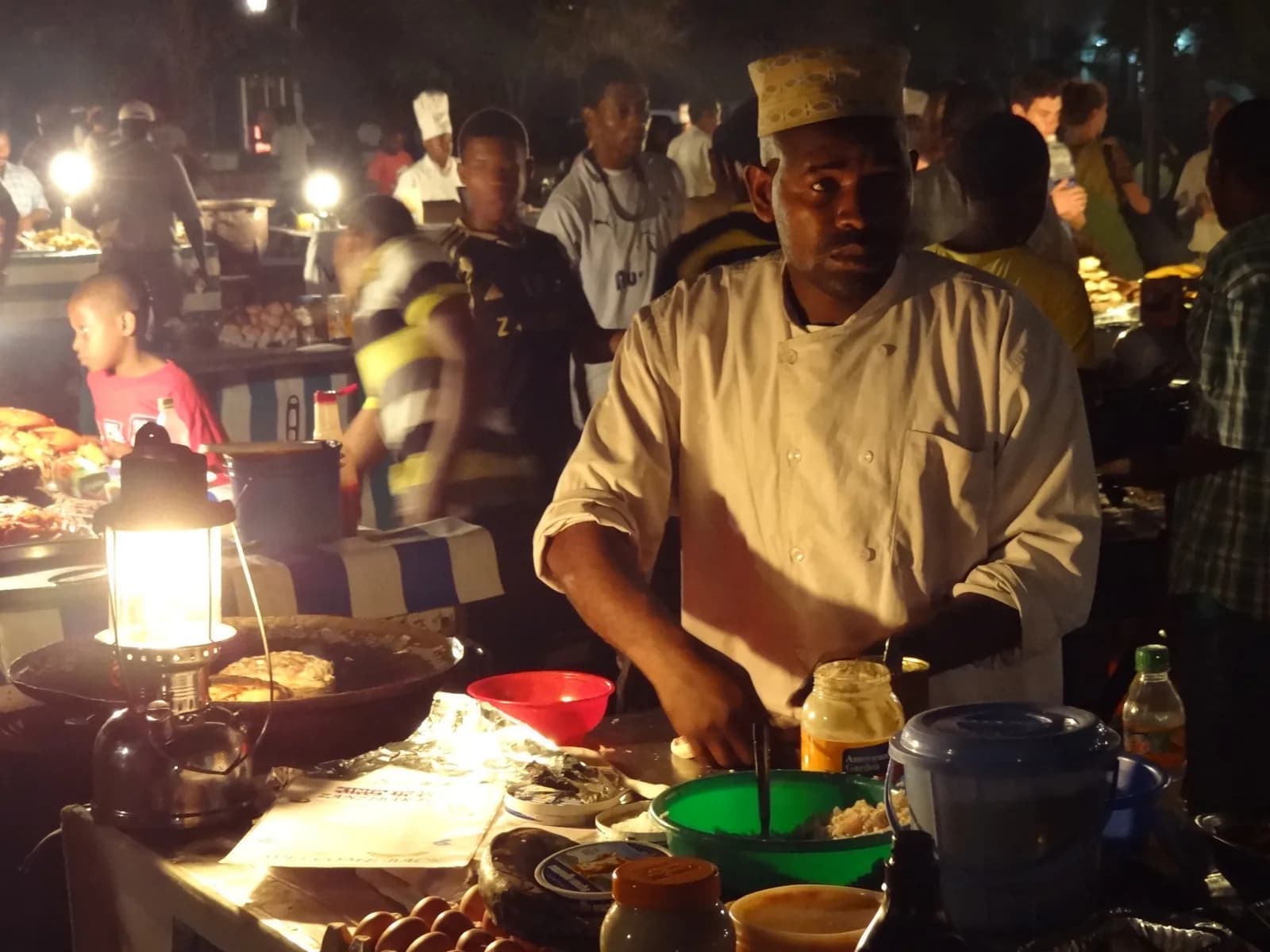
Ramadan 2027 is expected to begin around Monday 8 February 2027, with Eid al-Fitr around Tuesday 9 March. The dates are announced the evening before by the Chief Kadhi's office, after the new moon is sighted, so a day either way is normal. Muslims fast from dawn to sunset, about 13 hoursat Zanzibar's latitude.
The rules for visitors are written down. The Zanzibar Commission for Tourism published its guidelines on 11 February 2026, and the 2027 version is likely to repeat them:
- Restaurants, bars and food outlets outside hotels close during the day and reopen at sunset for iftar.
- Hotels keep serving their registered guests, in designated areas.
- No eating, drinking or smoking in public in daylight hours.
- Modest dress in public, with swimwear limited to beaches and hotel grounds.
The commission described the measures as educational rather than punitive, and nobody will confront you. In practice, a beach resort runs almost normally, while Stone Town is sleepy by day and busy after dark. Public offices work shorter hours, roughly 8 am to 2 pm, and the Forodhani night market is at its best once the fast is broken.
Eid and the other religious holidays in 2027
Eid al-Fitr (about 9 March) is two or three days of visits, new clothes and crowded beaches, when banks and many shops close. Eid al-Adha falls around 16 May 2027and Maulid, the Prophet's birthday, around 14 August, both public holidays. If your trip overlaps, withdraw cash beforehand. How Ramadan fits with the weather and prices month by month is on our when to go to Zanzibar page.
Should you avoid Zanzibar during Ramadan?
No. Hotels, beaches and excursions carry on, and the evenings in Stone Town are the liveliest of the year. Choose a hotel with its own restaurant, and keep water bottles in the bag rather than in your hand in town.
Alcohol in Zanzibar: where you can drink and where you cannot
Alcohol is legal for adults and served in hotels, resorts and licensed bars and restaurants, which covers almost everywhere a visitor eats on the coast. Kilimanjaro and Safari beers are the standard, and the beach bars of Nungwi and Kendwa stay open late, as our Zanzibar nightlife guide explains. Local shops and Muslim-run restaurants generally do not sell it, and a few heritage hotels in Stone Town serve none.
Where it goes wrong is drinking in the street or on a public beach in front of a village. It is not tolerated and is occasionally enforced. Take the bottle back to the bar or the hotel.
Ramadan tightens this further. On 11 March 2026 the government of Zanzibar announced a ban on alcohol sales in all non-tourist areas for the whole month, even for licence holders, with only authorised tourist hotels allowed to continue. Expect the same in February 2027: the hotel bar works, the bar in town may not.
Photographing people in Zanzibar: ask first
Always ask before photographing someone, and especially women and children. Many Zanzibaris, women in particular, do not want their picture taken, for religious reasons as much as for privacy. The Swahili is Naweza kupiga picha?, "may I take a photo?", and the answer is often yes when you ask with a smile. Some people, fishermen or market traders, will ask for a small tip in return. Point the camera at a crowd at Darajani and you will get shouted at, fairly.
Government buildings, police and military sites are off limits in practice. Inside Christ Church, photos for personal use are allowed except at the altar. In a mosque, ask, and assume the answer is no during prayer.
Kissing and public affection in Zanzibar
Holding hands is fine, kissing in public is not, in Stone Town or in the villages. On resort beaches and in hotel bars nobody notices. Same sex relationships are illegal under Zanzibar law, prosecutions of visitors are practically unknown, and discretion is the working advice, as our Zanzibar safety guide sets out with the other rules visitors run into.
Friday in Zanzibar: midday prayer and what closes
The call to prayer sounds five times a day, the first one before dawn: if you sleep in Stone Town, it will wake you. Friday is the day of collective prayer, the Jumu'ah, held around 12:30 to 1:30 pm depending on the season. Men in white kanzu and kofia fill the streets around the big mosques, and many shops and market stalls close from late morning until early afternoon.
For a visitor it changes little: plan Stone Town shopping for the morning or after 3 pm on a Friday, and do not schedule a meeting with a local business at midday. The weekend is Saturday and Sunday, as on the mainland, so offices and banks are open on Friday mornings.
Tipping in Zanzibar: how much for guides, drivers and hotel staff
Tipping is voluntary but expected in tourism, where wages are low. Give cash, in US dollars or Tanzanian shillings, and give hotel tips through the shared box at reception rather than to one person, so that kitchen and cleaning staff get a share. These are the amounts Expert Africa recommends:
| Who | Usual tip |
|---|---|
| Airport or hotel transfer driver | $3 to $5 per journey |
| Guide for a day (Stone Town, snorkelling, diving) | $8 to $10 per guest per day |
| Hotel staff, shared tip box | $3 to $5 per guest per day |
| Butler or private chef | $5 to $10 per day |
| Restaurant with table service | Around 10 per cent, if no service charge |
| Hotel or lodge manager | Not tipped |
Small notes are the problem, not the amount: change big notes at the hotel before an excursion. Do not hand sweets or money to children in the villages, it teaches them to chase cars. Exchange rates and how much cash to carry are on our Zanzibar money guide.
Greetings and manners in Zanzibar
Zanzibaris greet before they ask anything, and skipping the greeting to get to the question is the most common faux pas visitors make. A Jambo or Habari? to a shopkeeper, and Shikamoo, the respectful greeting, to an older person, changes the tone of the conversation. Our Swahili phrases for Zanzibar gives the replies too.
- Use the right hand to eat, to pay and to hand something over. The left is considered unclean.
- Take your shoes off when you enter a home, a mosque or some shops with carpets.
- Elders come first: greet them first, let them through a door first, and do not argue loudly in front of them.
- Shells and coral stay on the beach. Collecting them damages the reef, and exporting coral is banned.
Zanzibar population and languages
The 2022 census counted 1,889,773 people in Zanzibar, up from 1.3 million in 2012, a growth of about 3.8 per cent a year. Adding up the regions gives about 1,346,000 on Unguja, the main island, and 543,441 on Pemba. Almost half live in the Urban West region, around Stone Town and Zanzibar City (893,169). Older figures for Pemba, such as 362,166, still circulate online and date from earlier censuses.
| Region (2022 census) | Population |
|---|---|
| Urban West (Mjini Magharibi), Unguja | 893,169 |
| North Unguja (Kaskazini Unguja) | 257,290 |
| South Unguja (Kusini Unguja) | 195,873 |
| North Pemba (Kaskazini Pemba) | 272,091 |
| South Pemba (Kusini Pemba) | 271,350 |
| Zanzibar total | 1,889,773 |
What language do they speak in Zanzibar?
Swahili is the first language of almost everyone, and the Zanzibar dialect, Kiunguja, is the base of standard Swahili across East Africa. English is spoken throughout the tourist trade, in hotels, by guides and at the airport, less so in the villages. Arabic is the language of the mosque and the Quran school. Outside a few families of Omani descent, very few people speak it day to day.
Who are the people of Zanzibar?
Most Zanzibaris are Swahili, a coastal African people whose culture grew out of a thousand years of Indian Ocean trade. Persian (Shirazi), Omani Arab, Somali and Indian ancestry runs through many families. At independence in the early 1960s, about 56 per cent of islanders described themselves as Shirazi and 17 per cent as Arab. Zanzibar is part of Tanzania but keeps its own government, which is why it sets its own rules on alcohol and dress, as explained in is Zanzibar a country?
Questions people ask about religion in Zanzibar
What is the main religion in Zanzibar?
Islam. Estimates range from about 97 to 99 per cent of the population, most of them Sunni. There are small Shia communities of Indian origin, around 22,000 Christians, and Hindu, Jain and Sikh families in Stone Town.
Do they drink alcohol in Zanzibar?
Most Zanzibaris do not, because they are Muslim. Visitors can: alcohol is legal and sold in hotels, resorts and licensed bars and restaurants. Drinking in the street or on a public beach in front of a village is not acceptable, and during Ramadan sales outside tourist areas are banned.
Can you kiss in public in Zanzibar?
Not in Stone Town or in the villages. Holding hands is fine. Kissing and anything more reads as offensive in a conservative Muslim society, even if nobody says so. Inside resorts and at beach bars people are more relaxed.
What should I wear in Zanzibar?
Swimwear on the beach and inside your hotel, shoulders and knees covered everywhere else, for men as well as women. Light cotton trousers, a long skirt or a kanga tied over shorts all work. Topless sunbathing is not accepted anywhere.
Do they speak Arabic in Zanzibar?
Very few people speak it day to day. Swahili is the first language of almost everyone and English is spoken throughout the tourist trade. Arabic is the language of the Quran and the mosque, and some older families of Omani descent still use it at home.
Is Zanzibar African or Indian?
African, with a long Indian Ocean mix. Most Zanzibaris are Swahili, a coastal Bantu people, with Persian (Shirazi), Omani Arab and South Asian ancestry woven in over a thousand years of trade. The Indian communities of Stone Town are a minority with their own mosques and temples.
Is Zanzibar safe for tourists given the religious rules?
Yes. The rules shape how you are received rather than whether you are safe, and they are rarely enforced against visitors. The real risks are petty theft after dark and the sea, which are covered on our Zanzibar safety page.
When is Ramadan in Zanzibar in 2027?
It is expected to start around 8 February 2027 and end with Eid al-Fitr around 9 March 2027. Both dates depend on the sighting of the new moon and are confirmed by the religious authorities the evening before.