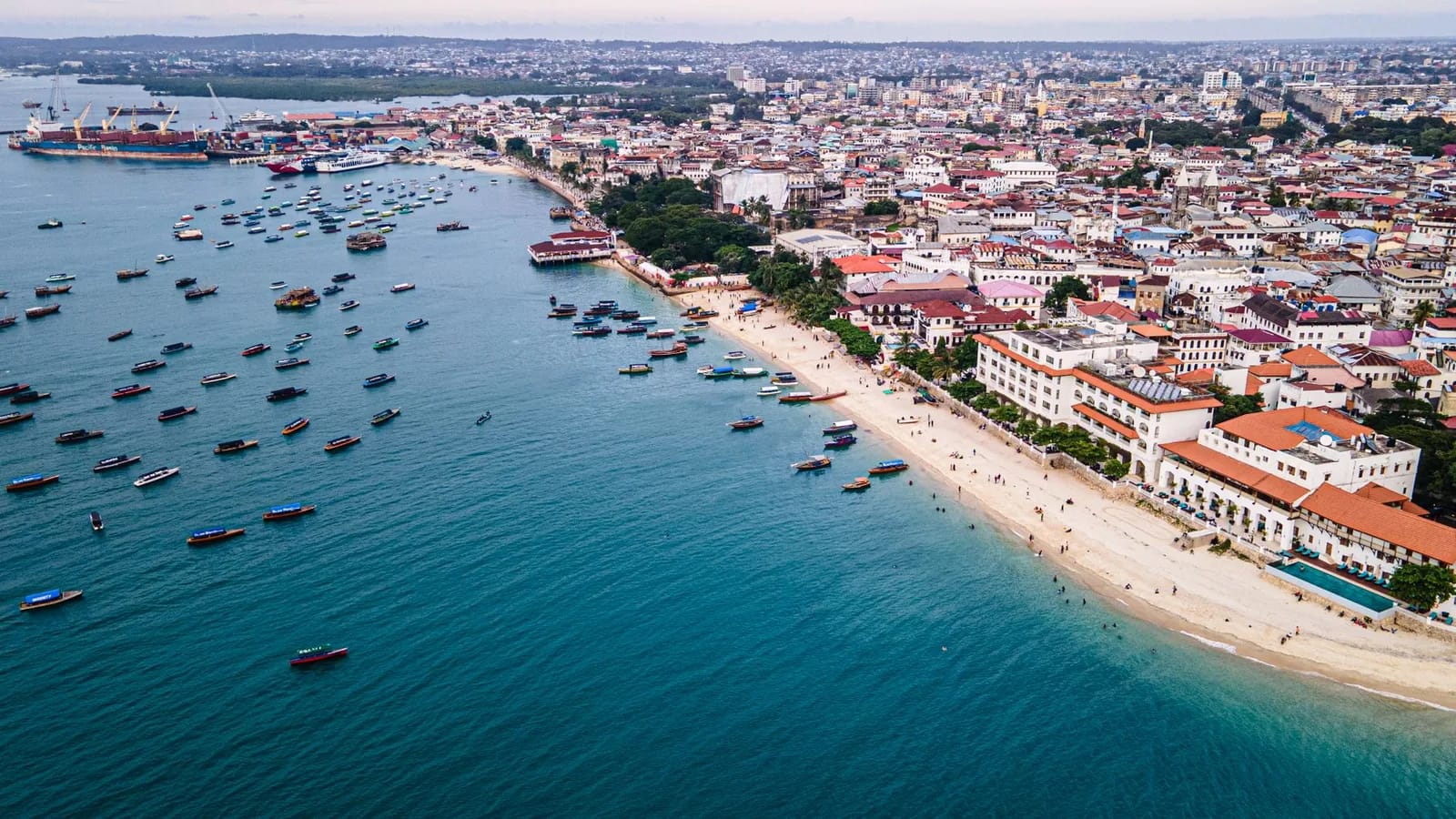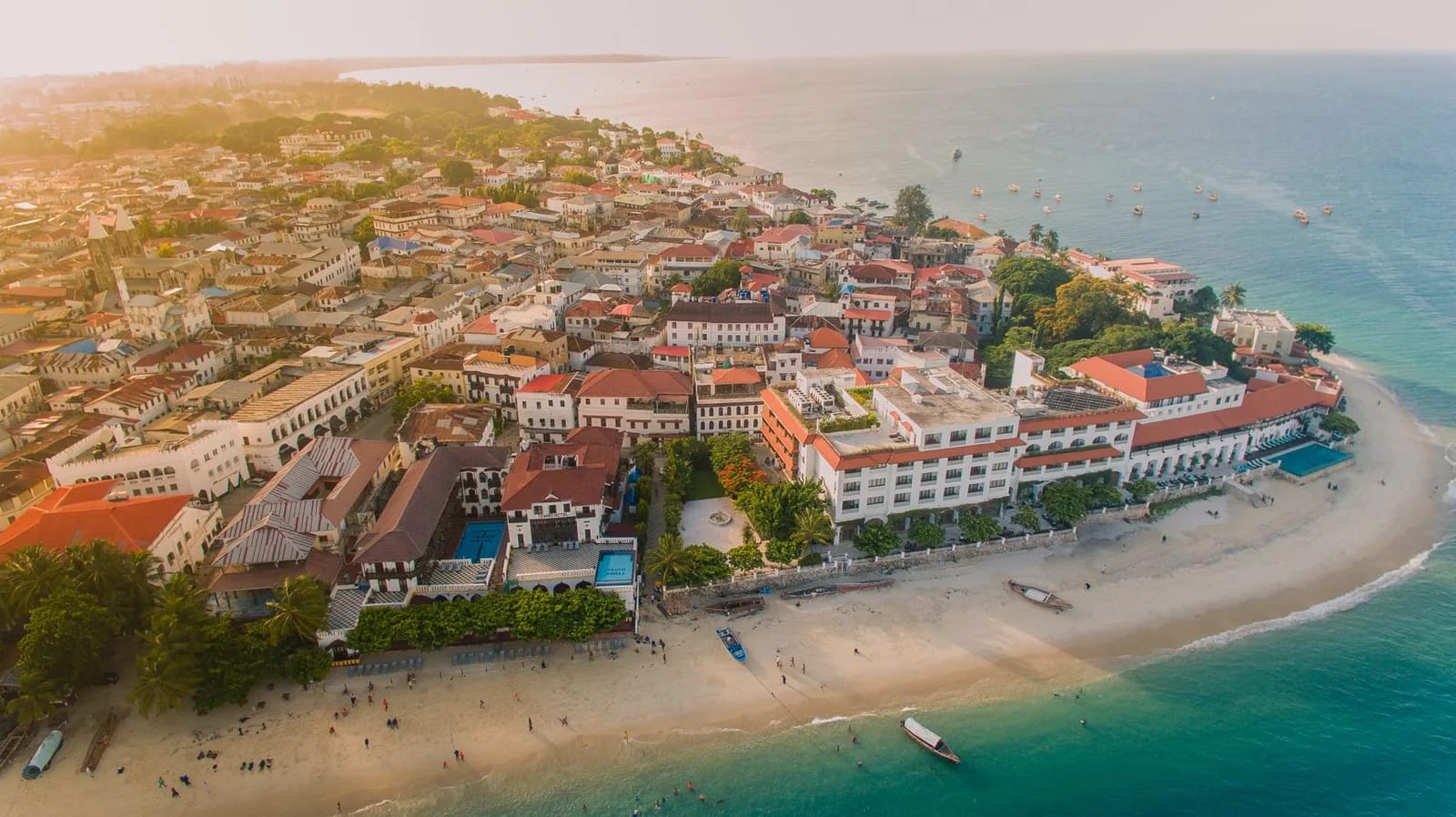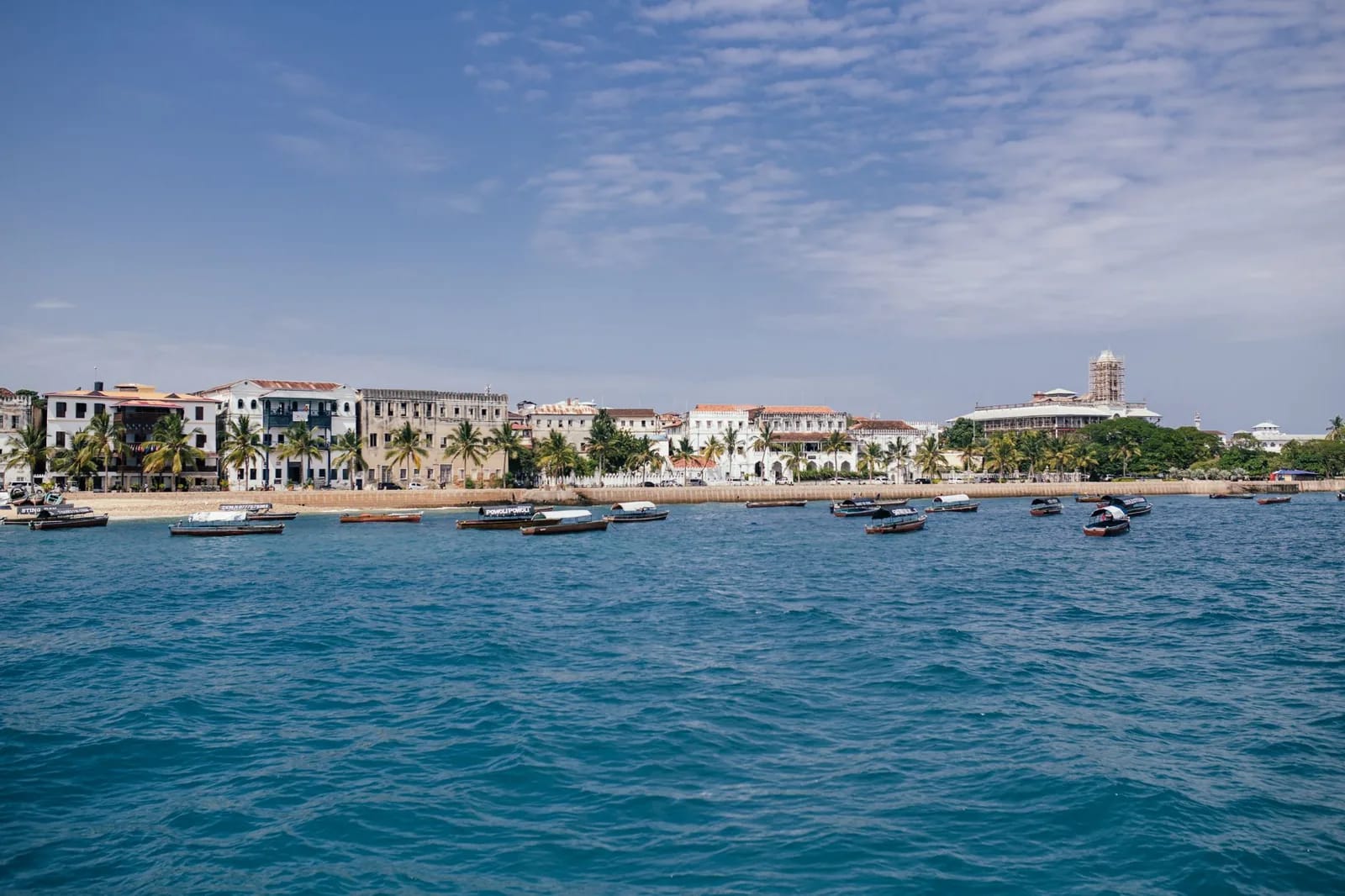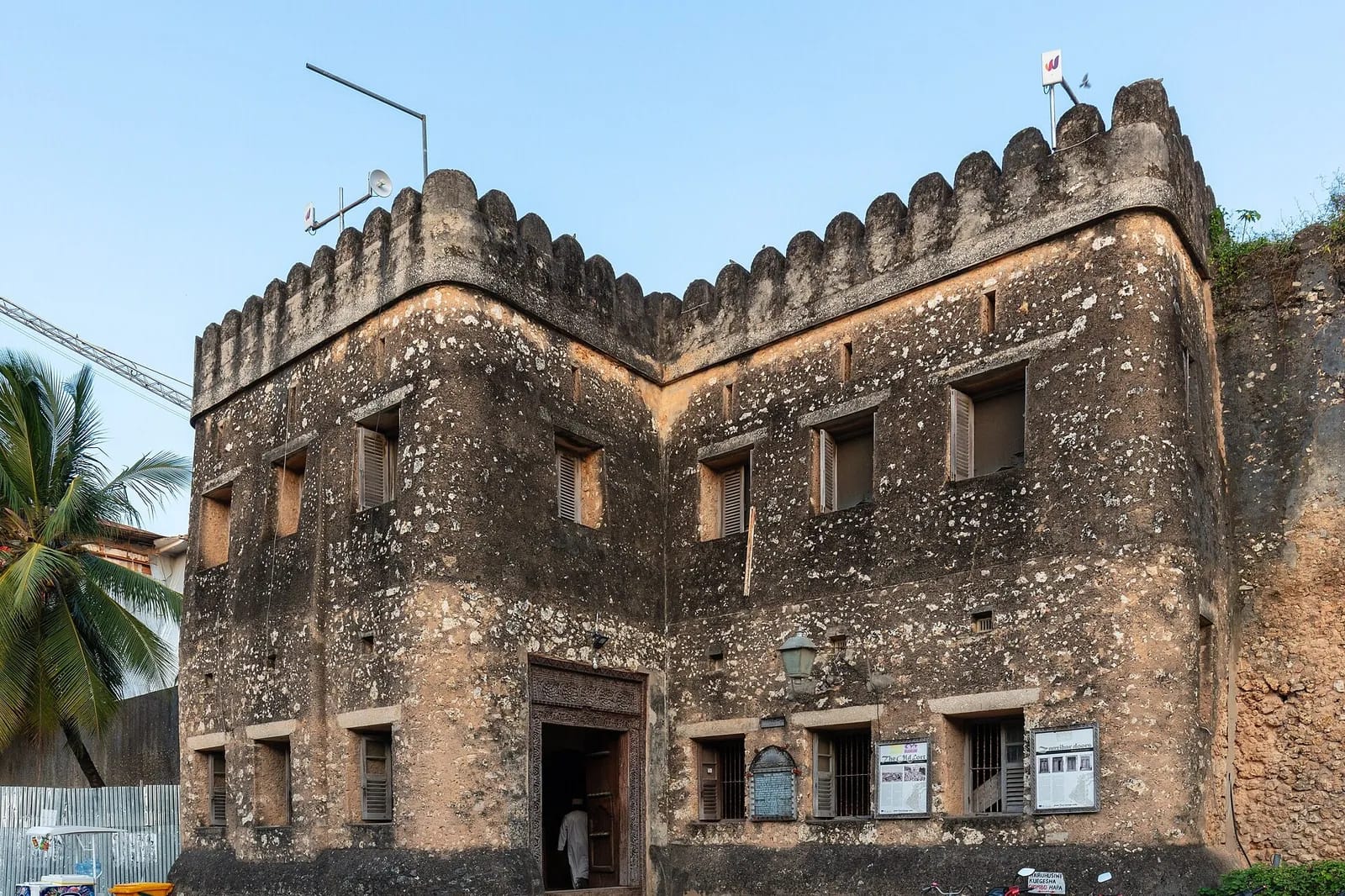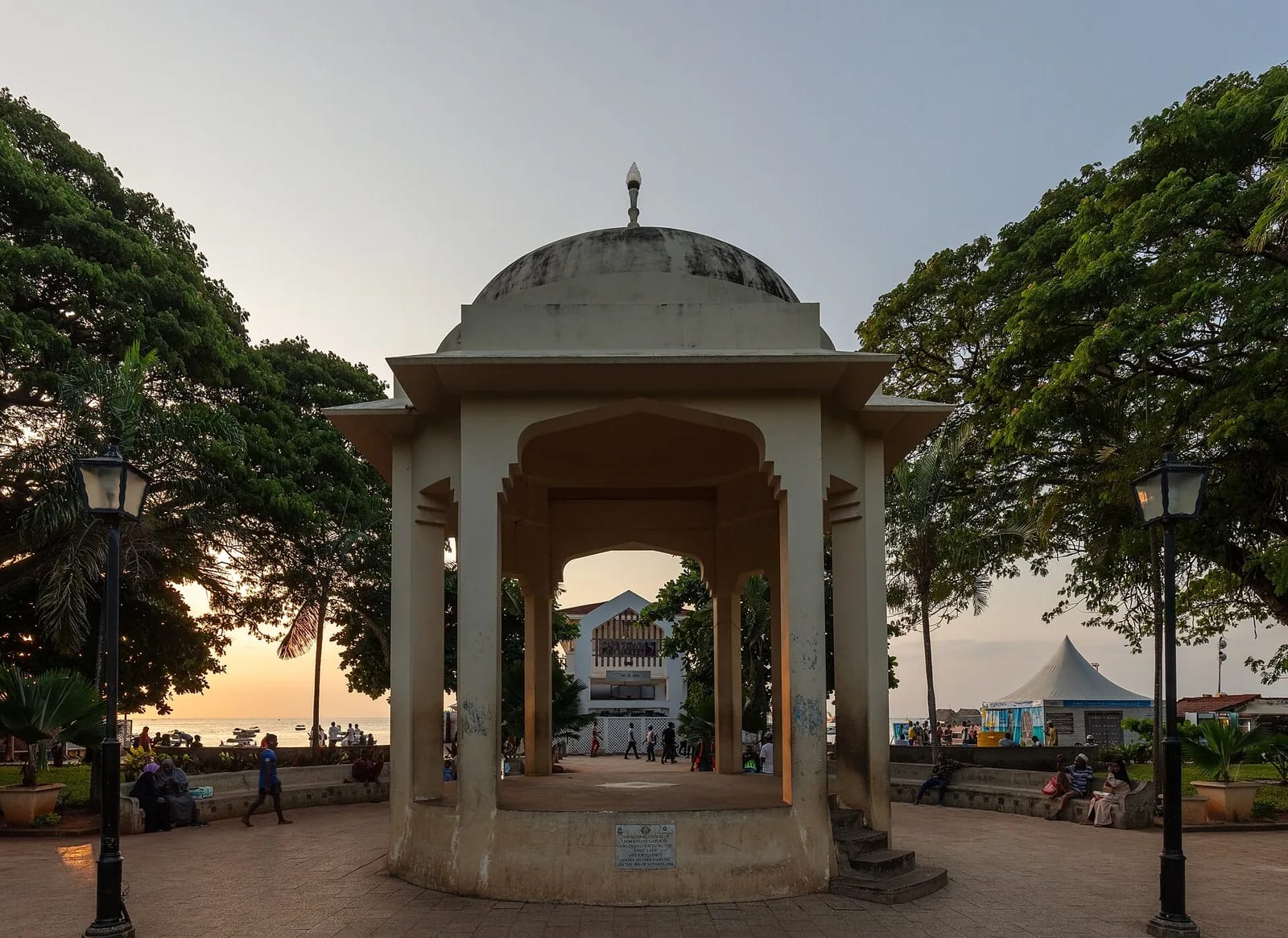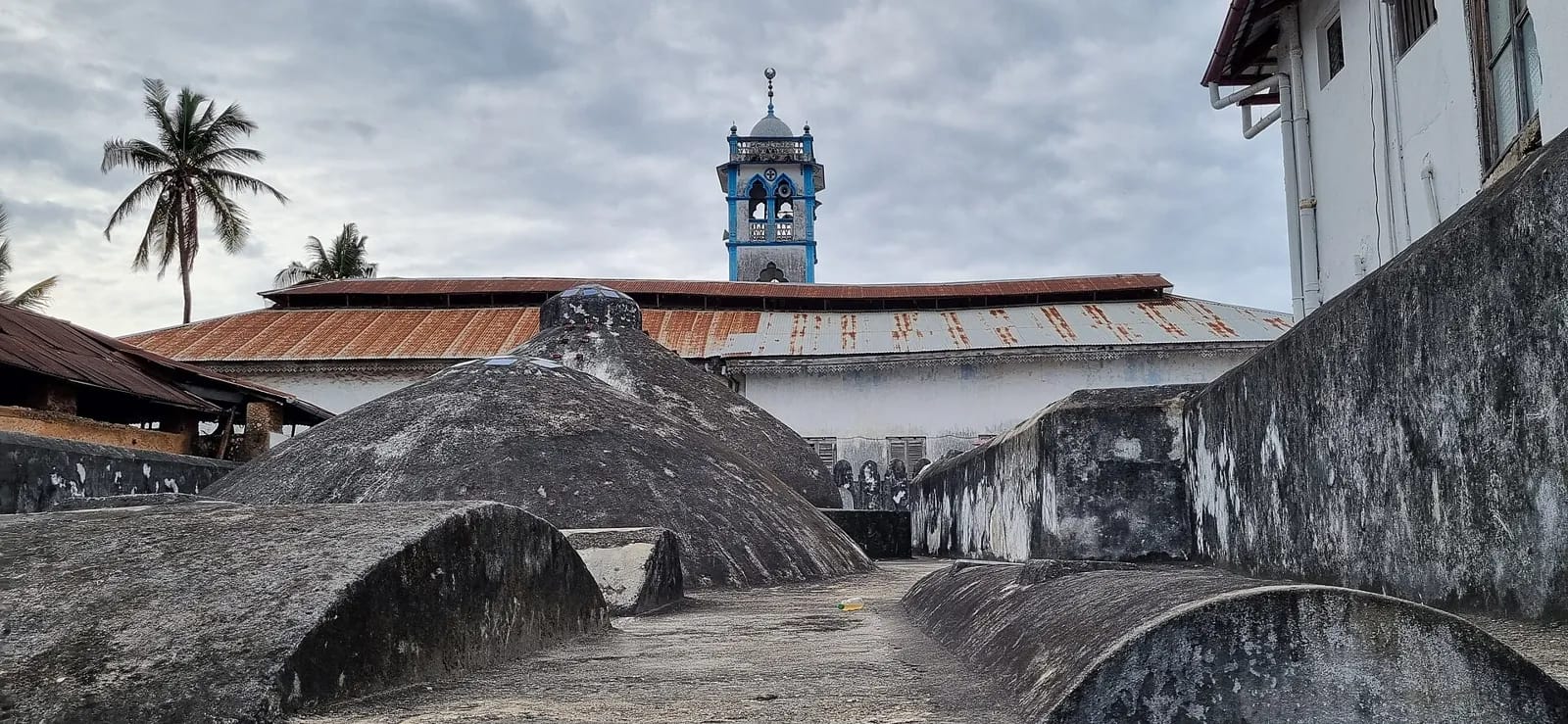
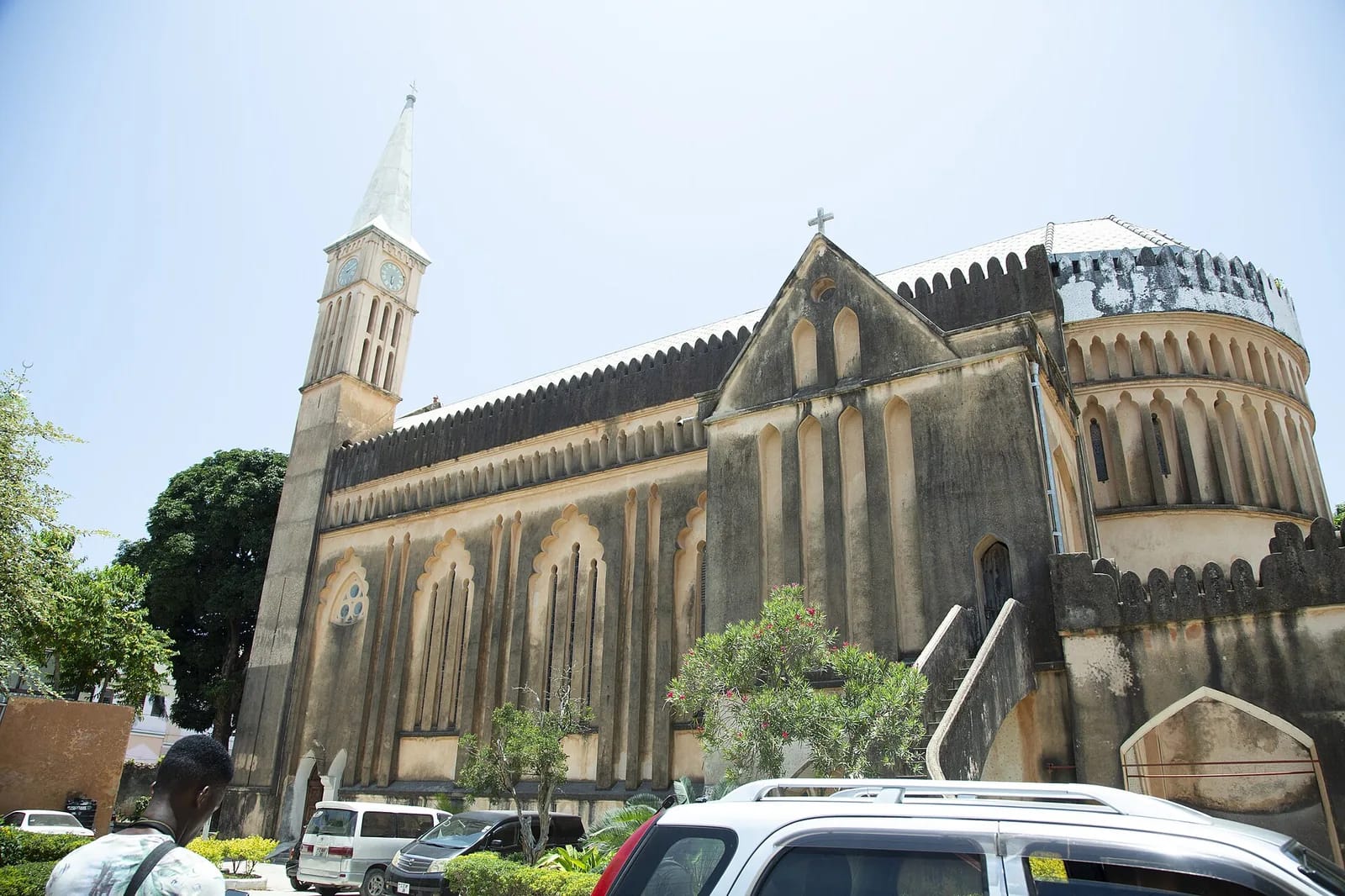
The former slave market in Zanzibar is in the Mkunazini quarter of Stone Town, ten minutes on foot from the Darajani market. Expect to pay about $5 in cash, give it an hour, and go before anything else in the old town.
| Where | Mkunazini, Stone Town, entrance on New Mkunazini Road |
|---|---|
| Entry | About $5, some visitors charged $10, cash |
| Hours | Daily, roughly 8:00 or 8:30 to 18:00 |
| Time needed | One hour, ninety minutes with a guide |
| Ticket covers | Exhibit, chambers, memorial and cathedral |
| Closed as a market | 5 June 1873, under Sultan Barghash |
Visiting the slave market in Zanzibar: entrance fee, hours and the ticket in 2026
You enter from New Mkunazini Road, through a security check where bags are opened, and buy the ticket at a desk just behind it. The ticket is a single one for the whole site. Most visitors in 2025 and 2026 report $5 per person, or about 11,500 Tanzanian shillings, and a minority were asked for $10. Bring small notes: cards are not reliable here, change is short and nobody refunds an overpayment.
The site opens every day from about 8:00 or 8:30 until 18:00. No official page publishes the hours, so treat them as a guide and ask at your hotel the evening before. The best hour is the first one. By mid morning the day tours from the north and east coasts arrive and the small chambers fill up.
The visit follows the same order for nearly everyone:
- 1
The East Africa Slave Trade Exhibit
The former mission building by the gate. Start here, because the panels explain what the chambers and the memorial are about.
- 2
The two slave chambers
Two low cellars under the old mission, with a stone ledge and a gutter. Five minutes is enough, and most people do not want longer.
- 3
The Slave Market Memorial
Clara Sörnäs's five chained figures in a pit in the garden, unveiled in 1998. The photograph everyone has seen of Zanzibar's slave trade.
- 4
Christ Church Cathedral
The Anglican cathedral built on the market from 1873, with the altar over the whipping post and a crucifix made from Livingstone's tree.
Covered by the ticket
The exhibit, both chambers, the memorial garden and the inside of Christ Church Cathedral. A guide is not included unless your tour says so, and the gift shop by the entrance is optional.
Stone Town tours that stop at the slave market
Check each listing for the entry ticket, because many walking tours only stop at the gate.
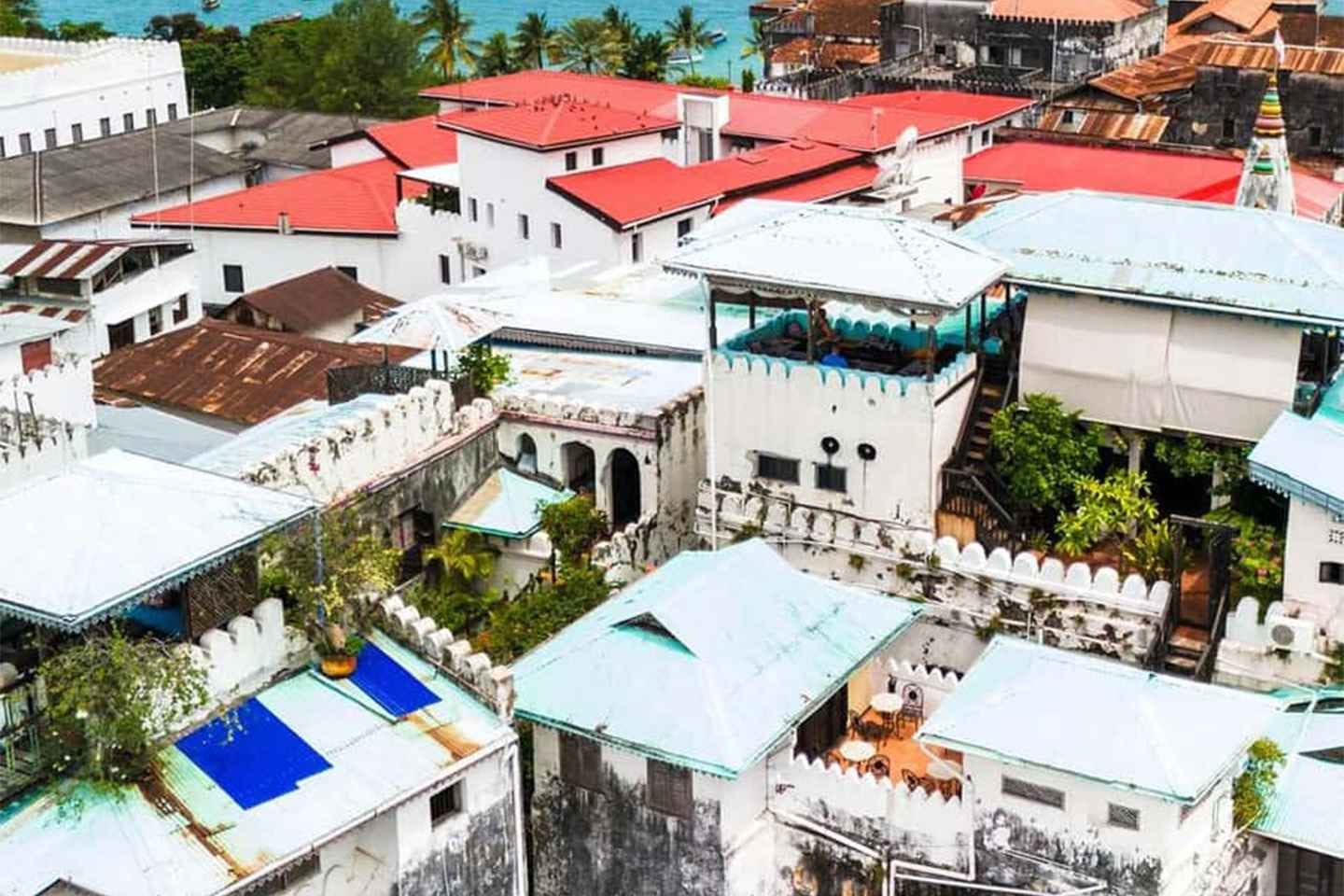
Stone Town Guided Tour: Culture, Slave Market & Spice Market
A guided walk with the slave market named in the programme, plus the old town lanes and the spice market.
- 2.5 to 3 hours
- Hotel pickup included
- Free cancellation
4.8(137 reviews)
from$19per person
Check prices & availability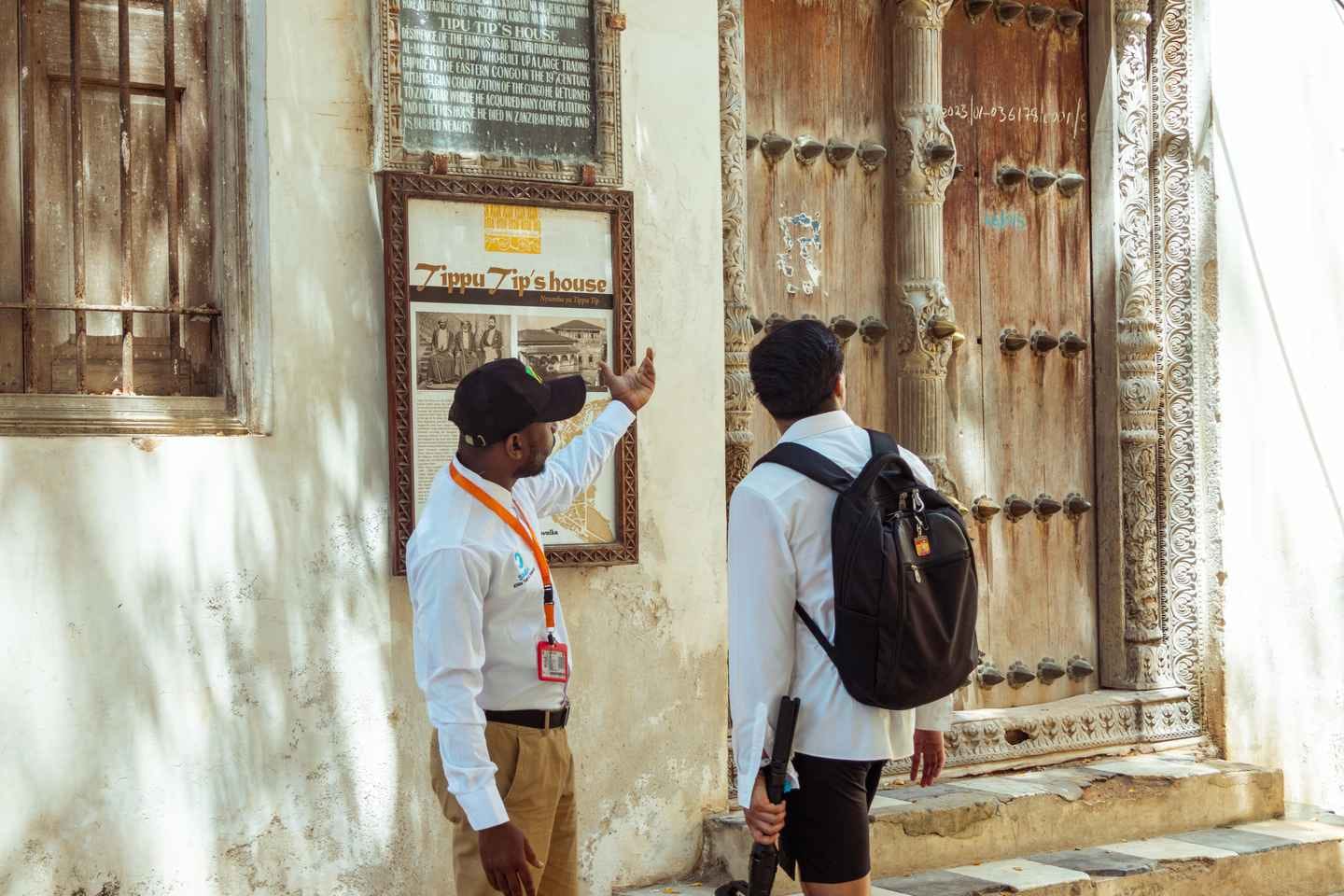
Stone Town, Local Life & Cultural Guided Tour
The all-round walk of the old town, good if you want the slave market framed by the rest of its history.
- 2 to 5 hours
- Hotel pickup included
- Free cancellation
4.5(217 reviews)
from$25per person
Check prices & availability
Zanzibar Stone Town Walking Tour: History, Culture and Hidden Gems
A history-led walk through Stone Town, from the trading houses to the lanes behind them.
- 2.5 to 3 hours
- Hotel pickup included
- Free cancellation
4.9(20 reviews)
from$17per person
Check prices & availabilityAll activities in Stone Town
The East Africa Slave Trade Exhibit: the museum on the market site
The exhibit fills the two floors of the old mission building by the gate, built by the Universities' Mission to Central Africa as a clinic in 1877 and turned into a hospital in 1893. It is the only museum in Zanzibar about the slave trade, and it is the part of the site that explains the rest.
The panels follow the route of a captive: the raids in the interior, around Lake Nyasa and in what is now eastern Congo, the march to the coast at Bagamoyo or Kilwa, the crossing in a dhow, the sale here, and then the plantations or the ships to Arabia. A later section covers the British treaties and the legacy in Swahili society.
Visitors often say the text is dense and some panels look dated. That is fair. Read it anyway, and give it thirty minutes before you go down to the chambers. Without it, the cellars are two dark rooms.
The slave chambers in Zanzibar: what is under the old mission
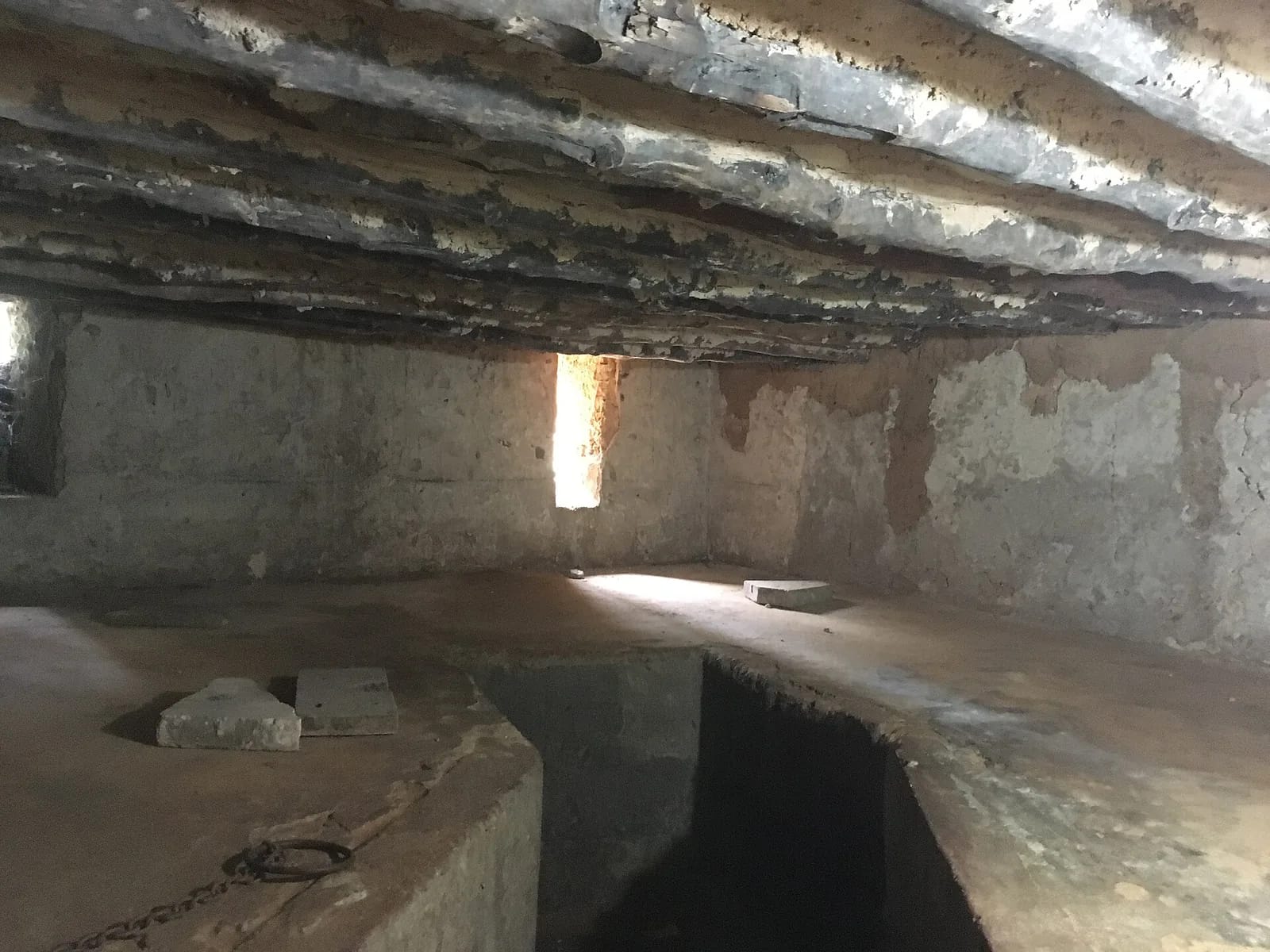
Two cellars survive under the mission building, reached down a short flight of steps. The ceiling is too low to stand straight, the only light comes through small slits at street level, and a raised stone ledge runs round the walls with a channel cut in the floor below it. They have been left bare.
Guides say that around 50 men were held in one room and around 75 women and children in the other, waiting for the market day. Those numbers come from the oral accounts guides repeat, not from records of the market, and we have not found an archive that confirms them. What nobody disputes is that the market ran on this ground and that people were held close to it before sale.
In the chambers
The space is cramped and airless and the step down is steep. If you are claustrophobic, stay at the door, you see the whole room from there. Phone torches are fine, flash photos of other visitors are not.
The Slave Market Memorial in Stone Town
In the garden in front of the cathedral, five figures, men and women, stand in a pit with iron collars round their necks, joined by a chain. The sculpture is by the Swedish artist Clara Sörnäs, unveiled in 1998, and is called Kumbukumbu ya Historia ya Matumwa, the memorial of the history of the slaves.
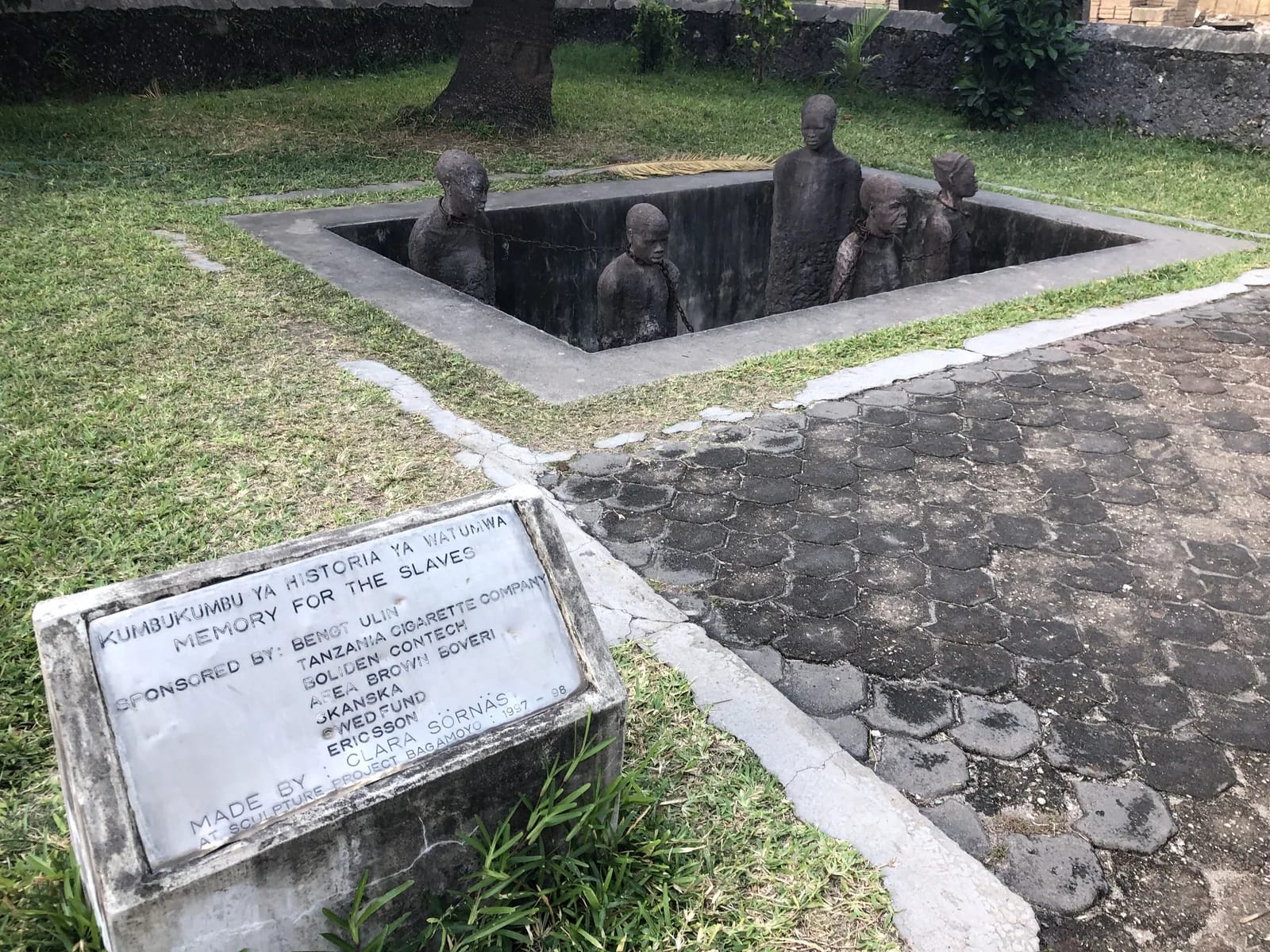
The figures are set below ground level, so you look down at them, the way buyers looked at people in the market. It is the most photographed spot on the site. Take your picture from the edge and step back for the next person, rather than posing beside the figures.
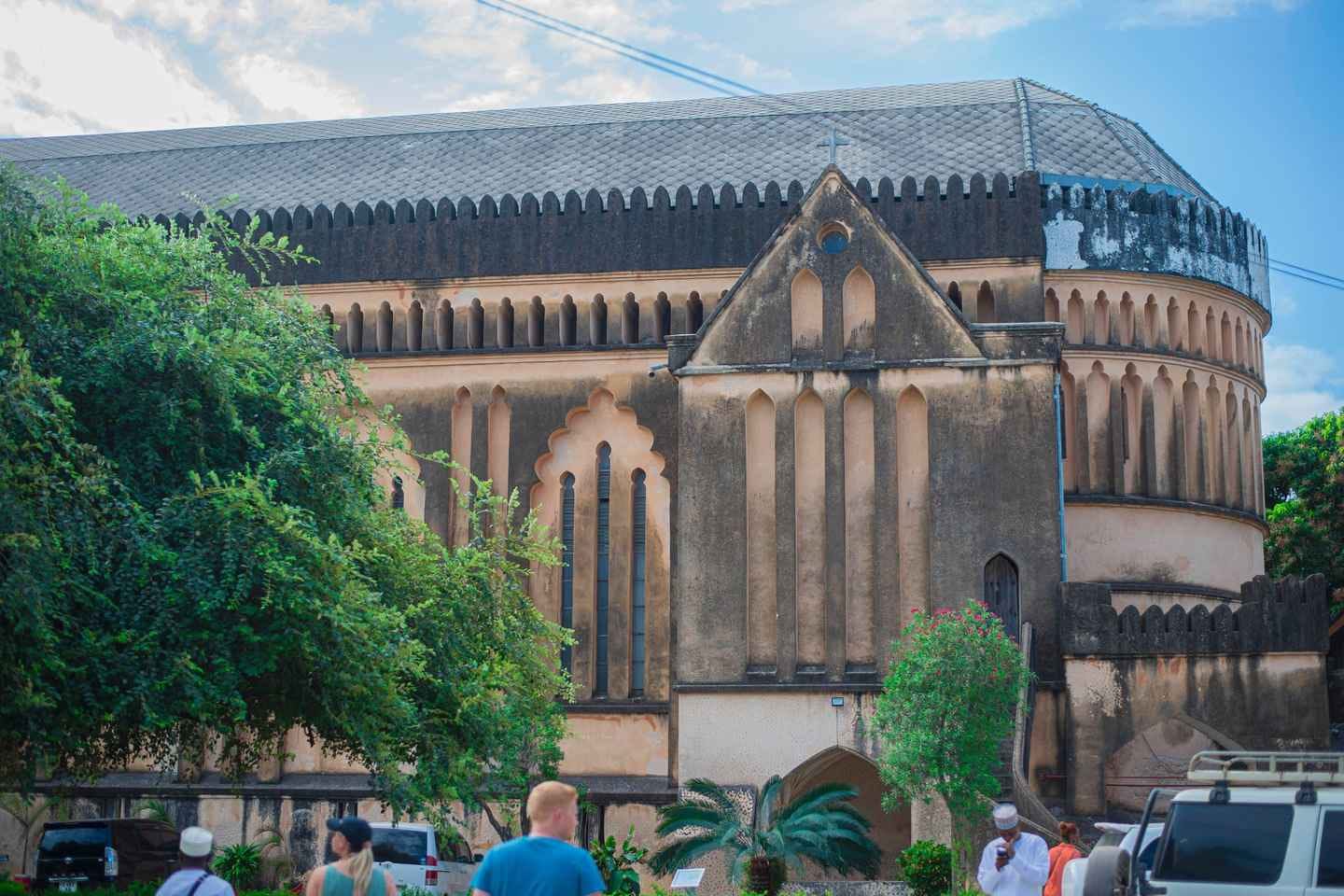
Christ Church Cathedral, Zanzibar: the church built on the market
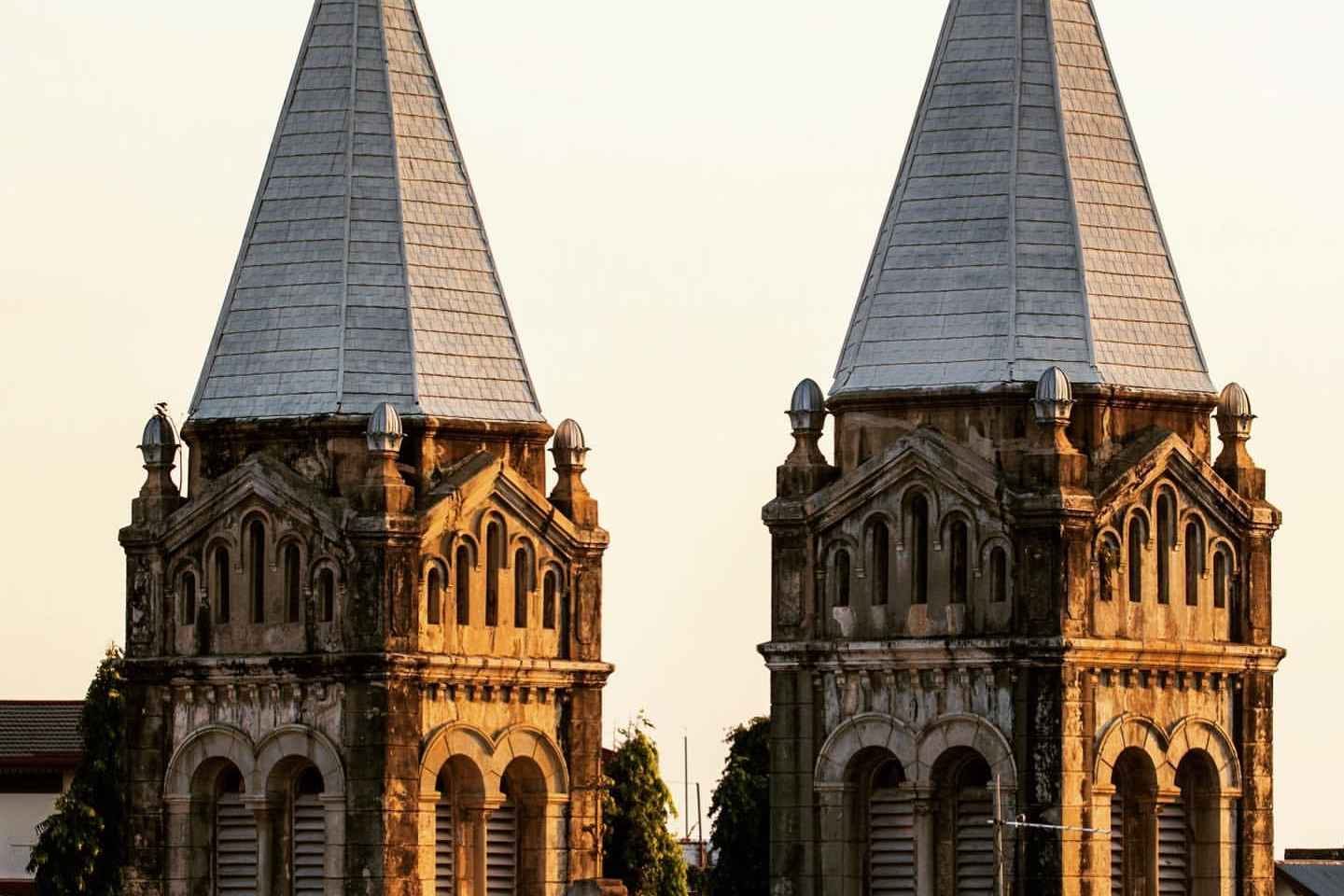
When the market closed in 1873, the Universities' Mission to Central Africa acquired the ground and decided to build a church on it. Bishop Edward Steere laid the foundation stone on Christmas Day 1873, the first service was held at Christmas 1879, and the cathedral was consecrated in 1903. It belongs to the Anglican Church of Tanzania, Diocese of Zanzibar, which runs the whole site.
The building mixes Gothic arches with Islamic and Swahili details, in coral rag stone, under a barrel vault that Steere had cast in concrete.
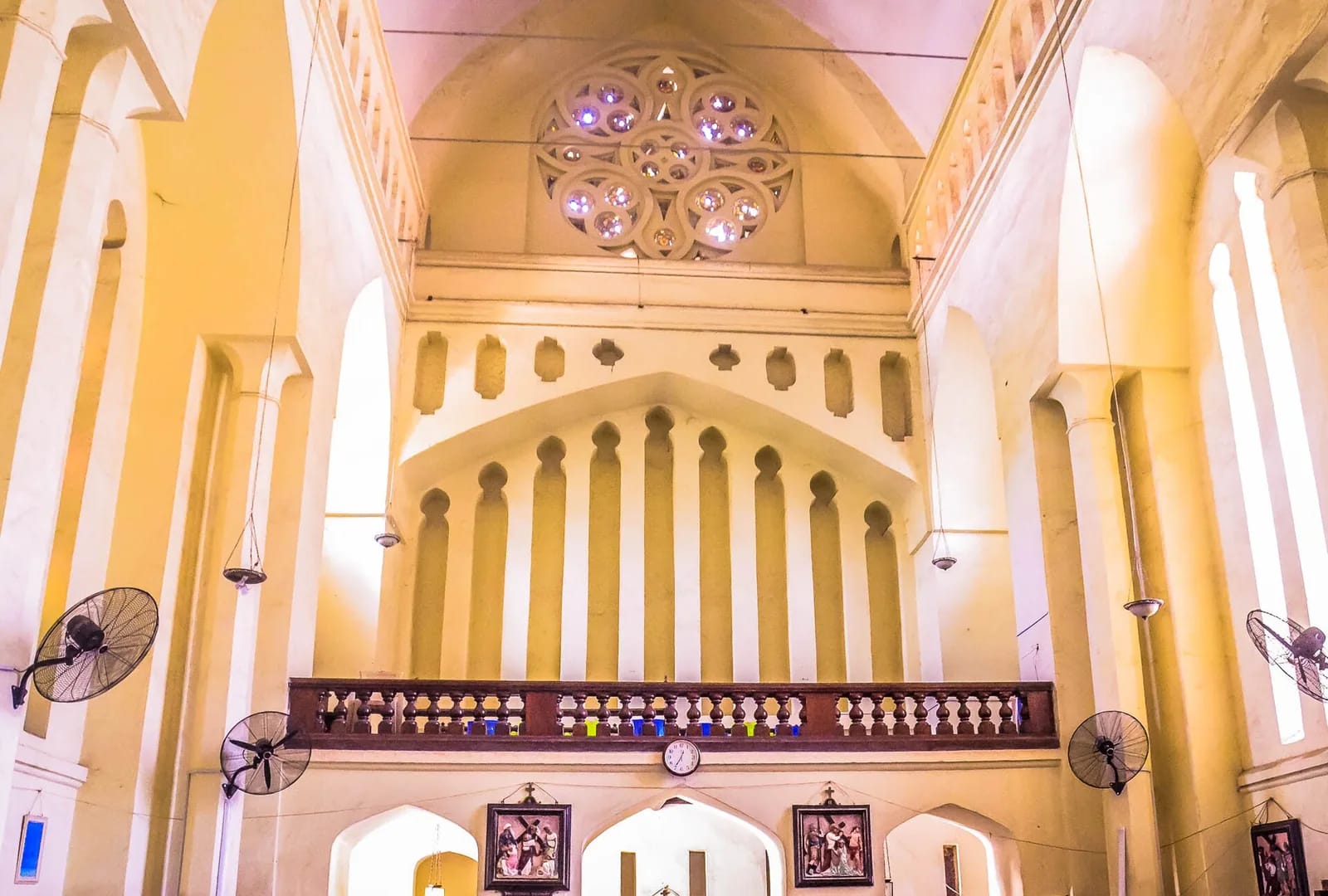
The altar and the whipping post
The high altar stands on the spot where the main whipping post of the market stood. Captives were beaten there in front of buyers, to show how they took pain. The choice of that spot was deliberate, and most guides start the cathedral visit with it.
The crucifix from Livingstone's tree
Inside hangs a wooden crucifix made from the tree at Chitambo, in present day Zambia, under which David Livingstone's heart was buried in 1873. His reports on the slave caravans had helped push Britain into the Frere mission that closed this market the same year.
Bishop Steere's tomb and the columns
Steere died in Zanzibar in 1882 and is buried behind the altar. Ask the guide about the columns near the entrance: the story is that they were set upside down by mistake while Steere was away. It is a story, and nobody has proved it either way.
Sunday morning
The cathedral is a working church. If a service is on, wait outside or sit at the back in silence, and come back to the exhibit afterwards.
Should you take a guide at the Zanzibar slave market?
You do not have to. Site guides wait at the ticket desk, some visitors are told one is compulsory, and it is not compulsory. The panels and this page give you the facts. What a good guide adds is the stories that are not on the wall, family names, and what the market meant for people from Zanzibar.
Quality varies a lot. If you take one, agree the price before you start and expect to tip in cash at the end. If you already have a guided walk of Stone Town booked, check whether it goes inside: many tours stop at the gate and send you in alone.
Visiting the slave market respectfully: dress, photos and behaviour
This is a memorial and a church as well as a sight. Cover shoulders and knees. If you arrive in shorts, the ticket desk lends a khanga to wrap round your legs. The rest of Stone Town asks the same, as our page on culture and religion in Zanzibar explains.
Photos are allowed in most of the site. Ask before photographing people, staff included, and inside the cathedral. Skip the smiling selfie at the memorial and in the chambers. Keep your voice low underground, there is often someone in there who came for personal reasons.
Zanzibar slave trade history: how the market worked
Slaves were traded on the Swahili coast for centuries, but the market in Stone Town grew huge in the 19th century. In 1828 the Omani sultan Said bin Sultan ordered clove planting on the island, and the plantations of Zanzibar and Pemba needed labour. When he moved his court to Zanzibar in 1840, the town became the main slave market of East Africa.
By the middle of the century more than 10,000 people a year were brought across from Bagamoyo and sold on the island. Estimates put the total at around 600,000 people sold in Zanzibar between 1830 and 1873. They were brought in by caravans that marched hundreds of miles from the interior, the trade that made Tippu Tip, the richest trader of them all, and its ivory paid for much of the carved architecture of Stone Town.
Where enslaved people from Zanzibar went
Most of those sold here were kept on the islands, on the clove and coconut plantations. The rest were shipped north to Oman, the Arabian Peninsula and the Persian Gulf, and down the Somali coast, where historians estimate that 25,000 to 50,000 were sold between 1800 and 1890. Earlier in the century, ships also carried people to the French sugar islands of the Indian Ocean.
The closing of the slave market in 1873
Britain sent Sir Bartle Frere to Zanzibar in 1872 to end the sea trade. Sultan Barghash refused until the Royal Navy threatened a blockade, then signed on 5 June 1873, and the open market in Stone Town closed the same day. Smuggling went on, moved to Pemba and the mainland coast, and slavery stayed legal on the islands.
A decree of 1890 banned buying and selling slaves. In 1897 the British protectorate removed the legal status of slavery, which meant people could claim their freedom in court, and about 12,000 did over the next twelve years. Concubines were only covered in 1909. The full timeline, with the 1896 bombardment in between, is on our history of Zanzibar page.
The slave market, Tippu Tip's house and the old town in one morning
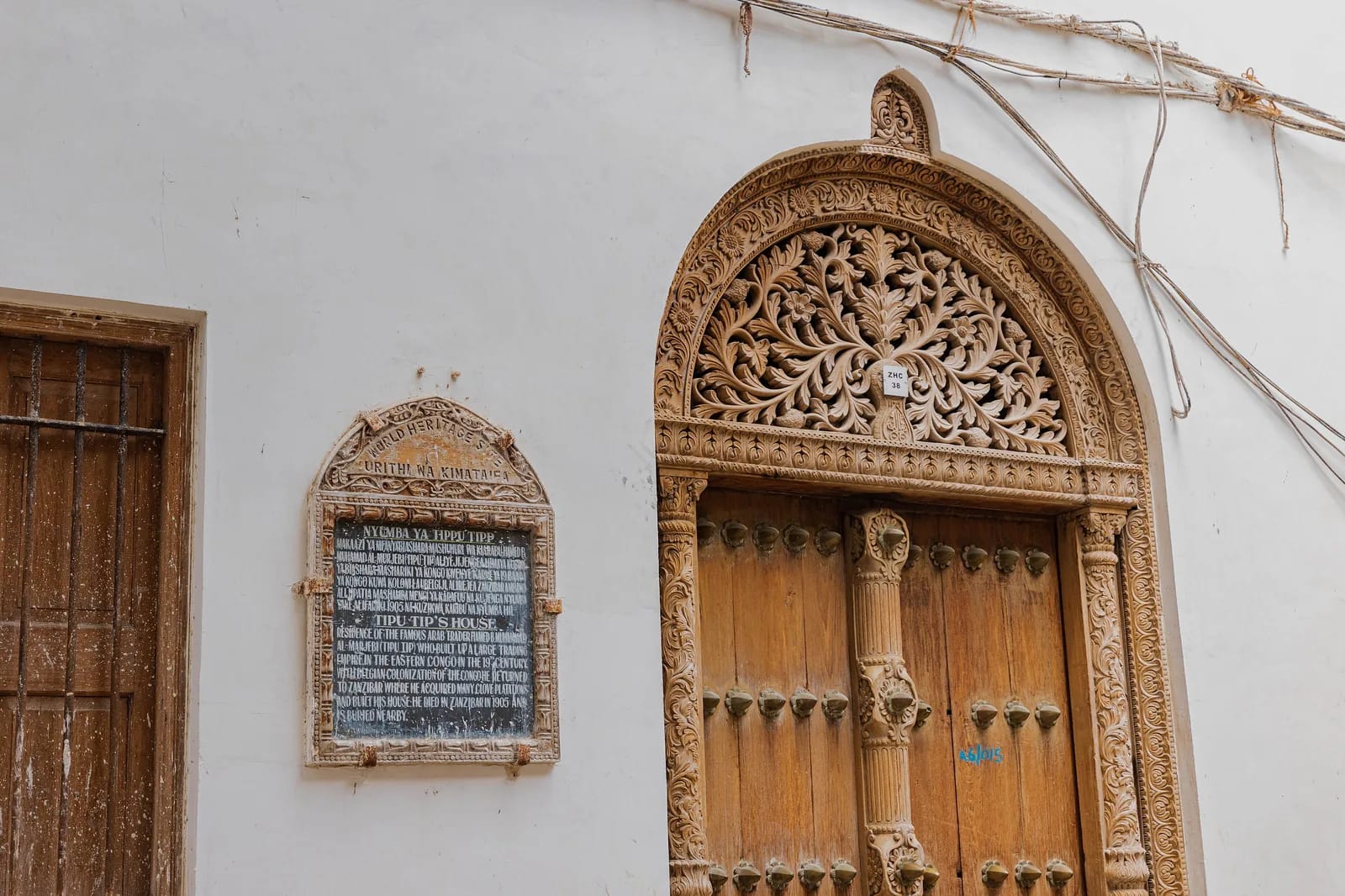
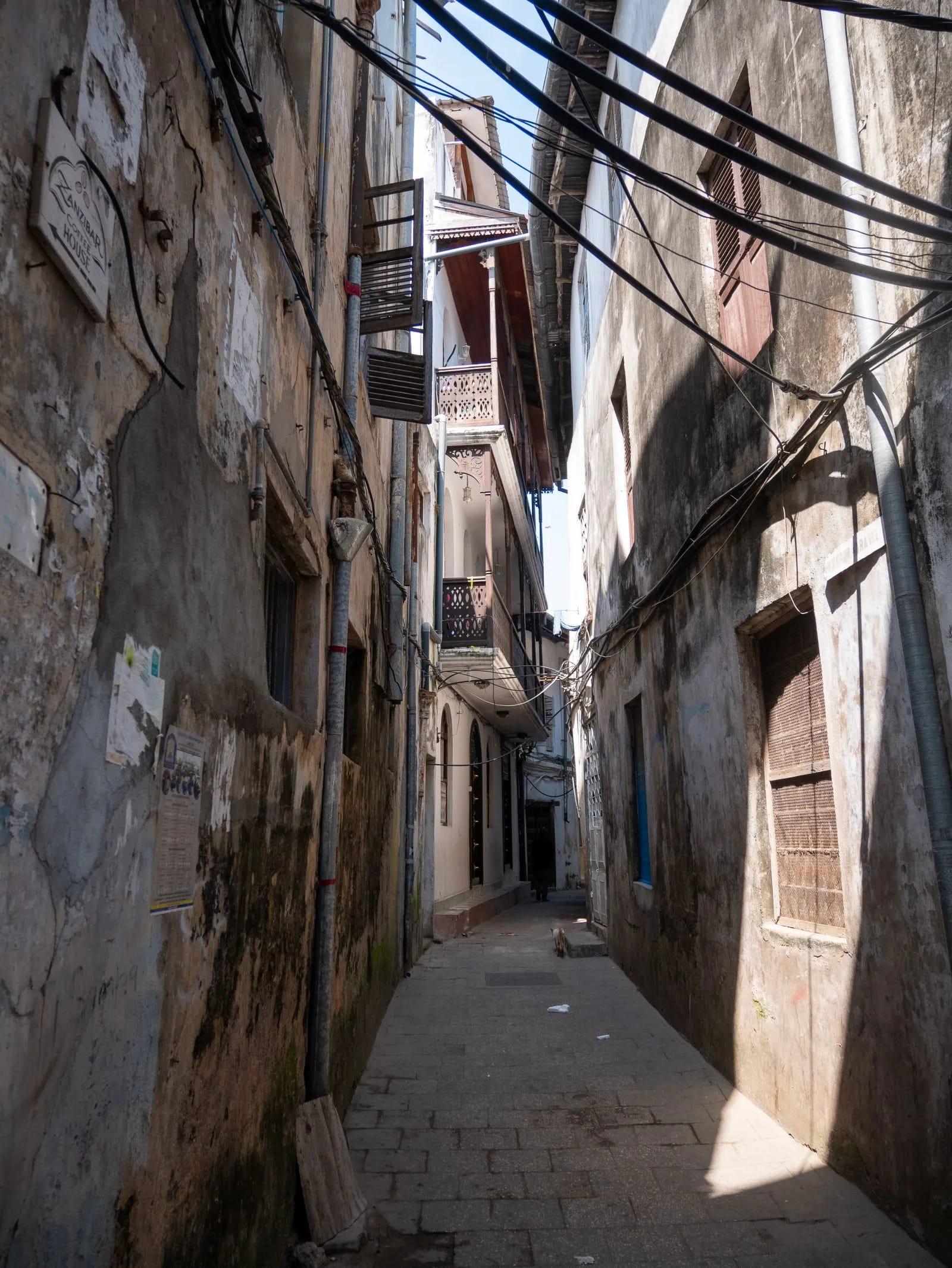
Start at the slave market at 8:00, before the heat. Walk ten minutes west through the lanes to the Shangani quarter and the carved door of Tippu Tip's House, which means much more once you have stood in the chambers. Then take the seafront past the Old Fort to the palace district, where the Anglo-Zanzibar War was fought in 1896, partly over who would rule a sultanate the treaties had already turned into a British client.
That makes about three hours, with time for lunch before the afternoon. The rest of the old town, doors, markets and Forodhani at night, is on our Stone Town guide.
Questions people ask about the Zanzibar slave market
Is there a slave museum in Zanzibar?
Yes. The East Africa Slave Trade Exhibit sits on the site of the former slave market in Stone Town, in the old mission building next to Christ Church Cathedral. It is the only museum on the island devoted to the slave trade, and the same ticket covers the two slave chambers, the memorial and the cathedral.
How much does it cost to visit the slave market in Zanzibar?
Most visitors in 2025 and 2026 report paying about $5 per person, around 11,500 Tanzanian shillings, and a few were charged $10. Pay in cash, in small notes, because change is not always available and there are no refunds. The ticket covers the exhibit, the chambers, the memorial and Christ Church Cathedral.
When was the Zanzibar slave market closed?
Sultan Barghash closed the open slave market in Stone Town on 5 June 1873, when he signed the treaty Britain had sent Sir Bartle Frere to obtain. Slavery itself stayed legal on the island until 1897, and the last exception, for concubines, ended in 1909.
How long do you need at the Zanzibar slave market?
Plan one hour on your own and up to ninety minutes with a guide. The exhibit takes most of the time, the chambers five to ten minutes and the cathedral fifteen. Go at opening, before the group tours arrive from the coast.
Do you need a guide at the slave market in Stone Town?
No. Guides wait at the ticket desk and you can decline. A good one adds the stories the panels leave out, a poor one recites the same facts in the chambers. If you take one, agree the price first and tip in cash at the end.
Where did enslaved people from Zanzibar go?
Many stayed on the islands, on the clove plantations of Zanzibar and Pemba. Others were shipped on to Oman and the Arabian Peninsula, the Persian Gulf and the Somali coast. Before the British treaties, ships also carried captives to the French sugar islands in the Indian Ocean.
Is the Zanzibar slave market suitable for children?
For older children, yes, and it is a way to talk about the subject. The chambers are dark and cramped, and some of the exhibit panels describe violence in detail. With young children, many parents skip the chambers and visit the cathedral and the memorial.