
Open to visitors
No, closed since December 2020
Reopening
No date announced (checked 21 September 2026)
Built
1883, for Sultan Barghash
Rebuilt by
Oman, with Zanzibar and UNESCO
Where
Mizingani Road, on the Stone Town seafront
Best view
Forodhani gardens, late afternoon
Can you visit the House of Wonders now?
No, not inside. The House of Wonders, Beit al-Ajaib in Arabic, has been fenced off since part of it collapsed on 25 December 2020, and the museum it held had closed years before that. Oman is paying for the reconstruction, and no reopening date has been announced.
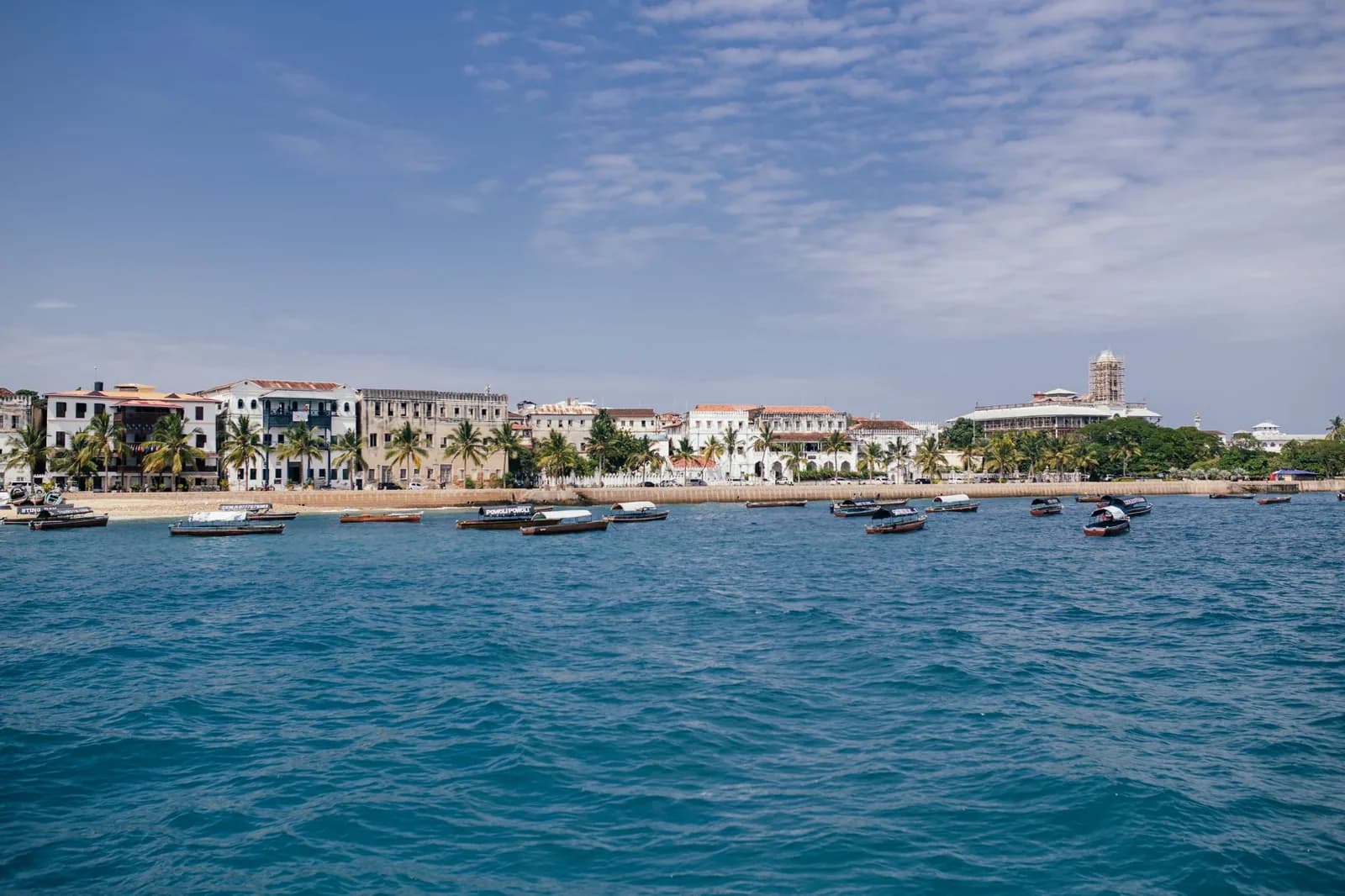
What you can do is look, and that is still worth the walk. It is the largest and tallest building in Stone Town, it faces the sea across Forodhani gardens, and the two buildings either side of it, the Old Fort and the Palace Museum, are both open. An hour on this stretch of seafront covers three centuries of the town.
We have found no dated official update on the works since the 2023 contract, and no reopening date. Treat any percentage of completion you read online with caution unless it names its source. Last checked 21 September 2026.
A guided walk through Stone Town
The building is closed, but a guide takes you round the outside and tells you what the fence hides: the sultans' palaces, the 1896 war and the families who built the seafront. Prices and ratings are as the partner lists them, read on the date shown below the card.
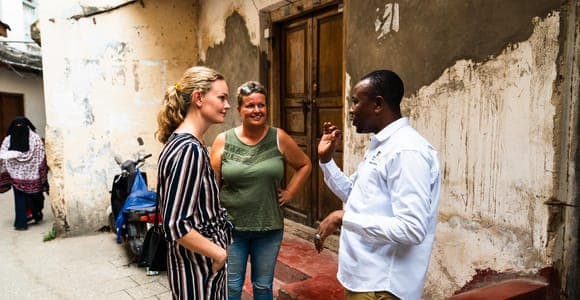
Stone Town: guided history walk
The slave market memorial, the palaces and the Freddie Mercury house.
From$25per person
Check availabilityPrices, ratings and review counts read from GetYourGuide on 27 September 2026, and indicative. These are partner links: the price is the same for you.
The House of Wonders collapse of December 2020
On 25 December 2020, much of the front facade of the House of Wonders fell, clock tower included. The building was under renovation at the time, paid for by Oman. Two workers died and four were pulled out of the rubble.
It had been failing for a long time. Sections of the veranda and the roof had come down in 2012 and again in 2015, and the museum inside had shut. In October 2019 Oman signed a contract worth 5.9 million rials, about $15 million, to strengthen the building's 240 columns and its terraces and to fit new mechanical systems. The work was due to finish in 2021.
After the collapse, repair turned into reconstruction. Oman announced an investigation, UNESCO sent experts to assess the damage to a building at the heart of a World Heritage site, and the survey team of the Zamani Project scanned what was left. In February 2023 Oman's Ministry of Heritage and Tourism awarded the tender to rebuild, restore and rehabilitate the palace with traditional materials, in coordination with the Zanzibar government and the UNESCO World Heritage Centre.
When it reopens, it is not meant to go back to being the national museum. The plan announced in 2023 is a joint centre on the shared history of Oman and Zanzibar, which says a good deal about who is paying and why.
Where is the House of Wonders in Stone Town?
On Mizingani Road, the road that runs along the Stone Town seafront, facing Forodhani gardens. It sits between the Old Fort to the south and the Palace Museum to the north, and you cannot miss it: nothing else on the waterfront comes close to its height.
From the airport it is about twenty minutes by taxi, and from Darajani market ten minutes on foot through the lanes, downhill towards the sea. If you are staying on the coast, a driver for the day is the easiest way to combine Stone Town with anything else.
What you can see today, and where to stand
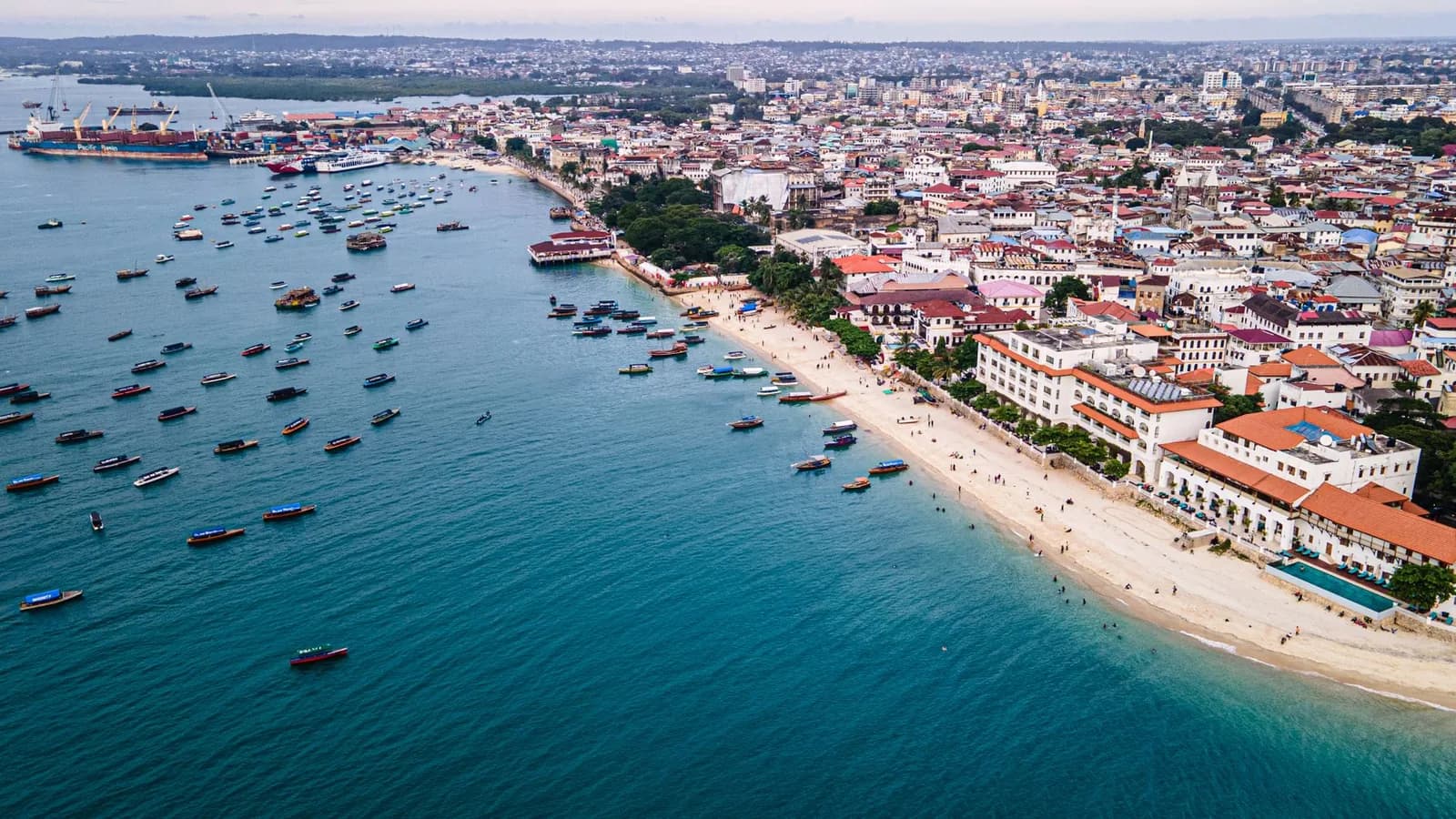
The best view is from Forodhani gardens, right in front of the building, where the whole facade fits in one frame over the palms. The site itself is fenced and you will not get closer than the pavement.
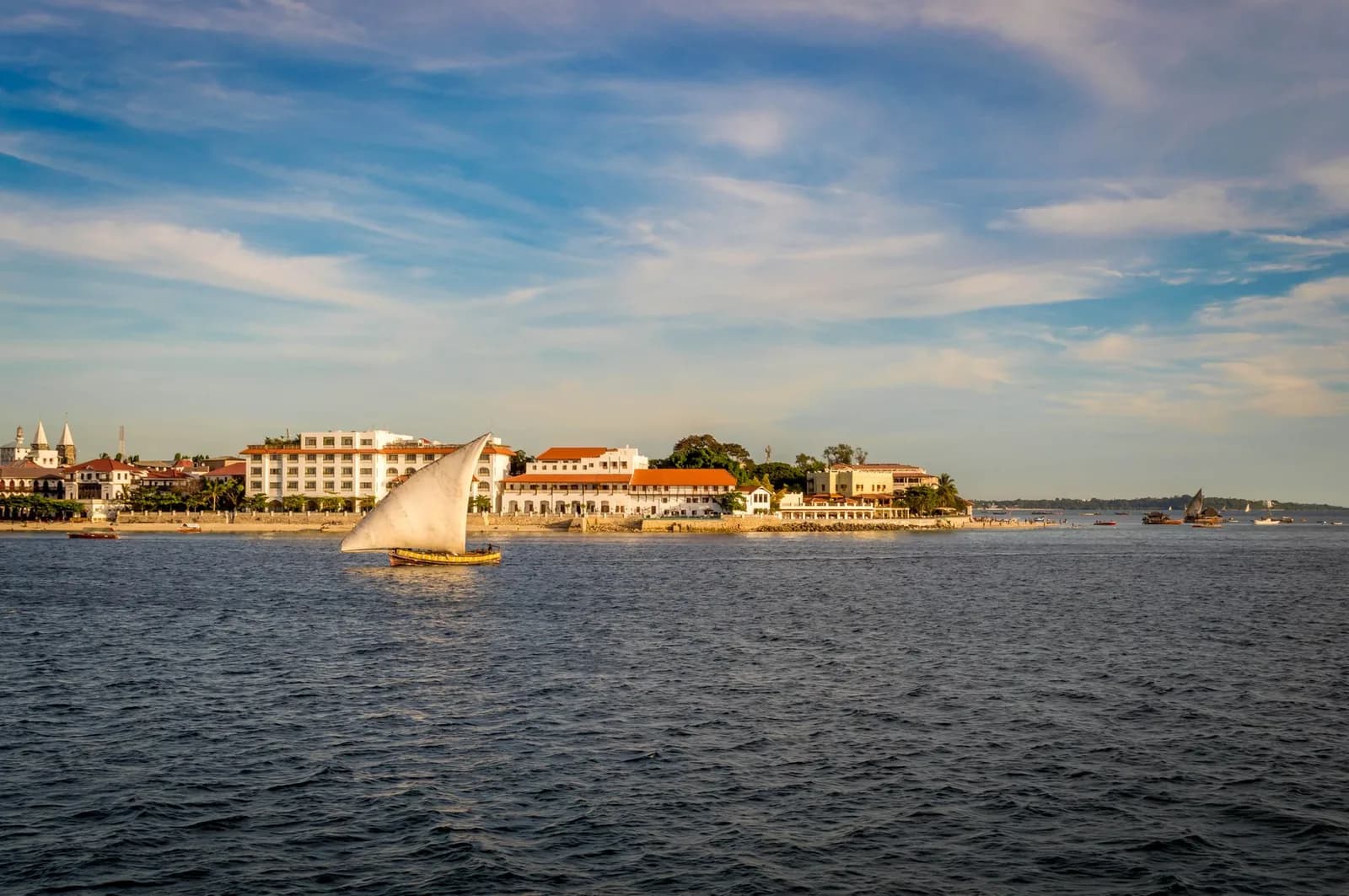
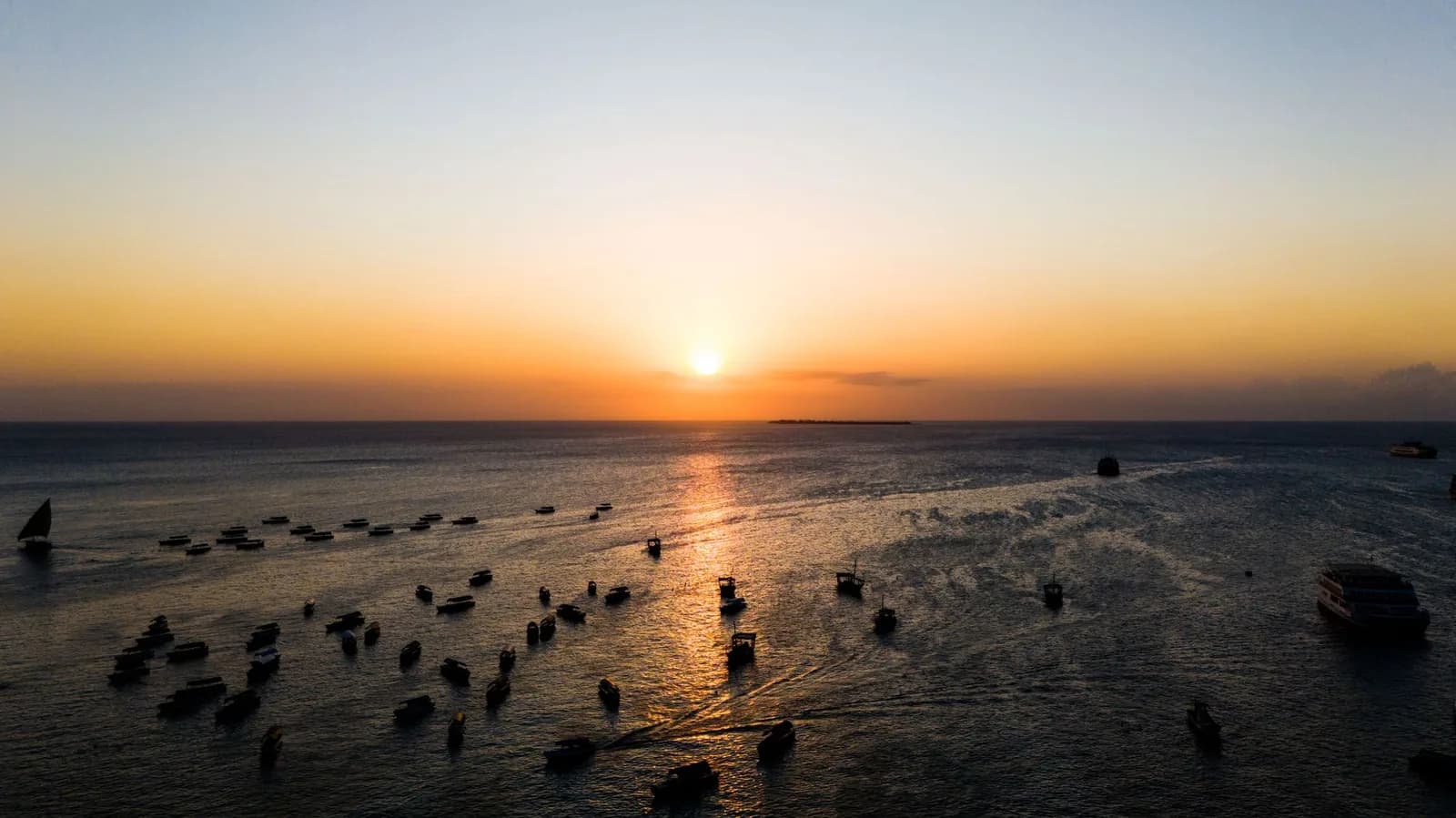
The other view is from the water. The boats to Prison Island leave from the beach just along from it and pass right in front, and a sunset dhow cruise shows you the whole waterfront in the evening light: the Old Fort, the House of Wonders and the Palace Museum in a row, the way the sultans meant them to be seen by anyone arriving by sea.
For the best House of Wonders photos
- Come after 4pm. The facade faces west, so the late sun lights it from over the sea. In the morning it is in shade.
- Shoot from the gardens, not from the road, to get the palms in front and the full height.
- Stay for the sunset over the water, then turn round: the grills are lit behind you.
House of Wonders history, in nine dates
- 1883
- Completed for Sultan Barghash bin Said as a ceremonial palace and reception hall, said to stand on the site of the 17th century palace of Queen Fatuma. It was the first building in Zanzibar with electricity and the first in East Africa with a lift.
- 1896
- The Anglo-Zanzibar War, 27 August, over in well under an hour. British shells destroyed the lighthouse in front of the building and the Beit al-Hukum palace beside it. The House of Wonders itself came out with minor damage.
- 1897
- During the repairs, the clock tower was added to the facade. The ruined Beit al-Hukum was never rebuilt and became a garden, which is why the House of Wonders now stands so alone on the seafront.
- 1911
- Turned into government offices, the main secretariat of the British administration.
- 1964
- After the revolution, a school and a museum for the ruling Afro-Shirazi Party, fitted out with North Korean aid.
- 2000s
- Opens as the Museum of History and Culture of Zanzibar and the Swahili Coast, after museum work that began in 1992.
- 2012
- Large parts of the veranda and roof collapse, and again in 2015. The museum closes and does not reopen.
- 2020
- On 25 December, during an Omani funded renovation, much of the front facade and the clock tower come down. Two workers are killed.
- 2023
- In February, Oman awards the tender to rebuild the palace with the Zanzibar government and UNESCO.
The bombardment of 1896 is the moment most visitors half remember: the shortest war on record, fought over who would succeed to the throne and won by the Royal Navy in well under an hour. The House of Wonders watched it from ringside and barely got scratched.
Why it was called the House of Wonders
In 1883 Zanzibar had never seen electric light, and East Africa had never seen a lift. Barghash put both in his new reception palace, and the town named it accordingly. The building was about 39 metres tall, designed, by most accounts, by a British marine engineer, and it looked like nothing else on the coast.
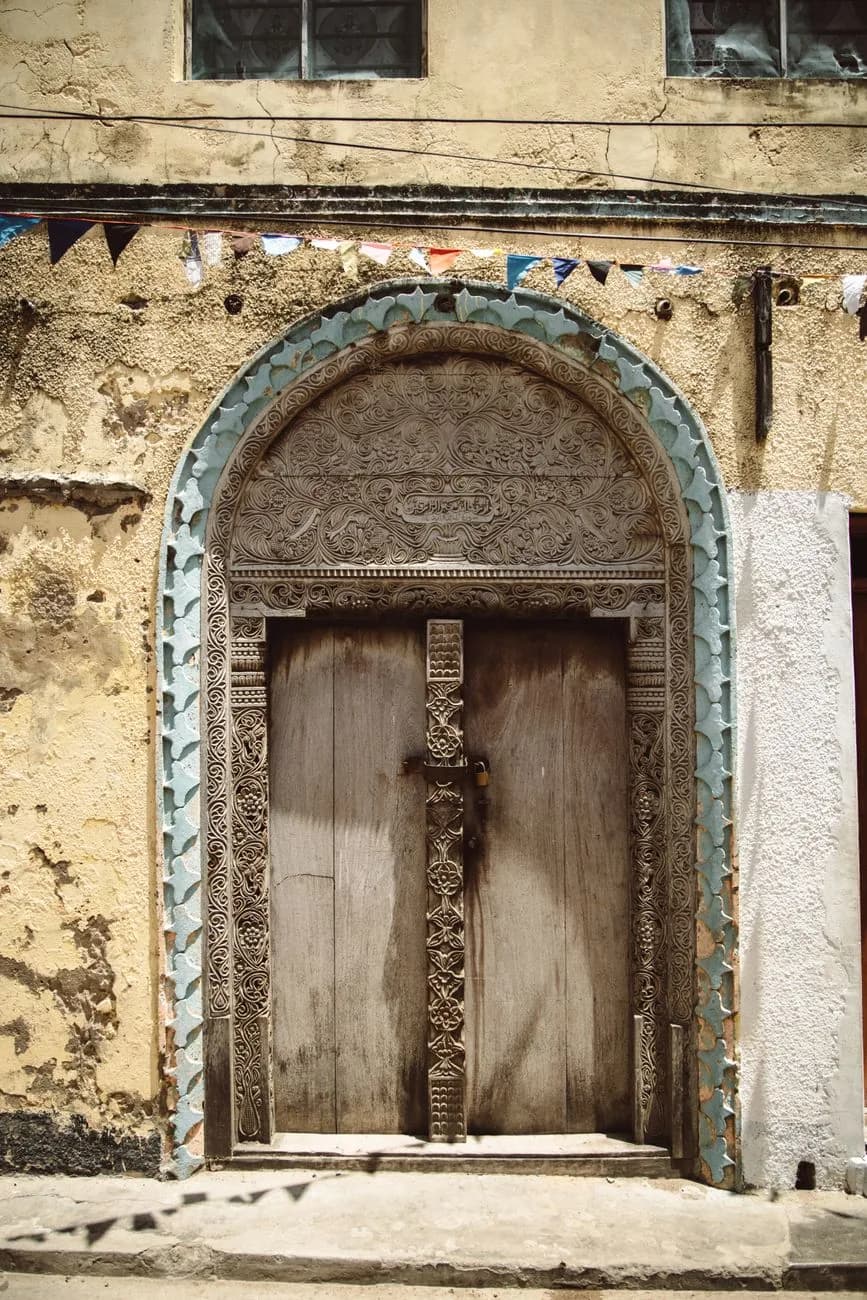
The novelty was structural. Wide verandas on every floor, held up by cast-iron columns, allowed ceilings far higher than a coral stone house could carry. The walls mixed coral rag, concrete slabs, mangrove poles called boriti and steel beams. Inside, a covered atrium rose through the floors, the marble floors and silver fittings came from Europe, and some inner doors were carved with verses from the Quran.
Some of it was pure theatre. The main door was reputedly made wide enough for the sultan to ride through on an elephant, and wild animals were chained outside for display. Some of it was practical: covered bridges above the street, the wikios, linked the palace to the two palaces beside it so that the women of the court could move between them unseen.
What was inside: the museum that closed
Anyone who visited before 2012 remembers the atrium, entirely filled by a mtepe, a traditional Swahili sewn boat. Around it, three floors of rooms held Swahili fishing gear and ship models, ceremonial kangas, portraits of the sultans and of other Zanzibaris, including a well known one of the slave trader Tippu Tip, and on the ground floor the car of President Abeid Karume.
Tickets were 6,000 shillings for adults in 2011. None are sold now, and anything online selling House of Wonders tickets is a walking tour that stops outside. Where the collection went, and how much of it will return to the rebuilt palace, has not been published.
The Old Fort, next door
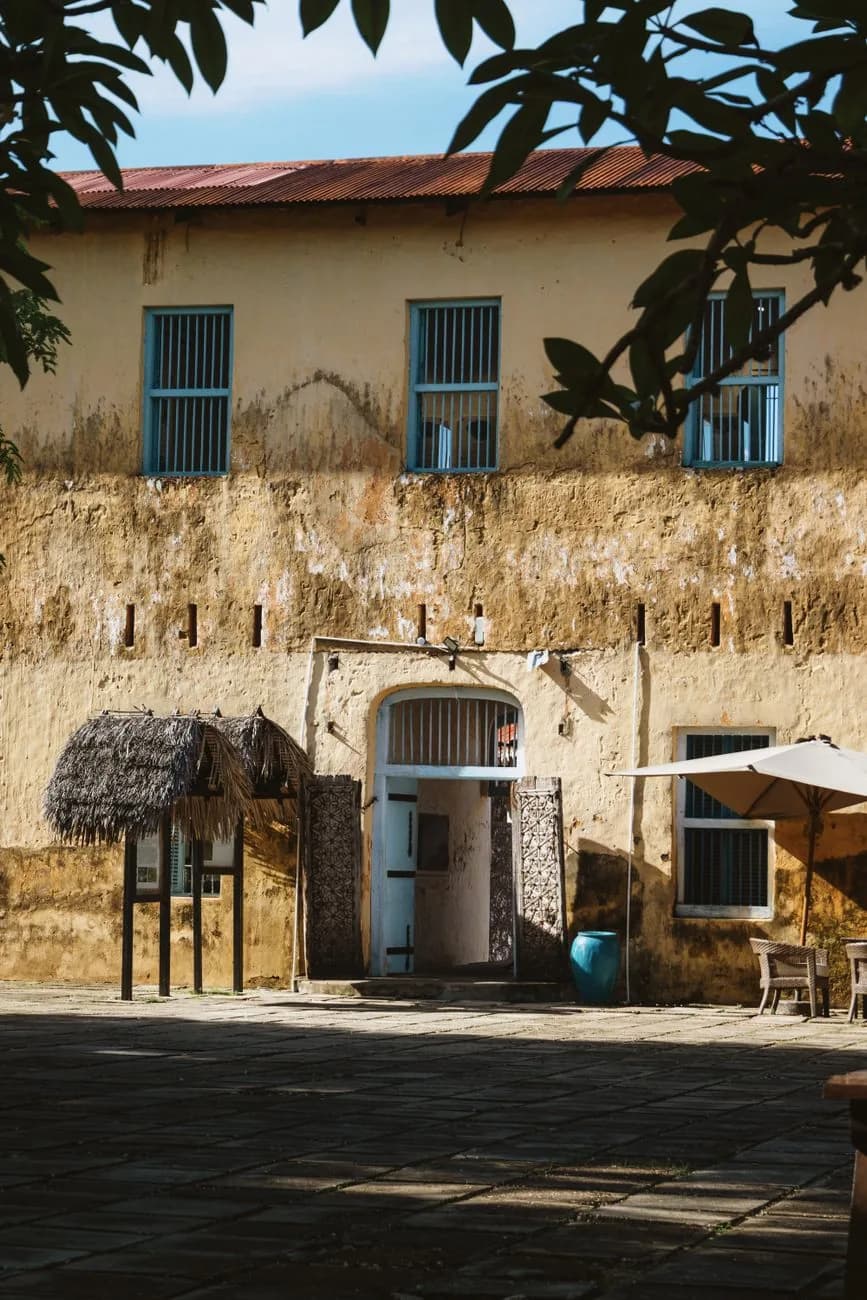
The Old Fort in Stone Town, Ngome Kongwe in Swahili, is the oldest building in the town and sits immediately south of the House of Wonders. The Portuguese had a church here. The Omanis built the fort around 1700 after driving them out, and the square of high brown walls with their crenellations is still intact.
It has been a garrison, a prison, the terminus of the little Bububu railway between 1905 and 1928, and from 1947 a ladies' club. Today the courtyard holds craft stalls, a cafe and an open air amphitheatre, the main venue of the Zanzibar International Film Festival and of Sauti za Busara, the music festival held every February.
Entry is free. Twenty minutes is enough outside festival time, and at midday it is the best shade on the seafront.
The Palace Museum: the palace you can still enter
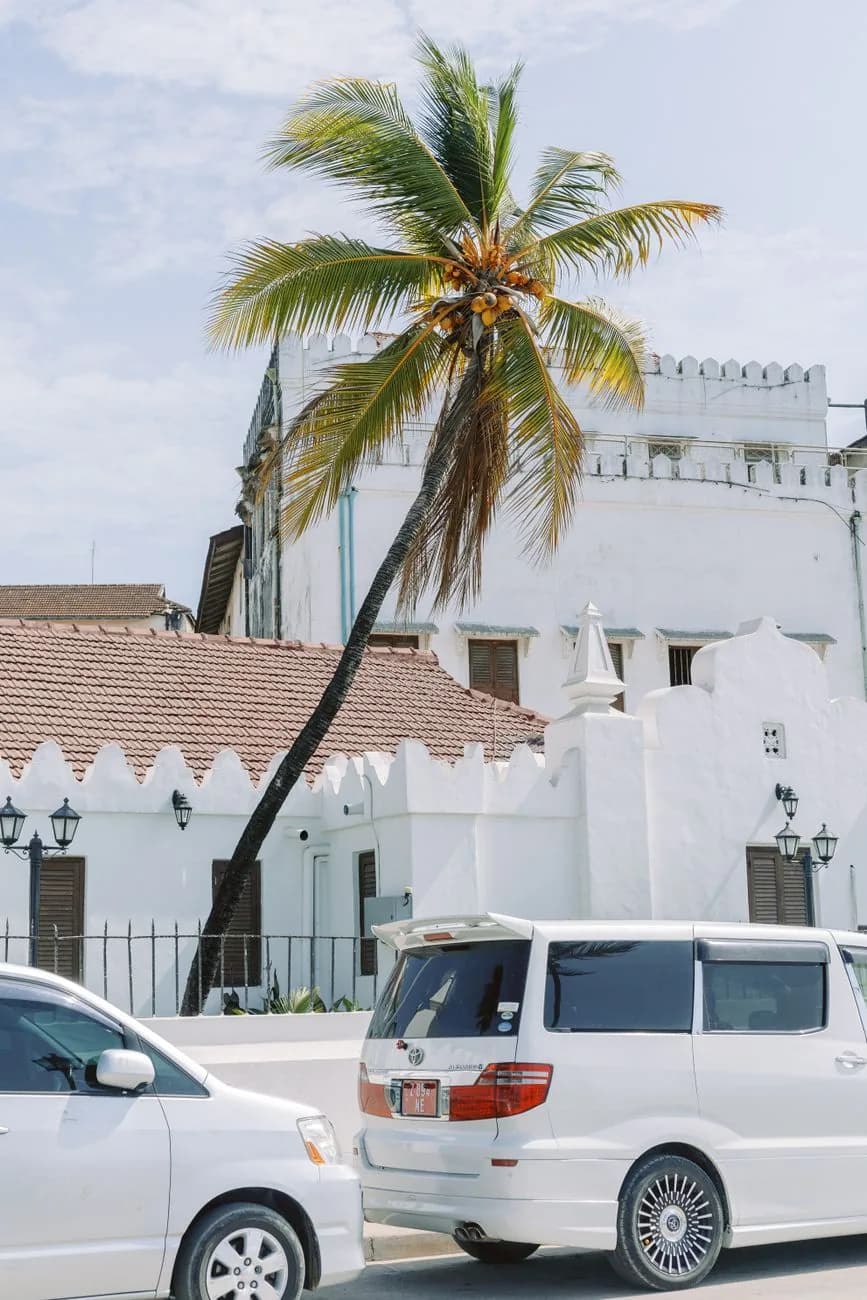
Immediately north, the Palace Museum is the white, crenellated building on the seafront. It stands on the site of Beit al-Sahel, the palace badly damaged in 1896, and was rebuilt as the residence of the sultan's family. After the revolution it became the People's Palace, and it has been a museum of the Zanzibari royal family since 1994.
With the House of Wonders closed, it is the only sultans' palace in Stone Town you can walk into. The furniture and the private rooms give you the 19th century court at domestic scale. One floor is given to Sultan Khalifa bin Harub, and another to Princess Salme, who eloped with a German merchant in 1866, became Emily Ruete in Hamburg, and wrote Memoirs of an Arabian Princess, one of the first autobiographies by an Arab woman.
Entry is around $5 and the visit takes about forty five minutes. Of everything on this stretch of seafront, it is the one ticket we would pay for.
A walk around the House of Wonders
Five stops, all within ten minutes' walk, about two hours with the Palace Museum. Start at four in the afternoon and you finish at Forodhani when the grills are lit.
Forodhani gardens
Start here · Free
The seafront gardens directly in front of the House of Wonders. From the benches by the water you see the whole building, scaffolding and all. After six the food stalls light their grills.
The House of Wonders, outside
10 minutes · Free, from the street
Walk along the front of the site. The building is fenced off, so this is a look at the scale of it rather than a visit. Take photos from the gardens, not over the fence.
The Old Fort
20 minutes · Free
Next door to the south. The courtyard, the craft stalls and the amphitheatre, and a cold drink in the shade.
The Palace Museum
45 minutes · Around $5
Next door to the north. The one sultans' palace on the seafront you can still walk into.
The Old Dispensary
10 minutes · Free outside
Just beyond the Palace Museum on Mizingani Road. Carved balconies and stained glass on an 1890s charitable dispensary, the other great facade of the waterfront.
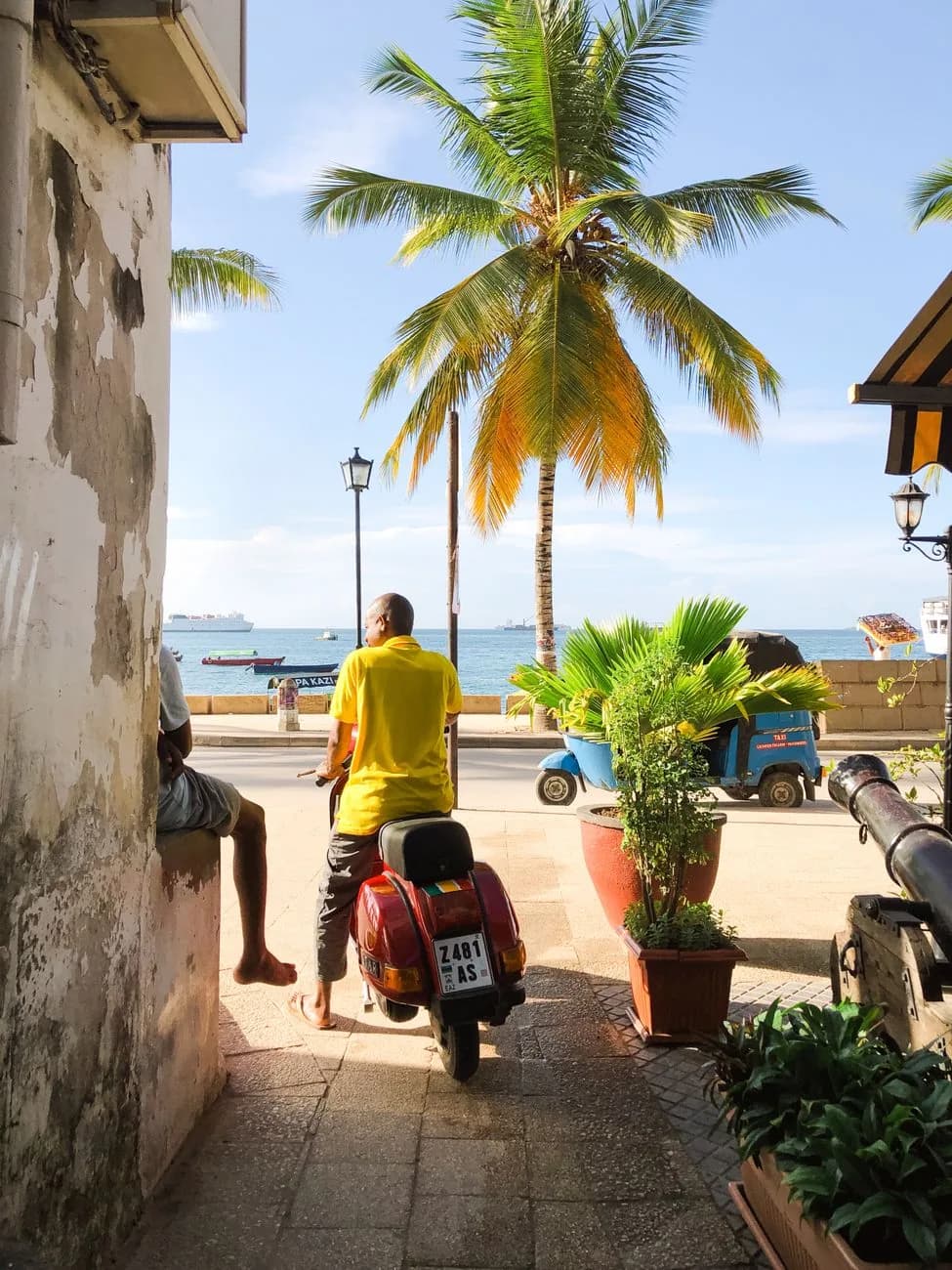
The full list of what to see in the old town, with prices and the order a day actually takes, is in our Stone Town guide. To see the seafront at both ends of the day, the town is worth a night or two: where to stay in Stone Town. Seven minutes inland, in Shangani, is the other stop most visitors ask about: the Freddie Mercury House.
House of Wonders Zanzibar: frequently asked questions
Can you visit the House of Wonders in Zanzibar today?
Not inside. The House of Wonders in Zanzibar has been closed since parts of the veranda and roof collapsed in 2012 and 2015, and much of the front facade came down on 25 December 2020. No reopening date had been announced when we last checked, on 21 September 2026. You can see it from Forodhani gardens and from a boat on the water.
What happened in the House of Wonders Zanzibar collapse?
On 25 December 2020, while an Omani funded renovation was under way, much of the front facade and the clock tower collapsed. Two workers were killed and four were rescued from the rubble. The building had been deteriorating for years before that. Oman announced an investigation at the time, and we have not found a published conclusion.
When was the House of Wonders built?
The House of Wonders was built in 1883, for Barghash bin Said, the second Sultan of Zanzibar. The design is attributed to a British marine engineer. The clock tower on the facade came later, in 1897, during the repairs after the Anglo-Zanzibar War.
What is the history of the House of Wonders in Zanzibar?
Built in 1883 as a ceremonial palace, it survived the 1896 bombardment with little damage, became the British secretariat in 1911, a party school and museum after the 1964 revolution, and the national Museum of History and Culture in the early 2000s. It closed after partial collapses in 2012 and 2015, lost its facade in 2020, and Oman took on the rebuild in 2023.
Are there House of Wonders Zanzibar tickets?
No tickets are sold, because the building is closed. When the museum was open, entry cost 6,000 shillings for adults in 2011. Tours that list the House of Wonders today are Stone Town walking tours that stop outside it. The Palace Museum next door does sell tickets, around $5.
Where is the House of Wonders in Stone Town?
On Mizingani Road, the seafront road of Stone Town, facing Forodhani gardens. It stands between the Old Fort to the south and the Palace Museum to the north. It is about twenty minutes by taxi from the airport and ten minutes on foot from Darajani market.
What does Beit al-Ajaib mean?
Beit al-Ajaib is Arabic for house of wonders, and it is the building's original name. In 1883 it had electric light and a lift, which nobody on the island had seen, and it was the tallest building in Stone Town. You will also see it spelled Beit el-Ajaib and Bait al Ajaib.
Is the Palace Museum in Zanzibar open?
Yes. The Palace Museum, the former Sultan's Palace on the seafront next to the House of Wonders, is open, costs around $5 and takes about forty five minutes. It has been a museum of the Zanzibari royal family since 1994, with a floor on Princess Salme.
Is the Old Fort in Stone Town worth visiting?
For twenty minutes, yes, and it is free. The Old Fort in Stone Town is the oldest building in the town, with a courtyard of craft stalls, a cafe and an amphitheatre that hosts the Zanzibar International Film Festival and the Sauti za Busara music festival. It is also the easiest shade on the seafront at midday.
Where do you get the best House of Wonders photos?
From Forodhani gardens in the late afternoon, when the sun is over the sea behind you and lights the facade. The other good angle is from the water, on a boat to Prison Island or a sunset dhow. In the morning the facade is in shade.
Sources: Oman Observer, 12 October 2019, on the renovation contract; Muscat Daily, 13 February 2023, on the reconstruction tender; UNESCO World Heritage Centre, December 2020, on the collapse; Wikipedia for the architecture and the dates before 2012.