
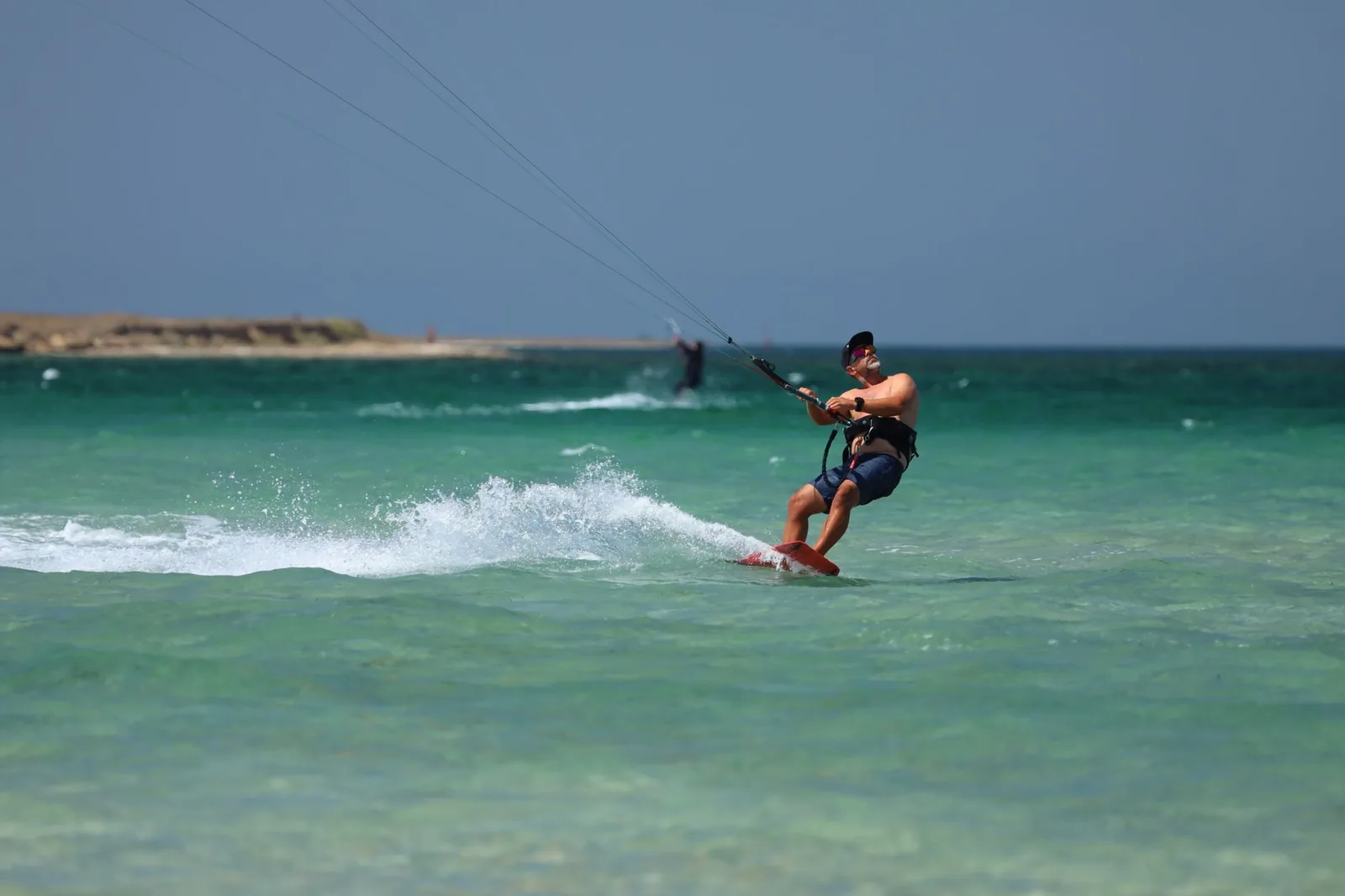
Where
Paje, with Jambiani and Bwejuu either side
Kusi season
June to September, 15 to 25 knots
Kaskazi season
December to March, 12 to 20 knots
Beginner course
$350 to $500 for around 9 hours
Kit rental
$60 to $90 a day, less by the week
Dead months
April and May. Do not plan a trip
Book a lesson or a course
Book the school before the hotel. In August every decent instructor in Paje is committed a week out, and the difference between a good school and a cheap one is measured in how many students share one instructor. One to one, or two at most. Three is a queue on the beach.
Kite lessons you can book online
Most Paje schools sell direct, so the online choice is short. Listings rarely name the beach: confirm it is Paje or Jambiani before paying, and check whether the lesson is private or shared, because that is the whole difference.

Kitesurf lessons in Jambiani
The lagoon next to Paje, from a single session to a full course.
From$360per person
Check availability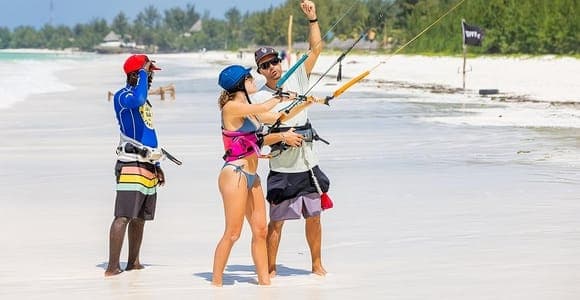
Private beginner kite lesson
One instructor, one student, four hours on the water.
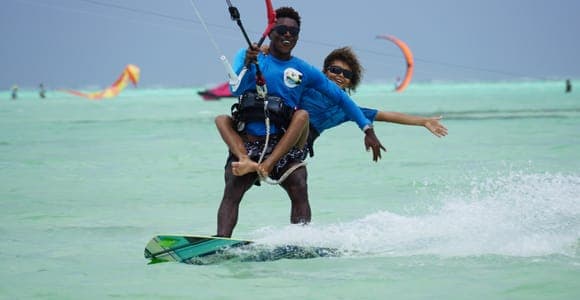
Two hour kitesurf lesson
A shorter session to find out whether kiting is for you.
Prices, ratings and review counts read from GetYourGuide on 27 September 2026, and indicative. These are partner links: the price is the same for you.
The two kitesurfing seasons in Zanzibar
Zanzibar has two monsoons and they behave completely differently. Which one you come for should decide when you book, not the other way round.
| Season | Wind | Suits |
|---|---|---|
| Kusi, June to SeptemberThe south east monsoon. Strong, reliable, side-onshore and blowing most days for four months. Cooler air, cooler water, and the beach at its busiest. If you already ride, come now. | 15 to 25 knots | Intermediates and anyone who wants to progress |
| Kaskazi, December to MarchThe north east monsoon. Lighter, warmer, a little gustier, and with more days off. It is the better season to learn in, and it is also the high season for everything else on the island. | 12 to 20 knots | Beginners, and anyone travelling with people who do not kite |
| October and NovemberThe shoulder between the two. Some good days, some flat ones, cheap accommodation, and short rains in the afternoon. | Unreliable | Nobody planning around wind |
| April and MayThe long rains. Most schools shut or run on skeleton staff. This is the one thing on this page not to get wrong. | Almost none | Nobody |
What kitesurfing in Paje costs
| What | Price | Notes |
|---|---|---|
| Beginner course, 9 to 12 hours | $350 to $500 | Three days, spread around the tide. The standard package, and enough to get most people riding. |
| Taster, 2 to 3 hours | $120 to $180 | Kite control on land and body dragging. You will not stand on a board. Useful for deciding whether you want the course. |
| Private hour | $60 to $80 | Worth paying for over a shared lesson. You get roughly double the water time per hour. |
| Kit rental, a day | $60 to $90 | Kite, bar, board, harness. Storage on the beach normally included. |
| Kit rental, a week | $250 to $400 | The obvious move if you ride. Cheaper than paying airline excess on your own gear. |
| Downwinder to Jambiani | $40 to $70 | Includes the pick up at the far end. The best afternoon on this coast once you can ride. |
The tide runs the day, not the clock
The east coast lagoon empties. At low water the sea can be several hundred metres out and what is left is ankle deep over rock, seagrass and seaweed farms. At high water it comes right up to the beach and you can launch off the sand.
- Mid to high tide is the window. Enough water to ride, still shallow enough to stand up, which is exactly what a beginner needs.
- Low tide is for kite control on land, or for the long walk out to the deeper channels. Schools plan lessons around this and will move your slot.
- The window shifts about fifty minutes a day. A 10am lesson this morning is an 11am lesson tomorrow. See how the tide works in Zanzibar.
- Spring tides, around the full and new moon, exaggerate both ends. Longer walks out, and a bigger riding window at the top.
Careful
Where to kitesurf: Paje, Jambiani and Bwejuu
| Spot | Verdict |
|---|---|
| Paje | The centre of it. Every school, every rental, the flattest water and by far the most kites in the air. Also the busiest beach on the island in August, which cuts both ways. |
| Jambiani | Ten minutes south, same lagoon, a fraction of the traffic. Fewer schools and a quieter village. The choice if you already ride. |
| Bwejuu and Michamvi | North of Paje, emptier again, and the wind gets shadowed nearer the Michamvi headland. Good for a downwinder, thin as a base. |
| Nungwi and Kendwa | Not a kite destination. Deep water off the sand, no reef protection and unreliable wind. Come here to dive, not to ride. |
For where to sleep on each of them, see Paje, Jambiani and Bwejuu.
Choosing a school, and what a course involves
There are more than a dozen schools on this stretch of beach and the good ones are not hard to identify. IKO or VDWS certification, radio helmets, a rescue boat on the water, and a stated maximum of two students per instructor.
- Hour one to three. Kite theory, the wind window, and flying a trainer kite on the sand. Tedious, and the part that stops you hurting somebody later.
- Hour four to six. A full kite in the water, body dragging, and relaunching. This is where people decide they love it or hate it.
- Hour seven to nine. The board. First water starts, first twenty metres, and a great deal of falling over.
- Hour ten onwards. Riding upwind, which is the point at which you stop needing a school and can start renting.
What to do on a flat day
Even in August there are days the wind does not arrive, and a week of staring at a windless lagoon is a real risk if you have booked around it.
Paje is thirty minutes from Jozani forest, forty from The Rock and an hour and ten from Stone Town. Most schools will also swap a lost lesson to another day rather than charge you for one that never happened, if you ask on the morning rather than at the end.
Questions people ask about kitesurfing in Zanzibar
How much is kitesurfing in Zanzibar?
A beginner course of around nine hours runs $350 to $500 depending on the school and whether you are sharing an instructor. Private hours are $60 to $80. Kit rental for an independent rider is $60 to $90 a day, and considerably less taken by the week. Storage and a beach spot are usually thrown in with rental.
What is the best month for kiteboarding in Zanzibar?
August if you can already ride, because the kusi is at its most reliable. January or February if you are learning, because the kaskazi is lighter and the water is warmer. Avoid April and May entirely, when the long rains kill the wind and half the schools close.
How windy is Zanzibar?
During the two monsoons, windy enough to ride most days: 15 to 25 knots in the southern winter and 12 to 20 in the northern one. Between them, in April, May, October and November, the wind is unreliable and no school will promise you anything.
Is Zanzibar the kitesurfing capital of the world?
No, and nowhere really is. Paje is genuinely one of the best places on earth to learn, because of the combination of flat water, a shallow lagoon and a reef that stops the swell. For advanced riding, Brazil, Tarifa and Cape Town all have more. Paje's claim is on beginners, and it is a strong one.
Can you learn to kitesurf in Zanzibar as a complete beginner?
It is one of the best places in the world to do it. The lagoon is waist deep over a long stretch, the wind is side-onshore so mistakes push you back to the beach, and there is no swell inside the reef. Nine hours over three days gets most people riding upwind badly, which is the point at which it becomes fun.
Where is the best kitesurfing in Zanzibar?
Paje, which has the schools, the space and the flattest water. Jambiani, ten minutes south, is quieter with the same lagoon. Bwejuu to the north is emptier still. The north coast at Nungwi and Kendwa has neither the wind consistency nor the shallow water and is not a kite destination.