The 30 Swahili words you will actually use in Zanzibar
These are the Swahili phrases that come up in a week on the island, in the order you will need them. The pronunciation column puts thestressed syllable in capitals. In Swahili it is almost always the second to last, so once you have heard a few words you will get the rest right without looking.
| Swahili | Say it | Meaning | |
|---|---|---|---|
| Jambo | JAHM-boh | Hello | The easy hello, said to and by visitors |
| Mambo? / Poa | MAHM-boh / POH-ah | What's up? / Cool | Between people your own age |
| Shikamoo / Marahaba | shee-kah-MOH-oh / mah-rah-HAH-bah | My respects / I accept them | To an elder, who answers marahaba |
| Habari? / Nzuri | hah-BAH-ree / n-ZOO-ree | How are things? / Good | The everyday greeting, any age |
| Karibu | kah-REE-boo | Welcome, you're welcome | You will hear it all day |
| Asante (sana) | ah-SAHN-teh (SAH-nah) | Thank you (very much) | Everywhere |
| Tafadhali | tah-fah-THAH-lee | Please | Asking for anything |
| Samahani | sah-mah-HAH-nee | Excuse me, sorry | Getting past, getting attention |
| Ndiyo | n-DEE-yoh | Yes | |
| Hapana | hah-PAH-nah | No | |
| Hapana asante | hah-PAH-nah ah-SAHN-teh | No, thank you | The one phrase for the beach boys |
| Sawa | SAH-wah | OK, fine, agreed | Closing a deal, agreeing a plan |
| Pole pole | POH-leh POH-leh | Slowly, take it easy | Also: please speak slower |
| Pole | POH-leh | Sorry (sympathy) | When someone trips or has bad news |
| Hakuna matata | hah-KOO-nah mah-TAH-tah | No worries | Said mostly to tourists |
| Hamna shida | HAHM-nah SHEE-dah | No problem | What locals say to each other |
| Bei gani? | BAY GAH-nee | How much? | Market, shops, boats |
| Ghali sana | GHAH-lee SAH-nah | Too expensive | The start of every negotiation |
| Punguza bei | poon-GOO-zah BAY | Lower the price | Said with a smile |
| Naangalia tu | nah-ahn-gah-LEE-ah TOO | I'm just looking | Walking past the curio shops |
| Sitaki | see-TAH-kee | I don't want (it) | Firmer than hapana asante |
| Maji | MAH-jee | Water | Maji baridi: cold water |
| Chakula | chah-KOO-lah | Food | |
| Kitamu | kee-TAH-moo | Delicious | The best compliment to a cook |
| Bili, tafadhali | BEE-lee tah-fah-THAH-lee | The bill, please | Restaurants and cafés |
| Choo kiko wapi? | CHOH-oh KEE-koh WAH-pee | Where is the toilet? | |
| Rafiki | rah-FEE-kee | Friend | What the touts call you |
| Mzungu | m-ZOON-goo | White foreigner | Descriptive, not an insult |
| Kwaheri | kwah-HEH-ree | Goodbye | |
| Lala salama | LAH-lah sah-LAH-mah | Sleep well, good night | Leaving the bar or the dinner table |
A one page version of this list, ready to print, is at the bottom of the page.
Swahili greetings in Zanzibar: jambo, mambo or shikamoo
On the coast people exchange two or three lines of greeting before getting to the point, and walking into a shop with a question and no greeting comes across as abrupt. The right greeting depends on who you are talking to, mostly on their age.
Jambo: the hello everyone uses with visitors
Jambo is the word you will hear first, from the immigration officer to the hotel porter. Answer with jambo. It is a shortened form of hujambo?, literally any matter with you?, whose full answer is sijambo, nothing is the matter. Between themselves, people in Zanzibar use jambo less than visitors think. It is the greeting of the tourist economy, perfectly polite and a little generic.
Mambo and poa: the casual greeting between equals
Mambo?, or vipi?, is what's up, and you answer poa, cool, or safi, clean, or fiti. The young guy running the kayak rental, the waiter your age, the other backpackers at the hostel: mambo is right. Said to a grandmother at the market it is overfamiliar, a bit like greeting her with hey dude.
Shikamoo and marahaba: how to greet an elder
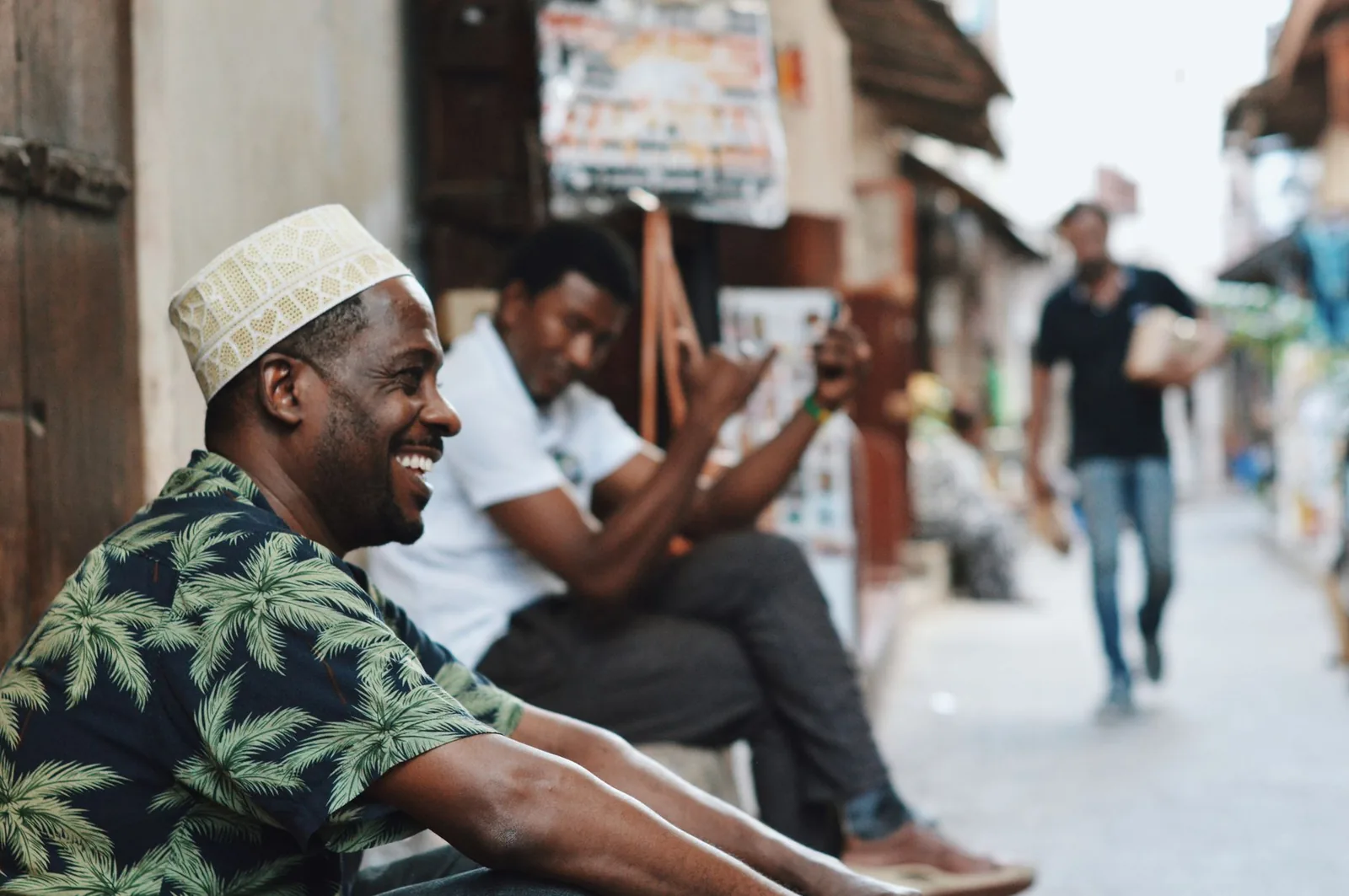
To anyone clearly older than you, the respectful greeting is shikamoo, which carries the old meaning of I hold your feet. The elder answers marahaba, I accept your respect. The younger person always says it first. Tourists almost never use it, which is exactly why it works: say shikamoo to the old man selling cloves in Darajani and you will see the conversation change.
Habari and nzuri: the safe greeting at any age
Habari? means what news?, and habari gani? how are things. The answer is nzuri, good, even when things are not. Variants follow the time of day: habari za asubuhi in the morning, habari za mchana in the afternoon. When you are not sure who you are talking to, habari is never wrong.
Karibu, salaam aleikum and kwaheri
Karibu, welcome, greets you at every door and doubles as you're welcome after asante. Zanzibar is a Muslim island, andsalaam aleikum, answered with aleikum salaam, is common when entering a shop or addressing an older man, especially in Stone Town. To leave, say kwaheri, goodbye, and at night lala salama, sleep well.
Hakuna matata, pole pole and mzungu: what they mean in Zanzibar
Hakuna matata, and why the locals smile
Hakuna matata is real Swahili: hakuna, there is not, and matata, trouble or worries. Its fame is not. A 1980s pop song, Jambo Hakuna Matata, carried it to Europe, and The Lion King in 1994 carried it everywhere else. Disney registered it as a trademark for clothing in 2003, and before the 2019 remake a petition against that trademark gathered more than 50,000 signatures.
In Zanzibar, it is now a phrase said mainly to tourists, printed on T-shirts in every curio shop. Among themselves, people say hamna shida or hakuna shida, no problem. So when a visitor proudly offers hakuna matata, the smile you get is friendly, and a little knowing: everyone can tell which film you learned your Swahili from.
Pole pole: slowly, and the pace of the island
Pole pole means slowly, gently. It is what a guide says on a hot afternoon walk, what a driver says when you are impatient, and the phrase to use when someone speaks Swahili too fast for you. The proverb pole pole ndiyo mwendo, slowly is the way to go, sums up the island's attitude to time.
A single pole is a different word: sorry, in the sense of I feel for you. You say it when someone stumbles, has bad news or looks exhausted, and pole sana when it is serious. It is not an apology, for which you use samahani.
Mzungu and rafiki: what you will be called
Children in the villages will call out mzungu!, white person or foreigner, as you walk or cycle past. It is descriptive and not meant as an insult. The word comes from a root meaning to go round or wander, first applied to European travellers. Rafiki, friend, is warmer, but on the beach it usually opens a sales pitch rather than a friendship.
Swahili numbers for bargaining in Zanzibar
You will rarely need to say a number in Swahili, since sellers switch to English for visitors. Recognising one is another matter. Knowing the numbers means you understand what the seller says to his neighbour, and whether a price was given in shillings or in dollars.
| Number | Swahili | Say it |
|---|---|---|
| 1 | moja | MOH-jah |
| 2 | mbili | m-BEE-lee |
| 3 | tatu | TAH-too |
| 4 | nne | N-neh |
| 5 | tano | TAH-noh |
| 6 | sita | SEE-tah |
| 7 | saba | SAH-bah |
| 8 | nane | NAH-neh |
| 9 | tisa | TEE-sah |
| 10 | kumi | KOO-mee |
| 11 | kumi na moja | KOO-mee nah MOH-jah |
| 20 | ishirini | ee-shee-REE-nee |
| 30 | thelathini | theh-lah-THEE-nee |
| 40 | arobaini | ah-roh-bah-EE-nee |
| 50 | hamsini | hahm-SEE-nee |
| 60 | sitini | see-TEE-nee |
| 70 | sabini | sah-BEE-nee |
| 80 | themanini | theh-mah-NEE-nee |
| 90 | tisini | tee-SEE-nee |
| 100 | mia moja | MEE-ah MOH-jah |
| 1,000 | elfu moja | EL-foo MOH-jah |
| 100,000 | laki moja | LAH-kee MOH-jah |
Numbers are built with na, and: kumi na moja is ten and one, 11, ishirini na tano is 25. Several of the tens, thelathini, arobaini, hamsini, come straight from Arabic, which is a good first hint of how much the language owes to the Indian Ocean trade.
How to read a price in Tanzanian shillings
Prices in Zanzibar run into thousands, and Swahili says the thousand first: elfu kumi, thousand ten, is 10,000 shillings. With the shilling at around 2,600 to the dollar, that is a little under four dollars. Once you hear elfu, you know the price is in shillings. A price in dollars comes as dola, dola kumi for ten dollars.
| What | Price (TZS) | Said as |
|---|---|---|
| A bottle of water | 1,000 to 2,000 | elfu moja, elfu mbili |
| Plate of pilau in a local canteen | 8,000 to 15,000 | elfu nane, elfu kumi na tano |
| Local beer at a beach bar | 6,000 to 12,000 | elfu sita, elfu kumi na mbili |
| Dinner at a beach restaurant | 25,000 to 60,000 | elfu ishirini na tano, elfu sitini |
| A small souvenir | 2,500 | elfu mbili na mia tano |
These are the going rates from our money in Zanzibar guide, which also explains why paying in shillings rather than dollars usually lowers the bill. For 100,000 and above you will hear laki:laki moja is 100,000 shillings, close to forty dollars.
Swahili phrases for the market and the curio shops
- Hii ni bei gani? How much is this?
- Ghali sana! Much too expensive.
- Naomba upunguze bei. Please lower the price. Punguza bei is the short form.
- Bei ya mwisho? Your last price?
- Rahisi / bei nzuri. Cheap / a good price.
- Naangalia tu. I'm just looking.
- Sawa, nitachukua. OK, I'll take it.
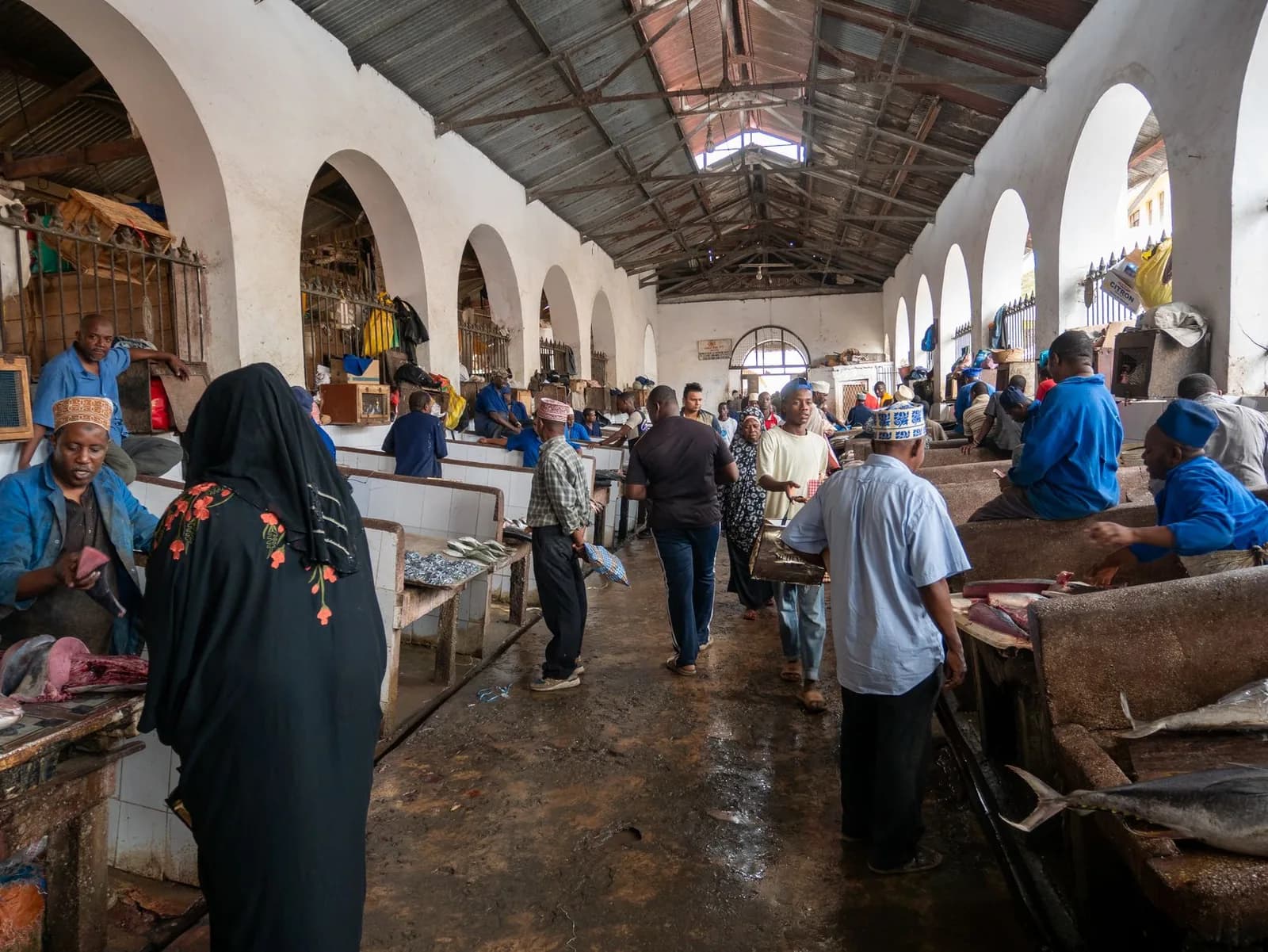
Bargaining is expected in the curio shops and on the beach, not in a food market stall with a price chalked up, nor in a supermarket. Keep it light: ghali sana said laughing gets you further than a hard counter offer. In the lanes of Stone Town, naangalia tu lets you walk into a shop without starting a negotiation you do not want.
Swahili for taxis and getting around
- Nataka kwenda Nungwi. I want to go to Nungwi.
- Ni bei gani mpaka Stone Town? How much to Stone Town?
- Ni mbali? Is it far?
- Kulia / kushoto / moja kwa moja. Right / left / straight on.
- Simama hapa. Stop here.
- Pole pole, tafadhali. Slower, please.
- Nauli ni bei gani? How much is the fare? Nauli is the word used in a dala-dala, the local minibus.
Taxi fares are quoted per car, in dollars, and agreed before you get in: roughly fifteen to Stone Town and forty to sixty to Nungwi from the airport. Greeting the driver in Swahili will not halve that, but it signals that you are not in a hurry to accept the first figure. What each route should cost is on the Zanzibar airport transfer page.
Swahili at a Zanzibar restaurant
- Naomba maji baridi. May I have cold water. Naomba, I ask for, is the polite way to order anything.
- Hii ni nini? What is this?
- Bila pilipili. Without chilli.
- Chai / kahawa. Tea / coffee.
- Chakula ni kitamu sana. The food is delicious.
- Bili, tafadhali. The bill, please.
- Choo kiko wapi? Where is the toilet?
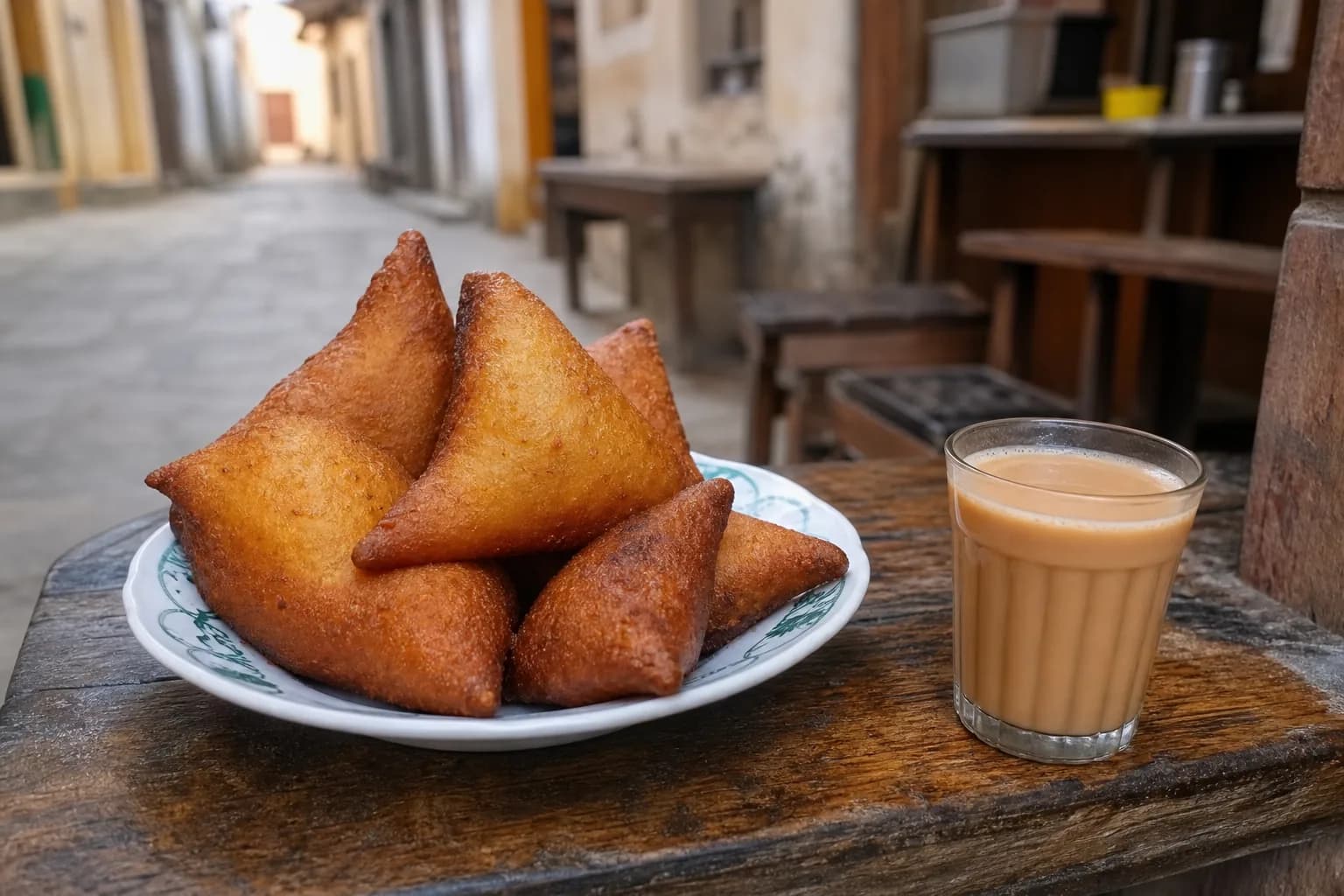
In a beach restaurant the menu and the staff are in English. The vocabulary earns its keep in the local canteens of Stone Town and at the Forodhani night stalls, where a plate of pilau or a Zanzibar pizza is ordered by pointing and a word or two. What to order in those places, and what it costs, is in our guide to Zanzibar food. Kitamu to the cook, on the way out, is always well received.
Swahili on the beach: hapana asante for the beach boys
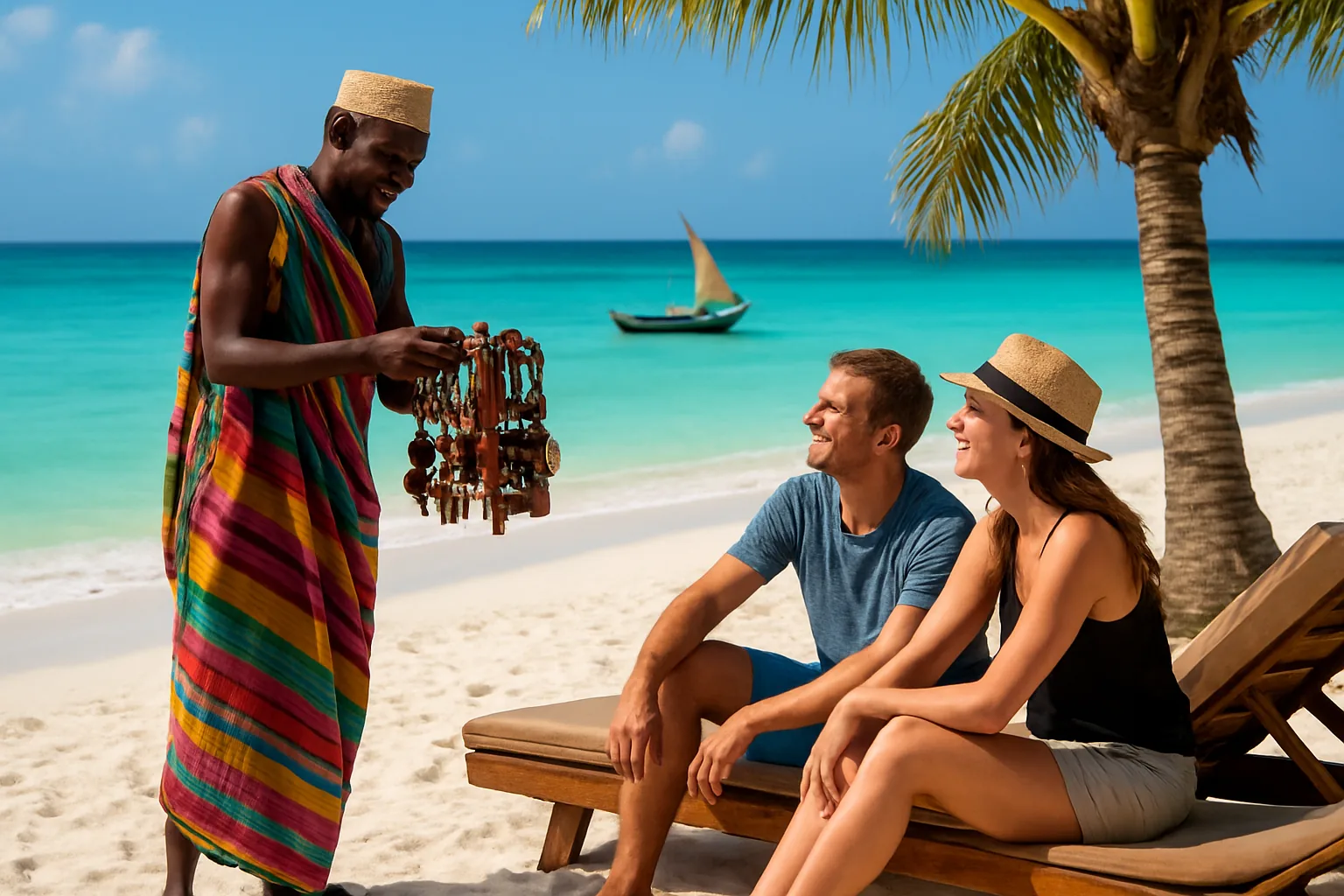
On the sand at Nungwi, Kendwa and Paje, the beach sellers known locally as papasi open with jambo, rafiki! and a question about where you are from. Their job is to turn that conversation into a boat trip or a bracelet. They are persistent, and they are not dangerous.
The phrase that works is hapana asante, no thank you, said once with a smile and repeated without adding anything. Do not stop walking,do not take anything handed to you, and avoid maybe later, which is heard as an appointment. Sitaki, I don't want it, is firmer and fine for a third attempt. Swahili helps here because it shows you are not on your first day.
Book boat trips away from the sand
A few beach words for the rest of the day: pwani is the beach, bahari the sea, jua the sun, and maji ya kunywa drinking water. If a boatman tells you the tide is out, he will say maji yamekupwa, the water has gone.
Everyday Swahili in Zanzibar: names, photos and asking for help
Small talk first, then the few phrases you hope never to need.
- Unatoka wapi? / Natoka Marekani. Where are you from? / I'm from the United States. Uingereza is Britain, Australia is Australia.
- Jina lako nani? / Jina langu ni... What is your name? / My name is...
- Unaongea Kiingereza? Do you speak English?
- Sielewi. / Kidogo tu. I don't understand. / Only a little.
- Naomba kupiga picha? May I take a photo?
- Leo / kesho / sasa. Today / tomorrow / now.
- Msaada! / Daktari / Polisi. Help! / Doctor / Police.
Naomba kupiga picha? is the one to learn by heart. Many people in Zanzibar, women especially, do not want to be photographed, and in the villages and markets you ask first, every time. A shake of the head or a hapana is a clear answer. Unatoka wapi? is the question you will be asked most, often as the opening line of a beach pitch.
Ramadan greetings and rules in Zanzibar
During Ramadan, spelled Ramadhan in Swahili, the greeting is Ramadan kareem or Ramadan mubarak, and at the end of the month Eid mubarak. Visitors who use it are noticed, in a good way.
The rules matter more than the greeting. The Zanzibar Commission for Tourism issued its guidelines for 2026 on 11 February. Check for the 2027 version before you travel.
- No eating, drinking or smoking in public during daylight hours.
- Restaurants outside hotels close by day and reopen for iftar, the evening meal.
- Hotel food and drink service is limited to registered guests.
- Modest dress away from the hotel and the beach.
Ramadan 2027 is expected to start around 8 February and end with Eid around 9 March. Both dates depend on the moon sighting and are only confirmed the evening before. Why Zanzibar sets its own rules on alcohol and dress when the mainland does not is explained on our page about Zanzibar and Tanzania.
What language is spoken in Zanzibar?
Swahili, or Kiswahili. It is the first language of nearly everyone on the island and the national language of Tanzania. English is used alongside it in government, secondary schools and business, and it is spoken throughout the tourist trade: at the airport, in hotels, restaurants and dive centres, and by guides. Many guides also speak Italian, German or French.
Zanzibar, the cradle of standard Swahili
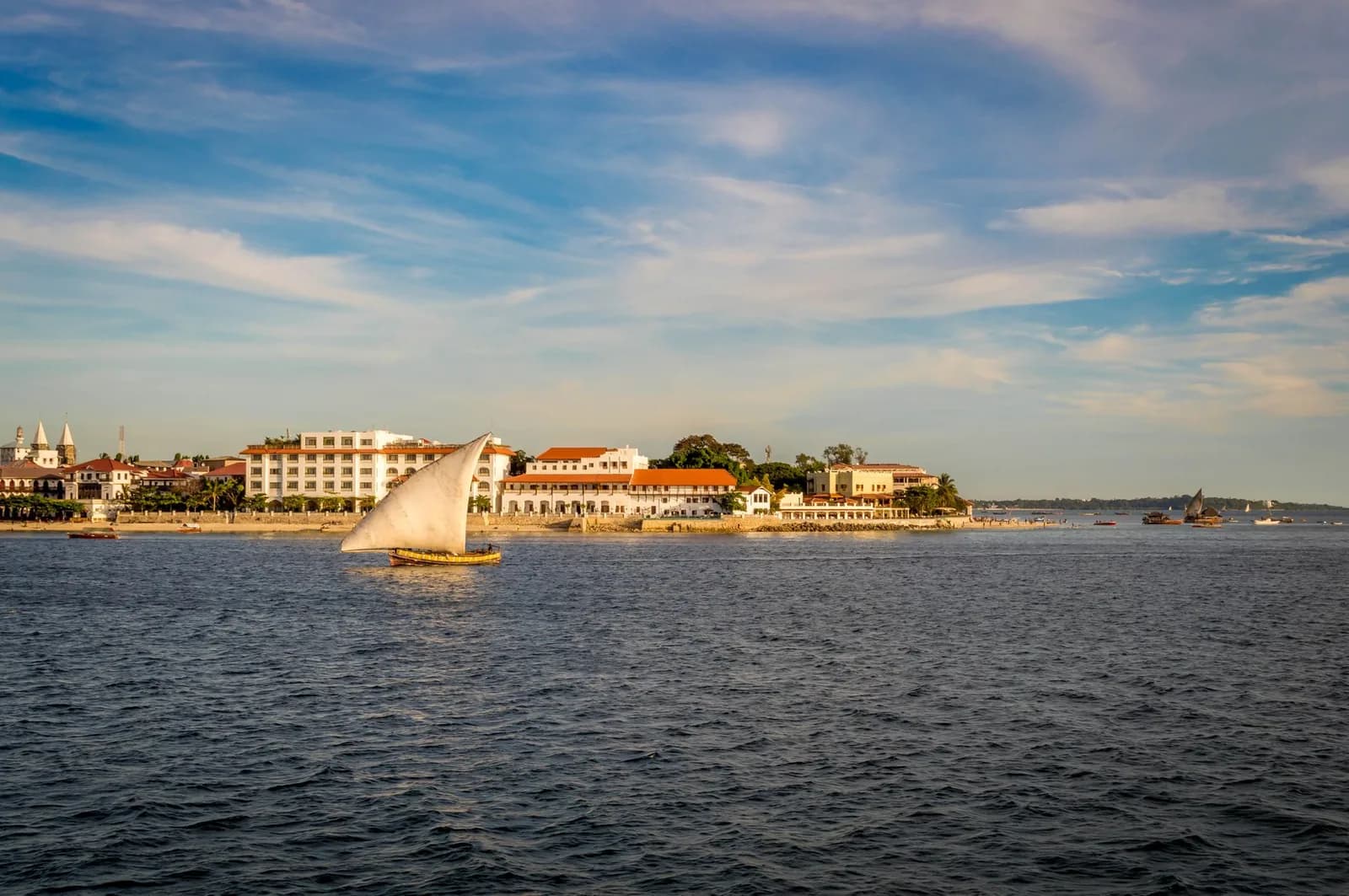
Swahili grew up along the whole East African coast, but the version taught in schools from Nairobi to Kinshasa is Zanzibar's. At the end of the 1920s and the start of the 1930s, the British colonial administrations chose Kiunguja, the dialect of Zanzibar town, as the basis for a common written standard, over the Kimvita of Mombasa. Zanzibar was then the commercial hub of the coast, and Kiunguja the variety that traders, officials and missionaries already knew.
So the Swahili you hear in the lanes of Stone Town is, give or take accent and slang, the textbook language. The countryside is another story. The villages keep their own dialects:
- Kitumbatu, on Tumbatu island off the north west coast.
- Kimakunduchi, in the villages of the south east around Makunduchi.
- Kipemba, on Pemba Island, the northern island of the archipelago.
How much of Swahili comes from Arabic?
A lot, and the island is where you hear it most. The name itself comes from the Arabic sawahil, the coasts. Estimates of the Arabic share of the vocabulary range from roughly a third to about 40 percent, much of it through the Omani sultans who ruled Zanzibar. Asante, from the Arabic for thank you, and the tens from thelathini to tisini are among the loans you will use daily. Persian, Portuguese, Hindi and English have all left words too.
The easiest place to try your greetings is a walk through Stone Town with a local guide, who will happily correct your shikamoo on the way past the old men playing bao.
Stone Town: guided history walk
The slave market memorial, the palaces and the Freddie Mercury house.
From$25per person
Check availability
Stone Town, spice tour and Prison Island with lunch
The most booked combined day on the island.
From$55per person
Check availabilityPrices, ratings and review counts read from GetYourGuide on 27 September 2026, and indicative. These are partner links: the price is the same for you.
How to pronounce Swahili: six rules
Swahili is written the way it sounds, which makes it one of the easiest languages to read aloud. Six rules cover almost every word on this page.
- Five pure vowels. A as in father, e as in bed, i as in see, o as in or, u as in food. They never glide: tano is TAH-noh, not TAY-no.
- Stress on the second to last syllable. ka-RI-bu, a-SAN-te, ta-fa-DHA-li. The exceptions are rare enough to ignore on holiday.
- Every letter is sounded. Choo, the toilet, is two syllables, cho-o. Shikamoo ends on a long o.
- M and n can be syllables of their own. Mzungu is m-zu-ngu, nne is n-ne, nzuri is n-zu-ri. Hum the m, then carry on.
- The Arabic sounds. Dh is the th of this, th is the th of think, gh is a soft rasp at the back of the throat, as in ghali.
- A light rolled r. One tap of the tongue, as in the Spanish pero. Marahaba, rafiki.
Printable Swahili cheat sheet for Zanzibar
The same thirty words, the numbers and the price rule on a single page. The print button sends only this sheet to the printer, not the rest of the article. On a phone, a screenshot does the same job.
Swahili for Zanzibar · zanzibarguides.com
| Jambo | JAHM-boh | Hello |
| Mambo? / Poa | MAHM-boh / POH-ah | What's up? / Cool |
| Shikamoo / Marahaba | shee-kah-MOH-oh / mah-rah-HAH-bah | My respects / I accept them |
| Habari? / Nzuri | hah-BAH-ree / n-ZOO-ree | How are things? / Good |
| Karibu | kah-REE-boo | Welcome, you're welcome |
| Asante (sana) | ah-SAHN-teh (SAH-nah) | Thank you (very much) |
| Tafadhali | tah-fah-THAH-lee | Please |
| Samahani | sah-mah-HAH-nee | Excuse me, sorry |
| Ndiyo | n-DEE-yoh | Yes |
| Hapana | hah-PAH-nah | No |
| Hapana asante | hah-PAH-nah ah-SAHN-teh | No, thank you |
| Sawa | SAH-wah | OK, fine, agreed |
| Pole pole | POH-leh POH-leh | Slowly, take it easy |
| Pole | POH-leh | Sorry (sympathy) |
| Hakuna matata | hah-KOO-nah mah-TAH-tah | No worries |
| Hamna shida | HAHM-nah SHEE-dah | No problem |
| Bei gani? | BAY GAH-nee | How much? |
| Ghali sana | GHAH-lee SAH-nah | Too expensive |
| Punguza bei | poon-GOO-zah BAY | Lower the price |
| Naangalia tu | nah-ahn-gah-LEE-ah TOO | I'm just looking |
| Sitaki | see-TAH-kee | I don't want (it) |
| Maji | MAH-jee | Water |
| Chakula | chah-KOO-lah | Food |
| Kitamu | kee-TAH-moo | Delicious |
| Bili, tafadhali | BEE-lee tah-fah-THAH-lee | The bill, please |
| Choo kiko wapi? | CHOH-oh KEE-koh WAH-pee | Where is the toilet? |
| Rafiki | rah-FEE-kee | Friend |
| Mzungu | m-ZOON-goo | White foreigner |
| Kwaheri | kwah-HEH-ree | Goodbye |
| Lala salama | LAH-lah sah-LAH-mah | Sleep well, good night |
1 to 10: moja, mbili, tatu, nne, tano, sita, saba, nane, tisa, kumi. Tens: ishirini 20, thelathini 30, arobaini 40, hamsini 50, sitini 60, sabini 70, themanini 80, tisini 90. Big numbers: mia 100, elfu 1,000, laki 100,000. Prices: the thousand comes first. Elfu kumi = 10,000 TZS, elfu ishirini na tano = 25,000 TZS.
Questions people ask about Swahili phrases for Zanzibar
What language is spoken in Zanzibar?
Swahili, which people there call Kiswahili. It is the first language of almost everyone on the island, and the standard Swahili taught across East Africa is based on the dialect of Zanzibar town, Kiunguja. English is widely spoken in hotels, restaurants, at the airport and by guides, so a visitor can manage with English alone.
Is jambo or mambo the right way to say hello in Zanzibar?
Both work, with different people. Jambo is the simple hello that everyone uses with visitors. Mambo is the casual greeting between people of the same age, answered with poa. To anyone clearly older than you, say shikamoo, and they will answer marahaba. Habari, answered with nzuri, is safe with everyone.
What does hakuna matata really mean?
It means there are no worries: hakuna is there is not, matata is trouble. It is genuine Swahili, but after The Lion King it became a phrase said mostly to tourists. Among themselves, people in Zanzibar are more likely to say hamna shida, no problem. Say hakuna matata and you will get a smile, because everyone knows where you learned it.
How do you say thank you in Swahili?
Asante, and asante sana for thank you very much. You will also see it written ahsante, which is the same word. The usual reply is karibu, you're welcome.
Can I get by in Zanzibar with just English?
Yes. Hotels, restaurants, tour operators, taxi drivers at the airport and most shopkeepers in Stone Town speak English. Swahili becomes useful in villages, in local canteens and at the Darajani market, and a few greetings change the tone of every exchange even where English would do.
What is the difference between Swahili and Kiswahili?
None. Kiswahili is the name of the language in the language itself, the ki prefix marking a language or a way of doing things. Swahili is the English form. The word comes from the Arabic sawahil, the coasts.
How do you say how much in Swahili?
Bei gani? means how much, literally which price. Hii ni bei gani? is how much is this. Prices come back in thousands of shillings: elfu kumi is 10,000 shillings, about four dollars. If it is too high, ghali sana, too expensive, opens the negotiation.
Is mzungu an insult?
No. Mzungu describes a white or foreign person and is used matter of factly, often by children calling out to you in a village. It comes from a root meaning to wander or go round, originally applied to the first European travellers. You can answer with a simple jambo.