
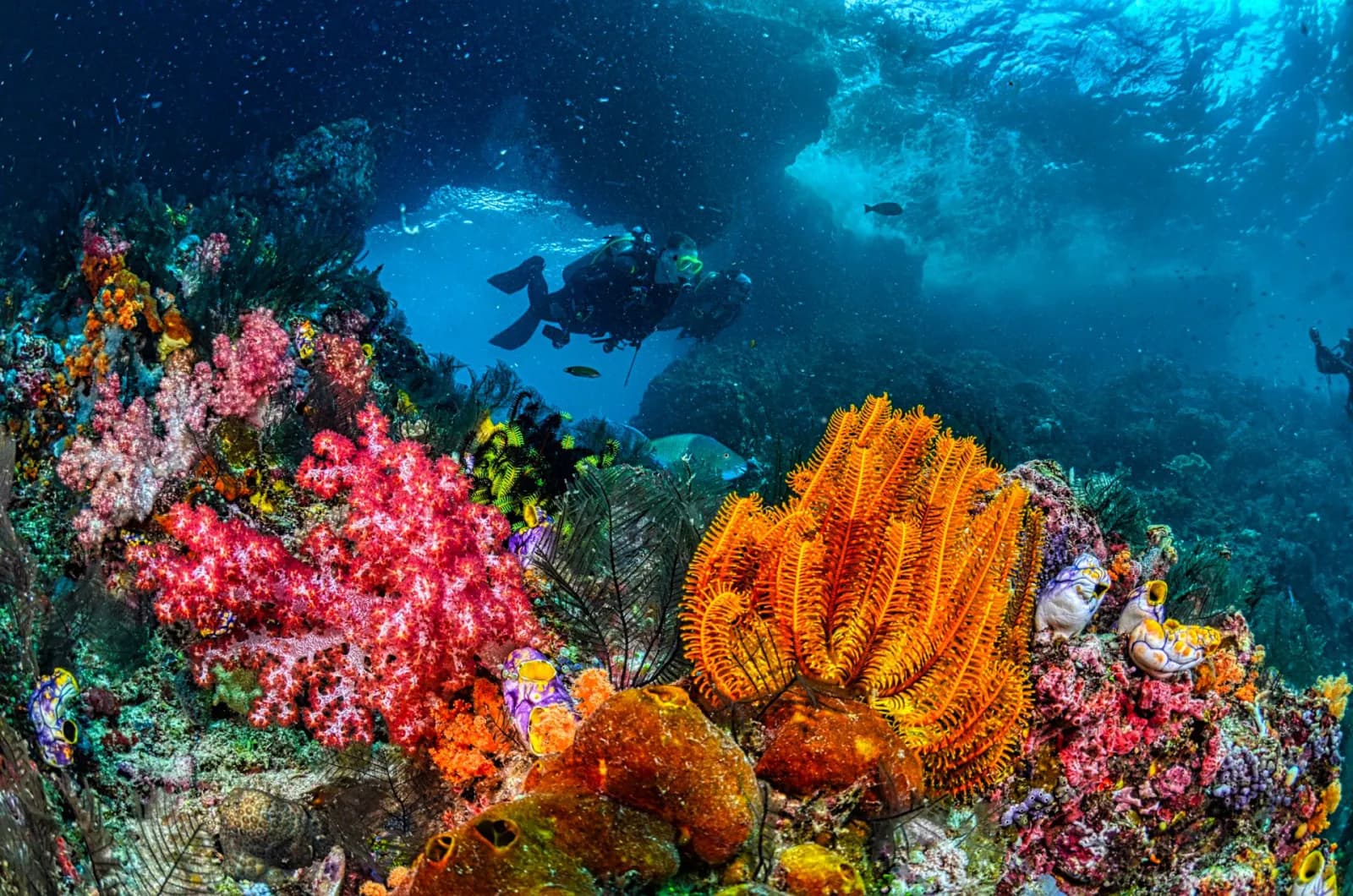
Single dive
$50 to $75 including gear
Open water course
$450 to $600 over three to four days
Water temperature
25 to 29 degrees, all year
Visibility
10 to 30 m, best February and October
Main areas
Mnemba, Nungwi, Pemba
Check first
That your insurance covers diving
Book a dive or a course
Pick the centre by its instructor to diver ratio and its boat, not by fifteen dollars on a two tank price. A PADI or SSI centre with four divers per guide and a boat that leaves at seven is worth considerably more than the alternative.
Dives and courses on the reef
Prices, ratings and review counts as the partner lists them, read on the date shown below the cards. Check whether gear and the Mnemba conservation fee are inside the price.
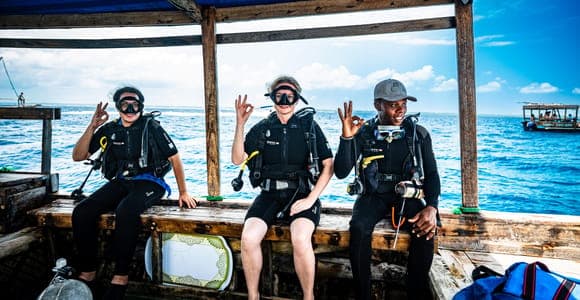
Two dives in a day, from Matemwe
The standard two tank day on the reefs around Mnemba, for certified divers.
From$120per person
Check availabilityFirst dives for beginners, one day with lunch
No card needed: a pool briefing, then two shallow dives with an instructor.
From$200per person
Check availability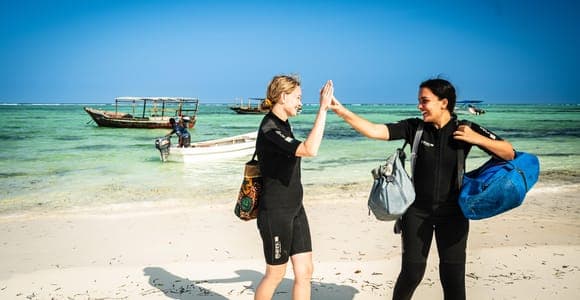
PADI Open Water course
The full certification, taught in warm water with no current.
From$429per person
Check availabilityPrices, ratings and review counts read from GetYourGuide on 27 September 2026, and indicative. These are partner links: the price is the same for you.
How much diving in Zanzibar costs
| What | Price | Notes |
|---|---|---|
| Single dive | $50 to $75 | Gear included at most centres. Confirm, because a few charge for it separately. |
| Two tank morning | $90 to $130 | The standard Mnemba trip. One deeper dive, a surface interval, one shallow. |
| Discover scuba, no certification | $100 to $150 | A pool session and one shallow dive with an instructor holding on. A good way to find out whether you like it. |
| PADI or SSI Open Water | $450 to $600 | Three to four days, four open water dives. Roughly half what the same card costs in Europe. |
| Advanced Open Water | $350 to $450 | Two days, five dives. Worth doing here if you want Leven Bank later in the week. |
| Mnemba conservation fee | $10 a day | In force since 1 September 2025 and rarely inside a quoted price. Cash, on the boat. |
The dive sites worth naming
Six areas, with the level each actually needs rather than the level a centre will sell you.
| Site | Level | Depth |
|---|---|---|
| Mnemba AtollThe reason most people dive here. Hard and soft coral, turtles, big schools of reef fish, and half a dozen named sites around the ring. Book the early boat for the same reason the snorkellers do. | All levels | 5 to 25 m |
| Leven BankA seamount off the northern tip with real current and real fish: big groupers, rays, tuna, occasionally something with teeth. The best diving off Unguja and not a place to be diving your tenth dive. | Advanced only | 20 to 40 m |
| Hunga Reef and Mwana wa MwanaThe everyday sites off Nungwi. Reliable, undramatic, good for a first open water dive and for the second dive of a two tank morning. | All levels | 8 to 20 m |
| Tumbatu and the north westWalls and drop offs off the island of Tumbatu, quieter than Mnemba because it is further to run. Current dependent, and worth asking about. | Intermediate | 10 to 30 m |
| Chumbe and the Menai sitesOff the south west, reached from Stone Town or Fumba. Chumbe's reef sanctuary has been protected since the nineties and shows it, though most of it is snorkelling depth. | All levels | 5 to 18 m |
| PembaA different league entirely. Wall diving on the Pemba Channel, Misali island, visibility that regularly beats forty metres. It is a flight or a long ferry, and it is where people who came for the diving actually go. | Intermediate to advanced | 10 to 40 m |
Most centres are based at Nungwi and Kendwa, with a second cluster at Matemwe for Mnemba. The east coast lagoons have no diving at all.
What you actually see underwater
Reef fish in quantity, hard and soft coral in patchy condition, green and hawksbill turtles regularly, moray eels, lionfish, blue spotted rays and the odd octopus. On the deeper sites, groupers and trevally, and at Leven Bank something bigger passing through.
What you do not see is a wall of pelagics or coral in the condition it was in twenty years ago. The 1998 and 2016 bleaching events both hit this coast, and the recovery is uneven from one reef to the next.
Humpback whales pass offshore between July and September and are occasionally heard on a dive rather than seen. Dolphins are common on the surface runs.
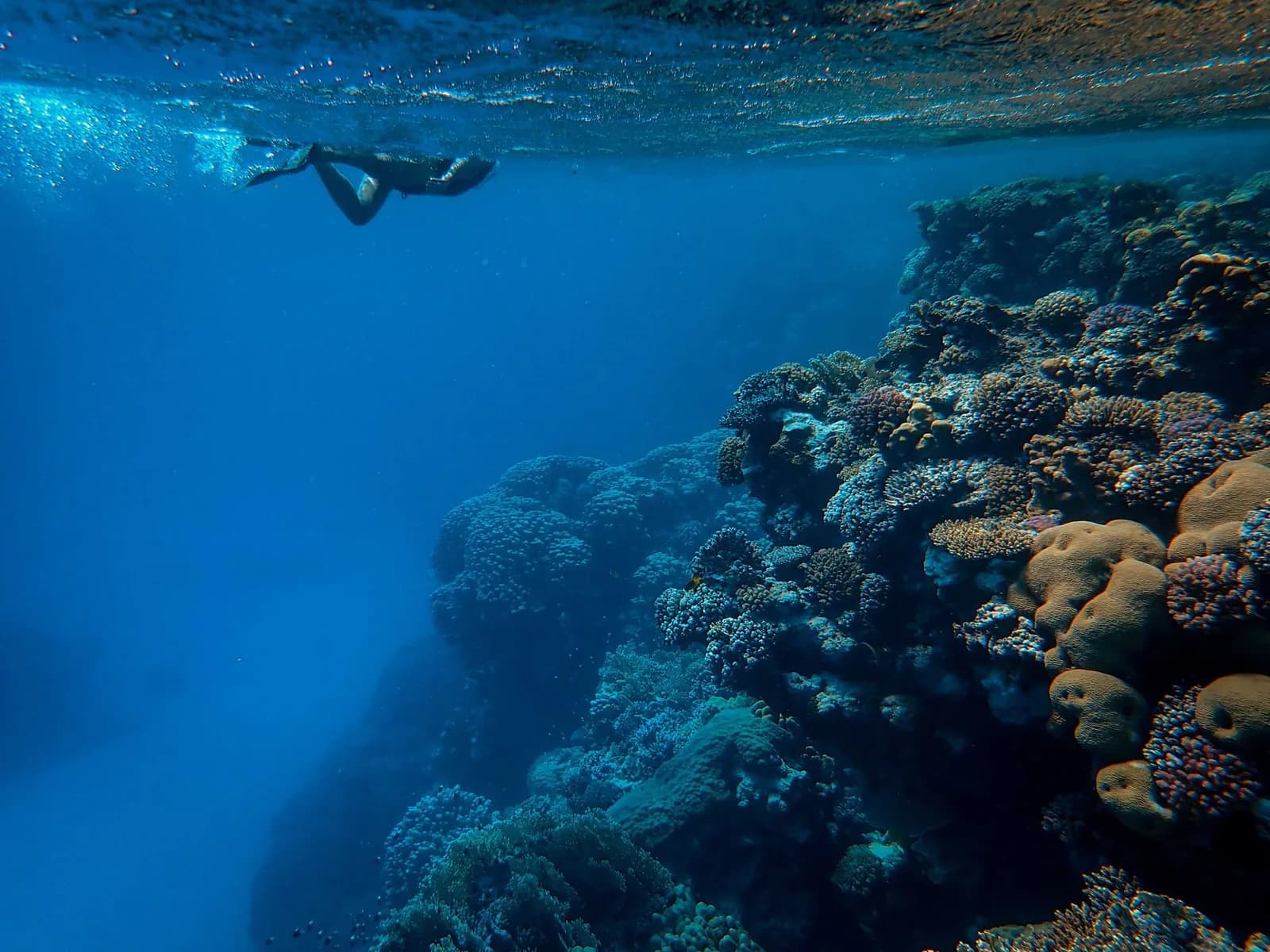
Are there sharks in Zanzibar
Yes, and it is a better question than it sounds, because the honest answer disappoints people in both directions. Divers see whitetip and blacktip reef sharks and nurse sharks, all small, all shy, and all more interested in the reef than in you.
- Nothing to worry about swimming. There is no record of a shark attack at the tourist beaches, and the animals worth respecting here are sea urchins and stonefish.
- Nothing to travel for either. If sharks are the reason you dive, this is not the coast. Leven Bank is the only site that regularly turns up anything larger.
- Whale sharks are at Mafia, not here. October to March, best November to February, and a separate flight. How to fit it in is in our guide to Mafia Island from Zanzibar. Read the wording of anything sold from Zanzibar very carefully.
- Wear reef shoes. Sea urchins on the rock at low tide put more visitors in a clinic here than everything else combined. More in health and safety in Zanzibar.
When the water works
- February and March. The flattest sea and the best visibility of the year, regularly twenty five metres or more.
- October and November. The second window, warm and calm, with the short rains arriving late in the day.
- June to September. The kusi. Diving runs throughout, the crossings are rough and visibility drops. This is also whale season offshore.
- April and May. The long rains, the poorest visibility, the fewest boats and the lowest prices. See when to go to Zanzibar.
Pemba, for anyone who came to dive
If diving is the reason for the trip rather than one morning of it, the answer is Pemba. Wall diving on the Pemba Channel, the reef sanctuary at Misali, drop offs that start at ten metres and keep going, and visibility that regularly clears forty.
It costs a short flight or a long ferry, it has far fewer hotels, and it is a genuinely different standard of diving from Unguja. Most people who describe Zanzibar diving as disappointing never went. Sites, lodges and how to get there are in our guide to Pemba Island.
Before you book a deep day
Questions people ask about diving in Zanzibar
Is Zanzibar good for diving?
Good rather than great, and honest expectations make it much better. The water is warm all year, the coral around Mnemba is in reasonable condition, and it is one of the cheapest places in the world to certify. If you have dived the Red Sea, Raja Ampat or Sipadan, Unguja will feel modest. Pemba, an hour north, is the real diving.
How much does scuba diving cost in Zanzibar?
Fifty to seventy five dollars for a single dive with gear, ninety to a hundred and thirty for a two tank morning. An open water course runs $450 to $600 over three or four days, which is cheap by European or Australian standards. Add the ten dollar marine conservation fee at Mnemba, and a discover scuba day is around $100 to $150.
Are there sharks around Zanzibar?
Yes, and none of them are a reason not to get in. Whitetip and blacktip reef sharks and nurse sharks are the ones divers see, all small and all uninterested. Leven Bank occasionally turns up something larger. There is no record of a shark attack on a swimmer at the tourist beaches, and the animals people should actually be careful of here are sea urchins and stonefish.
Is it safe to swim in the ocean in Zanzibar?
Yes. The east coast lagoons are shallow and reef protected, and the north coast has deep water off the sand with no rip to speak of. The real hazards are mundane: sea urchins on the rock at low tide, stonefish that you avoid by wearing shoes, and sunburn. Wear reef shoes and you have removed most of the risk.
When is the best time to dive in Zanzibar?
February and March, then October and November. Those are the flat windows between the two monsoons and visibility is at its best. June to September the kusi trade winds cut visibility and make the crossings rough, though the diving still runs. April and May bring the long rains and the poorest water of the year.
Can you see whale sharks in Zanzibar?
Effectively no, and this is the most common misunderstanding here. The whale sharks are at Mafia Island, October to March and most reliably November to February, which is a separate flight and a separate trip. Anything sold as a whale shark excursion from Zanzibar is either taking you to Mafia or selling you a hope.
Can you learn to dive in Zanzibar?
Yes, and it is a sensible place to do it. Warm water, shallow reef, no current on the training sites, and a price that undercuts most of Europe by a wide margin. Allow three to four days, do not book a flight for the day after your last dive, and pick a centre by its instructor ratio rather than its price.