
Is there malaria in Zanzibar? The 2026 answer
Yes.Malaria in Zanzibar is lower than on the Tanzanian mainland, but it is not gone, and the official advice for visitors is to protect yourself the same way you would on safari. The UK's TravelHealthPro puts it plainly: high risk in all areas of Tanzania below 1,800 metres, including Zanzibar. The US CDC does not separate the island from the rest of the country either.
The confusion comes from a real success story. Zanzibar's elimination programme sprayed houses, handed out bed nets and tested every fever, and by 2022 the World Health Organization reported prevalence below one percent, the lowest in Tanzania. A lot of blogs, and a lot of hotel staff, still repeat that figure.
Then came the rains of late 2023, 125 to 150 percent above normal. Between November 2023 and March 2024, Zanzibar recorded 23,569 confirmed malaria cases, with a peak of 3,270 in a single week around Christmas. Doctors in Denmark and Romania treated eight travellers infected on the island over that winter, and one of them died. Thirteen countries reported imported cases from Zanzibar and Tanzania. The authors of that study wrote that many travellers had been told they did not need tablets.
Where the malaria risk is highest on Zanzibar
The 2023 to 2024 outbreak was concentrated on Unguja, the main island, which had 96 percent of cases. The heaviest districts were Mjini and Magharibi B, in other words Stone Townand its western suburbs, where standing water collects after the rains. Pemba recorded around a tenth of Unguja's incidence over the same months.
People who live on the east coast will tell you that the wind off the sea keeps mosquitoes down on the beach, and it does help. No health body publishes a separate rating for the coast though, and most visitors spend at least one evening eating at Forodhani in town. Plan for the whole island.
If Zanzibar follows a safari, the mainland parks carry a higher risk than the island. The tablets you take for a safari and beach trip should be chosen for the whole itinerary, beach included.
Zanzibar malaria season: after the long and short rains
Transmission rises with the rain, with a lag of a few weeks while mosquitoes breed in the puddles. On Zanzibar that means two seasons. The masika, the long rains, peaks from March to May. The vuli, the short rains, peaks in November, and that is when the 2023 outbreak started. June to October and January to February are the lower months, which also happen to be the best months to visit Zanzibar.
Lower is not zero. TravelHealthPro and the CDC do not change their advice by month, and neither should you.
Do I need malaria tablets for Zanzibar?
For a visitor, the answer from both the CDC and TravelHealthPro is yes. Three drugs cover the island, since the parasite here, mostly Plasmodium falciparum, the dangerous one, resists chloroquine but not these. The CDC also lists tafenoquine, which is available in the United States.
| Tablet | Start | Take | Stop |
|---|---|---|---|
| Atovaquone/proguanilMalarone and generics | 1 to 2 days before | One tablet a day | 7 days after leaving |
| DoxycyclineGeneric antibiotic | 1 to 2 days before | One tablet a day | 4 weeks after leaving |
| MefloquineLariam and generics | 2 to 3 weeks before | One tablet a week | 4 weeks after leaving |
Timings from TravelHealthPro (NaTHNaC), checked 30 September 2026. Doses and suitability are set by the prescriber, especially for children, pregnancy and anyone on other medication.
- Atovaquone/proguanil. The usual choice for a one or two week beach trip, because the tail after you get home is short.
- Doxycycline. Cheapest option. It can make skin more sensitive to the sun, which matters at low tide on a white sand beach.
- Mefloquine. Weekly, so easy on long stays, but not suitable for everyone. The clinic will check your history first.
None of these is sold over the counter in the UK or the US. Book a travel clinic, a pharmacy travel service or your GP, and take the whole course, including the days or weeks after you get home. The tail is where people slip, and it is there because the parasite can still be in your liver after you leave.
Travelling with children? The options and doses differ from the adult ones, and our guide to Zanzibar with kids covers the rest of the planning. Pregnancy is a separate conversation: TravelHealthPro lists pregnant women among the groups most at risk from malaria.
Avoiding mosquito bites in Zanzibar: nets, repellent and dusk
Tablets are one half of the protection, bites are the other. The malaria mosquito, Anopheles, bites from dusk to dawn, so the window that matters is the sundowner, dinner and the night.
- Repellent from sunset. A DEET based product is the reference. Bring it from home, because the brands sold on the island are pricier and weaker. Reapply after swimming and put sunscreen on first.
- Cover up in the evening. Light long sleeves and trousers at dinner, especially in Stone Town and at restaurants with garden seating.
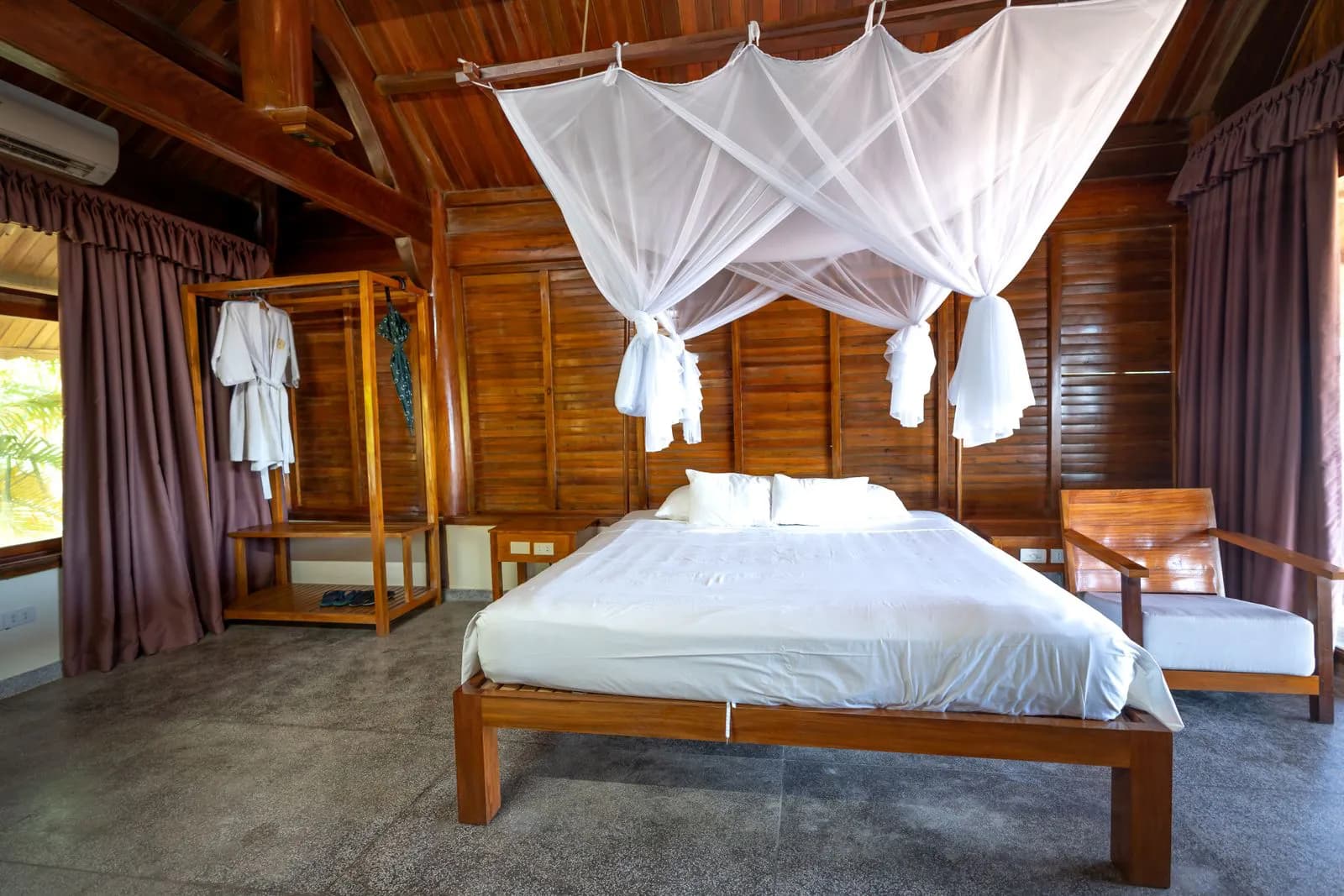
- Sleep under the net. Most Zanzibar hotels hang one over the bed. Check it for holes and tuck it under the mattress. Air conditioning with closed windows is the other good option.
- Daytime bites are dengue, not malaria. The CDC and TravelHealthPro both list dengue in Tanzania. It is rarer in travellers and there is no vaccine that helps here, so repellent during the day in town is worth it too.
Malaria symptoms after a trip to Zanzibar
Malaria looks like flu: fever, chills, headache, aching muscles, tiredness, sometimes vomiting or diarrhoea. It takes at least a week after the bite to show, so a fever on day two of your holiday is probably something else. It can also appear months after you get home.
Fever after Zanzibar: test the same day
On the island, every clinic and hospital listed below runs a rapid malaria test in minutes. Treatment is effective when it starts early.
Yellow fever and Zanzibar: when you need the certificate
Tanzania is not a yellow fever country, and the CDC and TravelHealthPro do not recommend the vaccine for Zanzibar itself. What Tanzania does ask for is a certificate of vaccination from travellers aged one and over who arrive from a country with yellow fever risk. That is about your route, not your destination.
| Your route to Zanzibar | Certificate? |
|---|---|
| Direct, or via Europe, Doha, Dubai, Muscat, Istanbul or Johannesburg | Not required |
| Via Nairobi or Addis Ababa, staying inside the airport, connection under 12 hours | Not required |
| Via Nairobi or Addis Ababa with a connection over 12 hours | Required |
| After a safari or stay in Kenya, Uganda or another risk country | Required |
| From mainland Tanzania, after a safari there | Not required |
Rule as published by the CDC (Tanzania page, updated 23 April 2025) and TravelHealthPro, checked 30 September 2026.
Transit through Nairobi or Addis Ababa: the 12 hour rule
This is the trap. Ethiopian Airlines and Kenya Airways sell some of the cheapest fares to Zanzibar, and both Ethiopia and Kenya are on the yellow fever risk list. The risk there is only in parts of each country, but the list does not make that distinction at the border.
A normal connection, where you stay airside and fly on within 12 hours, does not trigger the certificate. What does: a layover of more than 12 hours, an overnight in an airport hotel outside the terminal, or a few days in Nairobi on the way. Immigration officers at Zanzibar do not check every passenger, but the ones who get checked without a certificate risk being refused boarding or entry. Our flights to Zanzibar guide compares the routings, and the Nairobi to Zanzibar flight page covers the Kenya connection and the Masai Mara case.
Getting the yellow fever vaccine: timing and validity
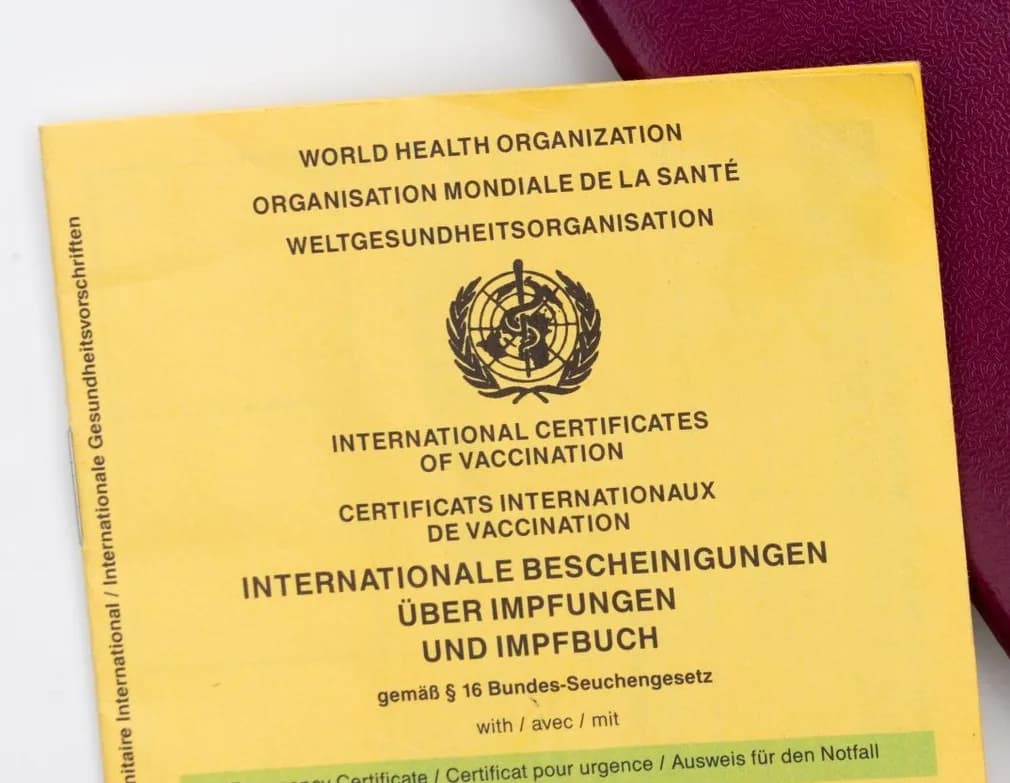
If your route needs it, the jab is given only at registered yellow fever centres, and the certificate becomes valid 10 days after the injection. Since 11 July 2016 it is valid for life: no border can refuse an older certificate for being more than ten years old. Keep the yellow card with your passport, and check the rule of the next country if you fly on from Tanzania.
Vaccines for Zanzibar: what the CDC and the NHS recommend
No vaccine is compulsory for Zanzibar when you arrive from a country without yellow fever. The list below is what the CDC and TravelHealthPro, which advises NHS travel clinics, recommend for Tanzania as of 30 September 2026.
| Vaccine | For whom | |
|---|---|---|
| Hepatitis A | Most travellers | CDC and NaTHNaC both recommend it for anyone not already immune, from age one. |
| Typhoid | Most travellers | CDC: recommended for most travelers. NaTHNaC: most travellers, as an injection or oral capsules. |
| Tetanus (with diphtheria and polio in the UK) | Everyone, as a booster | NaTHNaC advises a booster if your last dose was more than ten years ago, because care on the island is limited. |
| Polio | Adults, one booster | CDC issued a Level 2 Global Polio notice for Tanzania, updated 23 September 2026. The UK combined booster covers it. |
| Hepatitis B | Some travellers | CDC recommends it for unvaccinated travellers under 60. NaTHNaC lists it for longer stays and anyone who may need medical or dental care. |
| Rabies | Some travellers | Present on Zanzibar (NaTHNaC). Worth it for long stays, cyclists, runners, children and anyone far from Stone Town. |
| Cholera | Few travellers | CDC: transmission is active in Tanzania but rare in travellers. Consider it if you will work in health care or aid. |
| Yellow fever | Not for Zanzibar itself | CDC and NaTHNaC: generally not recommended for Tanzania. The certificate question depends on your route, see below. |
Vaccinations for Zanzibar from the UK: NHS or private
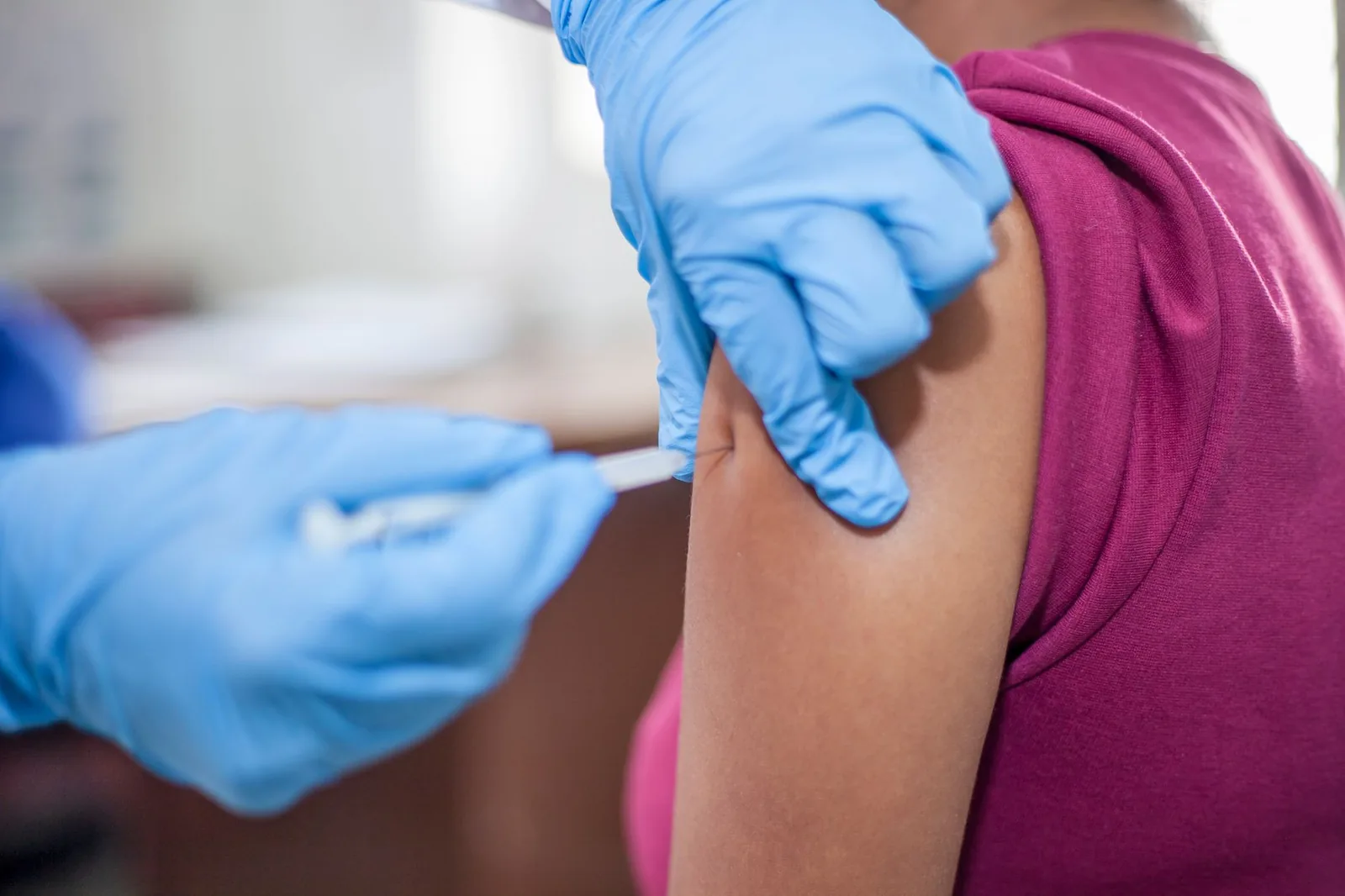
In the UK, hepatitis A, typhoid and the combined diphtheria, tetanus and polio booster are normally free on the NHS through your GP practice. Hepatitis B, rabies and yellow fever are paid for, at a private travel clinic or a pharmacy travel service. The GOV.UK travel advice suggests seeing a health professional at least eight weeks before you fly, which leaves room for a two dose course and for malaria tablets to be ordered.
In the US, the CDC suggests an appointment at least a month before departure. Vaccines are not free at travel clinics, and some insurers cover part of them.
Health notices for Tanzania in 2026
- Polio. The CDC's Level 2 notice was updated on 23 September 2026, and TravelHealthPro reported poliovirus in environmental samples in Mwanza, on the mainland, in January 2026. Hence the adult booster.
- Mpox. Tanzania confirmed 111 cases of clade Ib by the end of July 2025. The risk for a normal holiday is very low, and vaccination is only advised for specific exposures.
- Temperature checks. GOV.UK notes screening at all entry points, so do not be surprised by a thermometer at the airport.
- Chikungunya. TravelHealthPro notes that cases have not been reported on Zanzibar island and does not recommend the vaccine for a Zanzibar trip.
Water, ice and food in Zanzibar
A stomach upset is the health problem you are most likely to meet on Zanzibar, far ahead of malaria.
- Tap water is not drinkable. Buy bottled water, sold everywhere, or bring a filter bottle. Brush your teeth with it if your stomach is sensitive.
- Ice depends on the place. Hotels, resorts and established restaurants use ice made from treated water. At a roadside juice stall, ask for it without.
- Hot and busy is safe. Street food at Forodhani is fine when it is cooked in front of you and the stall has a queue. Salads, cut fruit and anything sitting out are where problems start.
- No fresh water swimming. The sea carries no bilharzia risk. Ponds, rivers and cave pools can, and the CDC also lists leptospirosis for fresh water.
Pack oral rehydration sachets and a few days of an anti-diarrhoeal in case. A fever, blood in the stool or an upset that lasts more than two days needs a clinic, and a malaria test at the same time.
Sea urchins, coral and sunburn at low tide in Zanzibar
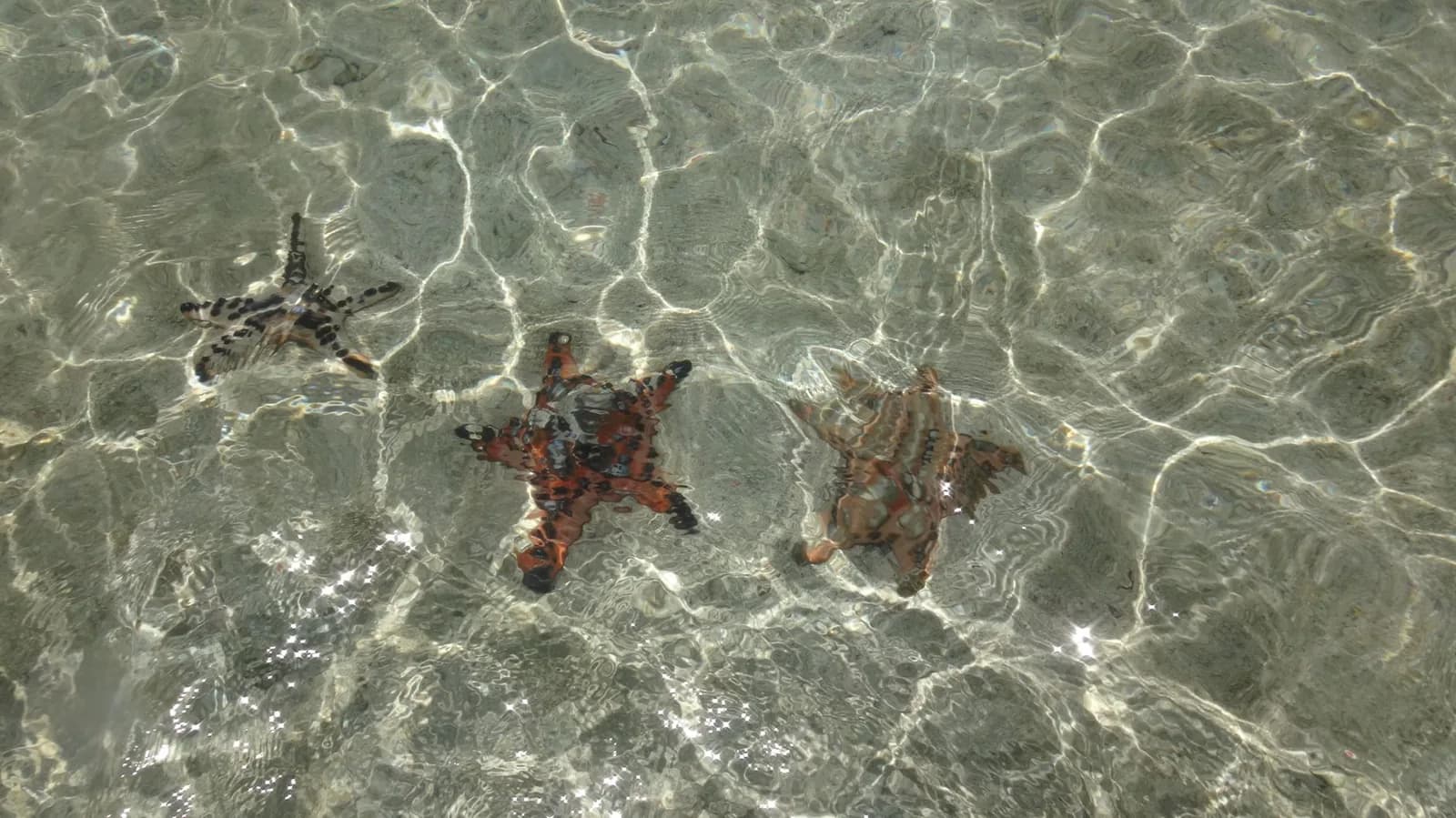
On the east coast the sea goes out a kilometre or more, and the Zanzibar tides leave a flat of sand, seagrass and coral that everyone walks out on. It is also where most minor injuries on the island happen.
Sea urchin spines: what to do
The black, long spined urchins sit in the seagrass and in the holes of the reef flat, and they are invisible in rippled water. Wear reef shoes or old trainers at low tide, and shuffle rather than stamp. If you step on one, pull out the spines you can grip, soak the foot in water as hot as you can comfortably bear, which eases the pain, and clean it well. Spines near a joint, a wound that swells or reddens after a day or two, or pain that gets worse need a clinic. Coral cuts infect easily in the heat: wash them with clean water and keep them covered.
Sunburn on the Zanzibar sandbanks
The worst burns come from the low tide walk and the sandbank stop of a Safari Blue day: two hours on white sand and shallow water, with no shade and a sea breeze that hides the heat. Zanzibar is six degrees south of the equator. Wear a shirt and a hat, reapply high factor sunscreen after each swim, and remember that doxycycline makes you burn faster.
Hospitals in Zanzibar: Stone Town, Nungwi and Paje

GOV.UK describes medical facilities in Tanzania as limited, especially outside Dar es Salaam. On Zanzibar, private hospitals handle tests, stitches, infections, fractures and malaria well. Serious trauma, heart problems and complex surgery mean a transfer to Dar es Salaam or Nairobi. The ambulance number is 112.
Ampola Tasakhtaa Hospital
Victoria Street, Vuga, Stone Town · Private, 130 beds
The usual first stop for visitors with anything beyond a pharmacy problem: 24 hour emergency department, scanner, laboratory and specialist consultants. Emergency line +255 24 223 2222.
Mnazi Mmoja Hospital
Stone Town · Public, main referral hospital
The largest hospital on the islands and the one the ambulance may take you to. Busy and stretched. Most insured visitors move to a private hospital once stable.
North Valley Hospital
Nungwi, north coast · Private
Emergency care, surgery, radiology, laboratory and an ambulance. The nearest private hospital if you are staying in Nungwi or Kendwa.
MedExpress
Paje, east coast · Private
24 hour emergency care, in-patient beds, laboratory and a pharmacy. The nearest proper facility for Paje, Jambiani, Bwejuu and Michamvi.
Private hospitals ask for payment or an insurer's guarantee before treatment. Call your insurer's assistance line first if you can: they often have a direct billing agreement and will tell you where to go. Pharmacies in Stone Town and the main beach villages sell most common medicines, but bring your own supply of anything you take regularly, in its original packaging.
Diving accidents: the Zanzibar hyperbaric chamber
Zanzibar has a recompression chamber for decompression illness, listed at Matemwe on the north east coast. Before you dive, ask your Zanzibar dive centre where the chamber is currently operating and how they would get you there, and check that your insurance covers diving to your certification depth. On Pemba, a serious injury means evacuation to Unguja or the mainland.
Medical evacuation from Zanzibar: AMREF Flying Doctors
The regional air ambulance is AMREF Flying Doctors, based at Wilson Airport in Nairobi. Its Maisha Tourist Plus plans cover unlimited air evacuation to Nairobi. The Silver Plus plan, which covers Kenya, Tanzania and Zanzibar, costs $50. Their emergency line is +254 20 699 2299. Prices from flydoc.org, checked 30 September 2026.
The compulsory ZIC policy, around $44 an adult since 1 October 2024 and explained on our Zanzibar visa page, is an entry requirement with basic cover. It is not a travel insurance policy. What pays for a private hospital, an evacuation to Nairobi or a flight home is your own policy, with medical expenses and repatriation, and diving or kitesurfing added if you do them.
Travel medical cover with evacuation
SafetyWing covers medical expenses and medical evacuation, can be bought after you have left home, and runs by the week. Check the sports and the pre-existing conditions sections before you buy. The full comparison is on our Zanzibar travel insurance page.
Questions people ask about malaria and vaccines for Zanzibar
Is there malaria in Zanzibar in 2026?
Yes. Zanzibar spent twenty years pushing malaria down, and prevalence was below one percent in 2022, but an outbreak between November 2023 and March 2024 produced 23,569 confirmed cases, mostly around Stone Town and the west of Unguja. The UK's TravelHealthPro classes all of Tanzania below 1,800 metres, Zanzibar included, as high risk.
Do I need malaria tablets for Zanzibar?
The CDC and the UK's TravelHealthPro both recommend antimalarial tablets for Zanzibar, and neither gives the island an easier rating than the mainland. Atovaquone/proguanil, doxycycline and mefloquine are the usual options. Which one suits you is a decision for a travel clinic or GP, not a website.
Why do people on Reddit say they skipped malaria tablets in Zanzibar?
Because for years the island was close to elimination and many residents and returning visitors never took them. Long-term residents also carry some acquired immunity that a visitor does not. The 2023 to 2024 outbreak changed the picture: a 2024 study found travellers infected in Zanzibar in several European countries, including one death, and noted many had been told they did not need tablets.
What vaccinations do I need for Zanzibar from the UK?
None is compulsory for a traveller flying from the UK. TravelHealthPro advises hepatitis A, typhoid and a tetanus booster for most travellers. On the NHS, hepatitis A, typhoid and the combined diphtheria, tetanus and polio jab are usually free from your GP practice. Hepatitis B and rabies are for some travellers and are normally paid for privately.
Do I need a yellow fever certificate for Zanzibar?
Not if you fly in from Europe, North America, the Gulf or South Africa. You need one if you arrive from a country with yellow fever risk, such as Kenya or Ethiopia, or if you spent more than twelve hours in transit at one of their airports. A short connection in Nairobi or Addis Ababa without leaving the airport does not count.
Where is the malaria risk highest on Zanzibar?
During the 2023 to 2024 outbreak, 96 percent of cases were on Unguja, the main island, and the heaviest area was Mjini and Magharibi B, which covers Stone Town and its western suburbs. Pemba recorded about a tenth of Unguja's incidence. No official risk map separates the beaches from town, so the advice for visitors is the same across the island.
Can you drink the tap water in Zanzibar?
No. Drink bottled or filtered water, which every hotel and shop sells, and use it to brush your teeth if your stomach is sensitive. Ice in hotels and established restaurants is made from treated water. Skip it at roadside stalls.
Is the compulsory Zanzibar insurance enough for medical care?
No. The ZIC policy every visitor has had to buy since 1 October 2024 is a basic entry requirement. It does not replace a full travel insurance policy with medical expenses and evacuation, and it does not cover activities like diving or kitesurfing in the way a proper policy does.
Sources for this Zanzibar health guide
This page is general information, not medical advice. Your travel clinic or doctor decides on tablets and vaccines for you. Sources checked on 30 September 2026:
- TravelHealthPro (NaTHNaC), Tanzania: malaria risk, tablets, vaccines, yellow fever.
- CDC Travelers' Health, Tanzania: vaccines, yellow fever rule, polio notice.
- NHS Fit for Travel, Tanzania: the NHS Scotland travel health service.
- Countries with risk of yellow fever transmission: NaTHNaC, based on the WHO list.
- World Health Organization, Moving towards zero malaria in Zanzibar (October 2022).
- Malaria Journal, the 2023 to 2024 Zanzibar outbreak (October 2025).
- New Microbes and New Infections, malaria in travellers returning from Zanzibar (2024).
- GOV.UK foreign travel advice, Tanzania health.
- NHS, travel vaccinations: which jabs are free.
- AMREF Flying Doctors, Maisha plans.