
Where
Kenyatta Road, Shangani, Stone Town
Entry
$10 adults, $6 children
Open
Daily, from 9 or 10am
Time needed
30 to 45 minutes
Opened
24 November 2019
Born here?
No, at the Government Hospital
Is the Freddie Mercury Museum worth visiting?
If you are already in Stone Town, yes. Budget thirty minutes. The museum takes up one floor of Mercury House. There are family photos, school pictures, a few handwritten lyrics and the piano, and the story is told carefully and without much fuss. It bills itself as the only museum in the world given over entirely to Freddie Mercury, and it stands in a house he actually lived in.
It is not worth the drive from the coast on its own. If you are staying in Nungwi or Paje and have one day for the town, the slave market memorial, the lanes and the seafront come first. The house takes a small detour from those, so fit it in on the way rather than planning around it.
The $10 is what divides visitors. Queen fans come out happy, some of them moved. People who went in out of curiosity often feel they paid a museum price for a room of photos they could have found online. Decide which of the two you are before you reach the door.
Thirty minutes that earn the detour if you are walking the old town. Go in the morning, and skip it if you have never played a Queen record.
A Stone Town walk that stops at the house
A guided walk through the old town, with the slave market memorial, the palaces and Mercury House on the route. Check whether museum entry is included before you book. Prices and ratings are as the partner lists them, read on the date shown below the card.
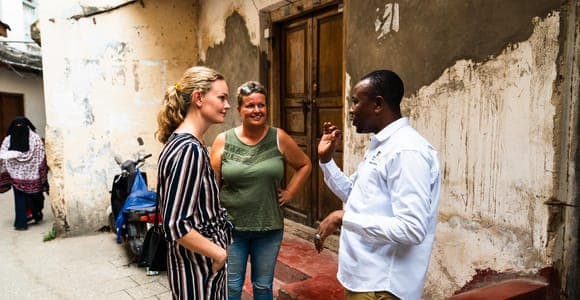
Stone Town: guided history walk
The slave market memorial, the palaces and the Freddie Mercury house.
From$25per person
Check availabilityPrices, ratings and review counts read from GetYourGuide on 27 September 2026, and indicative. These are partner links: the price is the same for you.
Where is the Freddie Mercury Museum?
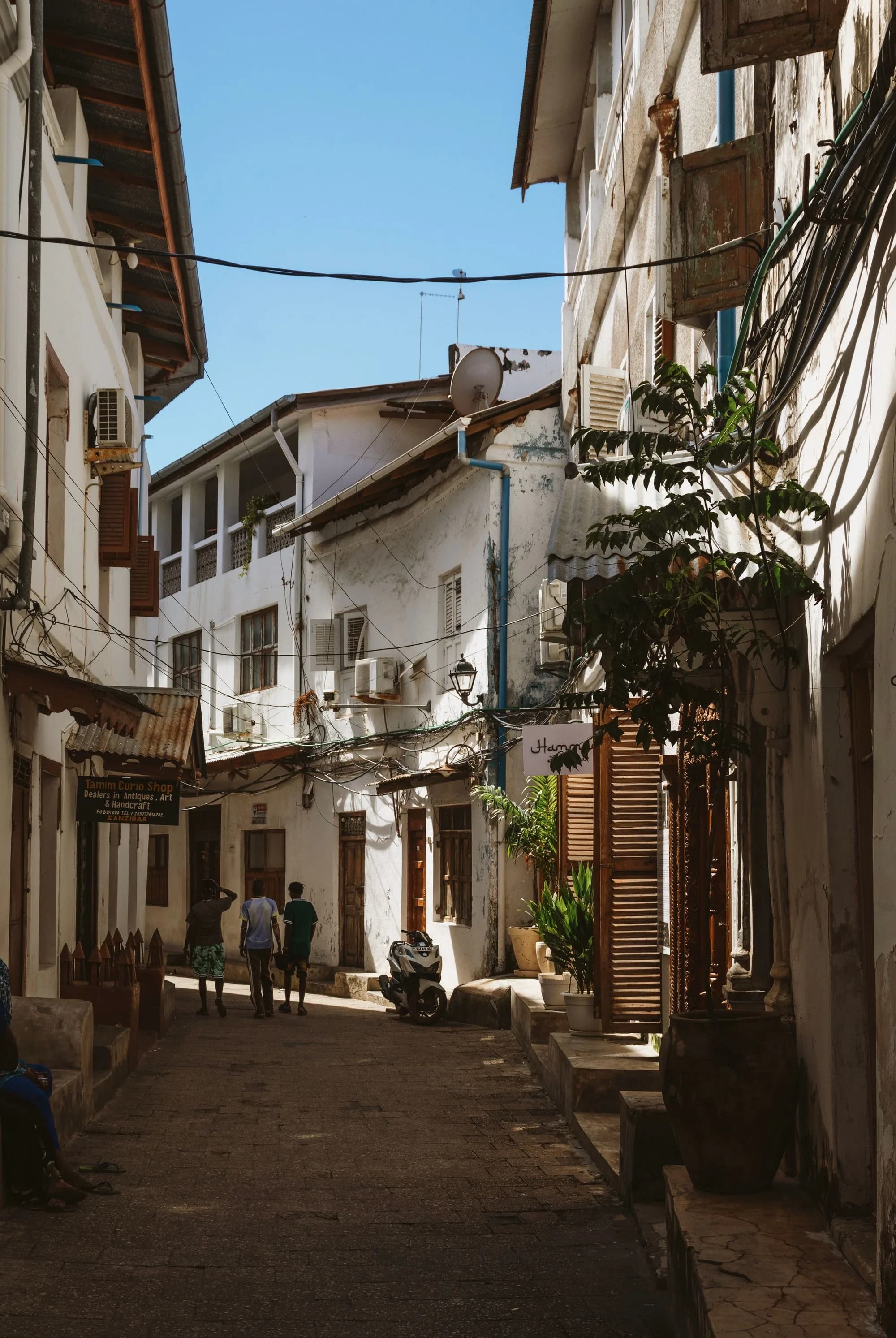
In Mercury House, on Kenyatta Road, in the Shangani quarter at the western tip of Stone Town. The museum gives its address as Shangani Street, which is the same place. The quarter is a tangle of hotels, galleries and curio shops a block back from the sea, and the house sits among them.
You will not miss it. The front is covered in photos of Freddie, from baby pictures to Wembley, under a large sign. From Forodhani gardens it is five minutes on foot. From the ferry terminal it is under ten, and from the House of Wonders about seven, along the seafront and then up into the lanes.
Taxis cannot get into most of Shangani. Ask to be dropped at the Serena hotel or at Forodhani and walk the rest. Any shopkeeper will point you the right way if you say "Freddie".
Opening hours, tickets and how long you need
Tickets are sold at the door, and you do not need to book. The published prices, checked on 22 September 2026:
| At the door | What to expect |
|---|---|
| Adult entrance | $10 for visitors, 10,000 shillings for Tanzanian residents. Dollars or shillings. |
| Children | $6, or 6,000 shillings for residents. |
| Opening hours | Every day. The museum's website says 9am to 8pm. Hotels and recent visitors say 10am to 6pm. Plan for the shorter one. |
| Time inside | 30 to 45 minutes, an hour if you read every caption. |
| Access | One floor, flat inside, a single step at the door. |
Timing your visit
- Go before eleven. The room is small, and a single walking tour can fill it.
- On 5 September, his birthday, expect fans and a fuller room.
- Carry small notes. Change for a $20 is not guaranteed.
What you see inside
The centrepiece is a black piano, said to be the one young Farrokh played. A yellow jacket, a nod to the one he wore on Queen's last tour in 1986, hangs over it. It is roped off, though some visitors have been allowed to sit at it for a photo.
Along one wall runs the family album: Farrokh as a baby with his mother, his fourth birthday in Zanzibar, school photos, a copy of his Zanzibari birth certificate. Opposite are the memories of people who knew him as a boy, and in big letters his line "I'm not going to be a star, I'm going to be a legend". Then come the handwritten lyrics on crumpled sheets. They look like nothing until you read the first line and recognise the song.
Many of the pictures are on loan from Queen Productions in London, and they get a lot of wall space. The last part covers the Queen years, Live Aid in 1985 and his death in London in November 1991, but it moves fast. The museum is about the boy before the singer, and that is its best idea.
Did Freddie Mercury live in Zanzibar?
Yes, but less than the signs suggest. Of his first seventeen years, fewer than ten were spent on the island. The rest were at boarding school in India.
- 1946
- Farrokh Bulsara is born on 5 September at the Government Hospital in Zanzibar. His father Bomi works as a cashier for the British colonial administration. The family are Parsis, Zoroastrians from Gujarat.
- 1951
- Aged five, he starts at a missionary school in Stone Town. His sister Kashmira is born the following year.
- 1954
- Sent to St Peter's School in Panchgani, a boarding school near Bombay. He starts calling himself Freddie there, takes piano lessons and later forms his first band, The Hectics. Most of his childhood is spent in India, not on the island.
- 1963
- Back in Zanzibar at sixteen to live with his parents and finish his schooling.
- 1964
- The Zanzibar Revolution in January overthrows the sultan, and thousands of Arabs and Indians are killed. That spring the Bulsaras leave for England and settle in Feltham, near Heathrow. He never comes back.
The museum's own timeline puts the departure in 1963. The BBC and his biographers place it in 1964, after the revolution. In Zanzibar the Bulsaras lived comfortably: a flat looking over the sea, domestic staff and a nanny, according to a cousin quoted by the biographer Lesley-Ann Jones. A school friend remembered swimming after class and bike rides to the beaches further south.
Which house is the real one?
Several buildings in Stone Town will tell you Freddie lived there, and some of them may be right. Bomi Bulsara moved house more than once, and no single address has been proven on the record. These are the ones you will hear about:
Mercury House, the museum
Kenyatta Road, Shangani
The building most guides and all the signposts point to, and the only one you can visit. Its own sign says he spent his childhood years here, not that he was born here.
The former Camlur's restaurant
Kenyatta Road
Local historians quoted in several guides say the family lived in this building too. The restaurant has closed and there is nothing to visit.
A house near the old post office
Kenyatta Road or the square behind it
A second address cited by the same historians. Guides disagree on which house, and nobody marks it.
Freddie Mercury Apartments
Shangani, run by Tembo House Hotel
Rooms to rent, named after him. A name, not a claim, though the two often get mixed up online.
The one thing every source agrees on is that none of them is his birthplace. He was born in hospital, like most children of colonial civil servants. So when a guidebook calls Mercury House his birthplace, it is wrong. The museum's own sign is more careful.
Why a museum here, and why it is complicated
The museum started as a shop. In 2002 a Zanzibari businessman, Javed Jafferji, opened a souvenir shop called The Mercury House in the building. He had been a fan since his student days in London, when hardly anyone knew where Freddie came from. After the 2018 film Bohemian Rhapsody and a visit by Brian May, who posted a photo outside, he went into partnership with Queen Productions. The museum opened on 24 November 2019, twenty eight years to the day after Mercury died.
The Parsi community he was born into has almost gone. There were around 300 Parsis on the island in the 1940s. Now there are a handful, and the Zoroastrian fire temple where he is said to have first sung has long been abandoned.
Then there is his private life. Zanzibar is overwhelmingly Muslim and socially conservative, and gay sex was made illegal there in 2004. In 2006 a Muslim group protested against rumours of a beach party for what would have been his sixtieth birthday. The museum handles this by not mentioning it at all. Its manager told CNN in 2020 that they focus on his music and his art because his personal life is a controversial topic for Zanzibaris.
So the island is proud of Freddie and quiet about part of his life at the same time. You will feel both in the room. Young Zanzibaris at the desk talk about him like a cousin who made it big, while half of what made him Freddie Mercury goes unsaid.
Is there a Freddie Mercury statue in Zanzibar?
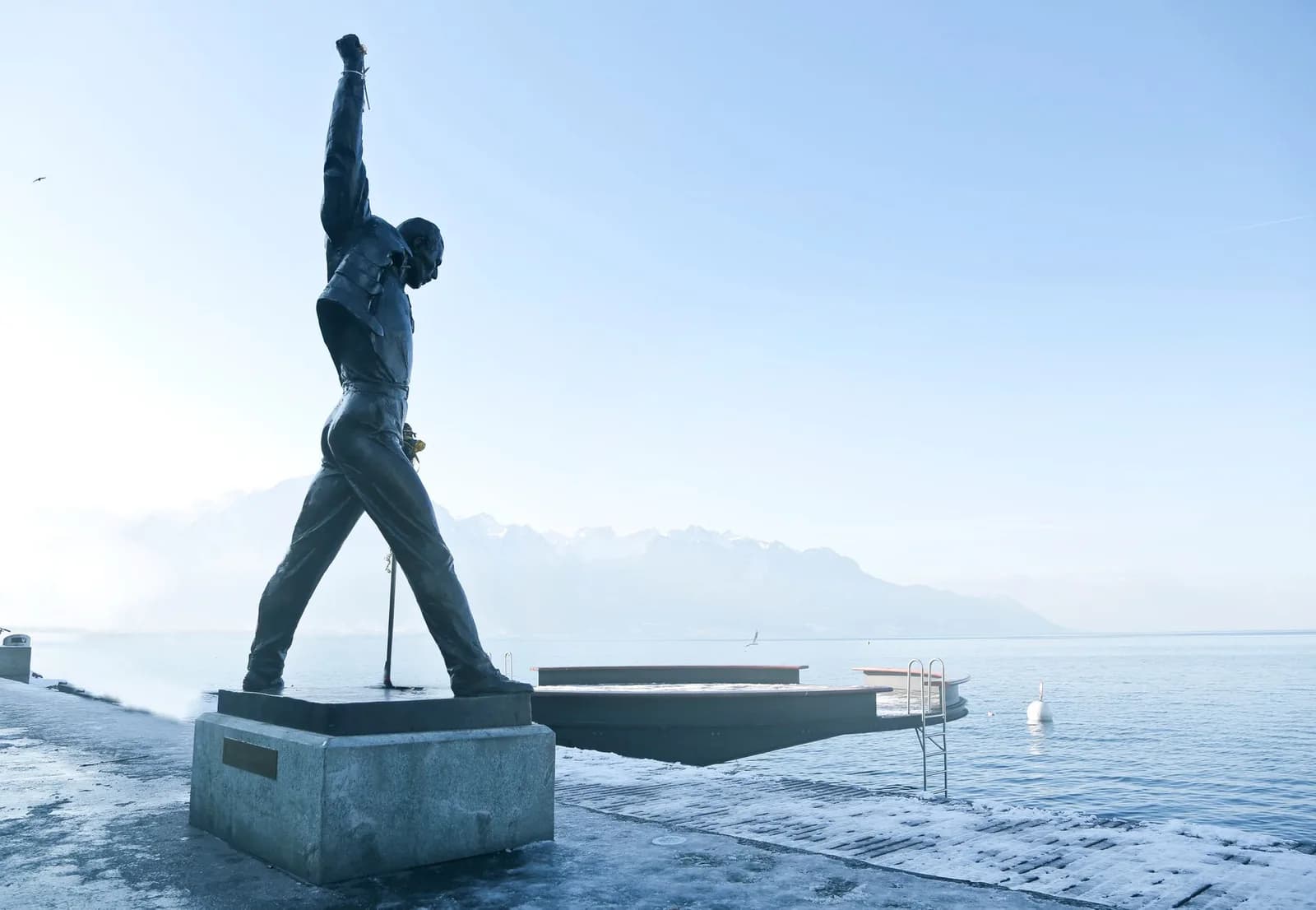
No, not that we have found. The photo wall on the front of Mercury House is the only tribute we know of on the island, apart from a restaurant named after him. The statue everyone pictures, fist raised, stands in Montreux, Switzerland, on the shore of Lake Geneva, where Queen owned a studio.
Mercury's bar, and coffee nearby
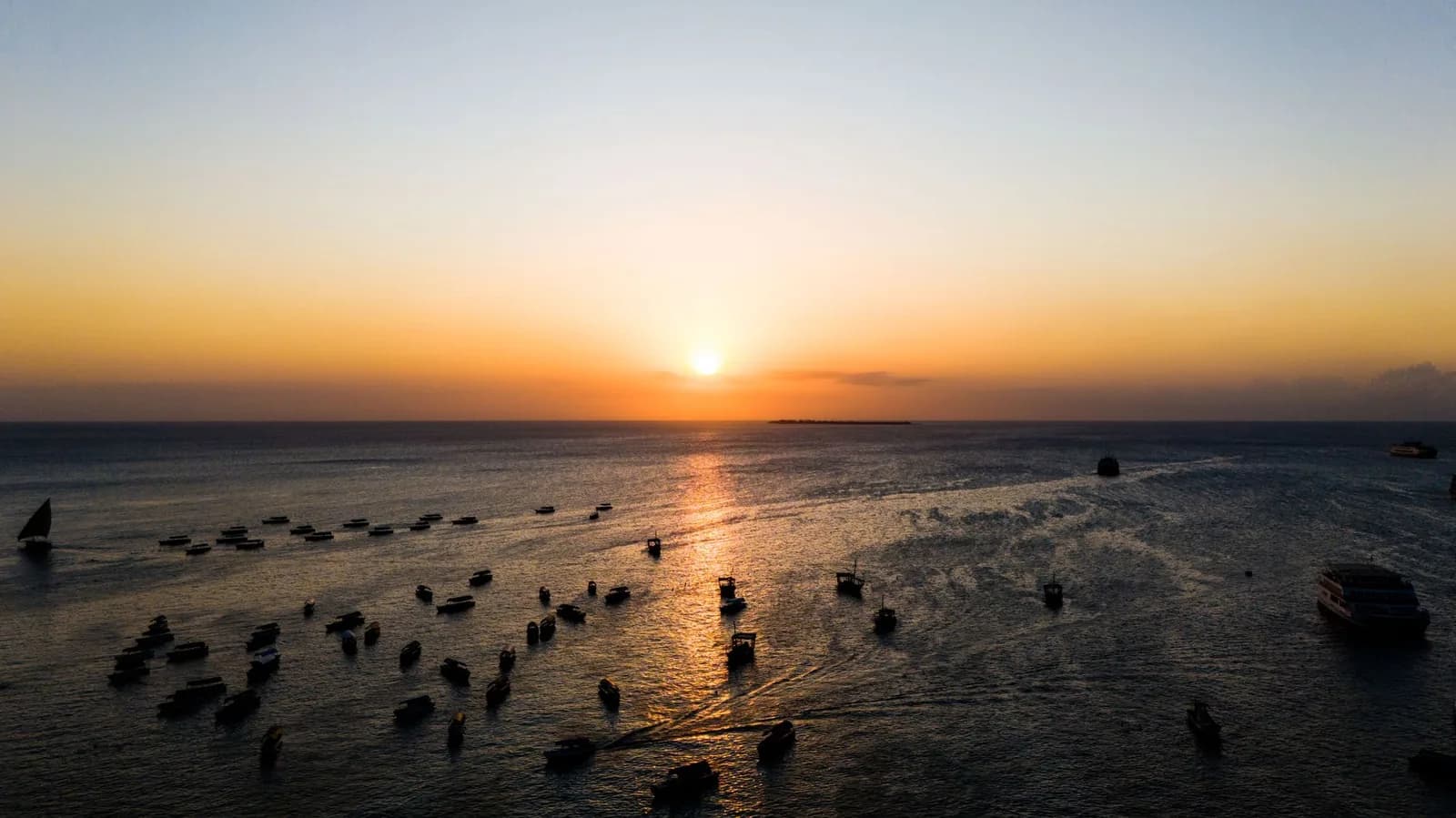
Mercury's is the waterfront restaurant and bar named after him, on Mizingani Road by the port. The menu has a Freddie's Favourite Salad and a Mercury's Special Pizza, and the food is priced for the view rather than the cooking. The terrace is where it earns its place: a cold drink at sunset with dhows coming in a few metres away. Have a drink there and eat somewhere else.
For coffee closer to the house, Shangani has plenty of small cafes and hotel terraces within a few streets, and the Forodhani food stalls open on the seafront after six. For a proper Zanzibari lunch, head inland to the Darajani market area, ten minutes away, where the local canteens cost a fraction of the waterfront.
A Freddie hour in Stone Town
Five stops, all within ten minutes of each other. Start mid morning at the museum and finish at Mercury's, or leave the last stop for the evening.
Mercury House
30 to 45 minutes · $10
Go in the morning, before the lanes get hot and the walking tours arrive. The photos on the facade are free if you only want the picture.
Kenyatta Road
10 minutes · Free
The street where local historians place at least one other Bulsara home. The old post office and the former Camlur's building are both on it or just off it.
Forodhani gardens
5 minutes away · Free
Downhill to the seafront. Sit under the trees, then carry on along Mizingani Road.
The House of Wonders
10 minutes · Free, from outside
Closed since part of it fell in 2020. Still the tallest building on the seafront, and the view from Forodhani is free.
Mercury's, by the port
As long as you like · $5 to $10 a drink
A drink on the terrace at sunset, facing the dhows. Order a drink, not dinner.
The rest of the old town, with prices and the order a day actually takes, is in our Stone Town guide. Shangani is also where most of the good small hotels are, so if you want the lanes to yourself before the day trippers arrive, see where to stay in Stone Town.
Freddie Mercury House Zanzibar: frequently asked questions
Why does Freddie Mercury have a museum in Zanzibar?
Because he was born there. Farrokh Bulsara was born in Stone Town on 5 September 1946 and lived on the island, between school years in India, until his family fled the 1964 revolution. A Zanzibari fan, Javed Jafferji, who had run a Freddie Mercury souvenir shop in the building since 2002, turned it into a museum with Queen Productions. It opened on 24 November 2019, the anniversary of Mercury's death.
Did Freddie Mercury live in Zanzibar?
Yes, but for less of his childhood than people assume. He lived in Stone Town until he was eight, then went to boarding school in Panchgani, India, from 1954, returning for holidays. He came back to Zanzibar in 1963 and left for England with his family in spring 1964, aged seventeen. He never returned.
Where is the Freddie Mercury Museum located?
In Mercury House, on Kenyatta Road in the Shangani quarter of Stone Town, a few minutes' walk from Forodhani gardens and under ten minutes from the ferry terminal. The museum gives its address as Shangani Street. The front is covered in photos of Freddie with a large sign above the door, so you will not walk past it by mistake.
Is there a statue of Freddie Mercury in Zanzibar?
Not that we have found. What Zanzibar has is the photo display on the front of Mercury House. The famous statue, fist in the air, stands on the shore of Lake Geneva in Montreux, Switzerland, where Queen recorded for years.
What is the Freddie Mercury Museum entrance fee?
$10 for adults and $6 for children if you are not a resident. Tanzanian residents pay 10,000 and 6,000 shillings. You can pay in dollars or shillings at the door. These were the published prices when we checked on 22 September 2026.
Do you need Freddie Mercury Museum tickets in advance?
No. You buy your ticket at the door and there is rarely a queue. Tours sold online as Freddie Mercury tours are usually Stone Town walking tours that stop outside the house. Check whether museum entry is included before you book one for that reason.
What are the Freddie Mercury Museum opening hours?
Every day. The museum's own website gives 9am to 8pm. Hotels and recent visitors quote 10am to 6pm, so plan for the shorter window and you will not be caught out. Last checked 22 September 2026.
Is Mercury House Freddie Mercury's childhood home or his birthplace?
A childhood home, not the birthplace. He was born at the Government Hospital. The family moved several times in Stone Town, and local historians name at least two other buildings on or near Kenyatta Road where they lived. Mercury House's own sign only claims that he spent his childhood years there.
What do the reviews of the Freddie Mercury Museum say?
Queen fans tend to love it and everyone else finds it small for $10. The common complaint is that many of the photos can be found online. The common praise is for the handwritten lyrics, the piano and the fact of standing in the house itself.
Can you take photos inside the Freddie Mercury Museum?
Visitors regularly post photos from inside, and some have been allowed to sit at the roped off piano for a picture. Ask at the desk. The easy shot is the photo wall on the facade, from the street.
Sources: the Freddie Mercury Museum website, September 2026, for the address, hours and timeline; Zanzibar Serena Hotel for the admission fees; CNN, 9 June 2020, on the museum's founding and its silence on his private life; BBC News, 23 October 2018, on his birth, schooling and the 2006 protest; Wikipedia for the 1964 departure.