Zanzibar history timeline: 20 dates that shaped the island
Zanzibar history comes in five layers: Swahili trading towns from around 1000, a Portuguese century of tribute from 1503, Omani rule from 1698, a British protectorate from 1890, and the revolution and union with Tanganyika in 1964. Each one left a building you can still walk into, most of them in Stone Town.
| Date | What happened | Where to see it |
|---|---|---|
| 26,000+ years ago | Stone tools left in Kuumbi Cave, the oldest trace of people on Unguja | Kuumbi Cave, near Jambiani (no visitor site) |
| c. 750 to 850 | Unguja Ukuu is probably the largest port on the East African coast | Unguja Ukuu, south west (excavations only) |
| c. 1000 to 1100 | Swahili and Shirazi settlements, ancestors of the Hadimu and Tumbatu | Kizimkazi, Tumbatu |
| 1107 | Kufic inscription carved in the Kizimkazi mosque | Kizimkazi Dimbani Mosque |
| 1499 | Vasco da Gama sails past on his way back from India | None |
| 1503 to 1504 | Portugal makes the local ruler pay tribute | Fukuchani ruins (disputed) |
| 1698 | Oman drives the Portuguese out of Zanzibar | Old Fort, Stone Town |
| c. 1699 | The Old Fort is completed over a Portuguese chapel | Old Fort, Stone Town |
| 1822 | First British treaty with Sultan Said against the slave trade | None |
| 1840 | Said bin Sultan makes Zanzibar the capital of Oman | Mtoni Palace ruins |
| 1856 | Said dies. Zanzibar and Oman become two separate sultanates | Palace Museum |
| 5 June 1873 | Sultan Barghash closes the Stone Town slave market | Christ Church and the slave market memorial |
| 1882 to 1883 | Maruhubi Palace, then the House of Wonders, built for Barghash | Maruhubi ruins, House of Wonders (closed) |
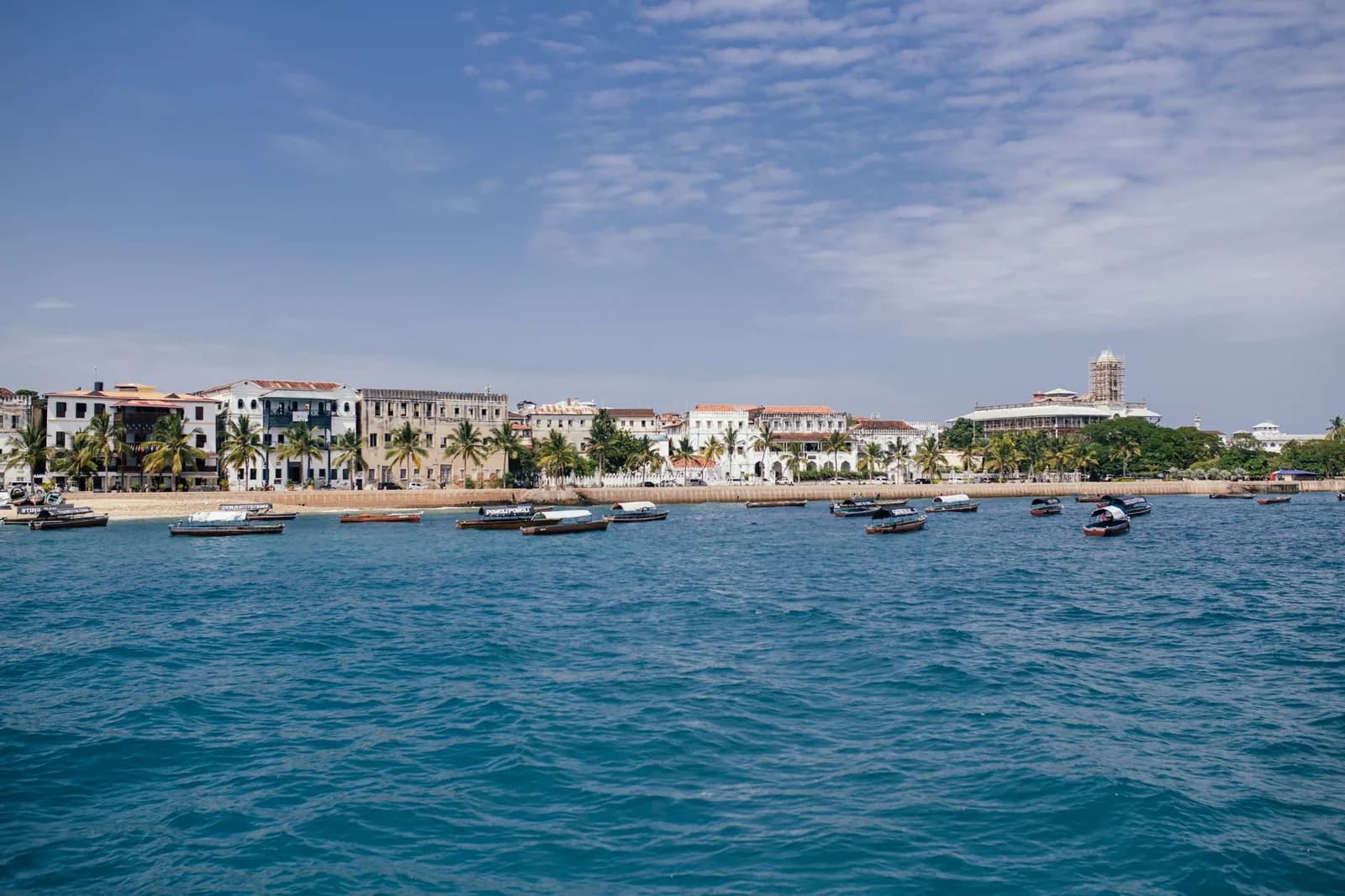
| 1890 | Heligoland-Zanzibar Treaty: Zanzibar becomes a British protectorate | Stone Town seafront |
| 27 August 1896 | The Anglo-Zanzibar War, about 38 minutes long | Palace Museum, Forodhani |
| 1897 | Slavery loses its legal status in Zanzibar | Christ Church |
| 10 December 1963 | Independence as a constitutional monarchy under the sultan | None |
| 12 January 1964 | The Zanzibar Revolution overthrows the sultan | Public holiday every 12 January |
| 26 April 1964 | Union with Tanganyika, renamed Tanzania on 29 October | Read our page on Zanzibar and Tanzania |
| 2000 | Stone Town added to the UNESCO World Heritage list | All of Stone Town |
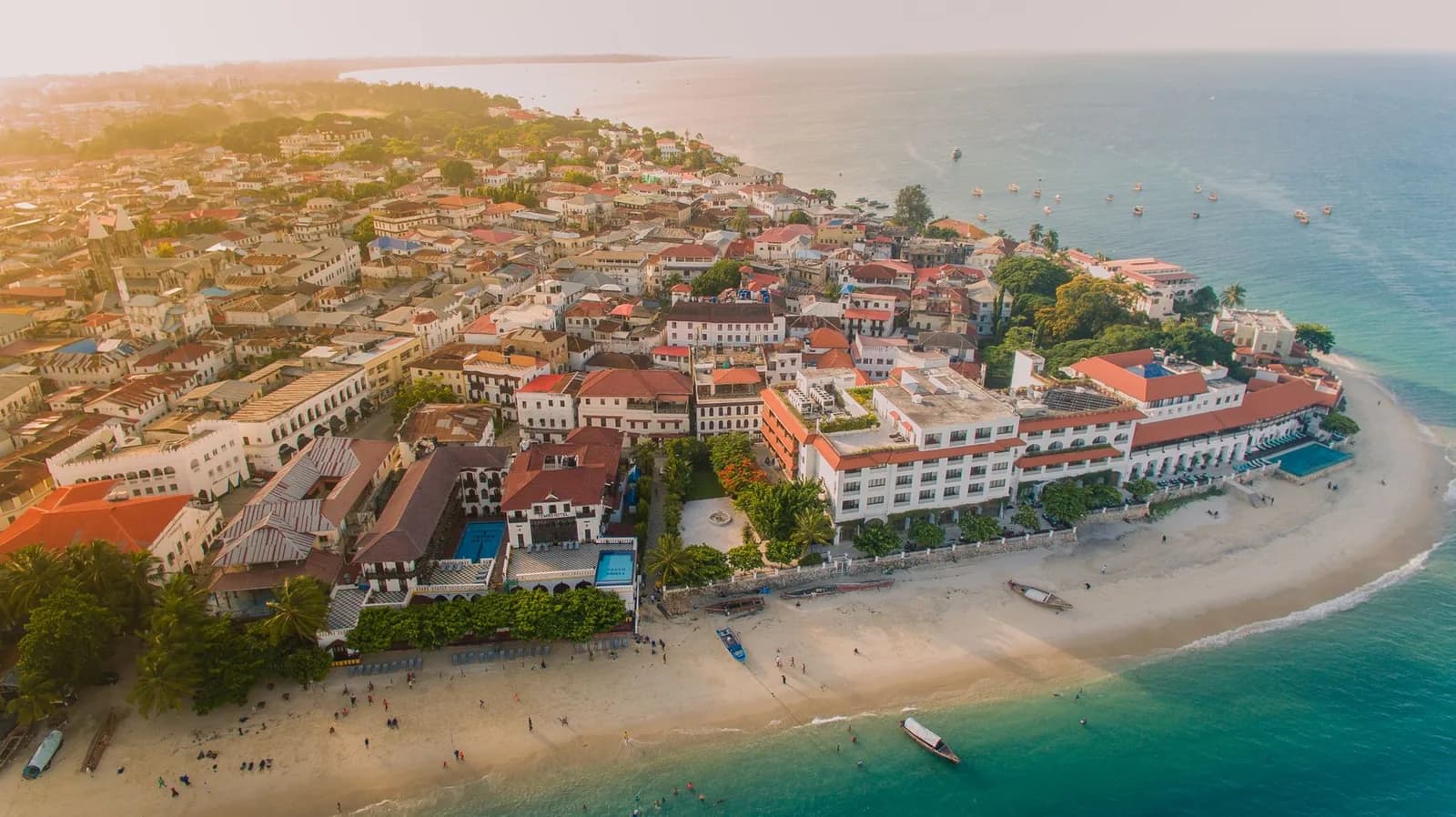
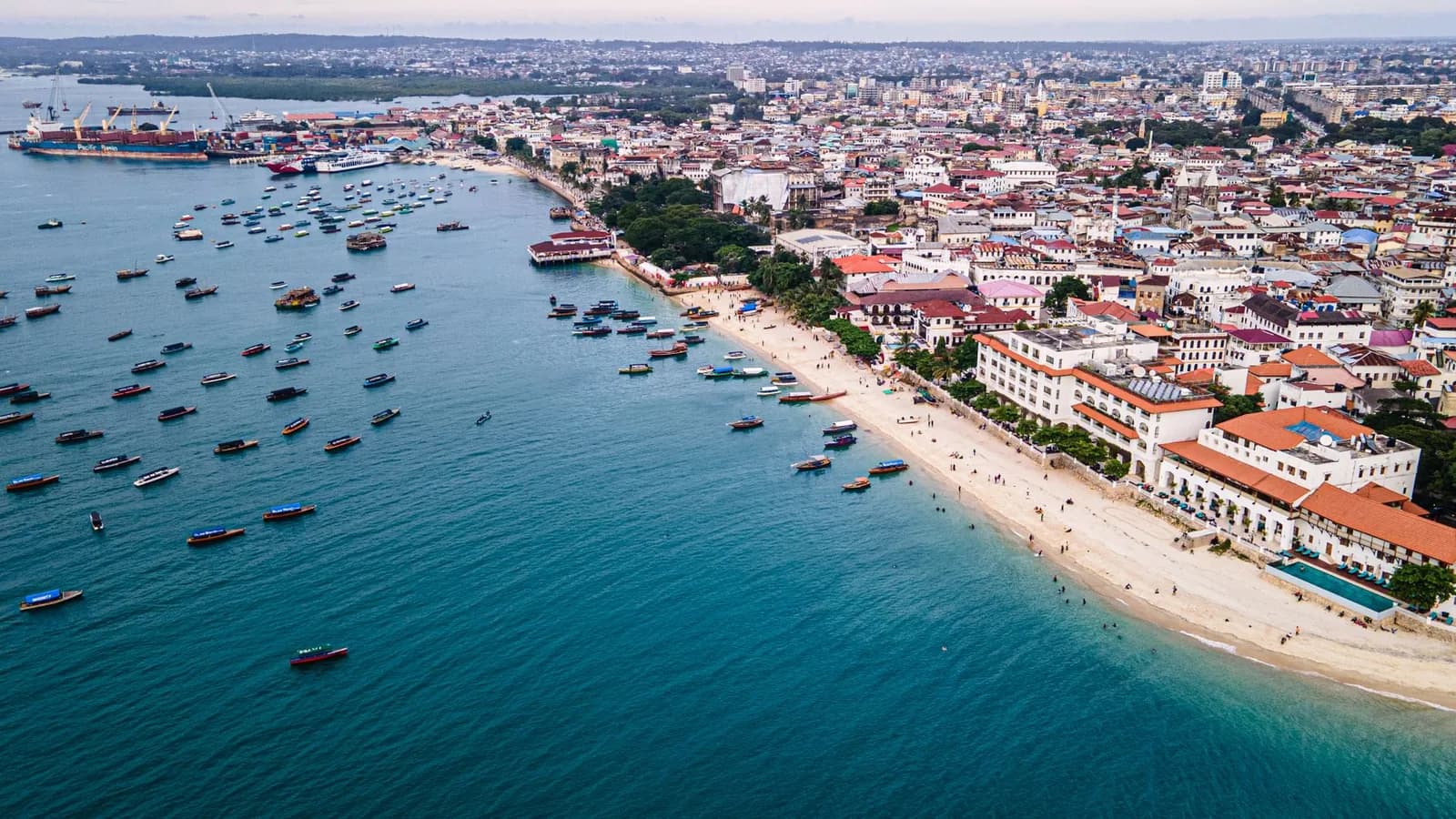
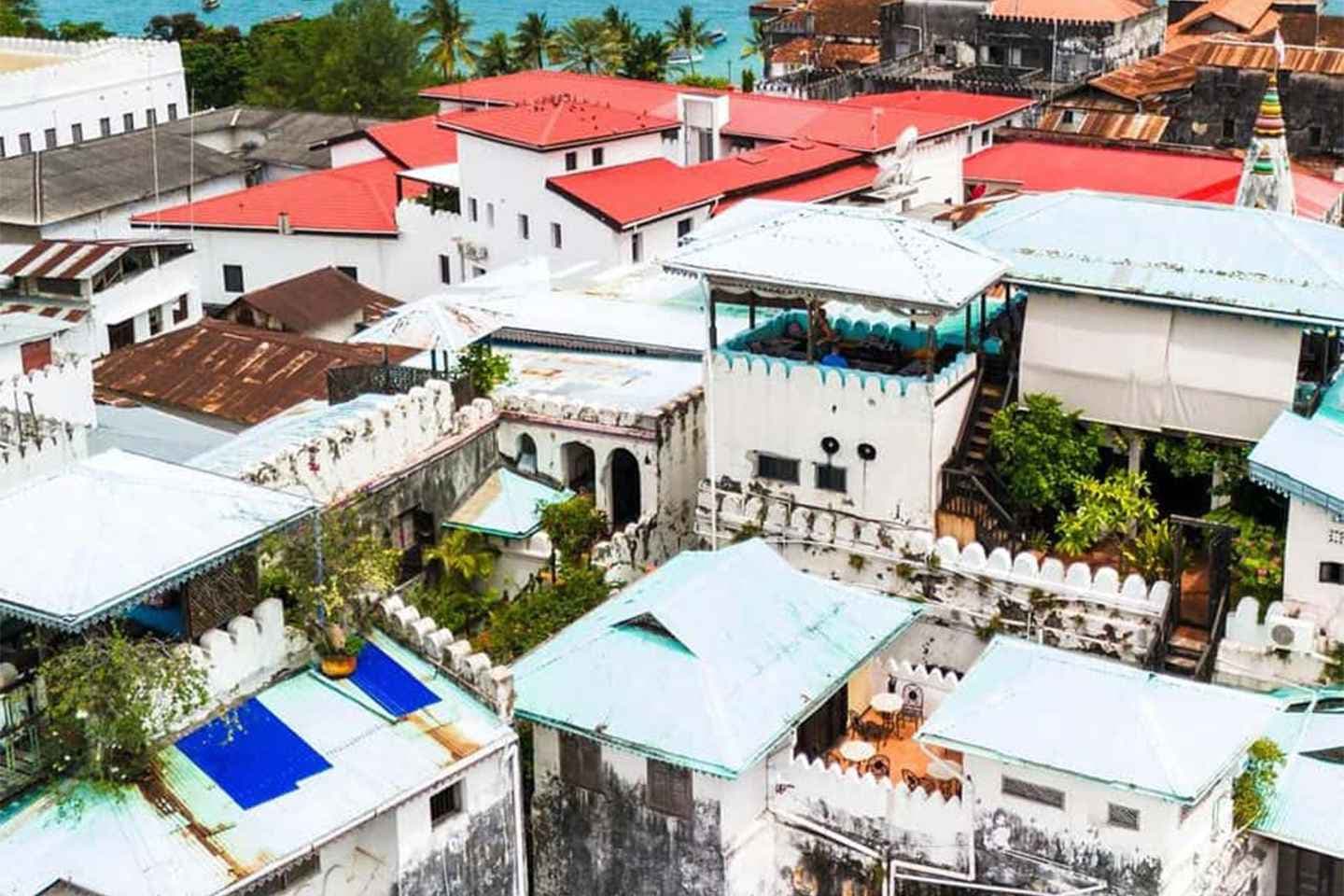
Header photo: the Stone Town seafront from the air. Dates checked on 12 November 2026.
Stone Town history tours with a local guide
A guide gets you into the slave chambers, the fort and the alleys where each era of this timeline happened.
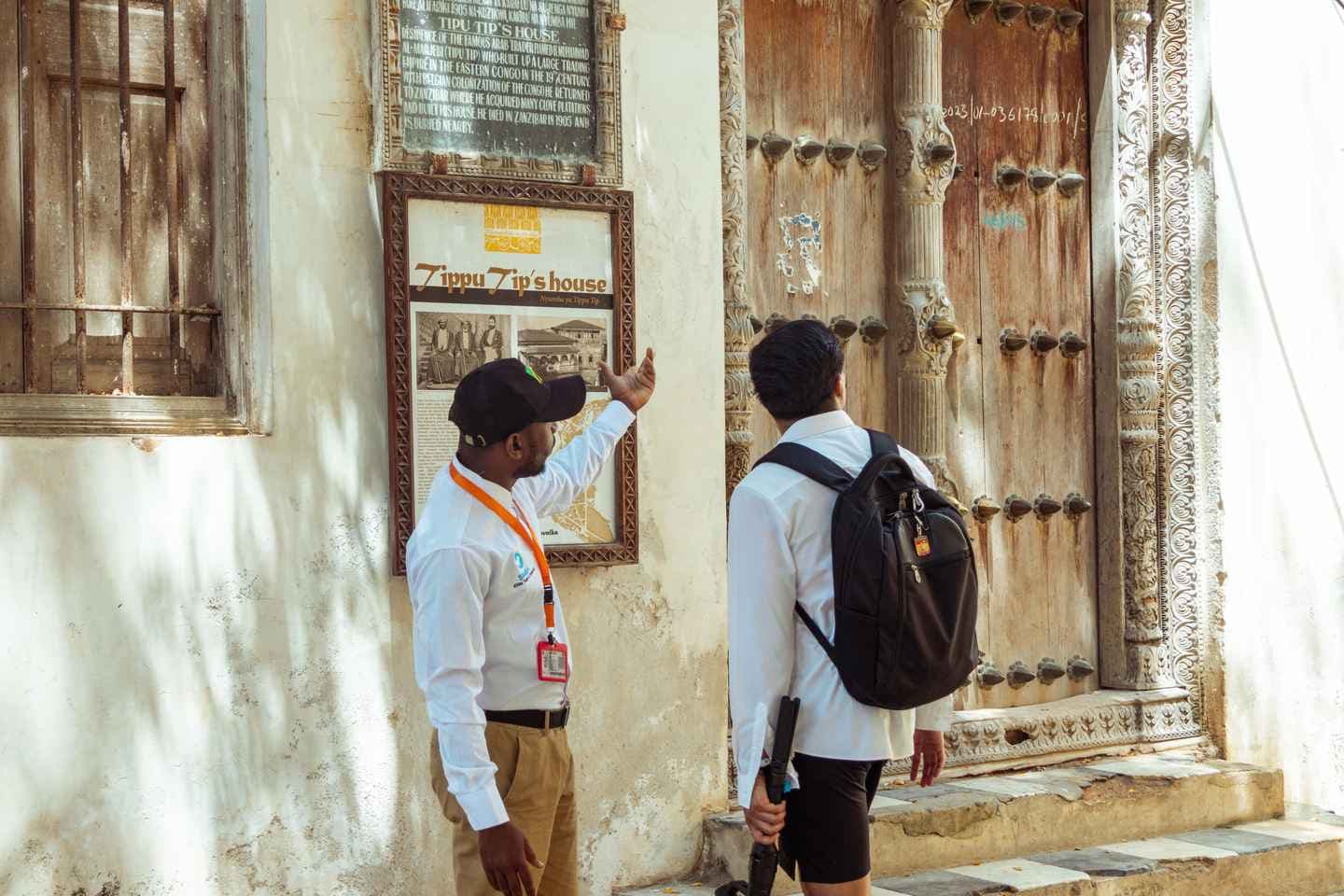
Stone Town, Local Life & Cultural Guided Tour
- 2 to 5 hours
- Hotel pickup included
- Free cancellation
4.5(215 reviews)
from$25per person
Check prices & availability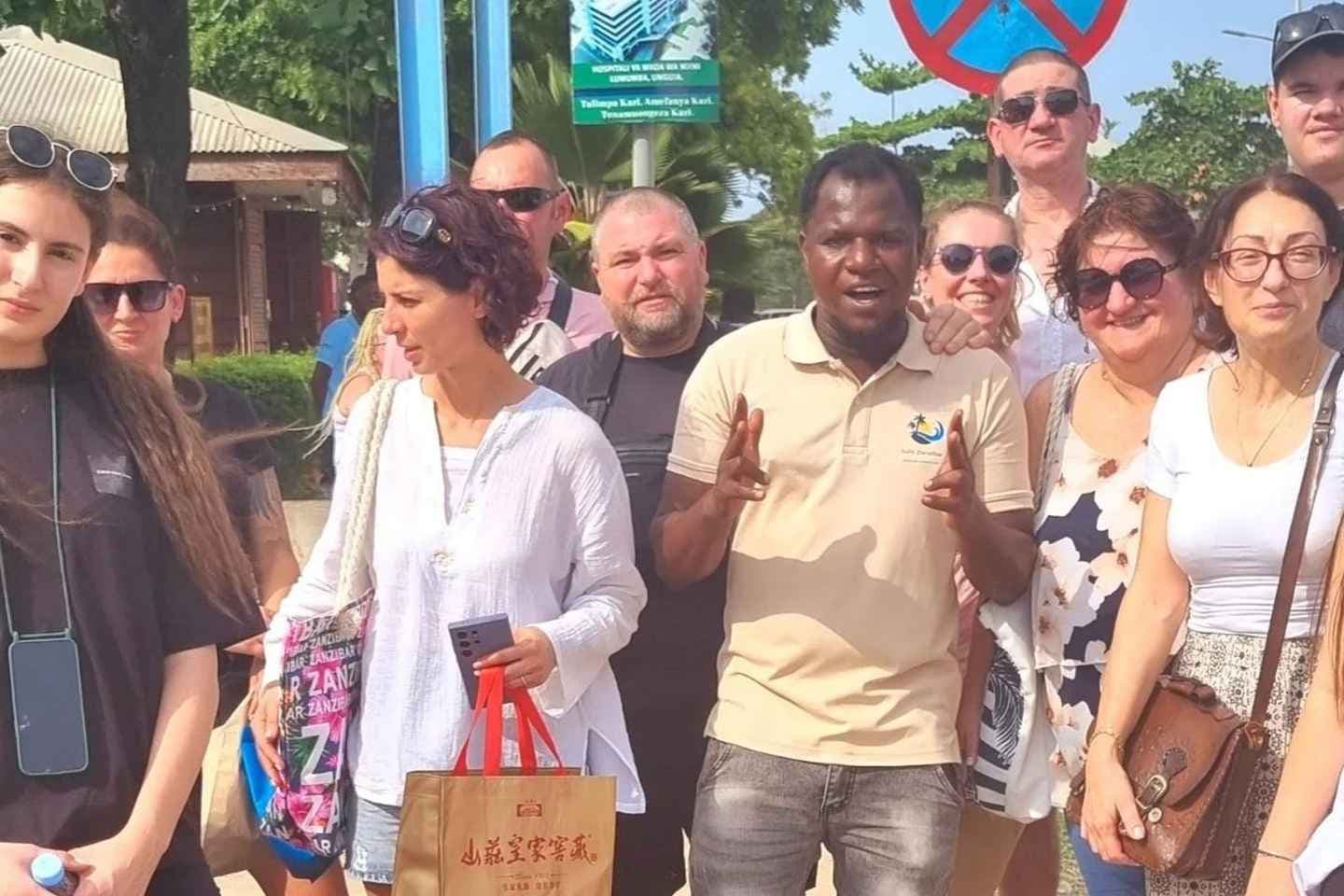
Zanzibar Stone Town Walking Tour: History, Culture and Hidden Gems
- 2.5 to 3 hours
- Hotel pickup included
- Free cancellation
4.9(19 reviews)
from$17per person
Check prices & availability
Stone Town: Food Markets and Street Food Walking Tour
- 3 hours
- Hotel pickup included
- Free cancellation
4.7(180 reviews)
from$35per person
Check prices & availabilityAll activities in Stone Town
Historical sites in Zanzibar by era: what is open and what it costs
You can cover the Stone Town sites in one long day on foot. Kizimkazi is about an hour south by road, and Fukuchani sits on the way to Nungwi. Prices are the ones reported on the ground, not an official schedule.
| Era | Site | State today | Entry |
|---|---|---|---|
| Swahili and Shirazi | Kizimkazi Dimbani Mosque | Still a working mosque, inscription of 1107 inside | No fixed fee, ask the caretaker and leave a tip |
| Portuguese | Fukuchani ruins, north west | Roofless coral stone house, national monument | No official fee found |
| Omani | Old Fort (Ngome Kongwe) | Open, used as a cultural centre | Courtyard free, evening shows ticketed |
| Omani | Mtoni Palace ruins | Ruins on the shore north of Stone Town | A few dollars, check on the day |
| Sultanate | Maruhubi Palace ruins | Pillars and baths, the palace burned down in 1899 | A few dollars, check on the day |
| Sultanate | House of Wonders | Closed since part of it collapsed in December 2020 | Seen from outside only |
| Slave trade | Christ Church and the former slave market | Open, with the slave chambers and the memorial | Around $10, guide included |
| Protectorate | Palace Museum (Beit el-Sahel) | Open, built after the 1896 bombardment | Around $5 |
| Protectorate | Old Dispensary and St Joseph's Cathedral | Both standing, from the 1880s and 1890s | Free to see from the street |
| 1940s | Freddie Mercury Museum | Open, in the house linked to his family | $10 adults, $6 children |
If you only have half a day
Start at Christ Church and the slave market, walk ten minutes to the Palace Museum and the House of Wonders on the seafront, and finish in the Old Fort courtyard next door. That is four eras in under a kilometre.Early Zanzibar history: Kuumbi Cave, Unguja Ukuu and the Shirazi
People were on Unguja long before any town. Excavations in Kuumbi Cave in 2005 found stone tools at least 26,000 years old, and a 2016 study placed hunter gatherers there between about 18,000 and 13,000 years ago. The island was not settled without a break, though.
The first real port was Unguja Ukuu, on the south west coast. It was busy from the 6th or 7th century, and archaeologist Mark Horton thinks it was the largest port on the East African coast between 750 and 850, at the height of the Abbasid trade. Digs over some 16 hectares turned up pottery from China, the Gulf and India. There is nothing laid out for visitors today.
Around the year 1000, the ancestors of the Hadimu and Tumbatu peoples settled for good, under chiefs called the Mwenyi Mkuu and the Sheha. Traders who claimed roots in Shiraz, in Persia, arrived from the 10th century and married into local families. "Shirazi" became an identity on this coast rather than a sign of pure Persian descent, and the name came back in 1964 in the Afro-Shirazi Party that led the revolution.
Kizimkazi Mosque, 1107: the oldest dated inscription in Zanzibar
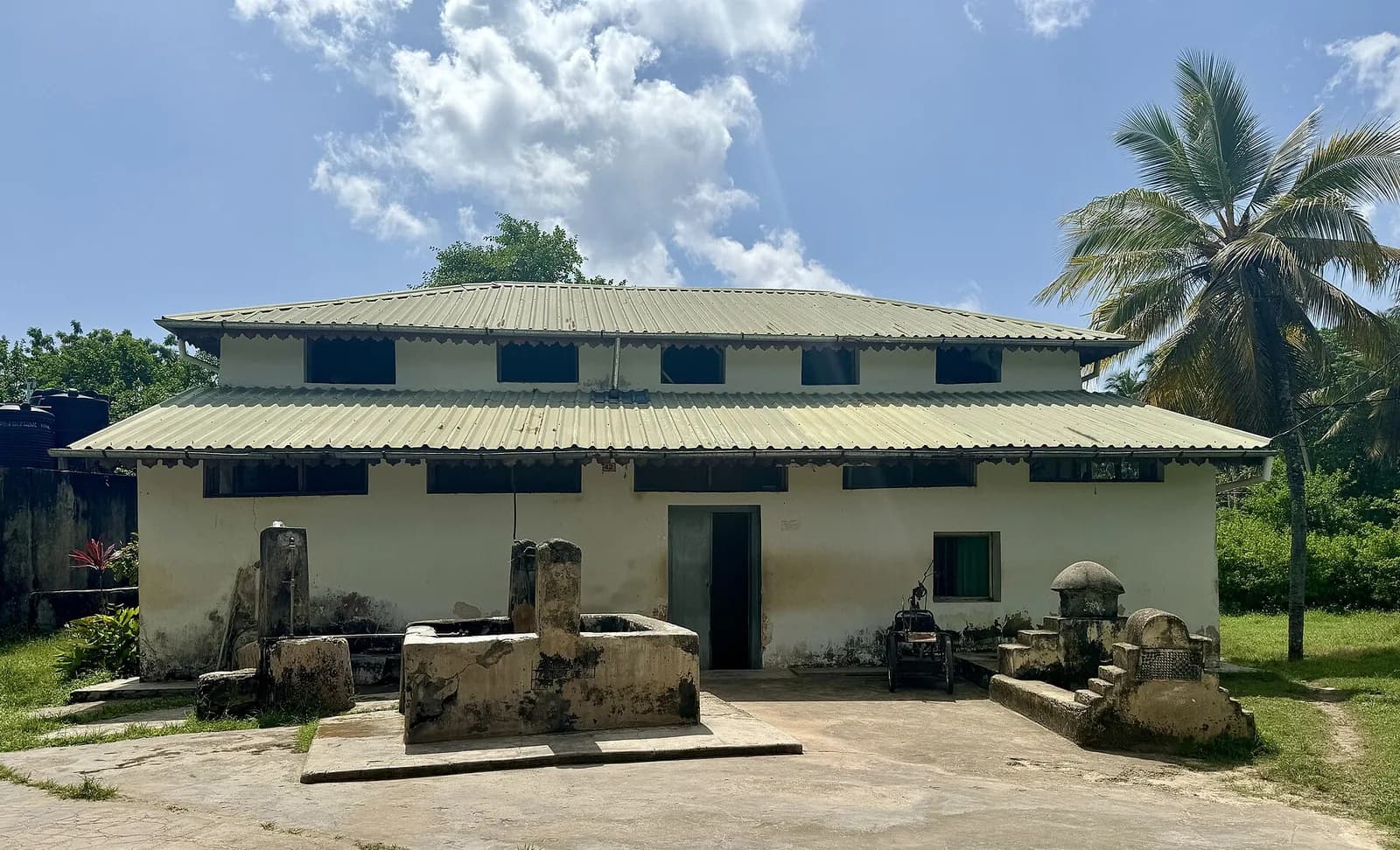
In the village of Kizimkazi Dimbani, a Kufic inscription carries the date AH 500, or 1107. The mosque is often described as the oldest in the southern hemisphere. What you see is mostly a rebuild of 1772 and 1773, recorded by a second inscription near the mihrab, but the original carving is still there.
It is a working mosque. Ask permission at the door, cover your arms and legs, take your shoes off and avoid prayer times. There is no ticket, a small tip to the caretaker is the custom. Most visitors stop on the way to the boats of the Kizimkazi dolphin trips.
The Portuguese in Zanzibar, 1499 to 1698
Vasco da Gama sailed past in 1499. In 1503 or 1504 captain Ruy Lourenço Ravasco Marques forced the local ruler to pay tribute, and Portugal kept a nominal hold for almost two centuries. It was light rule. The local sultan kept his administration, English sailors who called in 1591 were surprised to find neither fort nor garrison, and the first fort only went up in 1635, after an uprising in Mombasa.
Portugal built trading posts and a small church, not a city. That is why so little of this century survives, and why the main monument people link to it is probably not Portuguese at all.
Fukuchani ruins: the "Portuguese House" that probably isn't
At Fukuchani, on the north west coast about 12 km south of Nungwi, stands the shell of a coral stone house that locals call the Portuguese House. It is a national monument. Archaeologists now see it as a Swahili house of the 16th century, built in the Portuguese period rather than by the Portuguese. It is a short stop on the road to Nungwi, best with a driver who knows the turning.
Omani Zanzibar: the Old Fort and a new capital for Oman
In 1698 the Omanis took Zanzibar and drove the Portuguese out. Omani families became the island's landowners, and over the next century and a half Zanzibar grew rich on cloves, ivory and enslaved people brought from the mainland.
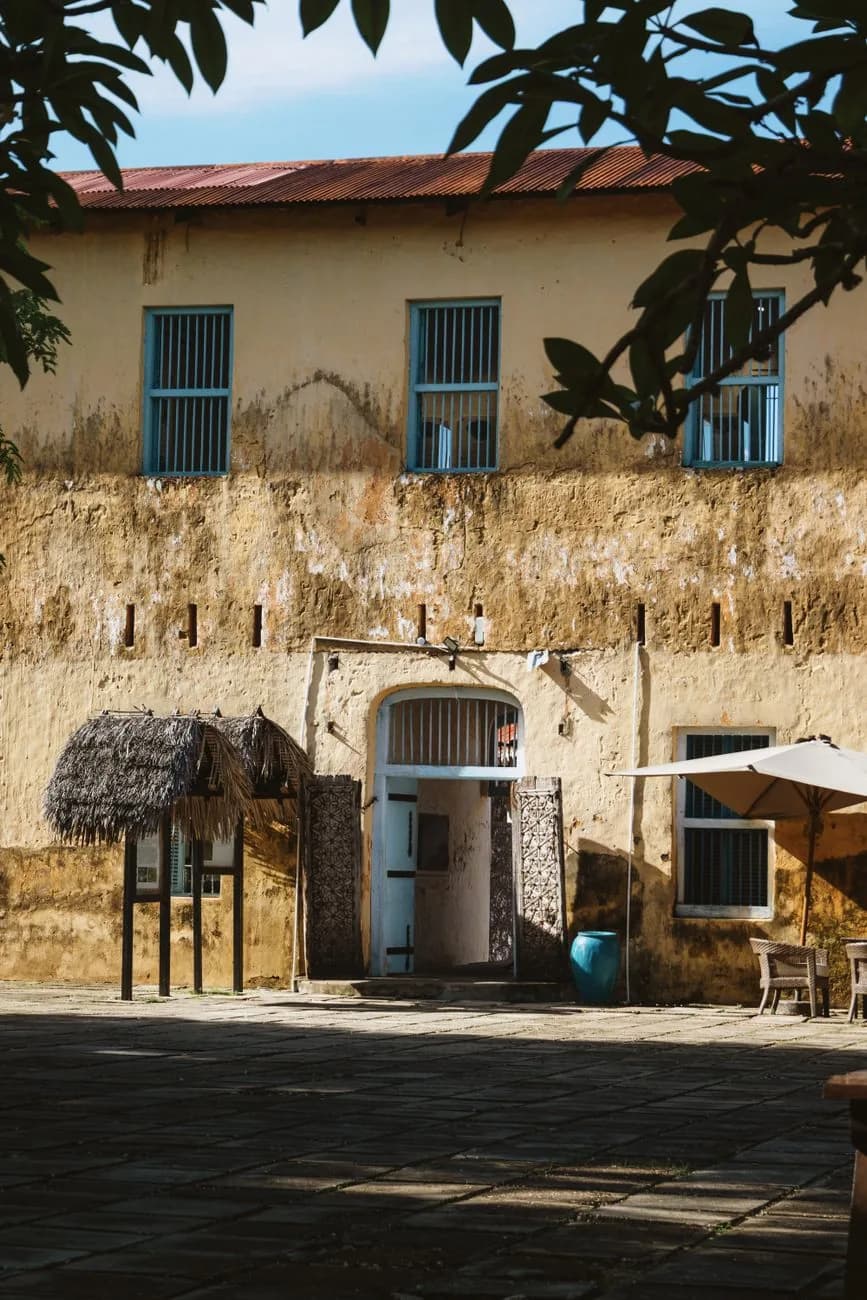
The Old Fort (Ngome Kongwe) is the oldest building in Stone Town. It was begun after the Omani takeover and finished around 1699, on the site of an earlier Portuguese chapel whose remains survive in the courtyard. It was a garrison and a prison in the 19th century, then the terminus of a small railway from 1905 to 1928. Today the courtyard is free and holds shops, a restaurant and the amphitheatre used by the Sauti za Busara festival and the Zanzibar film festival. Evening shows are ticketed.
Said bin Sultan makes Zanzibar the capital of Oman in 1840
Sultan Said bin Sultan (1791 to 1856) spent more and more time on the island from the 1820s and moved his capital from Muscat in 1840 (some authors give 1832). He planted cloves across Unguja and Pemba, which soon led the world in clove production. You can still smell that economy on a spice farm tour.
When Said died in 1856, his sons split the empire. Majid became the first Sultan of Zanzibar and Oman went to his brother. From then on Zanzibar was a state of its own, flying the plain red flag described on our Zanzibar flag page.
Mtoni and Maruhubi palaces: the sultans' ruins north of Stone Town
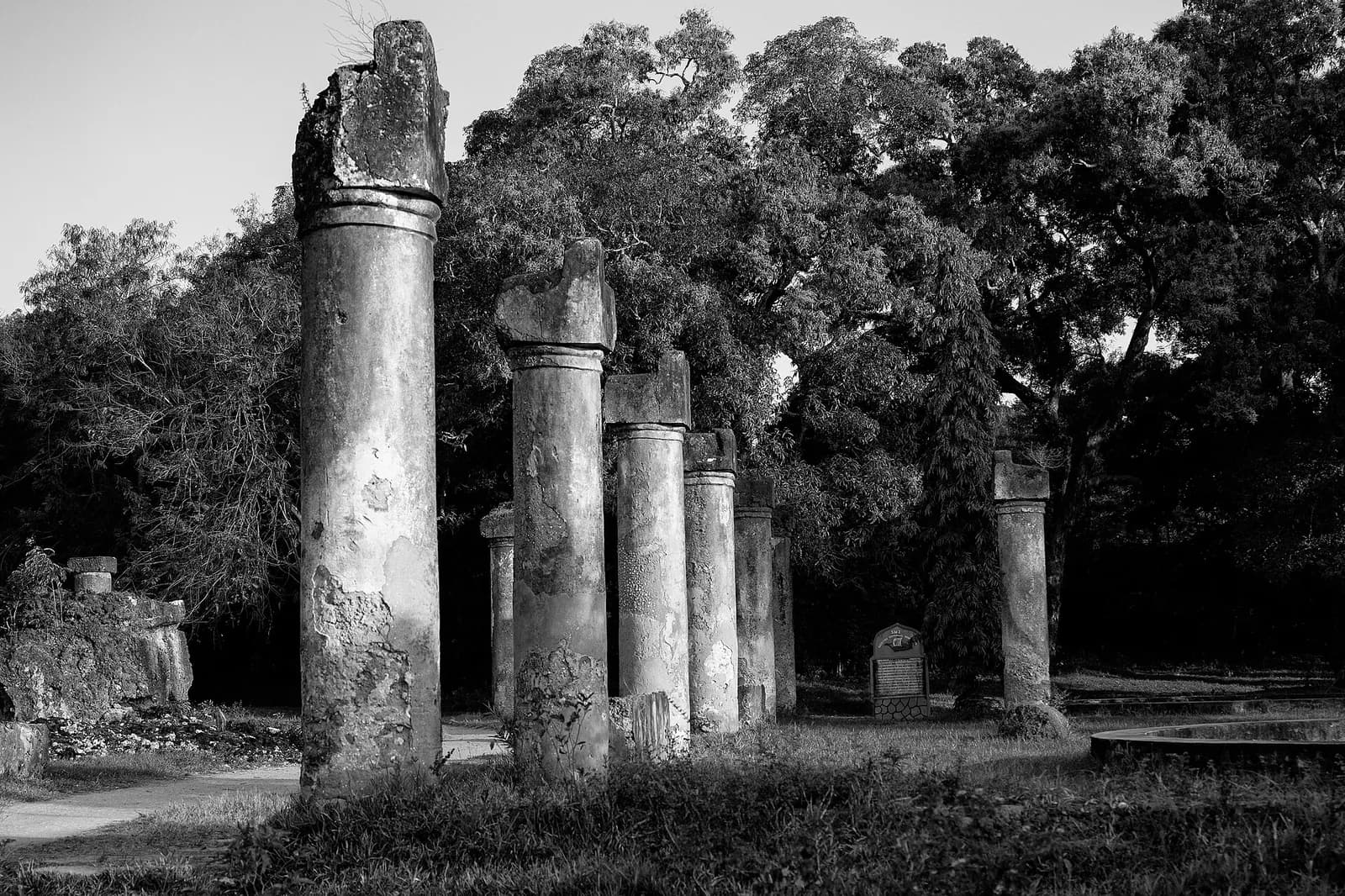
Mtoni, on the shore a few kilometres north of town, was Said's oldest palace and housed a court of more than 1,000 people. Princess Salme, his daughter, grew up there and later described it in her memoirs. A little closer to town, Maruhubi was built for Sultan Barghash in 1882 and burned down 17 years later. Its stone pillars and the Persian style baths are what is left. Both are reported at a few dollars to enter, and nobody we found publishes a fixed price.
Sultanate of Zanzibar: Barghash and the House of Wonders
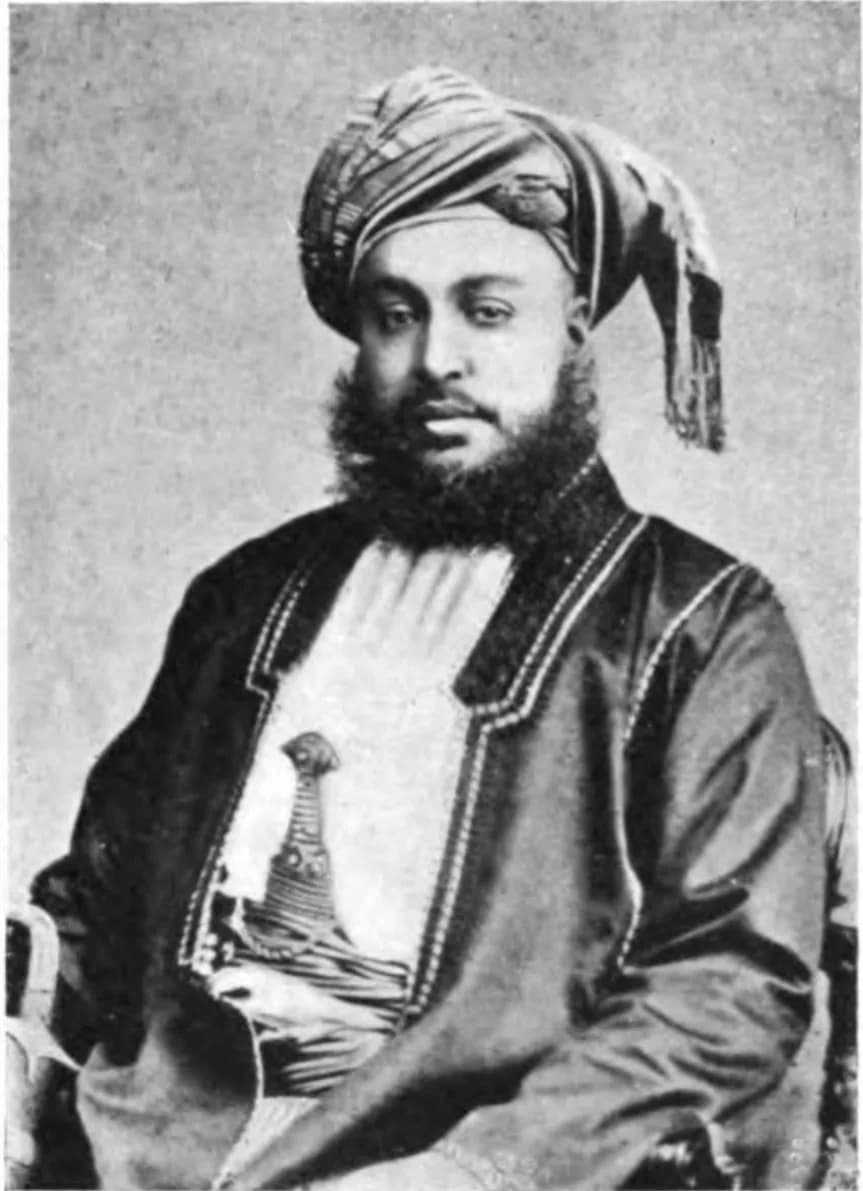
Barghash bin Said, sultan from 1870 to 1888, is the ruler who shaped the Stone Town you walk through. He piped water into town, built palaces and laid a short railway to his estates at Chukwani, the first in the region. His showpiece was the House of Wonders, finished in 1883 with electric light and a lift, things nobody on the island had seen before.
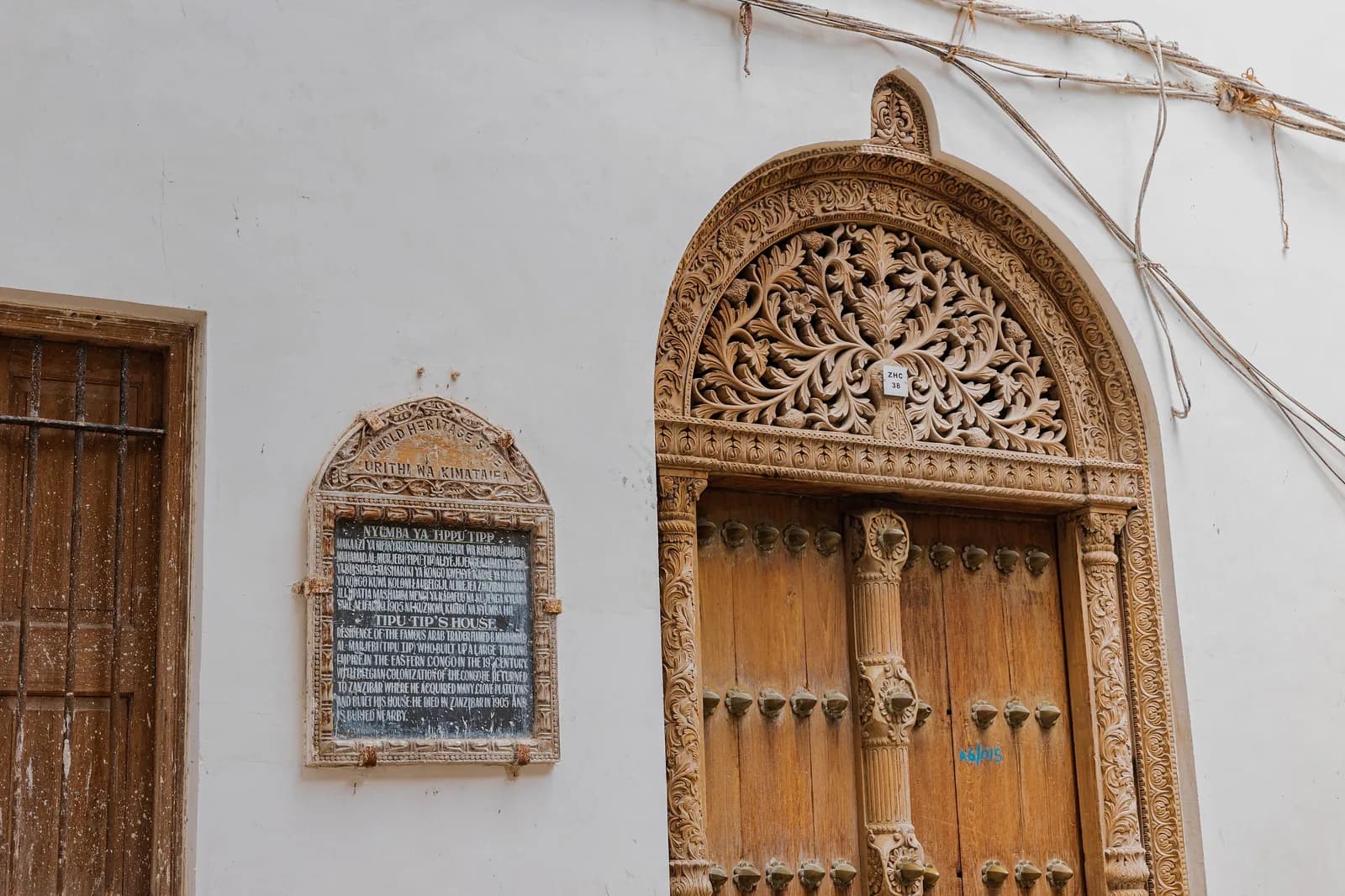
He also lost most of the mainland. Between 1887 and 1892 the coastal strip claimed by the sultans was leased or sold to Britain, Germany and Italy. The money that built his palaces came largely from the caravan trade run by men like Tippu Tip, whose house still stands in Shangani.
Zanzibar slave trade and its abolition: 1873, 1876 and 1897
In the 19th century 40,000 to 50,000 enslaved people a year passed through Zanzibar. About a third stayed to work the clove plantations of Unguja and Pemba, where mortality was brutal, and the rest were shipped on to Arabia, Persia and the Indian Ocean islands.
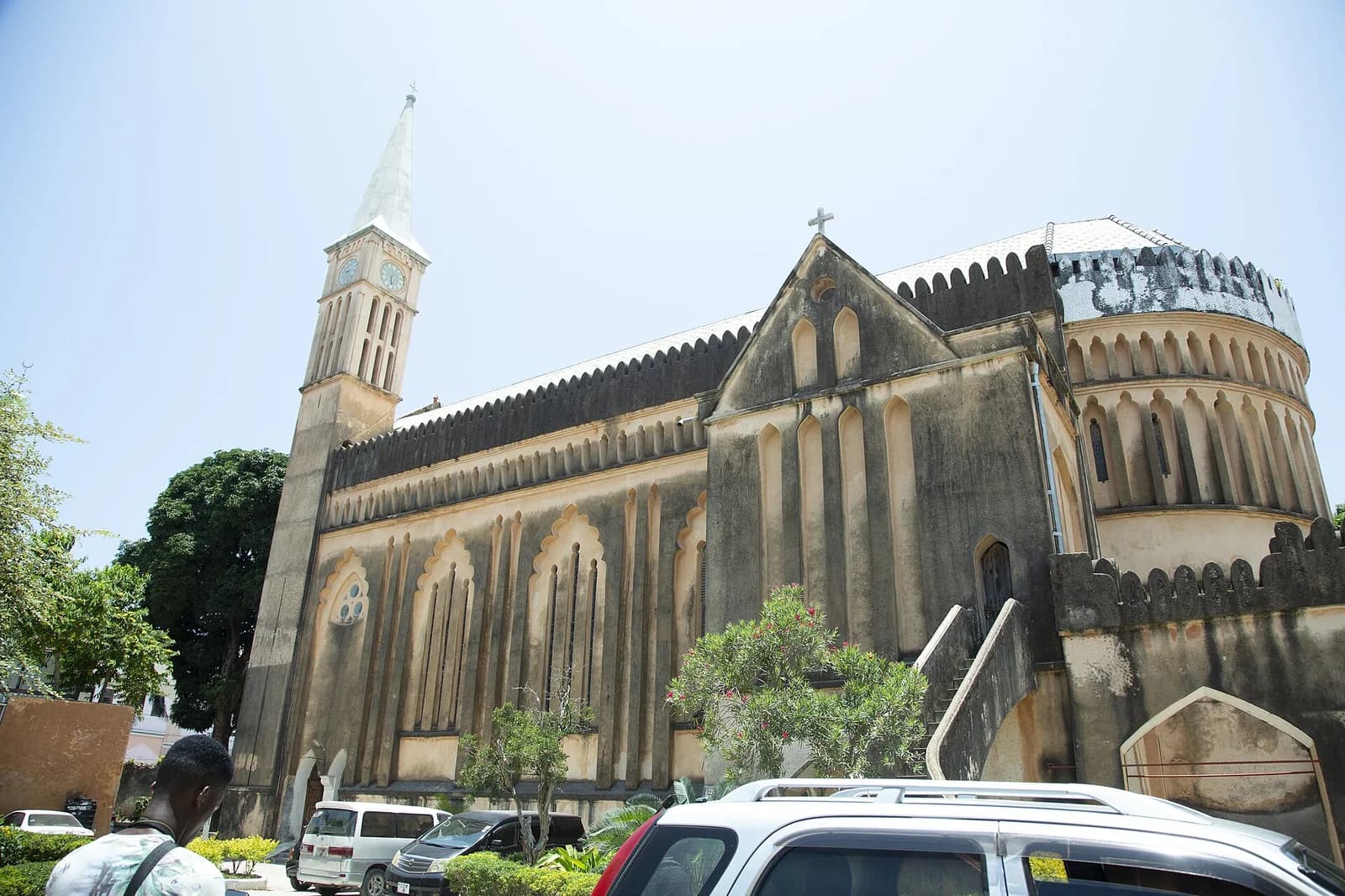
Ending it took three steps, which is why sources give different dates. On 5 June 1873, under British pressure, Barghash closed the Stone Town slave market. In 1876 the trade itself was banned by decree. Slavery as a legal status only ended in 1897, and the last forms lingered until 1909.
On the market site, the Universities' Mission to Central Africa built Christ Church in the 1870s, with its altar where the whipping post stood. The visit includes the underground slave chambers and Clara Sörnäs's memorial of chained figures outside, for around $10 with a guide. Our page on Tippu Tip and the slave trade goes through the visit in detail.
A hard visit, worth doing slowly
Zanzibar British protectorate, 1890 to 1963
Britain had signed its first anti slavery treaty with Sultan Said in 1822 and had steered Zanzibar's affairs for decades. In 1890 the Heligoland-Zanzibar Treaty made it formal: Germany agreed not to interfere and Unguja and Pemba became a British protectorate, not a colony. The sultan stayed on the throne, with a British first minister, Lloyd Mathews, from 1890 to 1901, and British Residents from 1913 to 1963.
The Anglo-Zanzibar War of 1896, about 38 minutes long
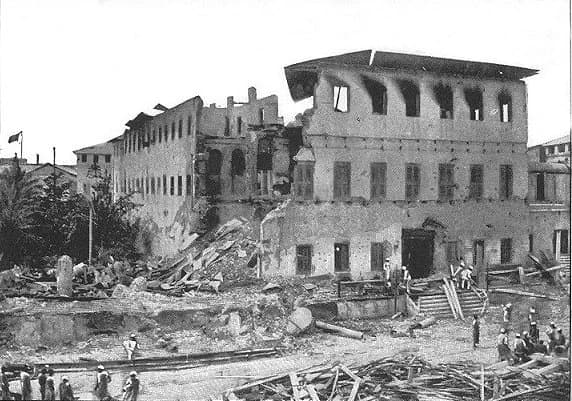
When Sultan Hamad died on 25 August 1896, his cousin Khalid seized the palace without British approval. The Royal Navy gave him an ultimatum and opened fire at 9 am on 27 August. The shooting stopped after about 38 minutes, Khalid fled to the German consulate and a new sultan was installed. The full story, and where to stand on the seafront, is on our Anglo-Zanzibar War page.
The ruined palace was replaced by the building now open as the Palace Museum, around $5, next to the House of Wonders. The protectorate also left the Old Dispensary (1887 to 1894) and St Joseph's Cathedral (1893 to 1897) in Stone Town. In 1946 a boy called Farrokh Bulsara was born in Stone Town, the future Freddie Mercury.
Zanzibar revolution of 1964
Zanzibar became independent on 10 December 1963, as a constitutional monarchy under Sultan Jamshid bin Abdullah, with a government that the African majority saw as Arab dominated. It lasted one month.
On the night of 12 January 1964 a few hundred armed men led by John Okello, a Ugandan, took the police armouries and the radio station. The sultan fled into exile and Abeid Karume of the Afro-Shirazi Party became president of the People's Republic of Zanzibar. Arab and Indian civilians were killed in large numbers. Estimates run from several thousand to more than ten thousand, and no figure is settled. Land was confiscated and the banks nationalised.
The revolution is still a public holiday on 12 January. Its traces are hard to visit: the House of Wonders, which held the national museum after 1964, has been closed since part of it collapsed in December 2020.
When did Zanzibar join Tanzania? The union of 1964
Three months after the revolution, on 26 April 1964, Karume and Julius Nyerere of Tanganyika signed the union that created the United Republic of Tanganyika and Zanzibar. It took the name Tanzania on 29 October 1964.
Zanzibar kept a lot: its own president, its own government and, from 1980, its own House of Representatives. It is a semi-autonomous region, not a country, and our page on Zanzibar and Tanzania explains what that changes for your passport, money and visa. Karume was assassinated on 7 April 1972, a single party ran the country until 1992, and Stone Town joined the UNESCO World Heritage list in 2000. Elections have been tense since, which our Zanzibar safety page covers for travellers.
The mix of all these eras is what you meet today in the language, the food and the island's customs: Swahili at the core, Omani doors and coffee, Indian shops and a mostly Muslim population.
Questions people ask about Zanzibar history
What is Zanzibar famous for historically?
Zanzibar is known for three things above all. It was a trading port for more than a thousand years, it was the capital of the Omani sultans and the main slave market of East Africa in the 19th century, and it fought the Anglo-Zanzibar War of 1896, often called the shortest war in history at about 38 minutes. Cloves made its fortune and Stone Town, a UNESCO site since 2000, is what that history left behind.
Who ruled Zanzibar before Tanzania?
The Portuguese claimed it from about 1503 to 1698, then Oman took over. From 1856 Zanzibar was a sultanate of its own, ruled by the Al Busaid family, and from 1890 to 1963 it was a British protectorate with the sultan still on the throne. It became independent on 10 December 1963, lost its sultan in the revolution of 12 January 1964, and joined Tanganyika on 26 April 1964.
When did Zanzibar join Tanzania?
On 26 April 1964, when Zanzibar and Tanganyika formed the United Republic of Tanganyika and Zanzibar. The country took the name Tanzania on 29 October 1964. Zanzibar kept its own president and government and is still a semi-autonomous region today.
Who is famous from Zanzibar?
Freddie Mercury, the Queen singer, was born in Stone Town in 1946. Abdulrazak Gurnah, winner of the Nobel Prize in Literature in 2021, was born on the island in 1948. History adds Tippu Tip, the 19th century ivory and slave trader, and Princess Salme, a daughter of Sultan Said who wrote the first known memoir by an Arab woman.
What is the oldest building in Zanzibar?
The Kizimkazi mosque in the south of Unguja carries a Kufic inscription dated 1107, the oldest dated one on the island. The building you see was largely rebuilt in 1772 and 1773, but the inscription survives. In Stone Town, the oldest standing structure is the Old Fort, finished around 1699.
What language is spoken in Zanzibar?
Swahili, which grew up on this coast from Bantu languages and centuries of trade with Arabia, Persia and India. English is widely spoken in hotels and Stone Town. Our Swahili phrases page has the words worth learning before you go.
Before you go, learn a few Swahili phrases.