
- Worth it for
- Beach plus culture, safari add-ons, value for money
- Skip it if
- You want to swim at any hour on any beach
- Minimum stay
- 7 nights from the US, 10 to 12 with a safari
- Best months
- June to October, then December to February
- Avoid
- April and May, the long rains
- Entry cost, US couple
- $288 in visas and compulsory insurance
Is Zanzibar worth visiting? The short answer
Yes, Zanzibar is worth visiting, especially if you want more than a beach: a beach week with an old Swahili town, spice farms, dhow trips and a safari one short flight away, for about half the price of the Seychelles. It disappoints people who come for an always-full turquoise lagoon and land on the east coast at low tide.
Three decisions make or break the trip. The coast: Nungwi and Kendwa in the north-west for swimming at any hour, the east coast for long empty beaches with a big tide. The month: June to October or December to February, never April or May. The length: a week at least from the US. Get those right and Zanzibar is one of the best-value beach trips in the Indian Ocean. Our north vs east coast guide settles the first one.
Who Zanzibar is worth it for, and who should skip it
Zanzibar is worth it for
- Safari travellers. The island is 1 h 20 by air from Arusha, and no other Indian Ocean beach sits that close to the Serengeti.
- People who get bored on a beach. Stone Town, the spice farms, Jozani forest and the dhow trips give you a different day out for a week.
- Couples on a mid-range budget. A good small hotel runs $80 to $200 a night, about half the Seychelles for the same standard.
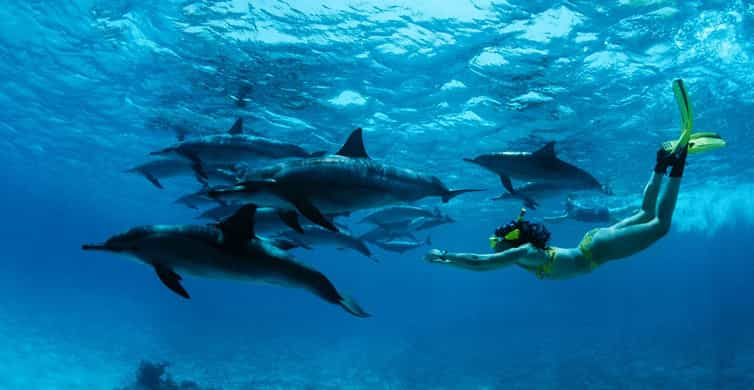
- Snorkellers. Mnemba atoll, the sandbanks and the Safari Blue lagoon are all half-day trips.
- Travellers who like a place with people in it. Fishing villages, markets and a living old town, not a resort island cut off from everything.
- Anyone who can come in the dry season. June to October and December to February deliver the postcard version.
Skip Zanzibar, or rethink it, if
- You want to swim whenever you like. On the east coast, where most hotels are, the sea can be gone for several hours a day. Only Nungwi and Kendwa escape it.
- You hate being approached on a beach. Sellers of boat trips walk the sand on the popular beaches. It is polite but it never stops.
- You only have four or five nights from the US. Count 18 to 24 hours each way. You would spend a third of the trip travelling.
- You expect flawless service. Warm but uneven outside the top resorts. Power cuts and slow kitchens are part of the deal.
- Your only dates are April or May. The long rains. Some hotels close, boat trips get cancelled, the sea turns grey.
If two or more of the second list apply to you, look at Mauritius or the Maldives instead. If only one does, there is usually a fix, and it is in the next sections.
Things to do in Zanzibar that make the trip worth it
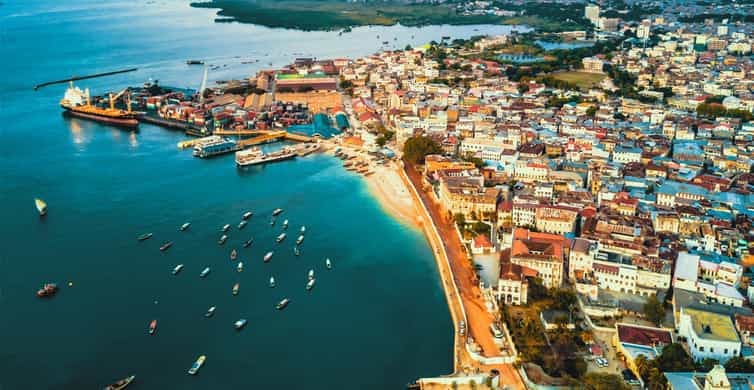
What separates Zanzibar from a resort island is the day out. The classic combination is Stone Town, a spice farm and Prison Island in one go: about 5 hours with lunch, from $55, with pickup from your hotel.
The Safari Blue is the full day on the water most visitors remember: a dhow across the Menai Bay lagoon, snorkelling, a sandbank and a seafood lunch, 7 hours from $90.
Short on time? The boat to Prison Island and the Nakupenda sandbank leaves from Stone Town and takes about 2 hours, with a barbecue on the sand. All three offer free cancellation.

Stone Town, Spice tour & Prison Island with Lunch
- 5 hours
- Hotel pickup included
- Free cancellation
4.5(1,386 reviews)
from$55per person
Check prices & availability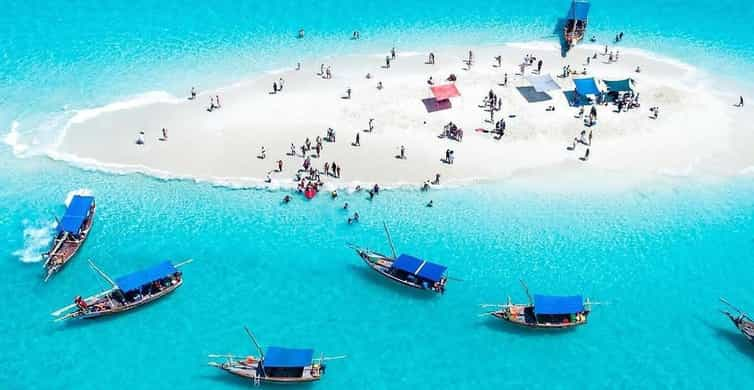
Safari Blue Lagoon Trip with Snorkeling and Lunch
- 7 hours
- Hotel pickup included
- Free cancellation
4.6(674 reviews)
from$90per person
Check prices & availability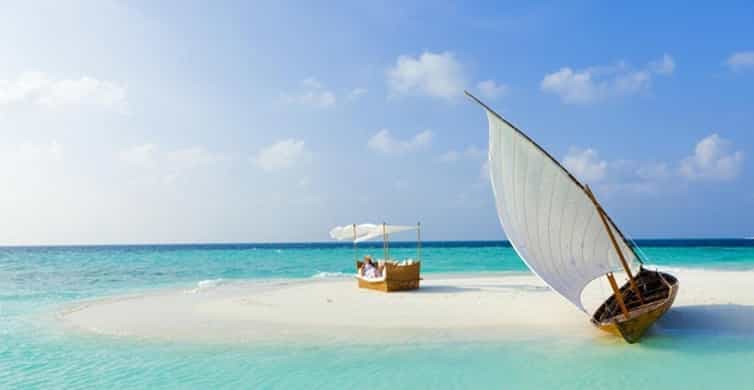
Prison Island & Nakupenda Sandbank Boat Tour +BBQ
- 2 hours
- Hotel pickup included
- Free cancellation
4.5(848 reviews)
from$17per person
Check prices & availabilityAll activities in Zanzibar
The downsides of Zanzibar, ranked by how much they matter
Ranked by how often they spoil a trip, with the fix for each. The first one is the complaint we hear most, by far.
1. The tide on the east coast
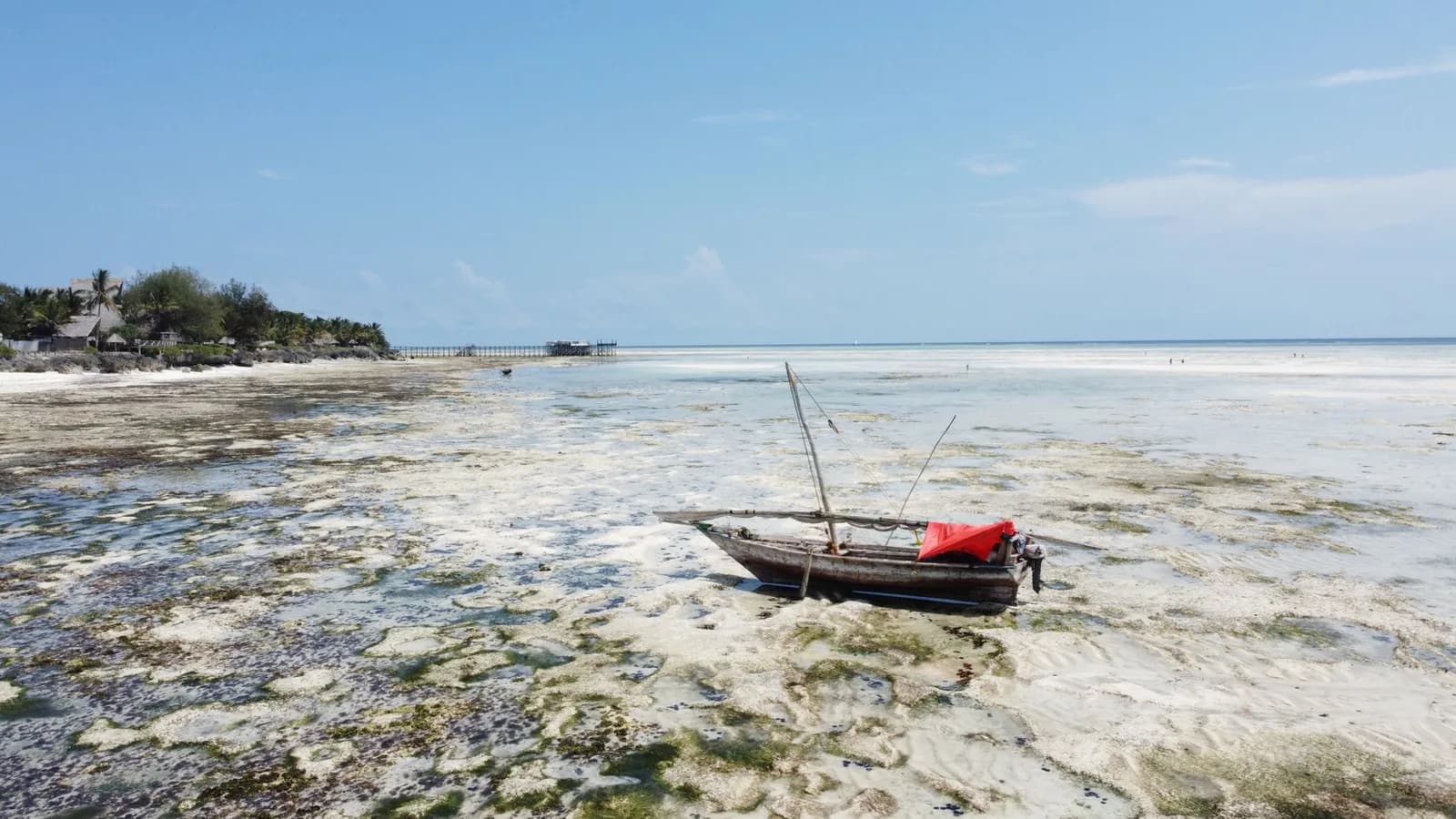
Paje, Jambiani, Bwejuu, Kiwengwa and Matemwe sit behind a reef on a flat lagoon. At spring tides the range reaches 3 to 4 metres and the sea retreats several hundred metres, twice a day. For hours you walk on sand, seagrass and rock pools, not swim. Nobody mentions it when you book.
The fix: stay in Nungwi or Kendwa if swimming matters most, or pick an east coast hotel with a pool and check the Zanzibar tide times before you plan a beach day.
2. Beach boys and persistent sellers
On the popular beaches, Nungwi, Kendwa and Paje above all, young men sell boat trips, paintings and spices as you walk. They are persistent, not dangerous. Women travelling alone get more attention, and it can tip into harassment in Stone Town and on busy beaches.
The fix: a firm, friendly hapana asante (no thank you) and keep walking. Never book a boat trip from someone on the sand. Our Zanzibar safety guide covers the rest, including what to wear in town.
3. High-season prices
Rooms cost the most in July, August and from about 20 December to 5 January. The best hotels sell out months ahead and minimum stays appear over the holidays. The fix: June, September and February give you the same weather for less.
4. The long rains in April and May
April is the wettest month of the year. It does not rain all day, but the sea turns murky, boat trips get cancelled and some hotels close. Rooms go for about half their high season rate, which is the only reason to come. The fix: move the trip.
5. Seaweed on the east coast
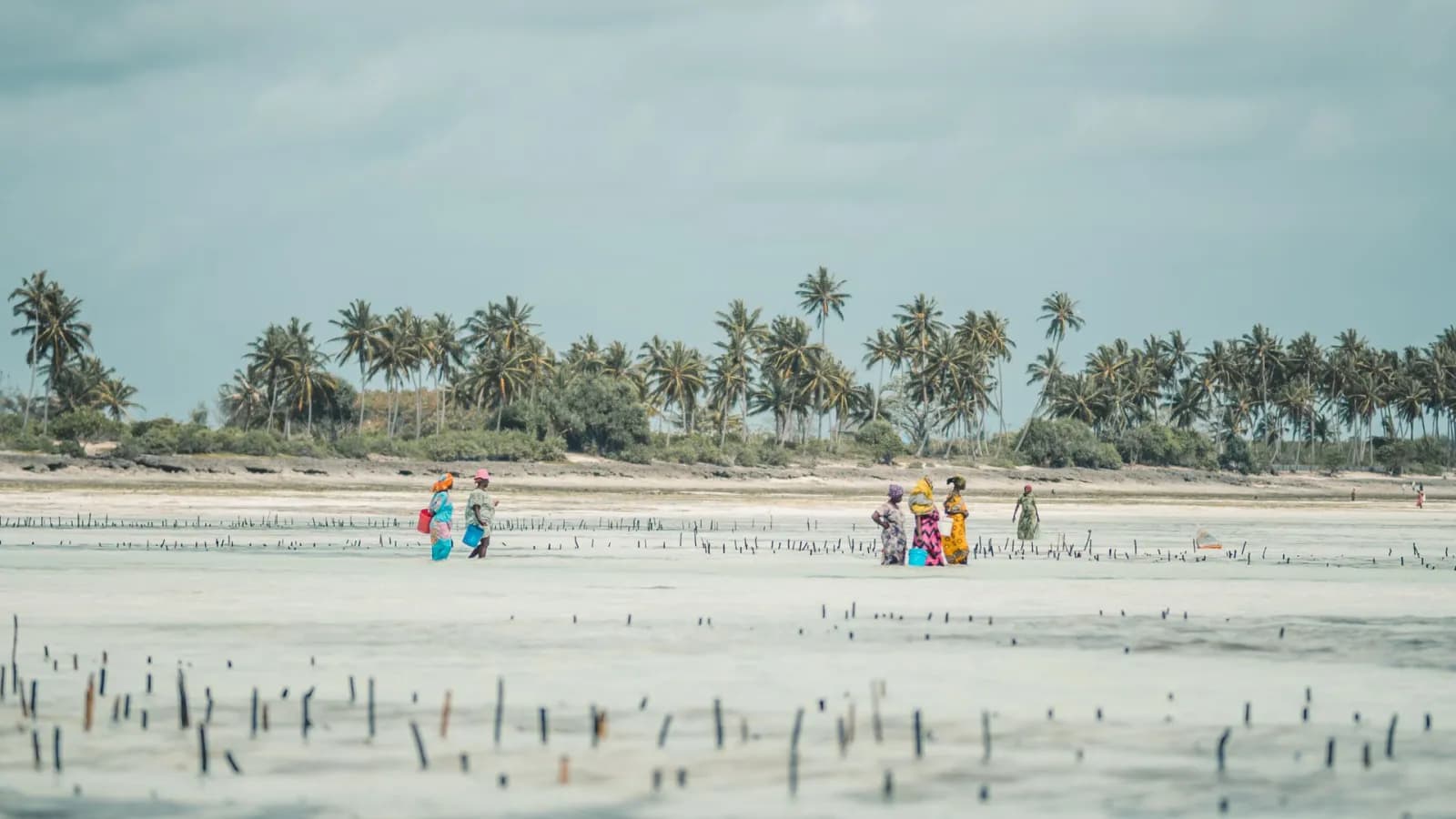
Two different things. Seaweed washes up in a line at high tide on some beaches. And in the lagoons of Paje and Jambiani, seaweed is a crop, farmed by village women on stakes since 1989. The plots are visible at low tide. It is not pollution, and visiting a farm is worth an hour, but it is not the empty lagoon from the brochure.
6. A long and costly trip from the US
There is no direct flight. From New York count one or two stops and 18 to 24 hours, via the Gulf, Istanbul or Addis Ababa. Then the entry costs: a Tanzanian visa at $100 on a US passport, plus the compulsory Zanzibar insurance at $44 per adult. That is $288 for a couple before the first night.
7. Service, roads and power cuts
Service is warm but slow outside the best resorts. Short power cuts are common and take card machines and ATMs down with them, so carry dollars. Roads cross villages full of speed bumps: the airport to Nungwi takes about 90 minutes.
8. More visitors every year
Zanzibar received about 917,000 international arrivals in 2025, a record according to figures reported by the local press. Nakupenda, Mnemba and The Rock now get crowded at midday in high season. Go early, or go in June and September.
Is Zanzibar expensive? High season vs low season
Not for the Indian Ocean. On the island, per person and before flights, a week costs about $450 backpacking, $1,300 in a comfortable small hotel and $3,000 upwards at the top end. The bed sets the level: guesthouses run $20 to $70 a night, good mid-range hotels $80 to $200, luxury resorts $250 to $600 and more.
The season moves the bill more than anything else. The same room can cost twice as much at Christmas as in May. Imported goods, resort restaurants and private boat trips are the places where Zanzibar stops being cheap. The full breakdown is on our Zanzibar budget page.
Zanzibar vs Maldives vs Seychelles: is it worth it compared to the other islands?
The honest comparison: Zanzibar wins on price and on things to do, the Maldives on water you can swim in at any hour, the Seychelles on the setting.
| Zanzibar | Seychelles | Maldives | |
|---|---|---|---|
| Mid-range hotel, per night | $80 to $200 | About €150 to €250 | Roughly two to three times Zanzibar |
| Entry cost, US passport | $100 visa plus $44 insurance | Travel Authorization, €10.90 | Free 30-day visa on arrival |
| Nightly tax | $1 to $5 per person | SCR 75 to 100 per person | $12 green tax ($6 in guesthouses) |
| Tide range | 3 to 4 m on the east coast at springs | About 1 to 1.5 m | About 1 m, lagoon swimmable all day |
| Flight from New York | 1 or 2 stops, 18 to 24 h | 1 stop via the Gulf, Istanbul or Addis | 1 stop, via the Gulf or Istanbul |
| Beyond the beach | Stone Town, spice farms, safari next door | Hiking, giant tortoises, island hopping | Diving and resting, little else |
| Who it suits | Explorers on a reasonable budget | Honeymooners who want the setting | People who want to unpack once |
Hotel prices are indicative 2026 ranges. Seychelles prices are given in euros, as their sources quote them. The Maldives green tax has been $12 per person per night in resorts since January 2025.
If you want to unpack once and see nothing but the lagoon, the Maldives are worth the extra money. If you want to explore, eat well and maybe add a safari, Zanzibar gives you more for less. Mauritius joins the comparison, with prices tier by tier, in our Zanzibar vs Seychelles vs Mauritius guide.
Is Zanzibar worth it for you? Verdict by type of traveller
Honeymoon and couples: yes, on the right beach
Sunsets in Kendwa, a dhow at dusk, dinner in Stone Town: Zanzibar is romantic and varied. Book the north-west or a hotel with a pool, so the tide never decides your afternoon. Our Zanzibar honeymoon hotels are chosen with that in mind.
Families with children: yes, with planning
Rock pools at low tide entertain small children for hours, and resorts in Kiwengwa and Nungwi are set up for families. The catches are the long flight, a malaria risk that is low but not zero, and the tide. Our family hotels in Zanzibar list the ones that handle all three.
Divers and snorkellers: yes, for snorkelling
Mnemba atoll is at its clearest in February and March, then October and November, between the two monsoons. Serious divers will find the Seychelles and the Maldives better, but Zanzibar is an easy, cheap place to learn.
Budget travellers: yes, more than anywhere nearby
Guesthouses from $20 a night, street food at the Forodhani night market, dala-dala minibuses at under $1.20 a ride. Paje and Jambiani are the backpacker beaches.
Safari and beach: the strongest yes

This is what Zanzibar does that the Maldives and the Seychelles cannot: the Serengeti is a 1 h 20 flight from Arusha, and the beach makes the perfect end to a dusty week in a 4x4. How to split the days is in our safari and Zanzibar guide.
Solo women: yes, with some care
Violent crime against visitors is rare. Expect more attention from beach boys and in Stone Town, cover shoulders and knees in town, and take a registered taxi after dark. Paje and its kitesurf crowd are the easiest place to meet other travellers.
How many days is enough for Zanzibar?
Seven nights is the right length for a first trip: two in Stone Town for the old town and a spice or sandbank trip, then five on one beach. Moving hotels more than once wastes half a day each time on slow roads.
- 4 to 5 nights: only if you are already in East Africa, after a safari for instance.
- 7 nights: the standard first visit from the US or Europe.
- 10 to 12 nights: with a three or four day safari on the mainland.
- 2 weeks: enough to add Pemba or Mafia island, or two coasts.
When Zanzibar is worth visiting, and when it is not
June to October is dry, sunny and breezy, the best window overall. December to February is hotter and calmer, ideal for snorkelling. November brings short afternoon showers that rarely ruin a day, and lower prices.
March is a gamble, April and May are the months to avoid. Month by month detail is in our best time to visit Zanzibar guide.
Our verdict: Zanzibar is worth visiting if you come between June and February, stay at least a week and pick your coast for the tide. It is the best-value beach in the Indian Ocean and the only one with a safari next door. If you want an always-full lagoon and perfect service, pay more for the Maldives.
Questions people ask about whether Zanzibar is worth visiting
What are the downsides of visiting Zanzibar?
The big one is the tide: on the east coast the sea pulls back hundreds of metres twice a day, so you cannot swim for several hours. After that come the beach boys selling trips on popular beaches, high season prices in July, August and over Christmas, the long rains in April and May, seaweed on some east coast beaches, and a long, expensive journey from the US with $144 per person in visa and insurance.
How many days is enough for Zanzibar?
Seven nights is the right length for a first trip: two in Stone Town and five on one beach. From the US, anything under five nights is too short given the 18 to 24 hour journey. If you add a safari on the mainland, plan 10 to 12 nights in total.
Can a woman wear shorts in Zanzibar?
On the beach and inside your hotel, yes. In Stone Town and in the villages, cover shoulders and knees: the island is almost entirely Muslim, and long shorts or a light skirt to the knee are fine. Swimwear stays on the beach.
Do they drink alcohol in Zanzibar?
Locals mostly do not, but alcohol is legal and served in hotels, restaurants and licensed bars, which covers everywhere a visitor eats. Drinking in the street or on a public beach is not acceptable. During Ramadan, keep it discreet in town.
Is Zanzibar worth it for a week?
Yes, a week is the length that works best. It gives you two days for Stone Town and a spice or sandbank trip, and five days on a beach without rushing. A shorter trip only makes sense if you are already in East Africa.
Is Zanzibar overrated?
It is if you arrive expecting the Maldives: the sea is not always there, the beaches are not empty and the service is uneven. It is not if you want a beach holiday with a town, a culture and day trips attached, at about half the price of the Seychelles.
Is Zanzibar better than the Maldives?
They are different trips. The Maldives give you one resort on its own island and a lagoon you can swim in all day, for two to three times the price. Zanzibar gives you Stone Town, villages, day trips and a safari one flight away, with a tide to plan around.
Is Zanzibar expensive?
Not by Indian Ocean standards. A week on the island costs about $450 backpacking, $1,300 in a comfortable small hotel and $3,000 upwards at the top end, per person and before flights. Prices rise sharply in July, August and over Christmas, and fall by about half in April and May.