Night market
Every evening from about 6pm
Entrance
Free, you pay the stalls
Where
Mizingani Road, below the Old Fort
Budget
About $5 to fill up, $8 to $12 to graze
Best hour
6 to 6.30pm, sunset then first grills
Time needed
One to two hours
Forodhani night market: opening hours and how the evening runs
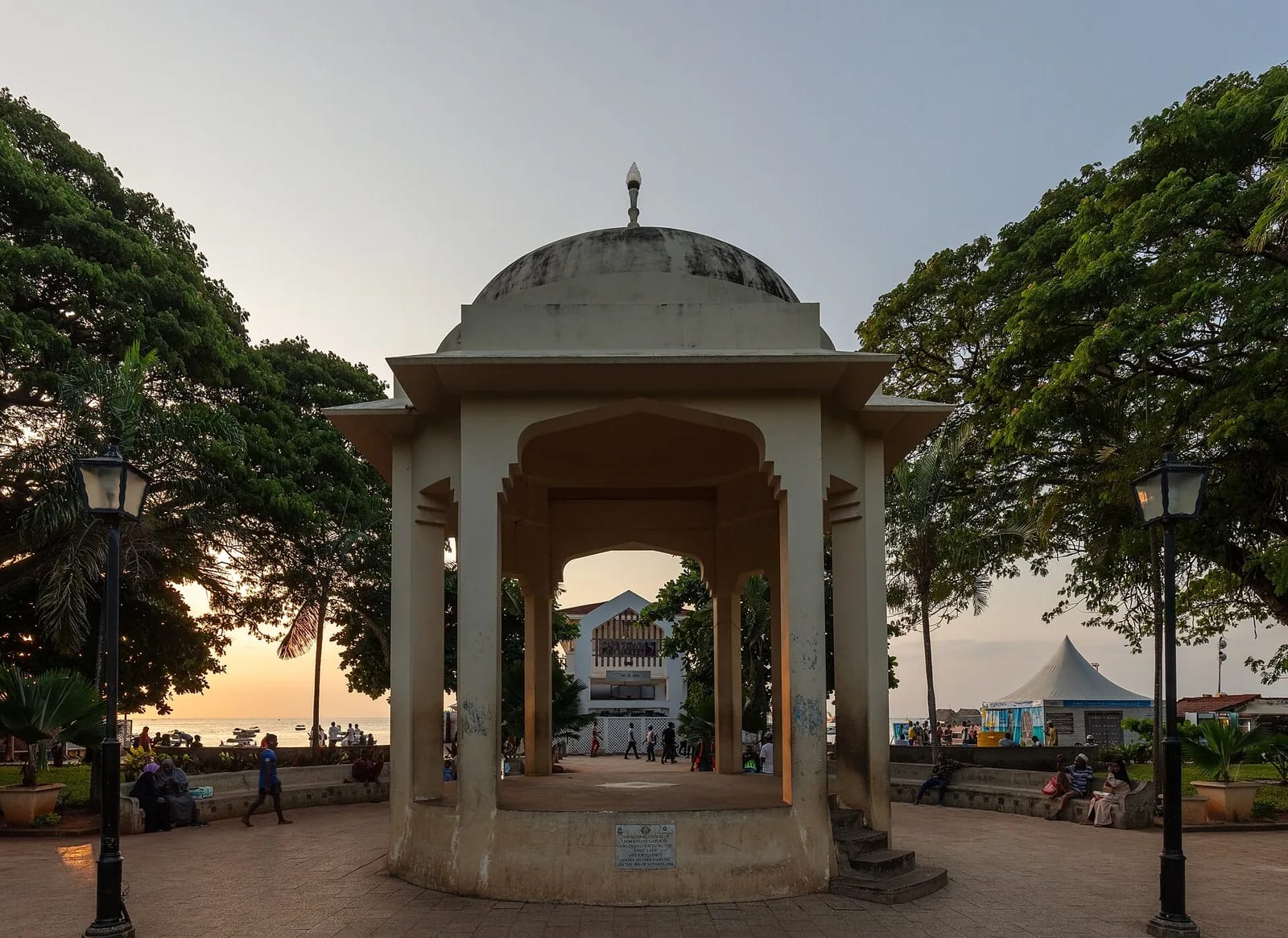
Header photo: the gazebo of Forodhani Gardens at dusk. Diego Delso, CC BY-SA 4.0, via Wikimedia Commons.
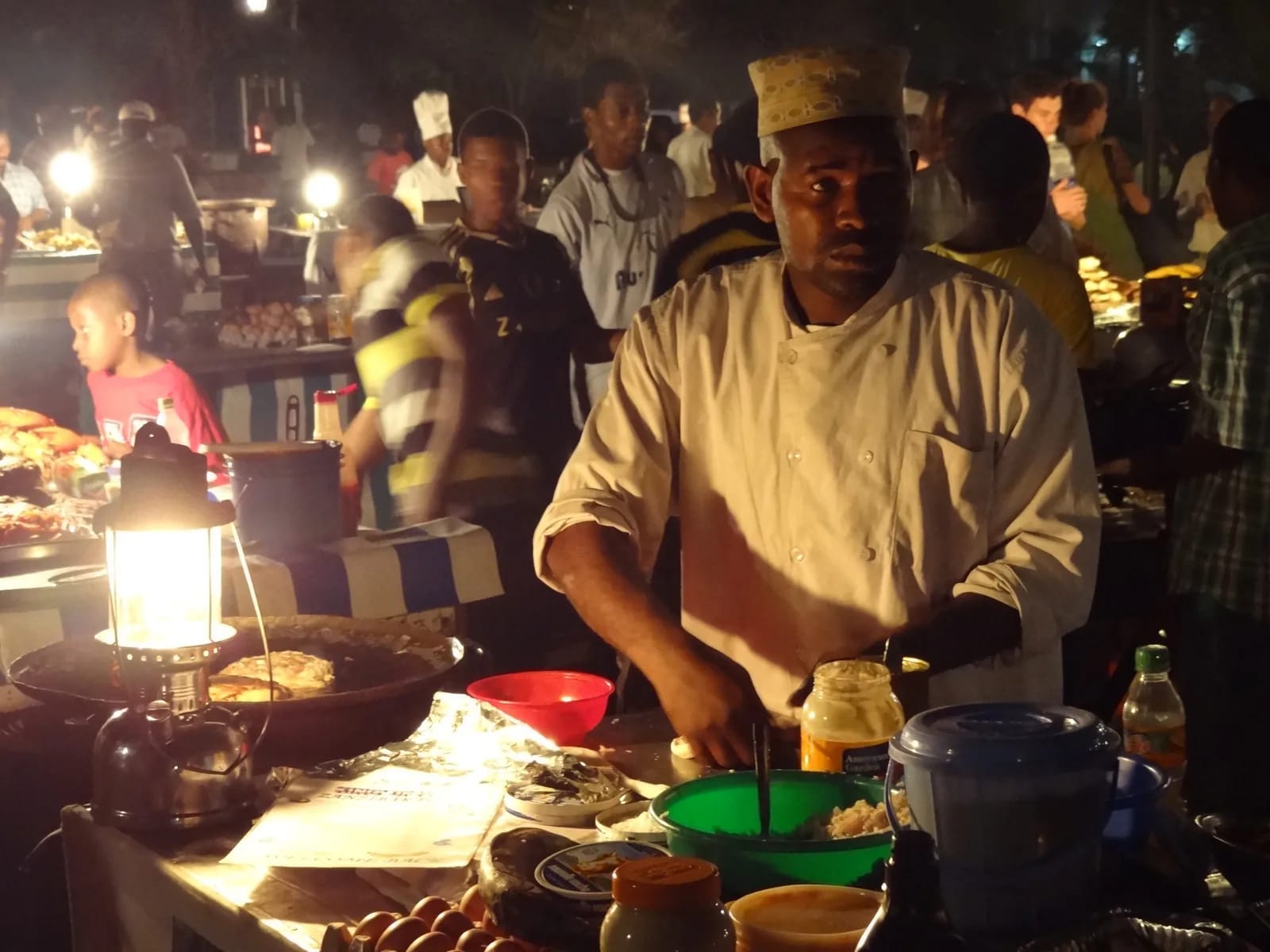
The gardens are open all day, but the market only exists after dark. Vendors start carrying in tables and charcoal at dusk, and the grills are lit from about 6pm every evening, while the dhows come back into the harbour. There is no official closing time: the stalls trade until the crowd thins, usually from nine or ten.
The rhythm matters more than the clock. Between six and half past you get the sunset, the freshest food and room to walk. By eight it is packed, with local families as much as visitors. Late in the evening the stalls are selling what did not go earlier, which is when the seafood turns risky.
During Ramadan
Forodhani is at its busiest after sunset in Ramadan, when the town breaks the fast. Timings shift with the evening prayer, so ask your hotel that day. Status checked 23 November 2026.
Forodhani food tours and Stone Town evening walks
Useful on a first night if you would rather have someone explain each stall and do the ordering.
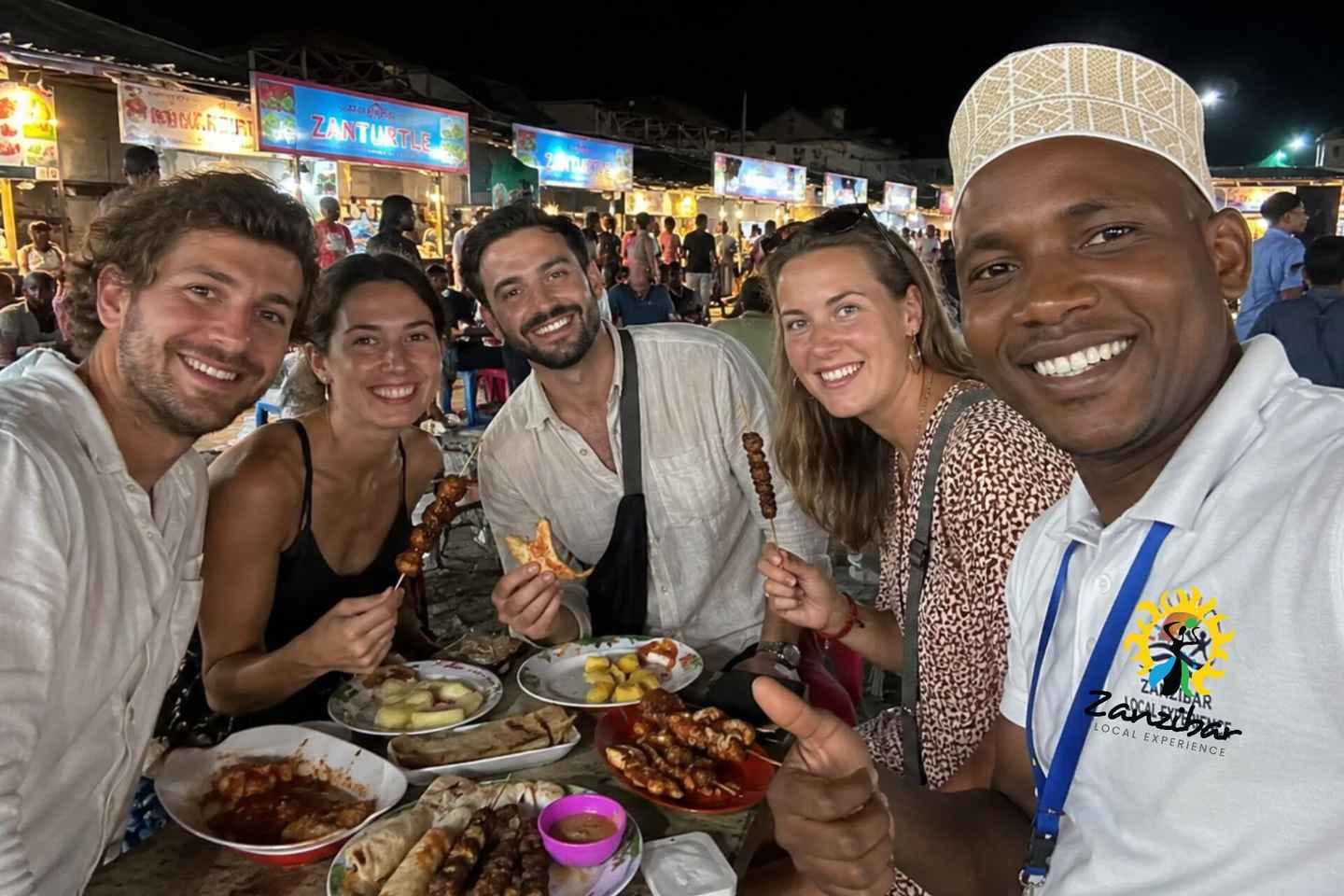
Stone Town: Food Markets and Street Food Walking Tour
A guided walk through Stone Town's food markets and street food stalls, with someone to explain each dish and order for you.
- 3 hours
- Hotel pickup included
- Free cancellation
4.7(181 reviews)
from$35per person
Check prices & availability
Zanzibar Stone Town Walking Tour: History, Culture and Hidden Gems
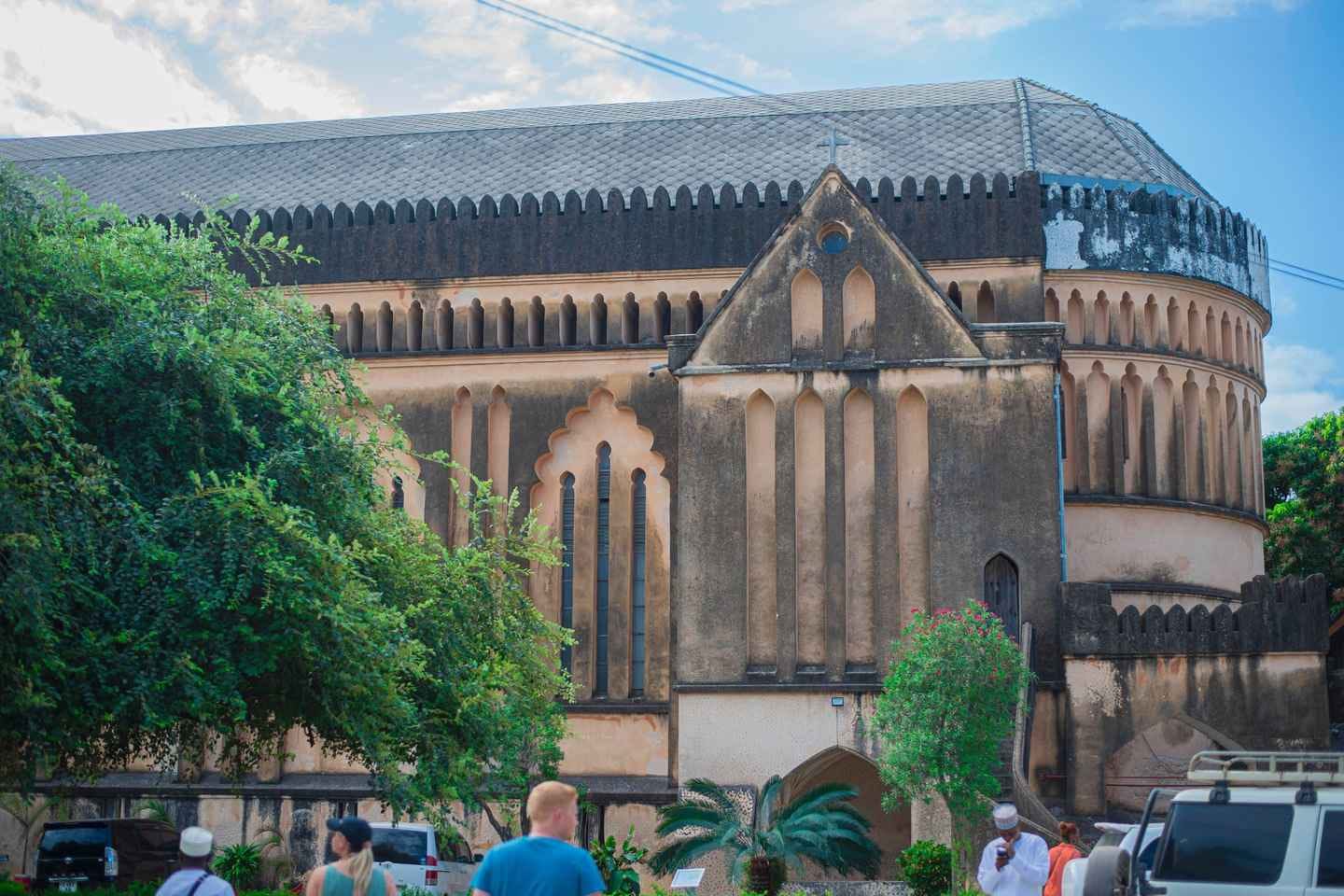
A walking tour of Stone Town's history and hidden lanes, an easy way to fill the afternoon before the Forodhani grills are lit.
- 2.5 to 3 hours
- Hotel pickup included
- Free cancellation
4.9(20 reviews)
from$17per person
Check prices & availabilityAll activities in Stone Town

What to eat at Forodhani Gardens, and what it costs
The market is a run of stalls that mostly sell the same few things, so the choice is less about where than about what. Order what is cooked in front of you: that is the rule that decides whether the evening goes well. The full list of island dishes, with what each one is, is in our guide to Zanzibar food.
Zanzibar pizza at Forodhani
The dish everyone comes for is not a pizza. It is a sheet of dough stretched thin, filled with minced beef, onion, a raw egg and processed cheese, folded into a square and fried on a flat iron plate. It takes a few minutes and you watch the whole thing, which is why it is the safest order in the market. Chicken, seafood and vegetable versions are on every board, and the sweet one is banana with chocolate spread. Eat it standing by the grill: it goes soggy within ten minutes.
Forodhani market prices in 2026
Prices are rarely posted, and the number you hear depends on how you look. The local rates below are what the stalls charge in shillings. The second column is what visitors were quoted in dollars in 2026. Both are honest guides, and the gap between them is the margin you can negotiate.
| Dish | Local rate | Quoted to visitors |
|---|---|---|
| Zanzibar pizza, savoury | TSh 3,000 to 5,000 | $2 to $3 |
| Beef mishkaki skewer | TSh 2,000 to 4,000 | not reliably posted |
| Octopus or seafood skewer | from about TSh 6,000 | $4 to $6 |
| Urojo, Zanzibar mix soup | a couple of thousand shillings | about $2 |
| Sugar cane juice | TSh 1,000 to 2,000 | not reliably posted |
In practice about $5 fills you, and TSh 20,000 to 30,000, around $8 to $12, buys a long evening of grazing. Lobster tails and king prawns are the exception: they are priced by the piece and can multiply the bill, which is exactly why they are where most complaints start.
What to skip at the Forodhani stalls
The long tables of lobster, prawns, calamari and kingfish laid out on ice look like the main event. Most of it is already cooked and only warmed on the grill once you point at it. Seafood that has sat out since six and is reheated at ten is how many bad nights in Zanzibar begin. Skip assembled platters, ice in your drink and cut fruit left uncovered. If you want seafood, choose a stall where local people are queuing and ask for it grilled fresh, early in the evening.
Is Forodhani Gardens safe at night?
Yes, for the usual city reasons rather than anything specific to Zanzibar. The gardens are lit, crowded and full of families until late. The real risks are small: an inflated bill, a stomach upset, and a phone lifted in the crush. Our wider Zanzibar safety guide covers the rest of the island, including the lanes of Stone Town after dark.
How the Forodhani overcharge works
You point at five seafood skewers, nobody names a price, and the bill arrives at forty dollars. To avoid it: agree the price of each item before it goes on the grill, order at the stall rather than through a man who walked you over, pay in shillings with small notes, and walk away from any stall that will not give a number.
Two more things. No alcohol is sold at the stalls, so anyone offering a beer is not part of the market. And the walk back through the old town is fine in a group, but if your hotel is deep in the lanes or across town, a taxi from Mizingani Road is cheap and easy to find. Dress as you would anywhere in Stone Town: shoulders and knees covered.
Sunset at Forodhani: where to stand and what to photograph
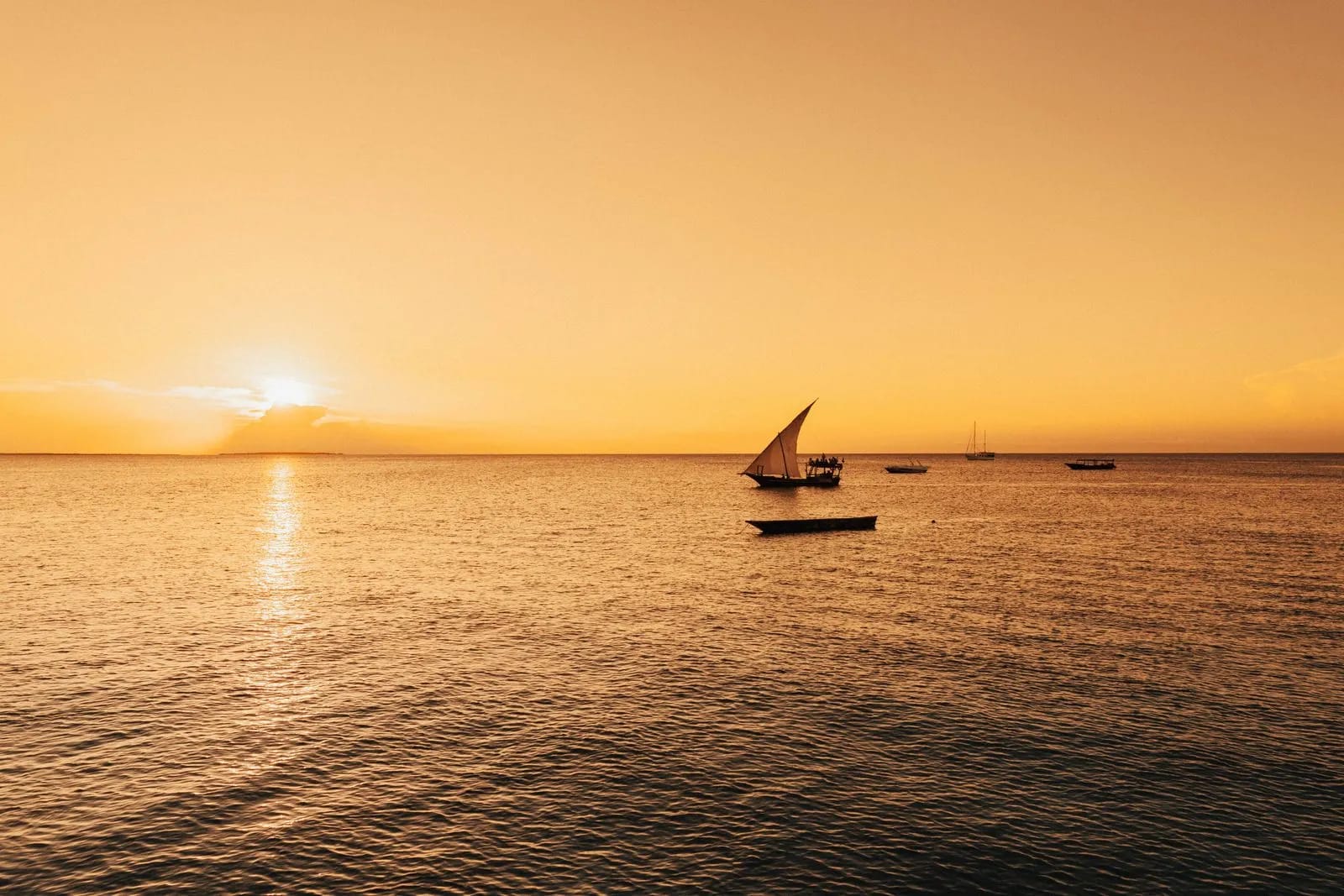
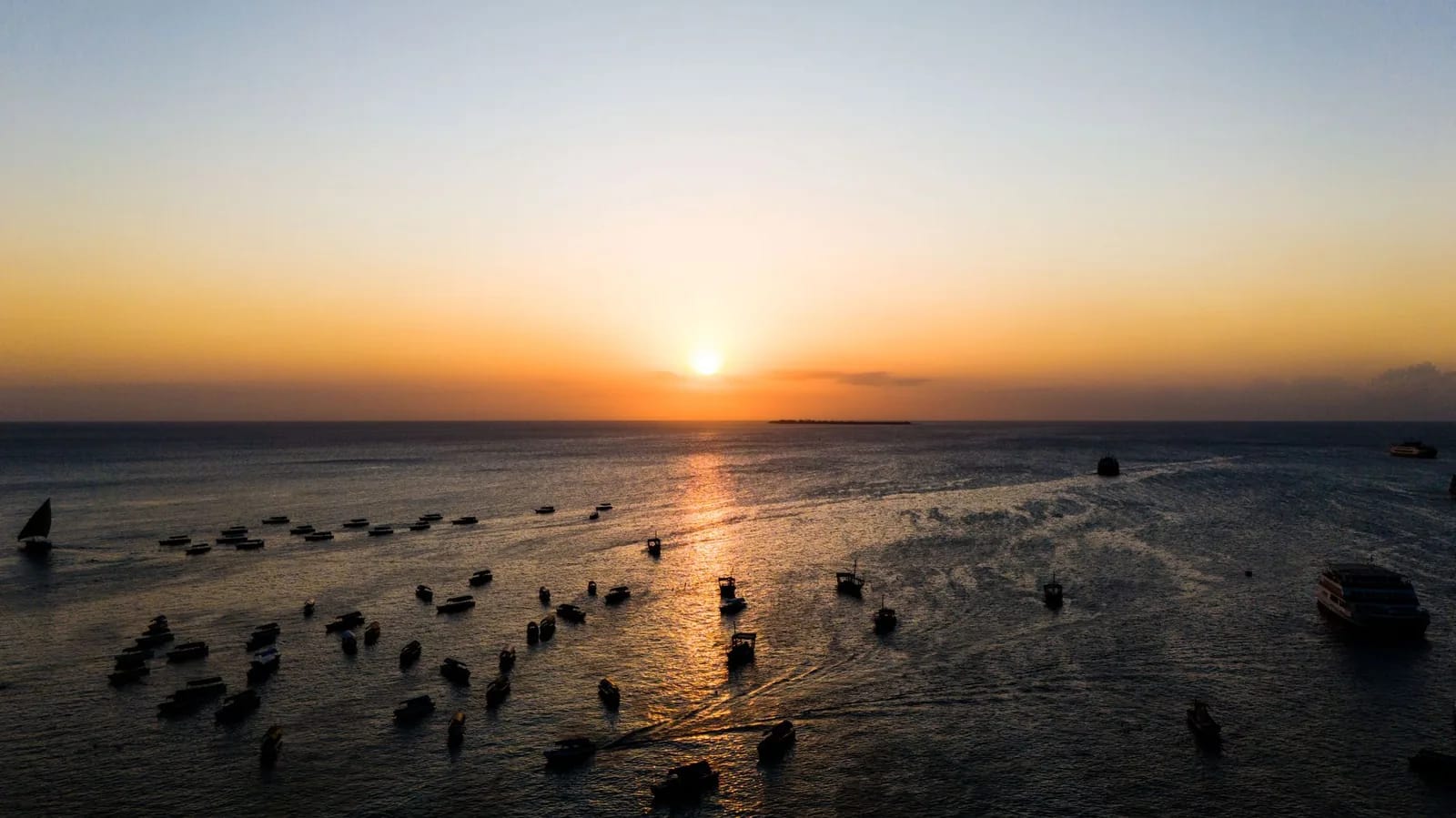
The sea wall of Forodhani faces west over the harbour, which makes it the best free sunset spot in Stone Town. Get there half an hour before sunset and walk to the end of the wall by the jetty. You get the sun dropping behind the anchored boats, dhows sailing back in, and the boys of Stone Town diving off the jetty and the wall into the harbour, the scene most Forodhani photos are trying to catch.
Ask before you photograph people close up, especially women and older men. If you would rather watch the sunset from the water, a sunset dhow cruise leaves from this same stretch of shore and brings you back in time for the market.
Forodhani Gardens history: from sultans' landing to restored park
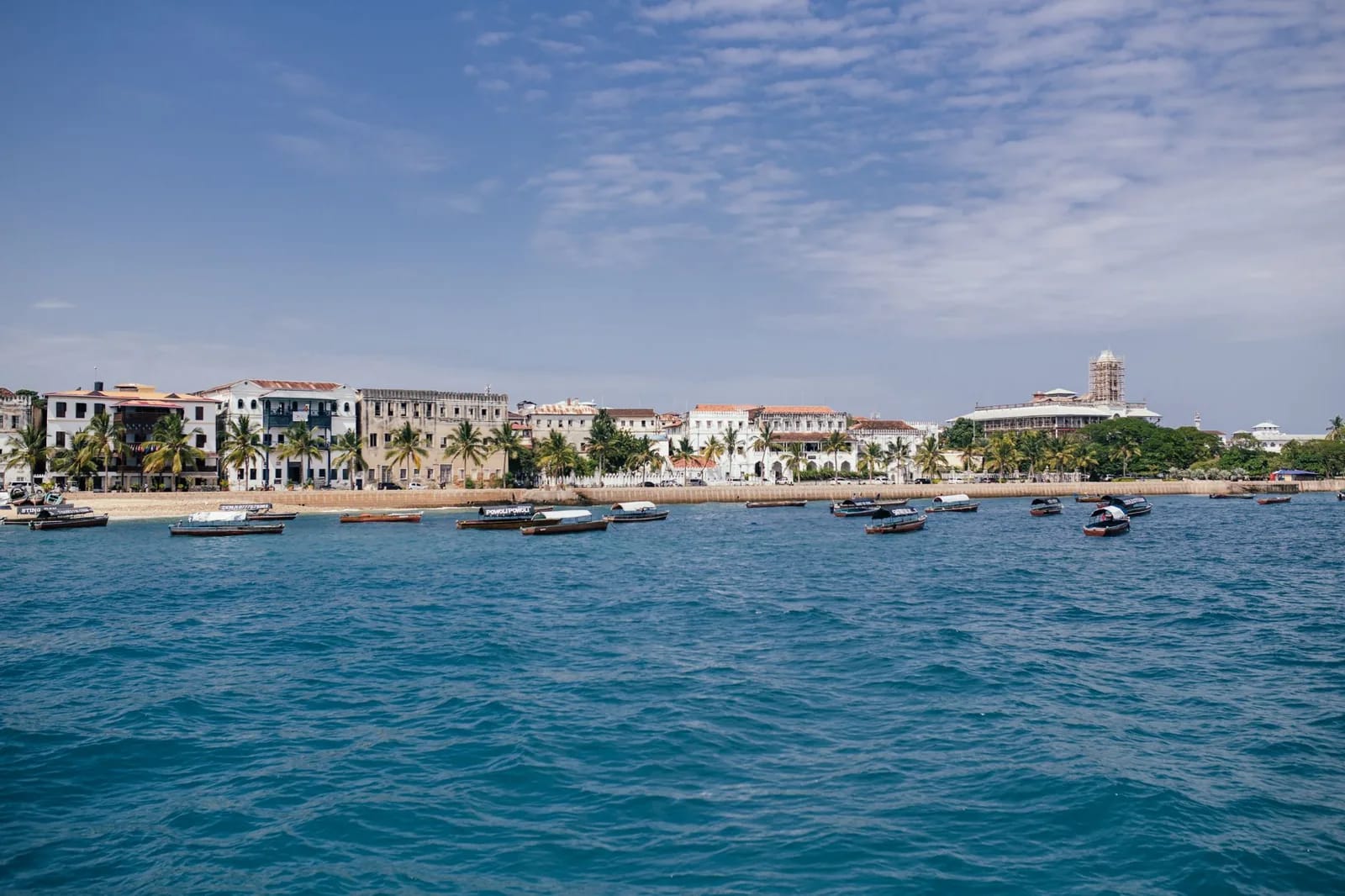
This shore was the main port of Stone Town and the landing place of the sultans, right in front of their palaces. It became a garden in 1936, laid out for the silver jubilee of Sultan Khalifa bin Harub, which is why older maps call it the Jubilee Gardens. The domed bandstand in the middle dates from that period, and the lone ceremonial arch was built for the visit of Princess Margaret in 1956.
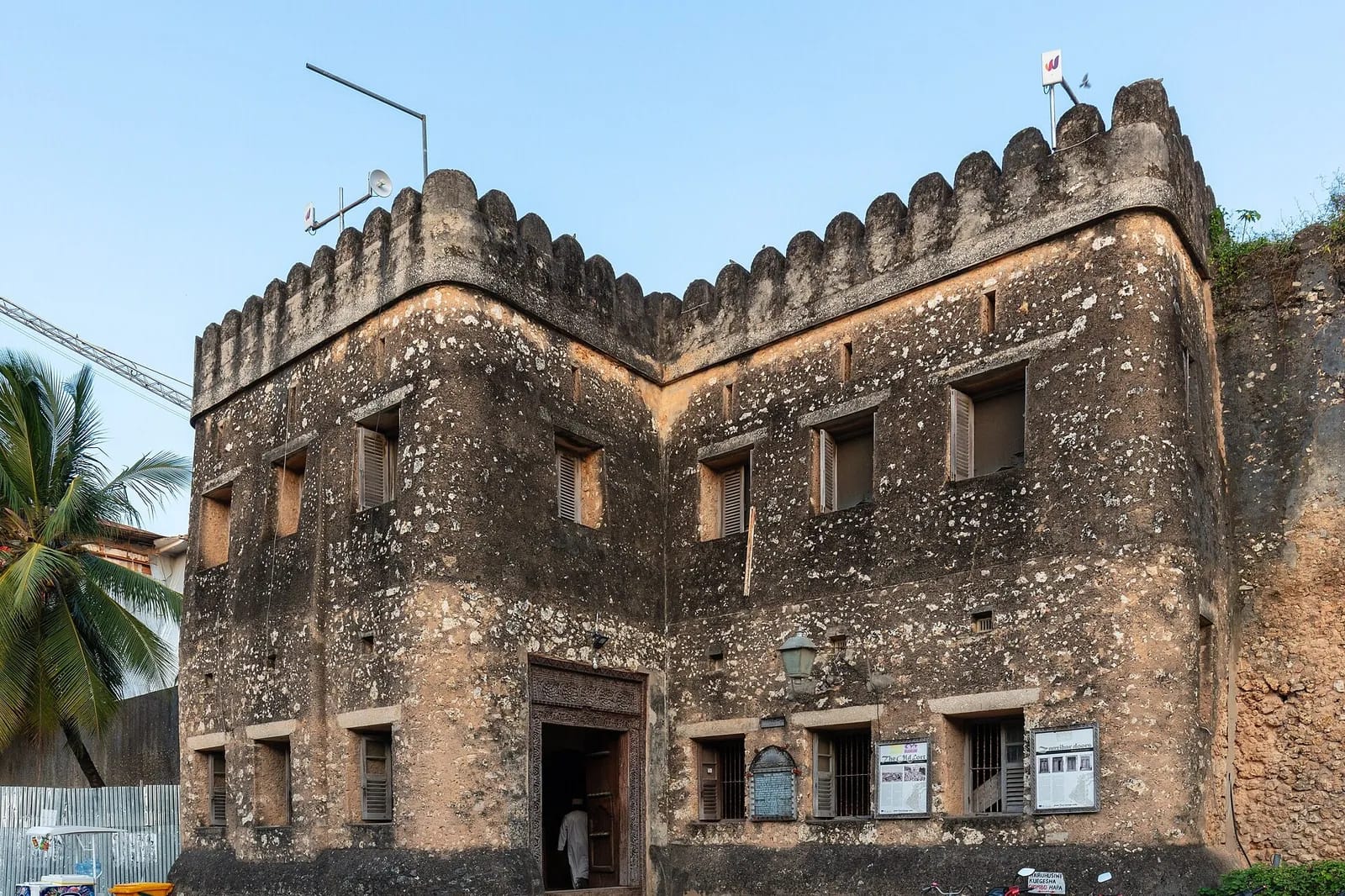
By the 2000s the park had decayed and the sea wall was crumbling. The Aga Khan Trust for Culture restored it between June 2008 and July 2009, for about $2.4 million: new paths, planting and lighting, new drainage and sewers, and a rebuilt sea wall. Behind the gardens stand the House of Wonders and the Old Fort, both closed for restoration in 2026 but worth a look from the outside on your way in.
Getting to Forodhani Gardens and where to stay nearby
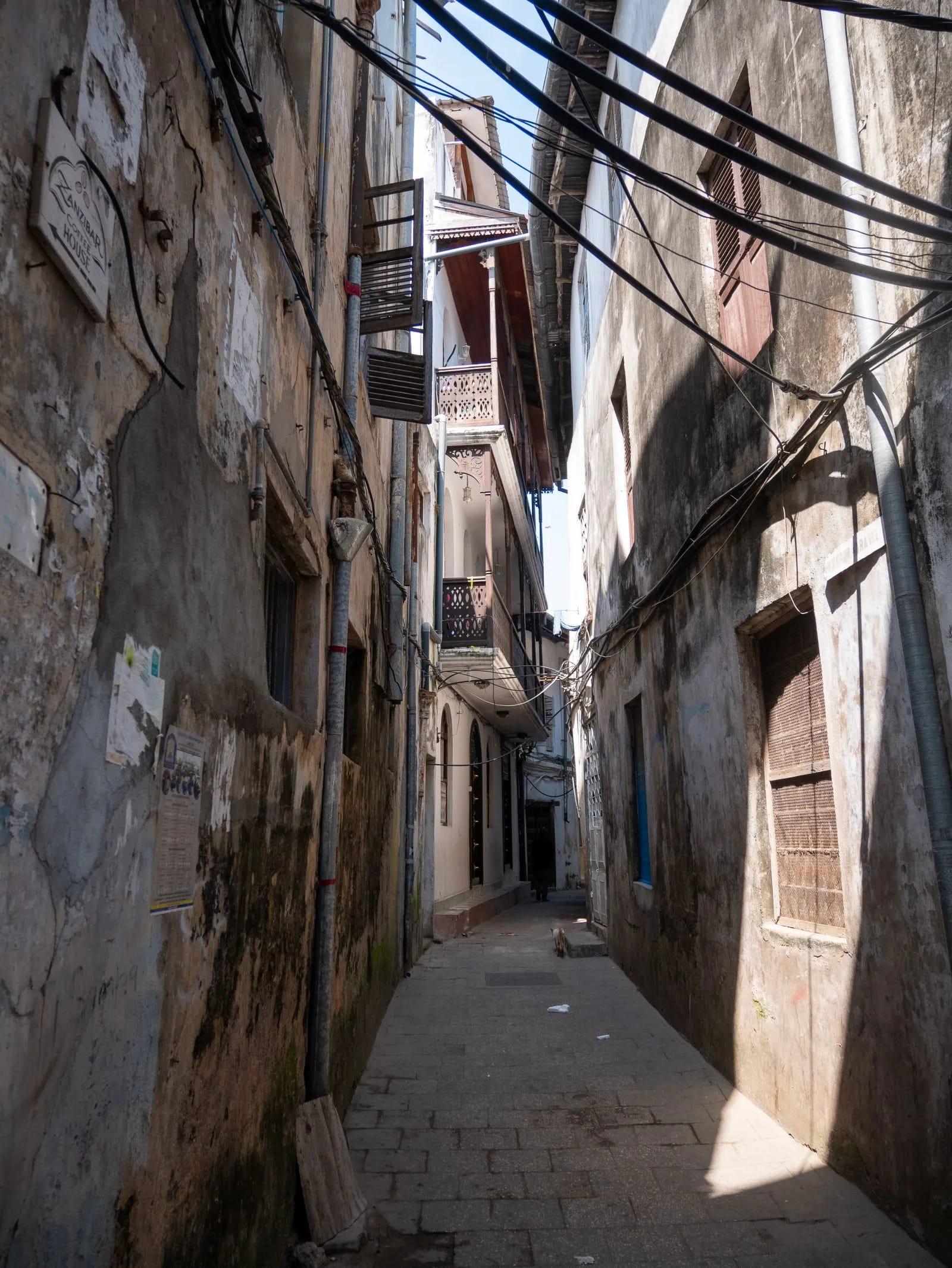
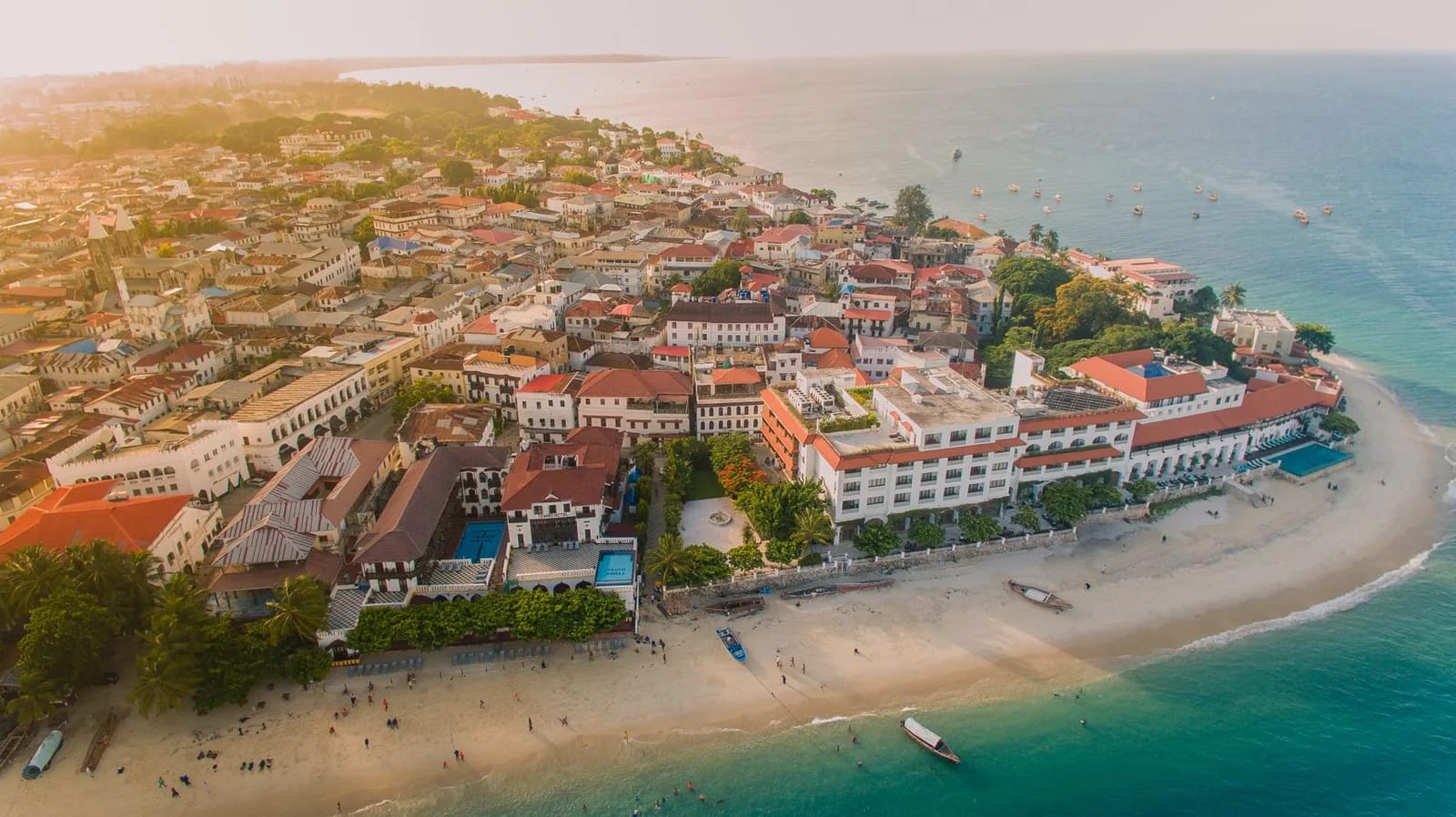
The gardens run along Mizingani Road, the seafront road of Stone Town, between the Old Fort and the sea. Taxi drivers all know the name. From anywhere in the old town you can walk, and the gardens make an easy meeting point because every lane that heads west ends near them.
The evening market is the strongest argument for a night or two in Stone Town rather than a day trip from the coast. From Nungwi or Paje, a day visit means leaving before the grills are lit, or a long drive back in the dark.
Questions people ask about Forodhani Gardens
What is Forodhani Gardens known for?
For its night market. Every evening from about 6pm the seafront park below the Old Fort fills with charcoal grills selling Zanzibar pizza, seafood and meat skewers, urojo and sugar cane juice. By day it is a quiet public garden where Stone Town families sit on the sea wall.
What does Forodhani mean?
Forodha is the Swahili word for customs, and the -ni ending means at or in, so Forodhani is roughly "at the customs house". The name fits the site: before it became a garden in 1936, this stretch of shore was the main port of Stone Town and the landing place of the sultans.
What to eat at Forodhani market?
A Zanzibar pizza made to order in front of you, beef mishkaki from a stall that is grilling raw meat, a bowl of urojo and a glass of sugar cane juice with ginger and lime. Be careful with the displayed lobster and prawns, which are usually precooked and only reheated.
Is Forodhani Gardens free?
Yes. There is no gate and no ticket, day or night. You only pay for what you eat, and nothing at the stalls has a fixed posted price, so agree each price before it goes on the grill.
What time does Forodhani night market close?
There is no official closing time. The stalls set up at dusk and most trade until well into the evening, thinning out from around nine or ten. Arrive early rather than late: the food is fresher and the prices easier to agree.
Is Stone Town worth visiting?
Yes, and ideally for a night rather than a day trip, because the evening at Forodhani is the part a day visit misses. Two nights give you the old town, the market and a sunset on the seafront without rushing.