
Entrance fee
About $10 an adult, guide included
Opening hours
Daily, 7.30am to 5pm
Time to allow
90 minutes to 2 hours
Where it is
38 km south east of Stone Town
Getting there
45 min from town, 30 from the east coast
Best time of day
Before 9.30am, while the monkeys feed
Book a Jozani Forest tour
Nothing here sells out, so this is a convenience rather than a precaution: a car, a driver and the entrance fee arranged in one go instead of haggling at your hotel desk the evening before. Check whether the ticket is included before comparing two listings, because half of them quote the transport only.
Guided visits, with the entrance included
Prices, ratings and review counts as the partner lists them, read on the date shown below the cards.
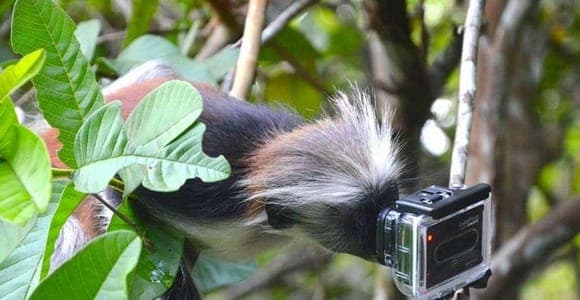
Jozani Forest: guided visit
Zanzibar red colobus and the mangrove boardwalk, three hours, entry included.
From$25per person
Check availability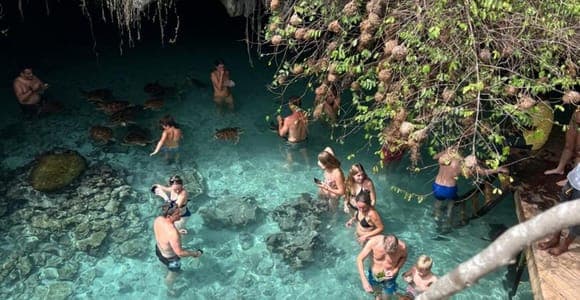
Jozani and the sea turtle sanctuary
Forest in the morning, giant turtles in the afternoon.
From$76per person
Check availability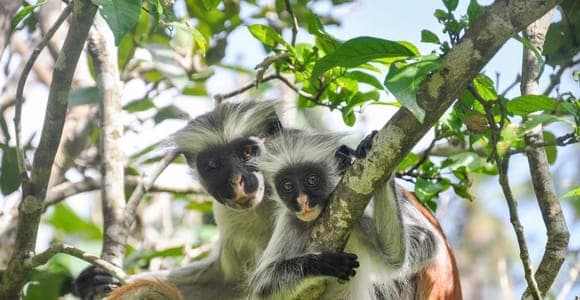
Jozani, spice farm and Stone Town, private
Full day to yourselves, with your own vehicle and guide.
From$70per person
Check availabilityPrices, ratings and review counts read from GetYourGuide on 27 September 2026, and indicative. These are partner links: the price is the same for you.
Jozani Forest entrance fee and opening hours
The gate price is the single most misquoted number about this place, because half the internet is quoting a tour price and calling it an entrance fee. What you pay at the barrier, and what you get for it:
| At the gate | What to expect |
|---|---|
| Adult entrance | About $10, and the compulsory guide is inside that price. Dollars are accepted at the window, shillings too. |
| Children | Roughly half the adult rate from about six, free below that. Ask at the window rather than assuming, the bands move. |
| Opening hours | Every day, 7.30am to 5pm. The last walk leaves around four, and nobody is sold a ticket after that. |
| Time to allow | 90 minutes for the forest trail, two hours with the mangrove boardwalk added. |
| Booked through a tour | From $25 to $60 a head, which buys the same walk plus a car, a driver and somebody else doing the arranging. |
| Where the money goes | A share of entrance revenue funds schools and clinics in the villages around the park. That arrangement is why the forest still has monkeys in it. |
How to get to Jozani Forest
The park sits 38 kilometres south east of Stone Town on the main road to the east coast, which is the single most useful thing about it. You do not detour to Jozani. You stop at it on the way to somewhere you were going anyway.
| From | Drive | Taxi, one way |
|---|---|---|
| Stone Town | 45 min | $25 to $35 |
| Paje or Jambiani | 30 min | $20 to $30 |
| Bwejuu or Pongwe | 35 to 45 min | $25 to $35 |
| Nungwi or Kendwa | 1 h 30 | $60 to $80 |
| The airport | 35 min | $25 to $30 |
- On a transfer day. Ask the driver to stop at Jozani on the way from Stone Town to Paje. Two hours of waiting costs perhaps ten dollars on top of the fare.
- By dala dala. Route 309 and 310 pass the gate for well under a dollar. Slow, hot, and the way most people who live here travel. Read getting around Zanzibar first.
- On a scooter. The road is tarmac and straight the whole way. You need a Zanzibar permit, and the police on that stretch do check.
- From the north. Ninety minutes each way from Nungwi is a real day out for a two hour walk. Pair it with Stone Town or leave it.
What to see in Jozani Forest
Five habitats meet inside the park boundary: groundwater forest, coastal forest, grassland, salt marsh and the mangroves of Chwaka Bay. That is why a small park holds 291 plant species and 168 kinds of bird. On a two hour walk you will meet perhaps six of the animals below, and one of them is the reason anybody comes.
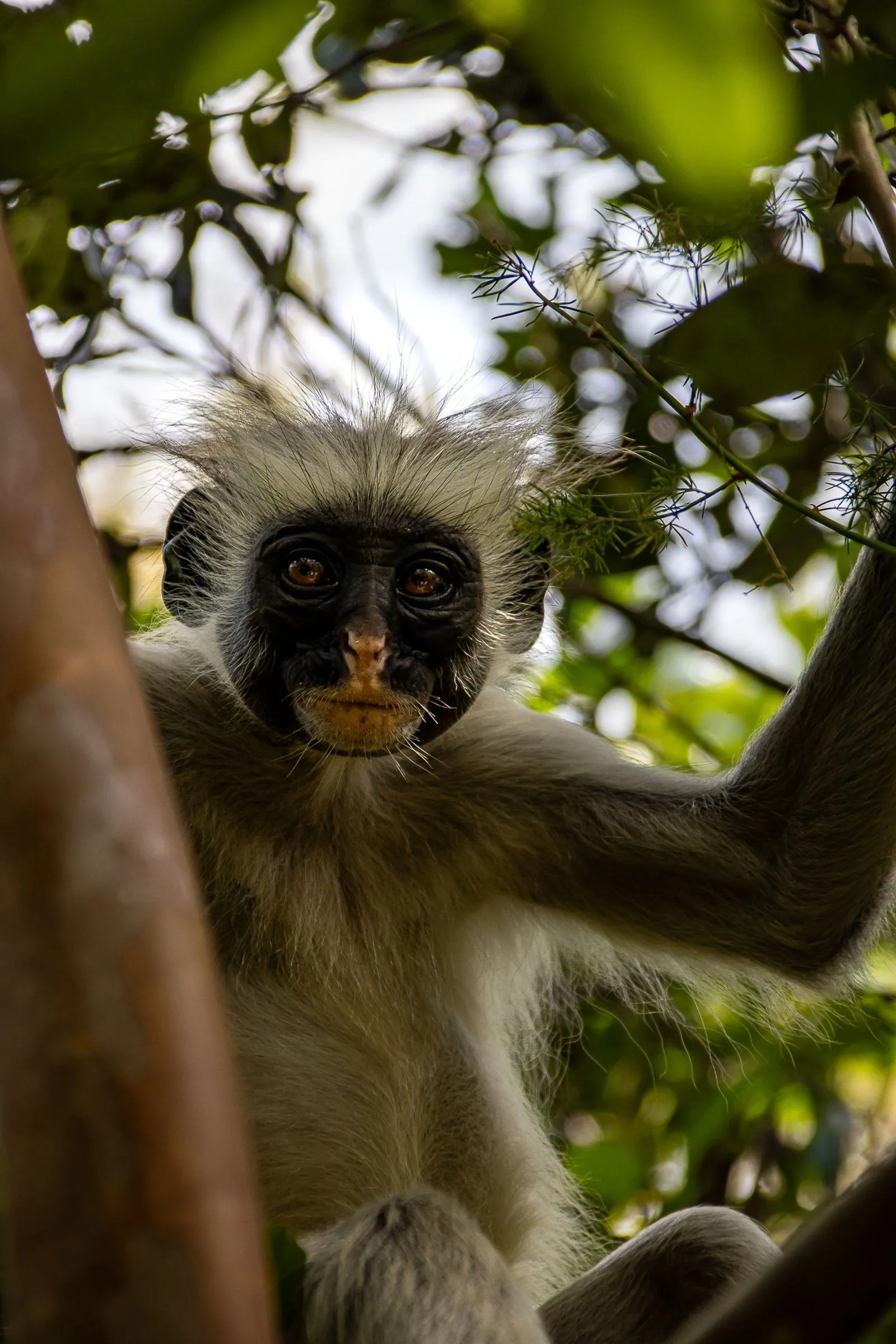
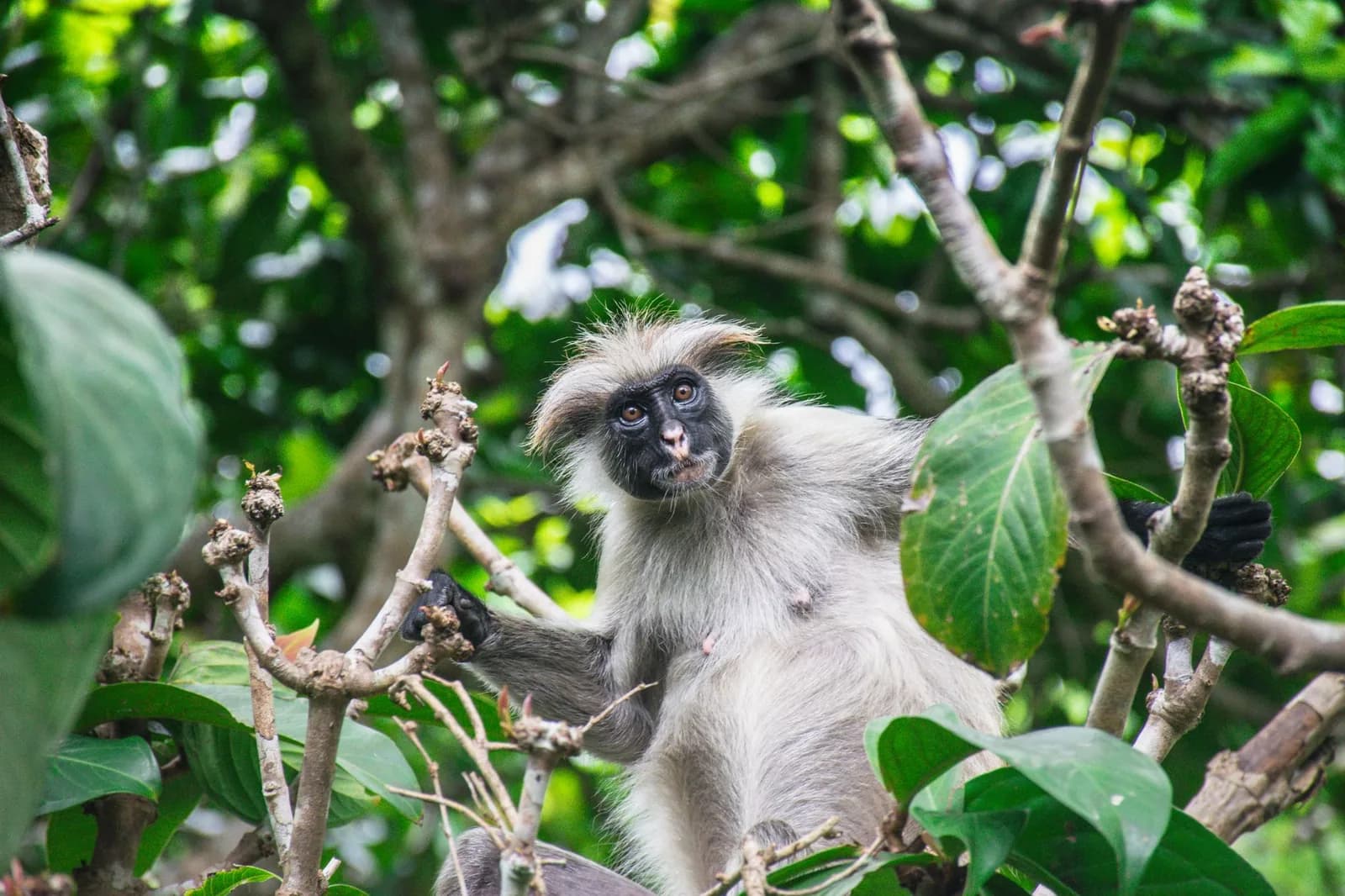
Zanzibar red colobus monkeys
Piliocolobus kirkii exists on this island and nowhere else. It was named after Sir John Kirk, the British Resident who first sent one to London, and it has been the flagship of Zanzibari conservation since the mid nineties. Around 5,800 survive in total, of which roughly a thousand live in and around this park.
Two troops on the main trail are habituated to people and behave as if you were not there. They feed in the low canopy directly over the path, sometimes at head height, and a phone camera is genuinely enough. The guides hold groups back a few metres. That is for the monkeys, not for you: they catch our respiratory infections.
Sykes monkeys, bushbabies and the tree hyrax
The colobus has company. Sykes monkeys are common and considerably bolder, which is the reason the guides ask you not to carry open food. Bushbabies sleep through your visit and come out at dusk. So does the Zanzibar tree hyrax, a nocturnal animal the size of a rabbit that screams like something being murdered and is more closely related to an elephant than to anything else in the forest.
Aders' duiker, the genet and the leopard nobody has seen
Three of the park's residents are effectively invisible. Aders' duiker is a tiny antelope and one of the most endangered in Africa. The Zanzibar servaline genet was not photographed alive until 2003. And the Zanzibar leopard was declared extinct, last confirmed in the early 2000s, then turned up on camera-trap footage in 2018. Your guide will mention it. You will not see it.
Birds and butterflies
- Fischer's turaco, crimson-winged and loud, the bird most visitors end up photographing by accident.
- Mangrove kingfisher and crab plover on the Chwaka Bay side, which is the half of the park almost nobody walks.
- East coast akalat and Zanzibar red bishop, two of the thirty species here that matter globally or regionally.
- More than 50 butterfly species, and a community-run butterfly centre at the gate that farms pupae as an alternative to cutting timber.
The Pete-Jozani mangrove boardwalk
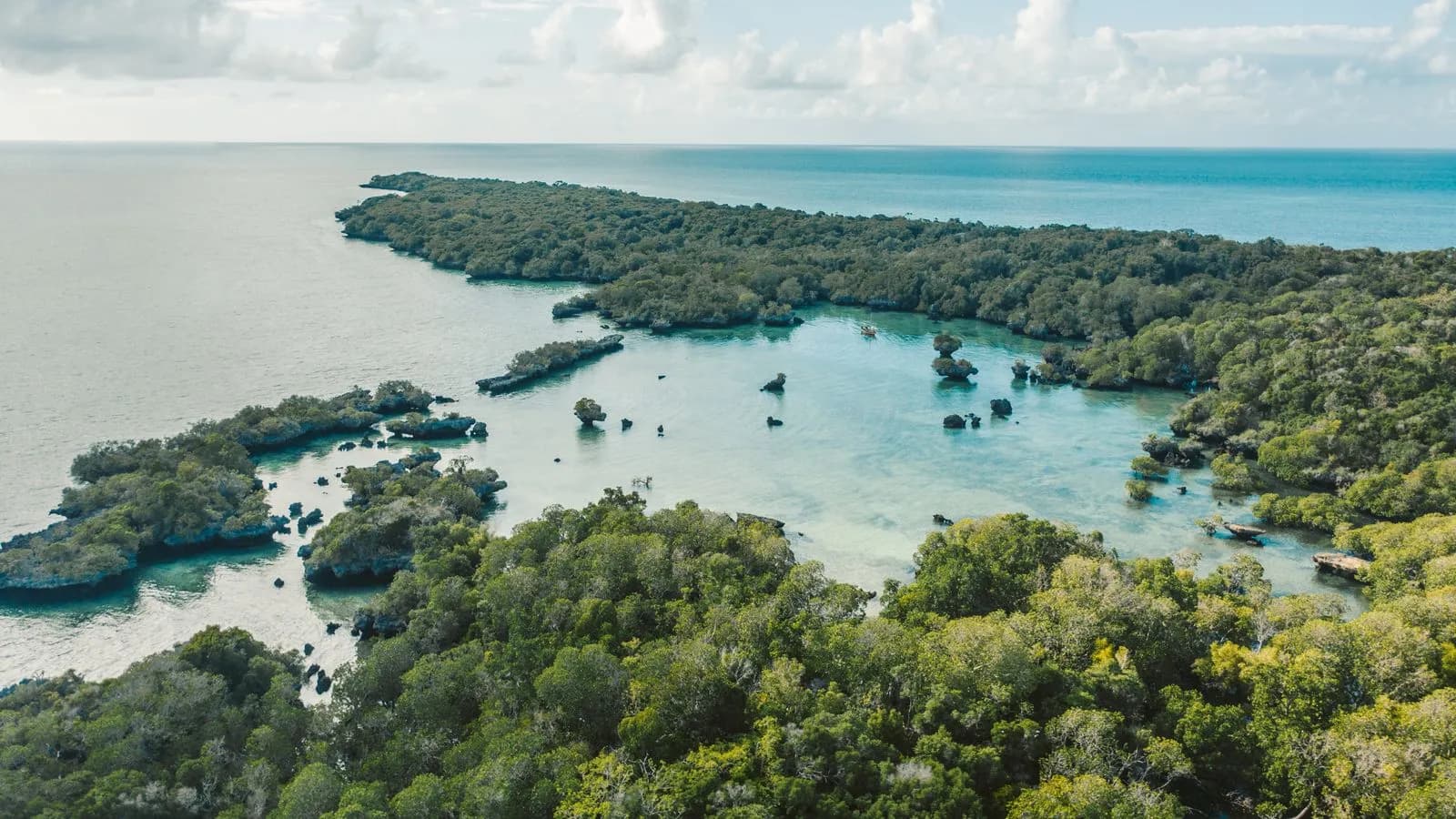
The second half of the standard visit is a raised walkway through mangrove, and it is the part people skip because they think the monkeys were the point. It takes twenty minutes and the landscape has nothing in common with the forest you just left. Go at a rising tide, when the water comes back in underneath the boards and the mudskippers move.
Which Jozani Forest tour is worth the money
The park sells six different visits and almost every hotel will book you the shortest one without mentioning the others. Prices below are the gate prices, before an operator adds a car.
| Tour | Length | From |
|---|---|---|
| Butterfly centre onlyA community-run butterfly farm at the gate. Good with small children, not a reason to drive out here on its own. | 45 min to 1 hour | From $10 |
| Short forest walkEntrance, a shared guide and the colobus troop on the main trail. This is what most people mean by visiting Jozani. | 45 min to 1 hour | From $25 |
| Forest and mangrove walkThe same monkeys plus the groundwater forest loop and the Pete-Jozani mangrove boardwalk. The version worth doing. | 2 to 3 hours | From $40 |
| Mangrove kayakPaddling the Bwejuu mangrove channels rather than walking above them. Tide dependent, so confirm the time the day before. | About 2 hours | From $50 |
| Private birdwatchingEarly start with a bird guide. Worth it if Fischer's turaco means something to you, wasted otherwise. | 4 hours | From $80 |
| Full day hikeThe parts of the park with no boardwalk and no coach parties. Hot, genuinely quiet, and a different day out. | 6 to 7 hours | From $130 |
The forest and mangrove walk is the one to ask for by name. It is the difference between having seen a monkey and having seen the park, and it costs about fifteen dollars more.
What to wear and what to take
- Closed shoes. The trails are flat and short, but they are wet after rain and the mangrove boards are slick.
- Long sleeves and repellent. Humid forest, standing water, and mosquitoes that are worst exactly when the monkeys are best. See health and safety in Zanzibar.
- Shoulders and knees covered. Zanzibar is Muslim and the villages around the park are conservative. Beachwear reads badly here in a way it does not in Paje.
- Small dollar notes or shillings. The window takes both, the change situation is better with the latter, and there is no cash machine at the gate.
- Water, and no snacks in your hand. Sykes monkeys will take food off you and the guides have to spend the walk stopping them.
Do not
When to go, and how Jozani fits into a day
Arrive between 7.30 and 9.30 in the morning. The colobus feed in the first hours of light, the forest is bearable, and the coaches from the north have not arrived. By eleven the monkeys are resting high up and the car park is full.
Second best is the last hour before four, when the light is low and the troops come down again. The middle of the day is the worst of both.
- With a spice tour. The plantations sit on the same side of the island and the spice tour takes a morning. Together they are a full and unhurried day.
- On the way to the east coast. The obvious pairing, and the one that costs no extra driving at all.
- Not with the turtle sanctuary. Operators sell that combination. It is at the far northern tip and the two are three hours of driving apart.
- In the rains. April and May flood parts of the groundwater forest and the walking gets messy, but the canopy is at its best and there is nobody there. Check when to go to Zanzibar before you plan around it.
Why Jozani is the last forest on Zanzibar
Zanzibar was forested before it was famous. Cloves changed that in the nineteenth century, and the vegetation that once covered the island now survives in one place. The IUCN calls Jozani the largest remaining stand of near-natural forest on Zanzibar, which is a careful way of saying there is nothing else left.
What grows here is groundwater forest, sitting on an old reef limestone terrace with the water table close enough to the surface to keep the canopy green through the dry season and to flood it in the wet one. Mahogany, palm and fig, tall enough to feel like forest rather than scrub.
It became a national park in 2004, the only one in Zanzibar, and carries both an IUCN category II listing and UNESCO biosphere reserve status. The colobus population had fallen far enough by the 1990s to be a genuine extinction risk. It has climbed since, which is unusual enough among endangered primates to be worth ten dollars of your money.
Questions people ask about Jozani Forest
How much does it cost to enter Jozani Forest?
Around ten dollars per adult at the gate, and the compulsory guide is included in that. Children pay roughly half and the very young go free. Tour operators sell the same visit from about twenty five dollars once transport and a private guide are added, so check what the difference is buying you before you pay it.
Can you go to Jozani Forest without a guide?
No. A park guide is compulsory on the forest trails and the fee already covers one. You are not paying for a chaperone, you are paying for the person who knows which trees the troop moved to this morning, which is the difference between seeing colobus and seeing leaves.
Are you guaranteed to see monkeys at Jozani Forest?
Close to it. Two troops are habituated to visitors and feed in the low canopy either side of the main path, often at head height. Sightings are near certain before about half past nine in the morning and merely likely in the heat of the afternoon.
What should I wear to Jozani Forest?
Closed shoes, long sleeves and long trousers if you have them, and repellent on everything else. It is humid forest, the mosquitoes are out early and late, and the mangrove boardwalk has no shade at midday. Zanzibar is also conservative, so cover shoulders and knees.
How long does a visit to Jozani Forest take?
Ninety minutes for the forest walk alone, closer to two hours with the mangrove boardwalk, plus the drive. Allow forty five minutes each way from Stone Town and about thirty from Paje or Jambiani.
Is Jozani Forest worth visiting?
For two hours and ten dollars, yes. The Zanzibar red colobus lives here and nowhere else on earth, you see it properly rather than as a rustle in the canopy, and this is the last substantial forest on an island that was once covered in it.